ES | Prestige: High-Performance Architectural Window Systems for Hawaii
Can a window system truly withstand the relentless salt spray of the windward coast while meeting the strict 140 mph wind-borne debris requirements of Hawaii’s building codes? For many architects, the challenge is finding a solution that balances these technical demands with the slim, modern profile...
Can a window system truly withstand the relentless salt spray of the windward coast while meeting the strict 140 mph wind-borne debris requirements of Hawaii’s building codes? For many architects, the challenge is finding a solution that balances these technical demands with the slim, modern profiles high-end residential and commercial projects require. The ES | Prestige line is engineered specifically to bridge this gap. It provides the heavy-duty performance required by the 2018 International Building Code and Hawaii-specific Appendix W amendments without sacrificing the aesthetic luxury your clients expect.
You likely agree that sourcing premium architectural systems to the islands is often a logistical hurdle, especially when your project demands impact-resistant glazing that meets ASTM E1996 standards. We understand that reliability and local technical support are just as critical as the hardware itself. This article explores why the ES | Prestige collection is the premier choice for Hawaii’s unique micro-climates. We'll examine its corrosion-resistant properties, its compliance with increasingly stringent wind load designs, and how local representation simplifies the procurement process for your next project.
Key Takeaways
• Define the ES | Prestige series as a premier aluminum-framed impact system designed for luxury coastal residences and commercial developments.
• Analyze how these systems meet Hawaii’s strict High-Velocity Hurricane Zone (HVHZ) requirements by utilizing established Miami-Dade NOAs.
• Compare the architectural flexibility and performance of the Prestige line against Elite and uPVC options to optimize project budgets and scale.
• Explore how configurations like storefront and sliding systems support indoor-outdoor living through local technical support from Hawaii Architectural Sales.
ES | Prestige: The Standard for High-Performance Glazing in Hawaii
The ES | Prestige series represents the pinnacle of architectural glazing, specifically designed to meet the rigorous demands of high-end commercial projects and luxury coastal residences. It serves as the flagship offering from the Tecnoglass and ES Windows partnership. This system provides a sophisticated alternative to standard residential products. In Hawaii, where building codes mandate strict adherence to High-Velocity Hurricane Zone (HVHZ) standards, this series offers a rare combination of structural integrity and refined aesthetics. It isn't merely a protective barrier; it's a design element that enhances the architectural value of a property. It ensures long-term durability against the elements while maintaining a high formality register suitable for elite developments.
Architects often face a difficult choice between safety and style. Standard impact systems can look bulky or industrial. The Prestige line solves this by prioritizing architectural flexibility. It bridges the gap between high-end manufacturing and practical application. This makes it a preferred choice for professionals who need a dependable partner for large-scale construction. The system's reliability is backed by extensive testing, positioning it as a steady, authoritative choice for the region's most demanding environments. It functions as a strategic ally in the building process, ensuring that vision and safety coexist seamlessly.
Core Features of the Prestige Line
Maximizing visual connection to the Pacific is a primary goal for any Hawaii-based architect. The ES | Prestige line features slim sightlines that allow for expansive glass areas without compromising the frame's strength. These systems are available with high-performance finishes specifically formulated for coastal exposure. These coatings protect the aluminum from the corrosive effects of salt spray and UV degradation. Additionally, the series includes advanced thermal break options. These are essential for maintaining energy efficiency in tropical climates. They help reduce solar heat gain, keep interior spaces comfortable, and keep cooling costs manageable for the building owner.
Why "Prestige" Differs from Standard Impact Windows
Most impact windows focus solely on meeting minimum safety requirements. The ES | Prestige series goes beyond basic compliance by utilizing a heavy-duty aluminum extrusion process. This results in a more rigid frame capable of supporting larger, heavier glass panes. This structural rigidity is paired with specialized hardware designed to handle the weight of large-format operable units. Whether you're specifying oversized casements or heavy sliding doors, the hardware ensures smooth operation over decades of use. This isn't a standard retail product; it is a precision-engineered solution for high-stakes design.
Beyond wind resistance, the laminated glass used in the Prestige series provides significant acoustic benefits. It effectively dampens external noise from high winds or urban traffic. This creates a serene indoor environment for luxury residents. This focus on precision engineering makes it a reliable choice for professionals who refuse to compromise. The series offers a level of sophistication that standard hardware simply can't match. It is a technical specialist in the world of high-performance building materials, providing the long-term value that Hawaii’s unique climate demands.
Engineering for the Pacific: HVHZ Ratings and Corrosion Resistance
Hawaii’s unique geography creates some of the most demanding building environments in the world. The ES | Prestige series is engineered to exceed these challenges by adhering to High-Velocity Hurricane Zone (HVHZ) standards. While these standards originated in Florida, they've become the benchmark for Hawaii building permits in high-wind regions. Most county building departments require a Miami-Dade County Notice of Acceptance (NOA) to verify that a system can withstand extreme wind loads and impact. By utilizing these rigorous certifications, the ES | Prestige line provides a pre-approved path to compliance for complex residential and commercial projects.
Architects working in the islands don't just worry about wind; they must account for a relentless combination of humidity and salt. The metallurgical properties of the aluminum alloys used in the Prestige line are selected specifically to prevent oxidation. This proactive approach to material science ensures that the window frames remain structurally sound and aesthetically pleasing, even when exposed to the intense environmental stressors found in coastal developments. It's a pragmatic solution for professionals who prioritize reliability and long-term value.
Structural Integrity and Wind Load Performance
High-rise developments along the coast face immense atmospheric pressure. Design Pressure (DP) ratings quantify a window's ability to resist these forces without structural failure or water infiltration. ES | Prestige systems utilize large-missile impact glass, which consists of a durable interlayer bonded between two layers of glass. This ensures the building envelope remains intact even if the glass is struck by wind-borne debris. In Honolulu coastal zones, architectural systems must typically achieve a minimum Design Pressure (DP) rating of +50/-50 to satisfy the ASCE 7-16 wind design provisions required by the 2018 International Building Code. Performance ratings verified by the National Fenestration Rating Council (NFRC) further confirm that these units maintain their structural and thermal integrity under extreme stress.
Finishes Designed for High-Salt Environments
The primary threat to architectural longevity in areas like Kihei or Lahaina isn't just wind; it's constant salt spray. Standard aluminum alloys often fall victim to oxidation and pitting within years of installation. ES | Prestige uses high-grade aluminum alloys treated with Kynar 500 or Duranar coatings. These fluoropolymer resins provide a non-reactive surface that resists chemical breakdown from salt and UV radiation. To prevent mechanical failure, all operable hardware is constructed from 316-grade stainless steel. While these materials are robust, a consistent maintenance protocol involving fresh-water rinsing is recommended to extend the system's service life. For projects requiring specific engineering data on corrosion resistance, you can consult with a technical representative to review localized performance metrics.
Product Selection: Comparing the ES | Prestige Line with Elite and uPVC
Selecting the correct glazing system requires a methodical evaluation of project scale, budget, and site-specific environmental stress. While the ES | Prestige series serves as the flagship for high-performance architectural projects, it exists within a hierarchy designed to address varying functional needs. Architects must balance the structural requirements of Hawaii’s building codes with the client's desire for specific aesthetic outcomes. This decision framework ensures the selected system provides long-term value without unnecessary over-specification. It positions the architect as a knowledgeable guide who understands both manufacturing capabilities and practical application.
The choice often comes down to the specific micro-climate of the project site. A high-rise in Kaka‘ako faces different structural demands than a single-family residence in Lanikai. Understanding the technical boundaries of each product line allows for a more precise specification process. This organized approach respects the project timeline and mirrors the organized nature of professional architectural planning.
Prestige vs. Elite: Performance and Aesthetics
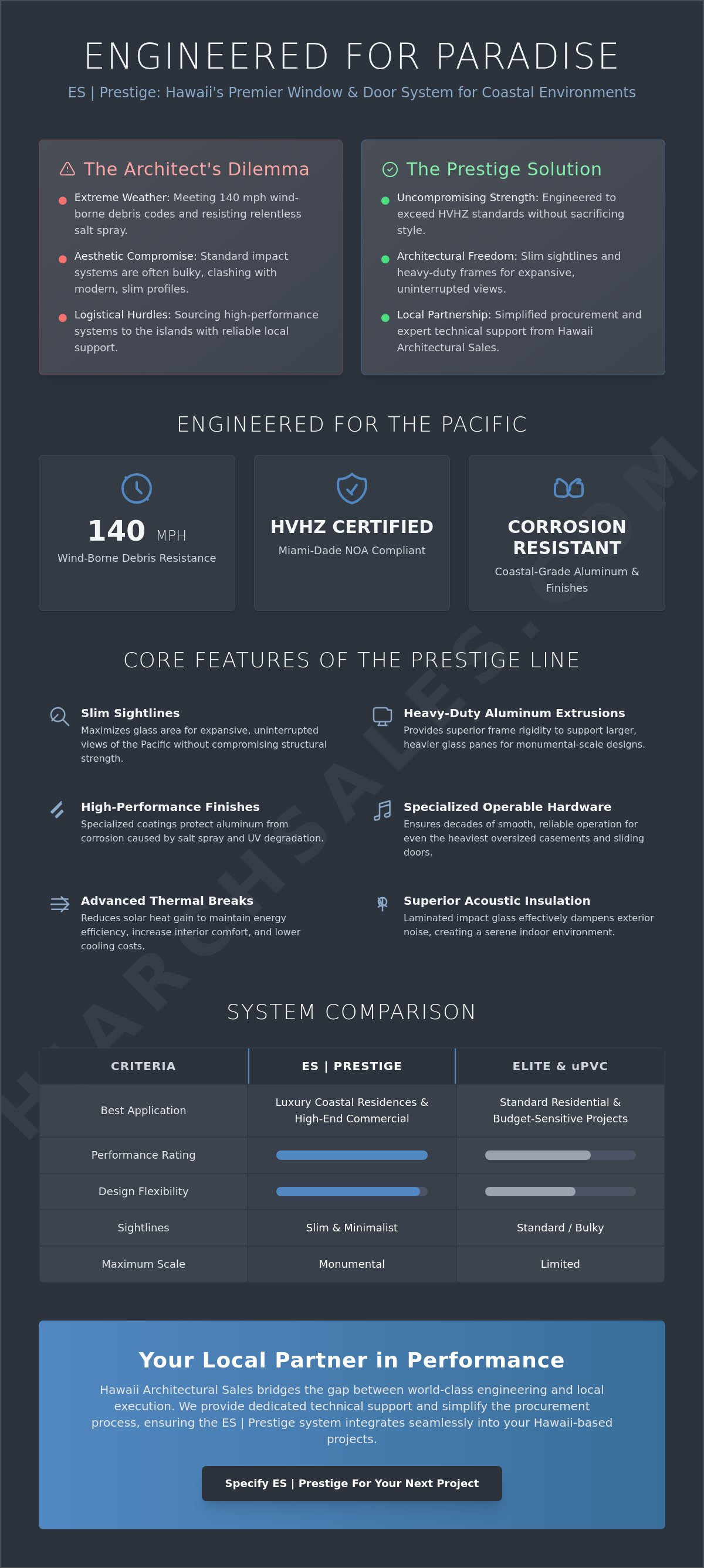
The primary distinction between the Prestige and Elite lines lies in architectural flexibility and maximum aperture size. ES | Prestige features deeper frame profiles and heavier wall thicknesses. This structural advantage allows for significantly larger glass spans while maintaining the required design pressure ratings. Elite systems are often more suitable for standard residential applications where openings are smaller and budget optimization is a priority. Prestige offers a wider array of custom finishes and high-end hardware, making it the preferred choice for commercial storefronts and ultra-luxury estates that require a high formality register. The hardware in the Prestige line is specifically engineered for high-frequency use in larger, heavier operable units.
When to Consider ES | uPVC in Hawaii
In micro-climates characterized by extreme salt spray and high humidity, ES | uPVC offers a distinct technical advantage. Unlike aluminum, uPVC is a non-conductive material that is entirely immune to salt-air corrosion. This makes it a virtually zero-maintenance solution for coastal properties where oxidation is a constant threat. From a thermal perspective, uPVC typically achieves lower U-values than even thermally broken aluminum systems. This improves overall energy efficiency by reducing heat transfer into the building envelope. However, professionals must account for structural trade-offs. Aluminum remains the superior choice for high-rise applications or massive sliding door systems due to its higher tensile strength and ability to maintain slim sightlines at a larger scale. Use the following criteria for your selection:
ES | Prestige
Best for high-wind zones, large-format glass, and commercial storefronts.
ES | Elite
Ideal for standard residential projects with moderate opening sizes.
ES | uPVC
Recommended for low-rise coastal projects requiring maximum corrosion resistance and thermal performance.
Design Flexibility: Specifying Prestige for Hawaii’s Architectural Landscapes
Hawaii’s architectural landscape requires a balance between environmental protection and the "seamless transition" aesthetic that defines modern island living. The ES | Prestige series provides this flexibility through a wide range of configurations, including fixed, casement, sliding, and storefront systems. In regions like Kailua-Kona, where indoor-outdoor living is a primary design objective, these systems allow for massive openings that blur the line between the interior and the Pacific landscape. Architects can specify custom colors to ensure compliance with local homeowners association guidelines or historical design standards, ensuring the system integrates perfectly with the project's visual identity.
Integrating various architectural systems is often necessary for complex developments. ES | Prestige units are designed to work alongside other high-performance products such as specialized folding door systems or Kalwall translucent panels. This compatibility allows architects to maintain a consistent aesthetic while utilizing specialized systems for specific functional needs. It provides a cohesive building envelope that meets both the structural and stylistic requirements of the client. This organized approach to product selection ensures that the building envelope remains a high-performance asset rather than a design compromise.
Large Format Sliding Doors and Window Walls
Achieving floor-to-ceiling glass in a hurricane zone requires precise engineering of frame profiles and mullions. ES | Prestige systems are capable of creating expansive window walls that resist extreme wind loads without bulky structural reinforcements. Corner units can be specified with mitered glass or reinforced mullions to maximize panoramic views. For large-scale residential and commercial projects, ES | Prestige sliding glass doors are engineered to support individual panel heights of up to 12 feet while maintaining full HVHZ compliance. This capability allows for the dramatic, unobstructed vistas that high-end Hawaii real estate demands.
Energy Efficiency and Solar Heat Gain
In Hawaii’s intense tropical sun, managing solar heat gain is as critical as resisting wind. High-performance Low-E glass coatings are standard for the Prestige line, significantly reducing cooling loads and improving occupant comfort. This efficiency is a key component for projects seeking LEED certification in Honolulu, where building performance is increasingly scrutinized. Specifying the right balance between visible light transmittance and the solar heat gain coefficient (SHGC) ensures that interiors remain bright without becoming thermal traps. To see how these specifications fit your project, request a technical data sheet for your specific glazing configuration.
Procurement and Technical Support through Hawaii Architectural Sales
Hawaii Architectural Sales serves as the authorized representative and distributor for the ES | Prestige line across the islands. This relationship provides architects and engineers with a direct link to the manufacturer while maintaining a local point of contact in Mililani. It's a partnership built on technical expertise rather than just hardware distribution. We understand that Hawaii’s regulatory environment and environmental stressors require specialized knowledge that a mainland-only distributor cannot provide. We act as a knowledgeable guide throughout the project lifecycle, ensuring that high-performance requirements are met with precision.
Sourcing high-performance architectural systems to Hawaii involves unique logistical hurdles that can derail a project timeline. Working with a local representative ensures that shipping and delivery are managed with an understanding of island-specific constraints. We coordinate directly with the factory to manage lead times and ensure the product arrives on-site in accordance with the construction schedule. This local oversight reduces the administrative burden on the architectural firm and provides a steady, dependable point of contact for the duration of the build.
The Advantage of Local Distribution
Local representation simplifies the procurement process by providing a bridge between high-end manufacturing and practical island application. We provide localized technical data and support for Hawaii-specific code compliance, ensuring that every ES | Prestige system meets the exact wind load requirements of the project's micro-climate. This includes navigating the nuances of Appendix W and the 2018 International Building Code amendments. We also facilitate coordination between the manufacturer and Hawaii-based contractors. This ensures that the technical specifications established during the design phase are accurately translated during the construction process.
Consultation and Specification Services
During the specification phase, we offer comprehensive technical support to ensure the building envelope performs as intended. This includes providing physical samples and coordinating mock-ups for architectural review, which is essential for high-stakes luxury and commercial developments. We assist with wind load calculations and the development of glazing schedules to ensure every unit is engineered for its specific location within the structure. Our team also provides detailed shop drawings to ensure every detail aligns with the project’s design intent and structural mandates. This level of scrutiny helps prevent costly field adjustments and ensures a precise fit for every aperture. To begin the specification process for your next project, you can Contact Hawaii Architectural Sales for ES | Prestige Specifications and request technical data sheets or a project-specific consultation.
Advancing Hawaii’s Architectural Resilience
Specifying a glazing system for the Hawaiian Islands requires a strategic approach that addresses both environmental volatility and design excellence. The ES | Prestige series provides the structural integrity required for wind-borne debris regions while maintaining the slim profiles necessary for modern luxury. By prioritizing high-grade aluminum alloys and high-performance coatings, these systems deliver long-term value in high-salt coastal micro-climates where standard hardware often fails. This balance of durability and aesthetic flexibility is essential for projects that must withstand the Pacific's unique stressors.
Hawaii Architectural Sales has served as an authorized distributor for ES Windows since 1985. We offer specialized expertise in Hawaii-specific building codes and HVHZ requirements to ensure every specification is technically sound. Our team provides dedicated local support for architects and developers across all islands, acting as a technical consultant from initial design through final procurement. We're committed to helping you navigate the complexities of the 2018 International Building Code amendments with professional ease.
Is ES | Prestige hurricane-rated for use in Hawaii?
Yes, ES | Prestige systems are fully hurricane-rated and meet the stringent requirements of the 2018 International Building Code and Hawaii-specific Appendix W. These windows are tested to ASTM E1996 and E1886 standards for large-missile impact. This ensures the building envelope remains secure during high-wind events. They're specifically engineered for regions where wind speeds exceed 140 mph, providing essential protection for island developments.
How does ES | Prestige handle salt spray corrosion in coastal Honolulu?
The system utilizes high-grade aluminum alloys and fluoropolymer coatings like Kynar 500 to resist oxidation. These finishes create a non-reactive barrier against the abrasive salt air found in coastal Honolulu. All operable components feature 316-grade stainless steel hardware to prevent mechanical failure. This combination ensures the system maintains its structural integrity and aesthetic finish in high-salt micro-climates where standard hardware typically fails.
What is the difference between the ES | Prestige and ES | Elite series?
The primary difference lies in structural capacity and architectural flexibility. The ES | Prestige line features deeper frame profiles and heavier wall thicknesses than the ES | Elite series. This allows for significantly larger glass spans and higher design pressure ratings. While Elite is an excellent choice for standard residential projects, Prestige is the preferred specification for luxury estates and commercial storefronts requiring custom configurations.
Can ES | Prestige windows be used in high-rise commercial buildings?
Yes, the Prestige series is frequently specified for high-rise commercial developments due to its high Design Pressure (DP) ratings. These systems are engineered to withstand the intense atmospheric pressures encountered at higher elevations. The robust extrusion process ensures the frames remain rigid under extreme stress. This makes them a dependable choice for Honolulu’s urban skyline where structural performance is a non-negotiable requirement.
Does Hawaii Architectural Sales provide installation services?
No, Hawaii Architectural Sales does not provide installation services or general contracting. We function exclusively as the authorized representative and distributor for the manufacturer. Our role is to provide technical support, wind load calculations, and shop drawings to architects and developers. We coordinate with your selected licensed contractors to ensure the systems are delivered and specified according to the project’s engineering requirements.
What finishes are available for ES | Prestige windows to prevent fading?
We offer high-performance fluoropolymer resins, including Kynar 500 and Duranar, which are industry standards for UV resistance. These coatings are specifically designed to prevent fading, chalking, and chemical breakdown under Hawaii’s intense sun. A wide range of custom colors is available to match specific architectural palettes. These finishes ensure that the window frames retain their original color and luster for decades despite constant solar exposure.
How do ES | Prestige windows contribute to energy efficiency in Hawaii?
These windows utilize advanced thermal breaks and high-performance Low-E glass coatings to minimize solar heat gain. By reducing the amount of infrared and ultraviolet light entering the building, the system helps maintain stable interior temperatures. This significantly lowers the cooling load on HVAC systems. Every unit is NFRC certified, providing verifiable U-factor and SHGC data to support energy code compliance and LEED certification goals.
Where can I see ES | Prestige samples in Hawaii?
You can view physical samples and review technical specifications at our local office in Mililani. Hawaii Architectural Sales provides a central hub for architects and developers to examine the hardware and frame quality in person. We also offer physical mock-ups for larger commercial and luxury residential projects to assist with the architectural review process. Please contact our team to schedule a consultation at our 94-278 Keaolani St location.