ES | Prestige vs ES vs Legacy | Which Line Fits Your Build?
Can your current glazing specification withstand the 160 mph wind speed requirements mandated by Hawaii’s latest building codes while resisting the relentless corrosion of the Pacific shoreline? Designing for the islands requires a precise balance between aesthetic transparency and the brutal realit...
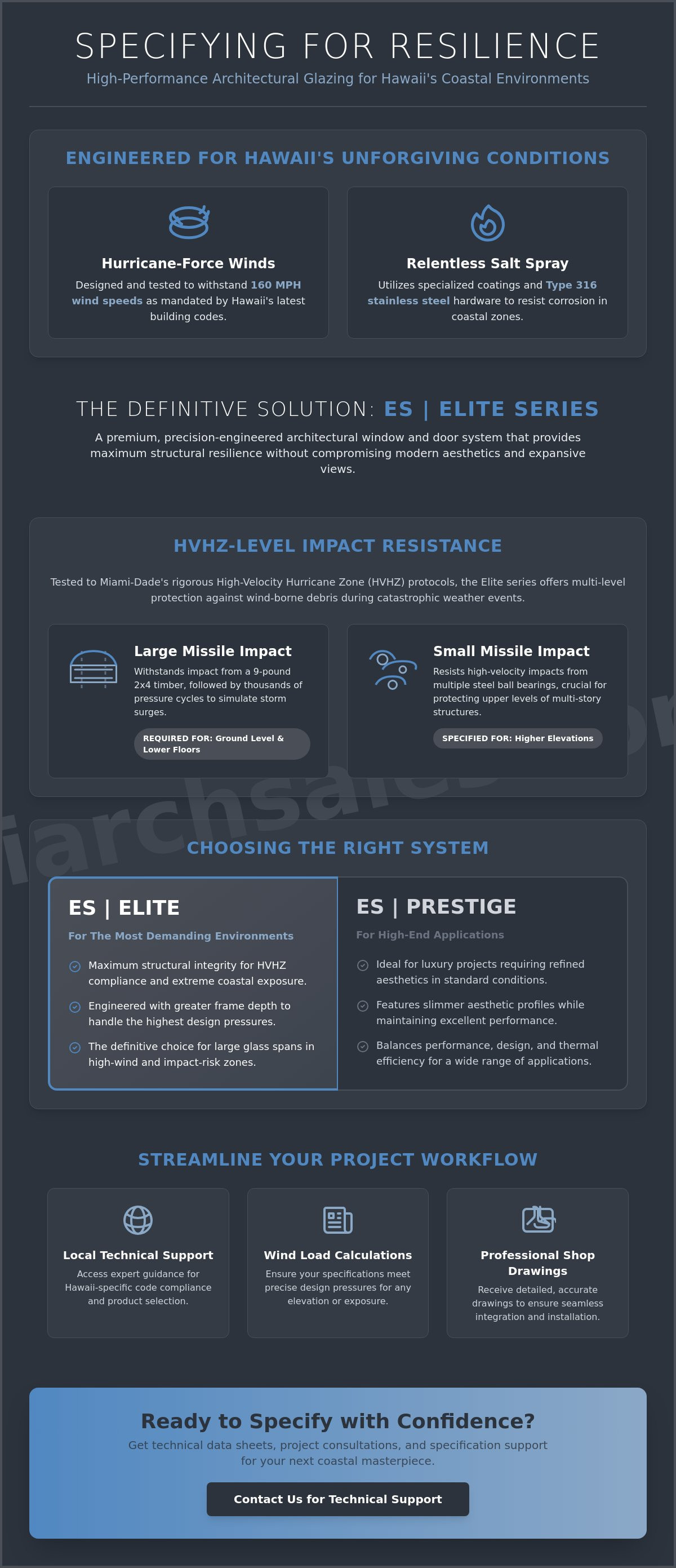
Can your current glazing specification withstand the 160 mph wind speed requirements mandated by Hawaii’s latest building codes while resisting the relentless corrosion of the Pacific shoreline? Designing for the islands requires a precise balance between aesthetic transparency and the brutal reality of salt spray and hurricane-force pressures. You understand that a standard window system simply won't suffice when a project sits within 500 feet of the coast. This is where the ES | Elite series establishes itself as the industry benchmark for high-performance architectural glazing.
This guide demonstrates why these systems are the definitive choice for Hawaii’s most demanding environments. We provide the technical clarity you need to distinguish the Elite line from the Prestige series, ensuring your project meets the most stringent HVHZ and impact-resistant standards. You'll gain a clear understanding of how these systems exceed Miami-Dade protocols and how to access local technical support to streamline your specification process. From corrosion-resistant Type 316 stainless steel hardware to high-velocity performance, we've outlined the essential data for your next coastal masterpiece.
Key Takeaways
• Learn how the ES | Elite series balances expansive architectural views with the structural integrity needed for Hawaii's high-wind environments.
• Gain a clear understanding of High-Velocity Hurricane Zone (HVHZ) compliance and impact ratings for large and small missile resistance.
• Compare the technical differences in frame depth and aesthetic profiles between the Elite and Prestige series to select the right specification.
• Discover specialized coating solutions and hardware requirements that protect architectural glazing from salt spray and tropical corrosion.
• Streamline your project workflow by utilizing local technical support for wind load calculations and professional shop drawings.
Understanding the ES | Elite Series: High-Performance Fenestration for Hawaii
The ES | Elite series represents a precision-engineered solution for projects where standard fenestration fails to meet rigorous structural and environmental demands. It's a premium architectural window and door system designed for maximum durability, reflecting the high-quality craftsmanship associated with specialists like MAD Fenster. Architects specify this line for its ability to handle high-pressure loads while maintaining the refined aesthetics required by modern design standards. This series is not merely a product; it's a structural component that defines the building's resilience against the Pacific's unique challenges.
In Hawaii, architecture often centers on the tension between expansive views and the necessity for a hardened building envelope. The ES | Elite line addresses this by providing high-performance frames that support large glass spans without compromising safety. This balance is critical for coastal properties facing high wind loads and potential impact events. Unlike standard systems, the Elite series provides the structural integrity necessary to meet the 160 mph wind speed requirements found in recent building code updates.
Thermal performance in the Elite series is achieved through advanced glazing options and sophisticated frame engineering. These features reduce solar heat gain, which is vital for maintaining energy efficiency in Hawaii's year-round tropical climate. By minimizing thermal transfer, the system helps lower cooling costs for large-scale developments and luxury residences. The aluminum construction ensures the system remains lightweight yet exceptionally strong, facilitating easier installation on multi-story projects.
The Aesthetic Advantage of the Elite Line
Modern Hawaiian architecture demands a seamless connection between interior spaces and the natural environment. The ES | Elite series features slim sightlines that minimize visual obstruction. These profiles accommodate large-format glass panels, facilitating the indoor-outdoor flow characteristic of luxury residential and high-end commercial builds. Finishes are fully customizable to resist high-UV exposure. This ensures that the system's appearance doesn't degrade under the intense tropical sun, maintaining the architect's original vision for decades.
Why Material Choice Matters in the Pacific
Material selection is the foundation of longevity in the Pacific's corrosive environment. The Elite series utilizes high-grade aluminum alloys, which provides a superior strength-to-weight ratio compared to traditional materials. This structural rigidity is essential for multi-story builds where wind pressures increase significantly with elevation. To ensure these components survive years of exposure, manufacturers rely on Salt Spray Testing Standards to validate the performance of coatings and hardware. Unlike standard commercial offerings, the hardware integrated into the Elite series is built to resist mechanical failure and surface pitting caused by constant salt air contact. This focus on material science ensures that every hinge, handle, and track remains functional in the most demanding salt-spray zones.
Technical Specifications: Impact Resistance and HVHZ Ratings
Engineering a building envelope in Hawaii requires adherence to some of the most rigorous structural standards in the United States. While the state does not utilize a singular High-Velocity Hurricane Zone (HVHZ) designation like Miami-Dade, the ES | Elite series is tested to those exact protocols. This ensures the system can withstand the 160 mph wind speeds now required by updated building codes across the islands. These specifications are not just voluntary benchmarks; they are essential for ensuring the long-term survival of the structure during Category 5 hurricane events.
Impact resistance is categorized into Large Missile and Small Missile ratings. Large missile testing involves a nine-pound 2x4 timber impacting the glass at high velocity, followed by thousands of pressure cycles to simulate storm surges. This rating is typically required for ground-level openings and lower floors in wind-borne debris regions. Small missile testing uses steel ball bearings and is often specified for higher elevations on multi-story builds. The ES | Elite series provides options for both, allowing architects to maintain a consistent aesthetic while varying the technical protection based on the specific elevation and risk profile of the opening.
Beyond impact, the system’s air, water, and structural performance metrics are critical for coastal exposure. High design pressures (DP) are necessary to prevent water infiltration during the horizontal rain common in tropical storms. For architects seeking to verify these metrics for a specific project, consulting with a local technical representative ensures all design pressures align with county-specific amendments and project-specific wind load calculations.
Meeting Hawaii’s Stringent Building Codes
Local building departments in Honolulu and Kihei increasingly scrutinize fenestration data during the permit approval process. The ES | Elite series meets and exceeds ASTM E1886 and E1996 testing standards, which are the primary benchmarks for island safety. Providing these certified test reports early in the design phase prevents costly delays during permitting. These standards confirm that the window assembly remains intact even after an impact, preventing the internal pressurization that often leads to roof failure during high-wind events.
Thermal Performance in a Tropical Climate
Managing thermal loads is a primary concern for LEED-certified projects and high-end residential builds. The ES | Elite series utilizes thermal breaks and high-performance glass spacers to reduce the cooling demand on the building's HVAC system. This engineering allows for expansive glazing without creating "hot spots" near the building perimeter. The Solar Heat Gain Coefficient (SHGC) measures the fraction of solar radiation admitted through a window, which is the primary metric for managing cooling loads under Hawaii’s year-round sun exposure. By selecting an optimized SHGC, designers can maximize visible light transmission while rejecting the infrared heat that drives up energy costs.
ES | Elite vs. ES | Prestige: Navigating the Selection Framework
Choosing between ES | Elite and ES | Prestige requires a nuanced understanding of structural requirements versus project scale. While both systems offer high-performance aluminum construction, they serve distinct architectural roles. The ES | Elite series typically provides deeper frame profiles and enhanced structural reinforcement. This makes it the preferred choice for openings that exceed standard height and width limitations. Prestige, conversely, offers a streamlined approach for projects with standard wind load demands where the massive reinforcement of the Elite line isn't structurally necessary.
Aesthetic refinement often drives the selection process. The Elite line is engineered for a minimalist luxury appearance, providing the strength to support massive glass spans with surprisingly slim sightlines. This structural capability allows for larger unobstructed views without the need for additional heavy mullions. When evaluating the cost-benefit ratio, consider the long-term value of the building envelope. Elite is an investment in structural resilience for the most vulnerable parts of a build, whereas Prestige provides a high-quality, cost-effective solution for less exposed elevations.
Strategic budget management often involves mixing and matching these lines within a single project. You don't need the maximum structural capacity of the Elite line on every elevation. By specifying Elite for the primary ocean-facing facades and Prestige for protected courtyards or inland-facing windows, you can optimize the budget without sacrificing brand consistency or finish quality. This hybrid approach ensures that money is spent where performance is most critical.
When to Specify ES | Elite
Specify this line for ultra-luxury residences and high-rise commercial towers where the environment is unforgiving. It's the standard for exposed coastal sites where salt spray and wind pressures are constant. Consider a cliffside project in Lahaina. In such a scenario, the extreme wind resistance and HVHZ compliance of the Elite series are non-negotiable. It handles large-span openings where the Prestige line might reach its structural limits, ensuring the glass remains secure under the highest design pressures found in Hawaii's wind-borne debris regions.
When ES | Prestige is the Practical Choice
Prestige is ideal for mid-range commercial projects and standard residential upgrades. It balances performance with tighter budget constraints. You'll find that it meets the requirements for many inland builds or shielded urban environments where the extreme specs of the Elite line are overkill. Check out our deep dive on ES | Prestige for more details to see how it fits your specific project needs. It remains a premier choice for architects who need reliable, impact-rated fenestration for standard opening sizes and typical tropical conditions.
Engineering for the Islands: Addressing Salt Spray and Tropical Wind Loads
Hawaii’s environment is among the most corrosive in the world for architectural materials. Standard architectural finishes often fail prematurely due to filiform corrosion and the constant abrasive action of wind-borne salt. The ES | Elite series utilizes high-performance coatings that meet AAMA 2605 standards, providing the highest level of resistance against UV degradation and salt-air pitting. Without these specialized coatings, aluminum frames can suffer from surface oxidation and finish delamination within just a few years of installation.
Pressure differentials during Pacific tropical storms create unique stresses on the building envelope. These storms don't just push against the glass; they create significant suction on the leeward side of the structure. The engineering behind the Elite series accounts for these rapid pressure cycles, ensuring that the gaskets and seals remain seated even under extreme fluctuating loads. This prevents the "pumping" action that often forces water past the secondary seals in standard residential windows.
Longevity is fundamentally tied to maintenance protocols. To maintain warranty compliance in coastal zones, regular rinsing of the frames and hardware is required to remove salt crusting. The Elite design facilitates this by incorporating accessible tracks and optimized weep systems that prevent stagnant salt water from sitting against critical seals. If you're designing a project in a high-exposure zone, contact our engineering team for a project-specific technical review of your glazing schedule.
Coastal Durability in Lihue and Kailua-Kona
Projects in Lihue or Kailua-Kona often sit within 1,000 feet of the shoreline, placing them in the highest risk category for hardware failure. In these zones, we specify Type 316 stainless steel components for all window and door assemblies. Unlike the Type 304 steel used in inland projects, Type 316 contains molybdenum to resist chloride-induced pitting. The Elite line’s design specifically prevents salt buildup in tracks and weep holes, which are common failure points where corrosion typically begins in lesser systems.
Wind Load Engineering for Island Topography
Urban Honolulu presents a different set of challenges related to island topography and building density. High-rise towers create "wind tunnel" effects, where air is forced between structures at increased velocities. The structural reinforcements available in the Elite line are designed to handle these localized pressure spikes. Building code requirements for design pressure typically increase by 20% to 50% as height transitions from the ground level to upper floors, necessitating higher PSF ratings to counteract increased velocity pressures at higher elevations. This ensures that the building envelope remains secure regardless of the floor count or the surrounding urban geometry.
Specifying ES | Elite: Technical Support for Hawaii Architects
Hawaii Architectural Sales serves as a specialized consultant rather than a simple distributor. We bridge the gap between high-level architectural intent and the physical realities of the job site. For the ES | Elite series, our role involves providing the data-driven support needed to secure permit approvals and ensure long-term performance. We provide comprehensive assistance with shop drawings and wind load calculations to ensure every opening meets the project’s specific design pressures. This technical oversight reduces the risk of specification errors that can lead to costly field modifications.
Our team understands that a successful build requires more than just a premium product. It requires a partner who can navigate the nuances of island logistics and local building department amendments. We facilitate the selection process by analyzing your glazing schedule against the environmental data discussed in previous sections. By identifying the exact performance requirements for each elevation, we help you optimize the project budget while maintaining the structural integrity of the building envelope. We also connect your team with certified installers who have a proven track record with high-performance aluminum systems.
Consultative Support for Design Professionals
We provide early-stage design assistance to help architects align their aesthetic goals with strict local code compliance. This includes providing access to detailed Revit models and CAD files for the ES | Elite series, allowing for seamless integration into your BIM workflow. To facilitate client approvals, we offer physical samples and full-scale mockups in Honolulu. These tangible resources allow developers to experience the finish quality and mechanical operation of the system before final specification. This level of support ensures that the design intent is preserved from the initial concept through to the final punch list.
Moving from Specification to Delivery
Logistics for the Hawaiian Islands require meticulous planning and transparent communication. In 2026, understanding current production schedules and shipping lead times is vital for project sequencing. We coordinate directly with general contractors to manage the delivery of custom Elite orders, ensuring that materials arrive on-site in alignment with the construction schedule. This proactive coordination minimizes storage costs and prevents installation delays. We handle the complexities of ocean freight and local drayage so your team can focus on the build. Contact Hawaii Architectural Sales for a technical consultation on your next project to begin the specification process and secure your project timeline.
Securing the Future of Hawaiian Architecture
Designing a resilient building envelope in Hawaii requires more than just high-quality products. It demands a partnership grounded in technical expertise and localized knowledge. The ES | Elite series provides the structural foundation necessary to meet the 160 mph wind speed mandates while offering the aesthetic refinement expected in modern luxury architecture. By integrating HVHZ-rated performance with specialized corrosion resistance, you ensure your project withstands the relentless Pacific environment for decades.
Hawaii Architectural Sales stands as your dedicated consultant throughout this process. As an authorized ES Windows distributor with over 40 years of experience in Hawaii's building industry, we provide the expert technical support required for complex architectural specifications. From initial wind load calculations to the final procurement phase, our team ensures your design intent is realized without compromising structural integrity. We understand the high stakes of island construction and provide the stability your project requires.
Take the next step in optimizing your building envelope. Request a Technical Quote for ES | Elite Systems and leverage our deep industry knowledge to streamline your project’s success. We look forward to supporting your vision for a more resilient and beautiful Hawaii.
Frequently Asked Questions
Is the ES | Elite series hurricane rated for all Hawaiian islands?
Yes, the ES | Elite series is engineered to meet or exceed the 160 mph wind speed requirements mandated by current building codes across all Hawaiian islands. These systems are tested to stringent Miami-Dade County protocols, which include large and small missile impact resistance. This makes them suitable for high-risk, wind-borne debris regions on Oahu, Maui, Kauai, and the Big Island.
What is the main difference between ES | Elite and ES | Prestige window systems?
The primary difference lies in the structural depth and reinforcement capabilities, as the ES | Elite series is designed for larger spans and higher design pressures. While both lines offer impact resistance, the Elite line features deeper frame profiles that support more massive glass panels. This allows architects to achieve more expansive views in exposed coastal locations where the Prestige line might reach its structural limits.
Can ES | Elite windows be customized for high-salt coastal environments in Maui?
Yes, these systems are specifically customizable for high-salinity zones by using AAMA 2605 coatings and Type 316 stainless steel hardware components. For projects in Maui coastal areas like Wailea or Kapalua, we specify these materials to prevent the pitting and oxidation common with standard finishes. This level of customization ensures the window assembly remains functional and aesthetically pleasing despite constant exposure to aggressive salt spray.
Do ES | Elite systems meet the energy code requirements for new construction in Honolulu?
ES | Elite systems are designed to meet or exceed the 2018 International Energy Conservation Code (IECC) requirements adopted by the City and County of Honolulu. By utilizing high-performance thermal breaks and low-E glazing, these windows achieve the U-factor and Solar Heat Gain Coefficient (SHGC) targets necessary for new construction. Our technical team assists in selecting the specific glass makeup required to satisfy your project's energy modeling goals.
Does Hawaii Architectural Sales provide installation for ES | Elite products?
Hawaii Architectural Sales does not provide installation services or general contracting; we serve as the dedicated manufacturers representative for the islands. Our role is to provide technical specification support, shop drawings, and logistics coordination. We maintain a network of certified local glazing contractors who are experienced in installing high-performance architectural systems and can provide competitive bids for your project.
Are CAD and BIM files available for architects specifying the Elite line?
Yes, we provide a full library of Revit models, CAD details, and technical spec sheets to streamline the design process for architects. These files allow for precise integration into your BIM workflow, ensuring that structural clearances and thermal performance data are accurately represented. You can access these resources through our technical team to assist with early-stage design or final construction documentation for your ES | Elite project.
What finishes are available for the ES | Elite series to prevent fading in Hawaii’s sun?
The ES | Elite series utilizes premium AAMA 2605 Kynar-based finishes that are specifically engineered to resist fading and chalking under intense UV exposure. These coatings are essential for Hawaii’s tropical climate, where standard powder coats often degrade within a few years. We offer a wide range of custom colors and textures that maintain their architectural integrity and finish warranty even in high-exposure coastal environments.
How does the cost of ES | Elite compare to other premium architectural window brands?
The ES | Elite series is positioned as a high-performance architectural solution that offers a superior strength-to-weight ratio and structural durability compared to standard commercial offerings. While costs vary based on customization and project scale, the value lies in the system's ability to meet extreme wind loads with slimmer sightlines. This engineering often reduces the need for secondary structural steel, providing a more efficient and aesthetically refined building envelope.