Hurricane Rated Windows in Hawaii: The Architect’s Technical Guide
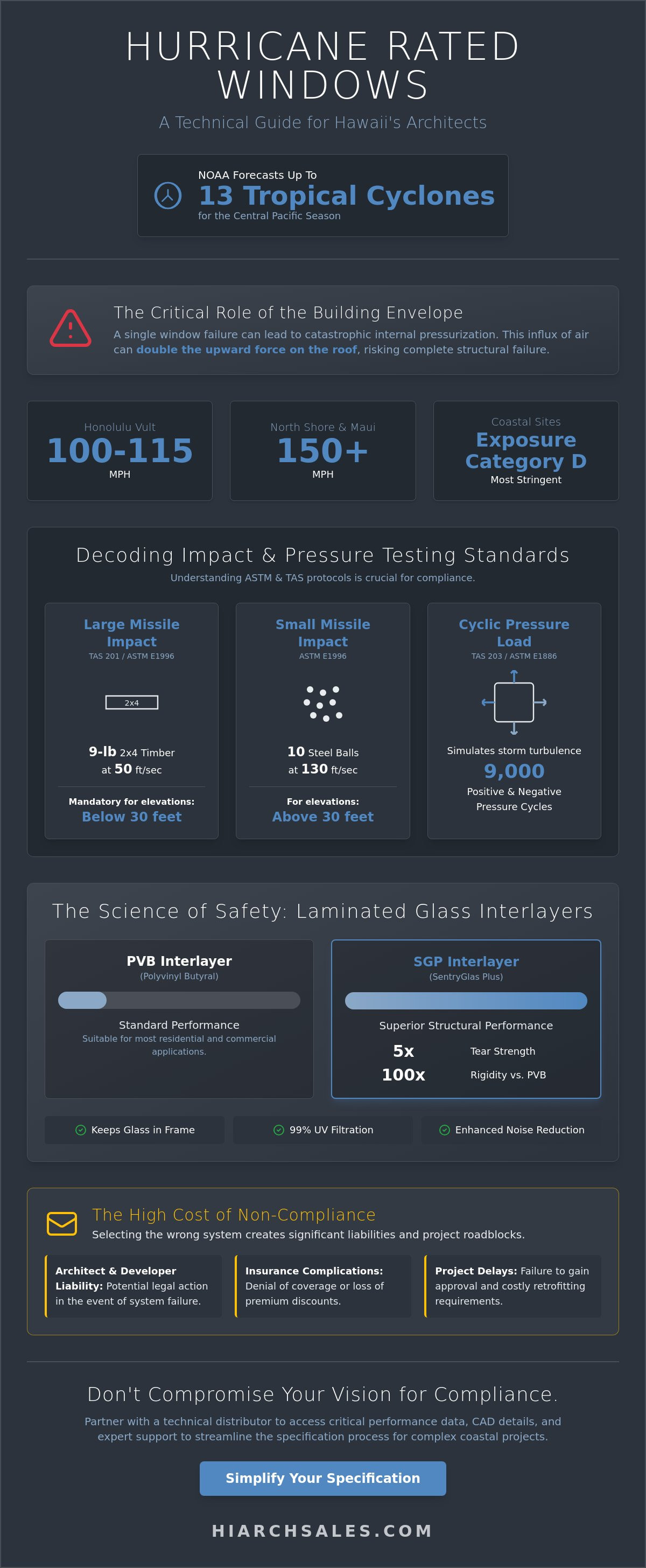
With NOAA forecasting up to 13 tropical cyclones for the 2026 Central Pacific season, the margin for error in building envelope design has never been thinner. For architects, the challenge goes beyond simple compliance; it involves protecting structural integrity against extreme wind loads while res...
With NOAA forecasting up to 13 tropical cyclones for the 2026 Central Pacific season, the margin for error in building envelope design has never been thinner. For architects, the challenge goes beyond simple compliance; it involves protecting structural integrity against extreme wind loads while resisting the relentless corrosion of Hawaii's high-salt environment. Specifying hurricane rated windows Hawaii projects can rely on requires a technical grasp of both local amendments to the 2018 International Building Code and the most recent testing protocols.
You shouldn't have to compromise your design vision to meet strict safety mandates. This guide provides the technical clarity needed to master these requirements, ensuring your projects remain both resilient and visually expansive. We will analyze the latest ASTM E1996-23 and TAS testing standards, evaluate the architectural possibilities of high-performance systems like ES Prestige, and show how a technical distribution partner simplifies the procurement of specialized materials for demanding coastal environments.
Key Takeaways
• Understand the localized Hawaii State Building Code amendments that govern the specification of hurricane rated windows Hawaii architects use for coastal developments.
• Differentiate between ASTM E1886, ASTM E1996, and TAS testing standards to ensure compliance with cyclic pressure and large missile impact requirements.
• Evaluate high-performance materials like advanced aluminum and robust steel systems to balance corrosive-environment durability with architectural intent.
• Overcome design limitations with advanced large-format glazing solutions, which provide expansive views while meeting High Velocity Hurricane Zone (HVHZ) standards.
• Leverage technical distribution partnerships to access critical performance data and CAD details that streamline the specification process for complex projects.
Understanding Hurricane Rated Window Requirements in Hawaii
Hurricane rated windows Hawaii architects specify are complex assemblies designed to maintain the building envelope's integrity during extreme weather events. These systems aren't merely standard units with thicker glass; they are engineered assemblies tested to withstand cyclic pressure differentials and large missile impacts from wind-borne debris. Unlike standard glazing, these units utilize high-strength laminated glass and reinforced frame profiles to ensure the aperture remains sealed even under intense stress.
There is a critical technical distinction between "impact-resistant" and "hurricane-proof" products. While the industry often uses these terms interchangeably, Hurricane-proof building standards clarify that no system is entirely indestructible. Instead, these windows are engineered to remain intact enough to prevent internal pressurization. If the building envelope is breached during a storm, the sudden influx of air can double the upward force on the roof. This often leads to catastrophic structural failure. The Hawaii State Building Code, currently based on the 2018 IBC and IRC with localized amendments for Honolulu and Lihue, mandates these systems to protect both life and property.
Hawaii Specific Wind Zones and Design Pressures
Designers must evaluate the Ultimate Wind Speed (Vult) for every specific project site. In Honolulu, these speeds typically range from 100 to 115 mph, while the North Shore or elevated regions on Maui and the Big Island can see requirements exceeding 150 mph. Coastal sites classified as Exposure Category D face the most stringent requirements due to unobstructed wind fetch over the ocean. Design Pressure (DP) ratings define the specific wind load a window system can withstand without structural failure, calculated based on Hawaii’s unique topography and the building's height.
The Consequences of Non-Compliance
Selecting non-compliant glazing creates significant liability for developers and architects alike. Beyond the structural risks during a tropical cyclone, insurance providers often require proof of certified impact-rated installations to provide coverage or premium discounts. In coastal regions like Virginia Beach, A Premier Home Inspection helps property owners verify these safety features and overall structural readiness. Project approval from local building departments depends on submitting precise technical documentation. This includes Florida Product Approvals or specific testing data that verify the system's performance in high-wind zones. Without this documentation, projects face costly delays and potential retrofitting requirements that can ruin a project's budget.
Impact Testing Standards: ASTM E1886, ASTM E1996, and TAS
Specifying hurricane rated windows Hawaii projects requires an understanding of the rigorous testing protocols that define performance. The ASTM E1996 standard provides the core specification for exterior windows, while ASTM E1886 defines the test method for cyclic pressure differentials. In many high-stakes architectural applications, technical professionals look to the Testing Application Standards (TAS) developed for Miami-Dade County. TAS 201 (large missile impact), TAS 202 (uniform static air pressure), and TAS 203 (cyclic wind pressure loading) represent the most stringent criteria available in the industry.
The distinction between Large Missile and Small Missile impact tests is vital for correct placement. The Large Missile test involves a nine-pound 2x4 timber shot at 50 feet per second; this is mandatory for glazing located within 30 feet of the ground. For elevations above 30 feet, the Small Missile test uses 10 steel balls fired at 130 feet per second. Choosing the correct missile level is a critical early step in the specification process to ensure both safety and cost-efficiency.
The Science of Laminated Glass Interlayers
The interlayer is the heart of an impact-rated system. Polyvinyl Butyral (PVB) is the standard for most residential and commercial applications. For projects requiring higher structural performance or larger glass spans, SentryGlas Plus (SGP) interlayers offer five times the tear strength and 100 times the rigidity of PVB. These interlayers keep the glass adhered to the frame even after a fracture occurs. This prevents wind-borne rain from entering the building and providing secondary benefits like noise reduction and 99% UV filtration.
Cyclic Load Testing Explained
Impact resistance is only half of the equation. After the impact test, the window must undergo 9,000 cycles of positive and negative pressure to simulate the "pumping" action of a sustained storm. This ensures that the frame, hardware, and glass-to-frame anchorage can withstand prolonged turbulence without failing. A window must pass both the initial impact and the subsequent cyclic testing to receive certification. If you need help verifying these technical certifications for your project, consulting with an architectural specialist can provide the necessary performance data.
Selecting Materials for High-Performance Building Envelopes
Aluminum is the technical benchmark for hurricane rated windows Hawaii professionals specify for luxury and commercial builds. Unlike vinyl, which often lacks the structural rigidity for large-format openings, aluminum systems provide the high moment of inertia required to resist extreme wind loads. In coastal areas like Kihei and Lahaina, the choice of material is inextricably linked to corrosion resistance. High-performance finishes, such as AAMA 2605 powder coatings, are essential for preventing oxidation in high-salt environments. These coatings ensure that the aesthetic integrity of the building remains intact despite the relentless sea spray.
While frame strength is paramount, the hardware is often the first point of failure in coastal environments. Specifying 316-grade stainless steel hardware isn't just a recommendation; it's a non-negotiable requirement for projects within five miles of the shoreline. This level of precision in material selection prevents the pitting and seizing of operable components that commonly plague standard window units in Hawaii.
ES | Prestige and ES | Elite: Aluminum Excellence
Hopes Steel Windows: Historic Elegance, Modern Strength
Architects working on historic Honolulu restoration projects often face a dilemma: maintaining period-correct aesthetics while meeting modern impact standards. Hopes steel windows solve this by utilizing solid hot-rolled steel. This material's inherent strength allows for ultra-slim sightlines that aluminum simply can't replicate. These systems are fully tested for hurricane zones, providing a "best of both worlds" solution for high-value architectural designs that require both elegance and extreme resilience.
For projects in the intense heat of Kailua-Kona, ES | uPVC solutions offer a distinct thermal advantage. While aluminum conducts heat, uPVC provides superior thermal breaks that significantly reduce cooling loads. When specified with the correct internal steel reinforcement, these systems achieve the necessary impact ratings while maximizing energy efficiency. This makes them an ideal choice for developers looking to balance LEED requirements with hurricane safety mandates.
Large Format Glazing and Operable Glass Walls
Many architects believe that meeting the requirements for hurricane rated windows Hawaii mandates requires sacrificing expansive views. This is a myth. Modern engineering allows for floor-to-ceiling glass that remains fully compliant with high-wind zone regulations. In coastal environments like Lahaina, the primary technical challenge is managing structural deflection. Large glass panels act like sails; the frame and anchorage must be stiff enough to prevent the glass from popping out of the rebate during a peak gust. Achieving this requires a precise calculation of the glass-to-frame ratio and the use of high-modulus sealants that maintain a bond under extreme pressure.
Specifying large-format systems involves more than just selecting a product from a catalog. It requires a deep understanding of how the building’s structural frame interacts with the glazing. When a storm hits, the building itself moves. Impact-rated systems must be able to accommodate this movement without losing their pressure seal. This is where the distinction between standard residential sliders and architectural-grade systems becomes evident. High-performance systems are designed with reinforced internal chambers that provide the necessary moment of inertia to resist bending even at heights exceeding ten feet.
Euro-Wall: Impact-Rated Folding and Sliding Walls
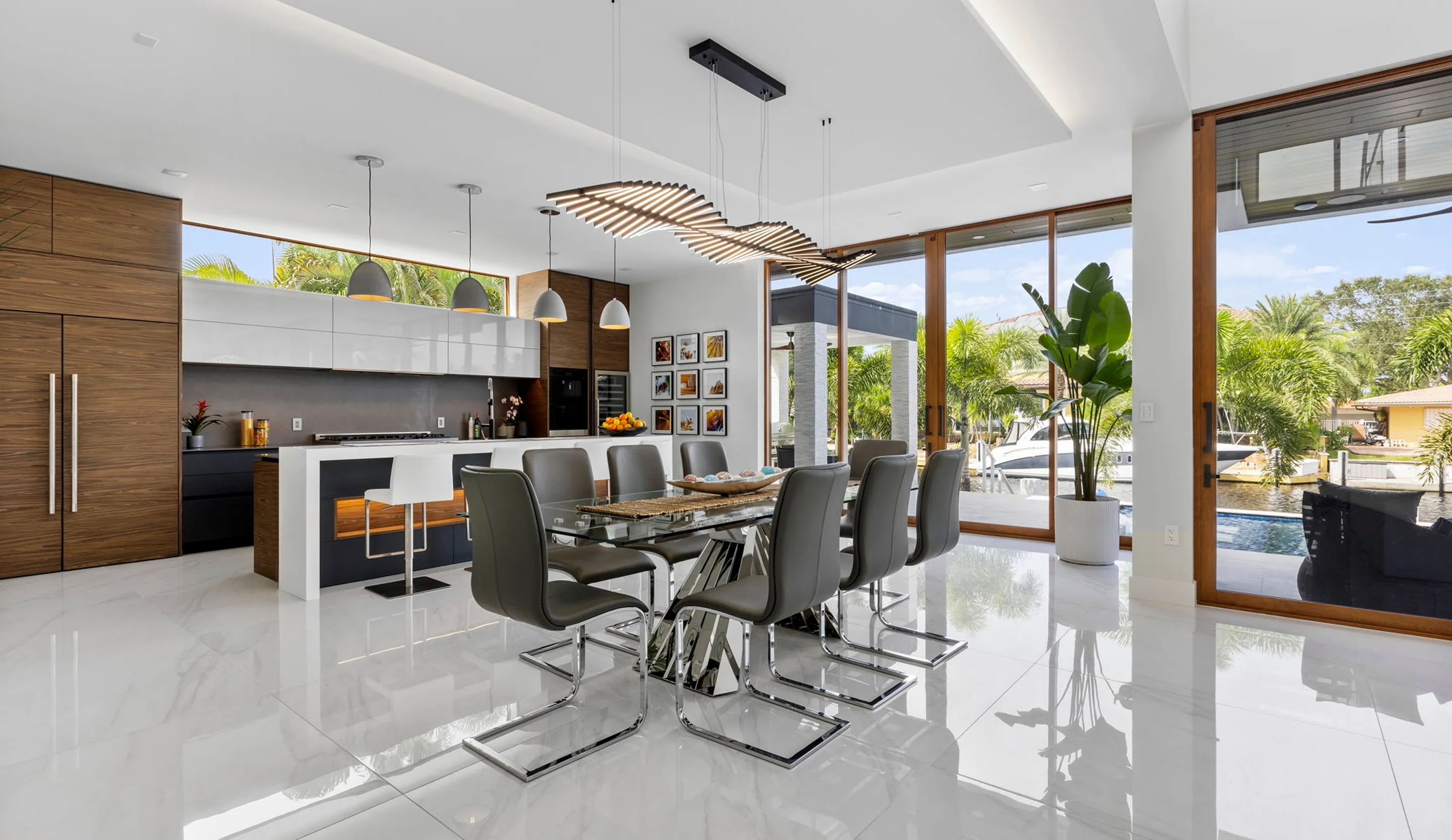
Euro-Wall systems are specifically designed to bridge the gap between architectural transparency and storm safety. Their folding glass walls meet High Velocity Hurricane Zone (HVHZ) standards, which are among the toughest in the nation. While multi-slide systems often handle higher design pressures due to their interlocking vertical stiles, Euro-Wall's folding technology has been refined to offer comparable performance. This allows for a seamless indoor-outdoor flow without the need for bulky shutters or visible reinforcement. These systems use specialized gaskets and heavy-duty hinges to ensure they remain airtight during the cyclic pressure changes of a tropical cyclone.
Pivot Doors and Specialty Openings
Integrating oversized pivot doors into a building facade requires specialized hurricane-rated hardware. These systems rely on multi-point locking mechanisms that secure the panel at several locations along the frame. This distributes the wind load evenly and prevents the door from bowing under pressure. Large glass panels must be carefully integrated into the overall facade system to ensure that the transition between fixed and operable units remains watertight. For architects designing projects with these massive spans, consulting with our technical team for specific CAD details and performance data is the most efficient way to ensure code compliance without compromising design intent.
Partnering with Hawaii Architectural Sales for Specification Support
Navigating the complexities of high-performance glazing requires more than a retail supplier. Retailers typically focus on volume and standardized residential units that often fall short of architectural requirements. In contrast, a manufacturer’s representative serves as a technical consultant throughout the design and construction phases. This partnership is vital for ensuring that hurricane rated windows Hawaii specifications meet the rigorous demands of the local environment. We bridge the gap between high-end manufacturers and local contractors, providing a direct line to engineering departments and specialized fabrication data.
Our role involves providing comprehensive technical support for architects. This includes delivering precise CAD details, thermal performance data, and structural calculations required for project approval. Logistics in Hawaii present unique challenges, but our distribution network ensures reliable delivery to projects across all islands, from Lihue to Kona. We handle the complexities of material transport so that project timelines remain on schedule. This level of logistical oversight is essential for large-scale developments where material delays can result in significant financial penalties.
Expert Consultation for the Building Envelope
A primary benefit of our service is the thorough review of window schedules for code compliance. We analyze your project's specific wind zone and exposure category to verify that every unit meets the necessary design pressures. Our team provides detailed guidance on selecting finishes and hardware that survive in high-salt environments. This proactive approach prevents common failures associated with under-specified components in coastal builds. To streamline your design process, you can access our Technical support for architectural products for immediate assistance.
Sourcing Premium Brands: ES, Euro-Wall, and Beyond
Hawaii Architectural Sales provides direct access to industry-leading systems, including the ES | Prestige and ES | Elite aluminum lines. We also facilitate the specification of high-performance ES | uPVC systems for projects requiring superior thermal breaks. Beyond standard windows and doors, our portfolio includes specialized architectural components like Kalwall translucent panels, Super Sky skylights, and Balco expansion joints. This curated selection allows architects to source a complete, high-performance building envelope from a single authoritative source. Consult with our experts for your next Hawaii project to ensure your build is both resilient and architecturally significant.
Advancing Architectural Resilience in the Central Pacific
Specifying the right building envelope components is a matter of both safety and design integrity. By mastering the nuances of ASTM E1996 and TAS testing, you can confidently integrate expansive views into Hawaii’s most exposed coastal sites. The availability of high-performance systems like ES Prestige and Euro-Wall ensures that hurricane rated windows Hawaii projects require don't have to look like industrial shutters. You now have the technical foundation to select materials that resist both cyclic wind pressures and the aggressive corrosion of the islands.
Since 1985, Hawaii Architectural Sales has served as a steady partner for the region’s design community. We provide expert technical support for architects and engineers, bridging the gap between complex manufacturing and local code enforcement. As an authorized distributor for premium systems, we're ready to help you navigate your next building envelope challenge. Request a Technical Consultation with Hawaii Architectural Sales today to secure the performance data and CAD details your project demands. We look forward to supporting your vision for a more resilient Hawaii.
Frequently Asked Questions
Do I need hurricane rated windows in Honolulu?
Yes, current Honolulu building codes require impact-resistant glazing in wind-borne debris regions where design wind speeds exceed specific thresholds. These requirements apply to both new construction and significant renovations to ensure structural integrity during tropical cyclones. Specifying hurricane rated windows Hawaii projects can depend on ensures compliance with these localized amendments to the 2018 International Building Code.
What is the difference between impact-resistant glass and hurricane shutters?
Impact-resistant glass provides passive protection that is always active, whereas hurricane shutters are an active system requiring manual or mechanical deployment before a storm. Laminated glass systems maintain the building’s aesthetic and view while providing 24/7 security against both weather and forced entry. Shutters often detract from the architectural intent and may fail if not deployed correctly or if hardware corrodes over time.
Can hurricane windows be used for soundproofing in busy city areas?
Yes, the thick laminated interlayers used in impact-rated glass significantly improve the window's acoustic performance. These systems typically achieve higher Sound Transmission Class (STC) ratings than standard dual-pane glass. This makes them an excellent choice for projects in busy Honolulu corridors where both storm protection and noise reduction are required for occupant comfort.
How do I know if a window system is HVHZ rated?
A window system is HVHZ (High Velocity Hurricane Zone) rated if it possesses a valid Miami-Dade Notice of Acceptance (NOA) or a Florida Product Approval for HVHZ. These certifications confirm the unit has passed TAS 201, 202, and 203 testing. Always verify the manufacturer's technical documentation to ensure the specific size and configuration of the window meet the required design pressures for your site.
Are there energy efficiency benefits to hurricane-rated windows?
Yes, hurricane-rated windows offer substantial energy efficiency benefits through improved thermal insulation and reduced air infiltration. The heavy lamination and low-E coatings used in systems like ES Prestige help manage solar heat gain in Hawaii’s intense sun. These units often contribute to lower cooling costs and help projects meet stringent energy codes or LEED certification goals.
What maintenance is required for windows in Hawaii’s high-salt environment?
High-salt environments require a monthly fresh-water rinse of all exterior surfaces and hardware to prevent salt crystallization and pitting. You must also lubricate all moving parts, such as hinges and rollers, with a high-quality marine-grade silicone spray. Using 316-grade stainless steel hardware in systems like ES Elite reduces the frequency of part failure but does not eliminate the need for regular cleaning.
Can I get large folding glass walls that are hurricane-rated in Hawaii?
Yes, you can specify large folding or sliding glass walls that meet rigorous hurricane rated windows Hawaii standards. Systems like Euro-Wall are specifically engineered to provide expansive openings while maintaining HVHZ certification. These architectural-grade solutions allow for floor-to-ceiling glass without the need for additional storm shutters or structural reinforcements that might obstruct the view.
What is the standard lead time for premium architectural window systems?
Standard lead times for premium architectural window systems typically range from 12 to 20 weeks depending on the complexity of the order. Custom finishes or specialized glass interlayers can extend this timeline further. We recommend engaging with a technical distributor early in the design phase to align procurement schedules with the project's construction milestones and avoid potential delays.