The glass package alone does not determine which windows perform best in Kona. To choose the best windows for Kona weather, consider window type, coastal exposure, and the way sunlight and rain affect your building. Hawaii Architectural Sales offers windows with double- or triple-glazing options, th...
The glass package alone does not determine which windows perform best in Kona. To choose the best windows for Kona weather, consider window type, coastal exposure, and the way sunlight and rain affect your building. Hawaii Architectural Sales offers windows with double- or triple-glazing options, thermal breaks, and superior sealing systems, designed for insulation and energy efficiency.
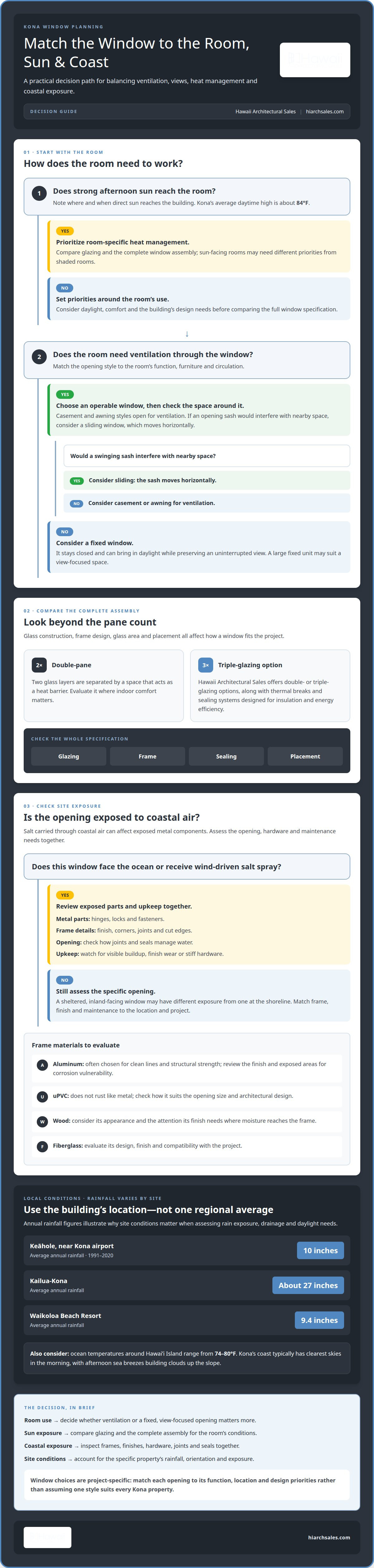
Local rainfall also varies: Keāhole receives an average of 10 inches of rain per year (1991-2020), while Kailua-Kona receives about 27 inches per year. That difference makes it useful to consider the conditions at the specific building site, not just the broader Kona climate.
Choosing windows means balancing comfort, durability, and views. Consider the room’s sun exposure, whether it needs ventilation, and how close the building is to the coast. Then compare the complete window system, including its glazing, frame, and sealing. These factors help you identify options suited to your project in Kona and elsewhere in Hawaii, including Honolulu, Lihue, Kihei, and Lahaina.
Key Takeaways
• Compare window types by how their glass construction can help manage heat and support the building’s design needs.
• Assess coastal exposure when weighing window materials, so durability remains part of the decision alongside appearance.
• Use Kona’s changing rainfall and cloud patterns to consider daylight, rain exposure, and the conditions at the specific site.
• Compare project needs with high-performance product options from Hawaii Architectural Sales when narrowing down window choices.
For Kona homes, compare window operation and glass construction before selecting a style. The best windows for Kona weather balance daylight, ventilation, and heat management. Kona’s average daytime high is about 84°F, so consider how each room handles warmth and sun exposure. A window facing strong afternoon sun may need different priorities from one shaded by the building.
Double-pane windows use two glass layers separated by a space that acts as a heat barrier. That construction makes them a practical option to evaluate for rooms where indoor comfort matters. Compare the full window assembly, not just the number of panes. Frame design, glass area, and placement all affect how the window fits the project.
Operable and fixed windows serve different purposes. Casement and awning styles open to provide ventilation, while fixed windows stay closed and can preserve an uninterrupted view. Sliding windows move horizontally, which can suit openings where a swinging sash would interfere with nearby space. For example, a fixed window can frame a coastal view, while an operable unit can serve an adjacent room where ventilation is a priority.
Choose by room and orientation. First, note where and when direct sun reaches the building. Next, identify rooms where opening windows supports the design. Then compare fixed and operable units against those needs. A bedroom may prioritize ventilation, while a living area may prioritize expansive glazing and views. These are project-specific design decisions, not one-size-fits-all rules.
Consider how each window type supports the building’s use. A large fixed unit can bring in daylight without an opening sash. An operable window provides an option for ventilation, but its location should suit furniture and circulation. Match each opening to its function, then compare glazing configurations as part of the complete specification. This approach helps narrow the options without assuming one style suits every Kona property.
Ocean temperatures around Hawaiʻi Island range from 74-80, adding a local climate consideration alongside sun exposure when weighing ventilation, glazing, and room comfort.
2. Durable window materials for salty coastal air
Salt carried through coastal air can affect exposed metal window components. That makes material selection important for Kona properties near the ocean. Aluminum, uPVC, wood, and fiberglass each call for different evaluation. Compare the frame, finish, fasteners, and moving hardware together. A durable frame paired with vulnerable hardware may still require more upkeep.
Aluminum frames are often chosen for their clean lines and structural strength. In salty air, the finish matters because exposed or damaged areas may be more vulnerable to corrosion. Review corners, joints, and cut edges in the design details, and consider whether hardware is protected from direct exposure. These checks help assess the complete assembly, not just the visible frame.
uPVC does not rust like metal, making it another material to consider for coastal projects. Review how the frame suits the opening size and architectural design. Wood offers a different appearance, but its finish needs attention where moisture reaches the frame. Fiberglass is another frame category to evaluate. Compare its design, finish, and compatibility with the project rather than assuming every material performs the same.
Use a practical review before choosing. First, map which windows face the ocean or receive wind-driven salt spray. Next, identify exposed metal parts, including hinges, locks, and fasteners. Then examine how frame joints and seals manage water at the opening. A sheltered inland-facing window may face different exposure than one facing the shoreline. Plan inspection and cleaning around visible buildup, finish wear, or stiff hardware. Hawaii’s coastal conditions make these details relevant to long-term upkeep, but no frame material removes the need to assess exposure. Match each material to the building’s location, design priorities, and maintenance approach. This gives architects and owners a clearer basis for selecting windows suited to coastal air.
The Kona and Kohala coasts are among the clearest-sky areas on Hawaiʻi Island. The leeward Kona and Kohala coasts receive about 9-18 inches of rain annually, while the Kohala coast has its highest beach-weather rating in September. These conditions add useful regional context when evaluating window exposure, but they do not replace checking each opening for salt spray, moisture, and maintenance needs.
3. Seasonal rainfall and cloud patterns
Kona’s rainfall varies by location and season, so window decisions should reflect the building site. Keāhole, near Kona airport, receives an average of 10 inches of rain per year for 1991-2020. Kailua-Kona receives about 27 inches per year, while Waikoloa Beach Resort averages 9.4 inches per year. These contrasts show why one coastal rainfall figure cannot represent every project. Consider exposure, drainage, and daylight needs at the specific property.
How does weather differ between Kona’s coast and higher elevations? The Kona coast typically has its clearest skies in the morning, while afternoon sea breezes build clouds up the slope. The trade-wind inversion over Hawaiʻi Island is usually between 5,000 and 7,000 feet, shaping how far those clouds rise.
Seasonal patterns also matter. Across Hawaiʻi Island, average rainfall is 8.4 inches in March and 4.3 inches in June. Average cloud cover is 57% in March and 41% in September. These island-wide figures help frame seasonal variation, but they are not site-specific measurements for every Kona home. Summer can also bring occasional thunderstorms to the Kona coast.
4. What are average monthly temperatures in Kona?
Kona’s average daytime high is about 84°F, a useful baseline for window planning. It describes daytime conditions, not indoor temperatures or overnight comfort. A monthly average can also hide differences between a sunny room and a shaded one. For design, pair the climate baseline with the building’s orientation, nearby shade, and window placement. A west-facing living room, for example, may receive stronger afternoon sun than a shaded hallway. That difference can shape glazing and shading decisions, even within one property.
Use the 84°F average as context, rather than treating it as a complete specification. Window performance depends on how sunlight reaches each opening and how the room is used. A bedroom, office, and shared living space can have different priorities. In a bedroom, occupants may value controllable ventilation. In an office, glare on a screen may matter more, often prompting property owners to complement glazing with custom coverings from specialists like The Window Valet. Compare those needs room by room before finalizing the window schedule.
For a monthly design review, focus on how each space is used rather than relying on a single climate figure. List the rooms, note their exposure, and record when direct sun affects them. Then consider whether each opening should prioritize daylight, views, ventilation, or reduced solar gain. A shaded dining area may suit a larger glazed opening, while a sun-exposed workspace may need more attention to glare. These are design comparisons, not claims about a specific month’s temperature.
Kona’s daytime high does not tell you how much a room warms after sunlight passes through its windows. Glass area, orientation, exterior shade, and ventilation also influence indoor comfort. Review these factors alongside local temperature context. Consider how the window layout supports comfort during the room’s busiest hours, then compare options against that use. This practical process turns climate information into project decisions without treating one average as a month-by-month forecast. For an accurate specification, align temperature context with the building’s actual exposure and room functions.
Hawaii Architectural Sales: ES | Prestige
Hawaii Architectural Sales offers ES | Prestige, ES | Elite, and Hopes window options to compare against your project’s design priorities. Consider each opening’s exposure, intended use, daylight needs, and material requirements. The company provides high-value solutions, durable and efficient products, and custom architectural solutions for projects in Kona and across Hawaii, including Kailua-Kona, Honolulu, Lihue, Kihei, and Lahaina. Contact Hawaii Architectural Sales to discuss window options for your project.
Turn your window criteria into a project decision
Choosing the best windows for Kona weather starts with setting clear requirements for each opening. Record what matters most in every room, such as daylight, views, ventilation, or material selection. Then compare window options consistently across the project. This gives design discussions a practical basis and keeps each selection tied to the building’s intended use.
If you’re ready to move from climate considerations to product options, Hawaii Architectural Sales offers ES | uPVC as part of its window selection. The right next step is to connect your project priorities with the available options and discuss how they fit your design direction.
Choose window configurations according to each room’s function and exposure. A fixed unit can suit a view-focused space, while an operable window may better serve a room where ventilation is a priority. A living area and a bedroom, for example, can have different opening needs. Compare glazing, frame, and operation together, then match each opening to its intended use.
What Are the Most Durable Window Materials for Coastal Homes?
Durability depends on the complete window assembly and its exposure, not the frame alone. Review visible finishes, joints, and moving hardware for salt buildup or wear. Regular care also helps maintain window condition: a Hawaii cleaning recommendation is every 2-3 months, especially for homes near the coast. Include that upkeep in the project’s maintenance plan.
How do Kona weather conditions vary by season?
Kona’s rainfall and cloud cover change across the year, and elevation affects local cloud patterns. For window planning, consider how a room performs under both clear and cloudy skies. A workspace may need consistent daylight, while another room may benefit from adjustable shading. Assessing these needs seasonally can make the design more responsive to daily use.