Cleaning and Maintenance for Kalwall Systems: Care Tips
More aggressive cleaning isn’t automatically better for a Kalwall system. A sound approach to cleaning and maintenance for Kalwall systems relies on rainfall to help clear exterior sediment, with periodic washing using normal detergents as needed. For powder-coated surfaces, use neutral washing agen...
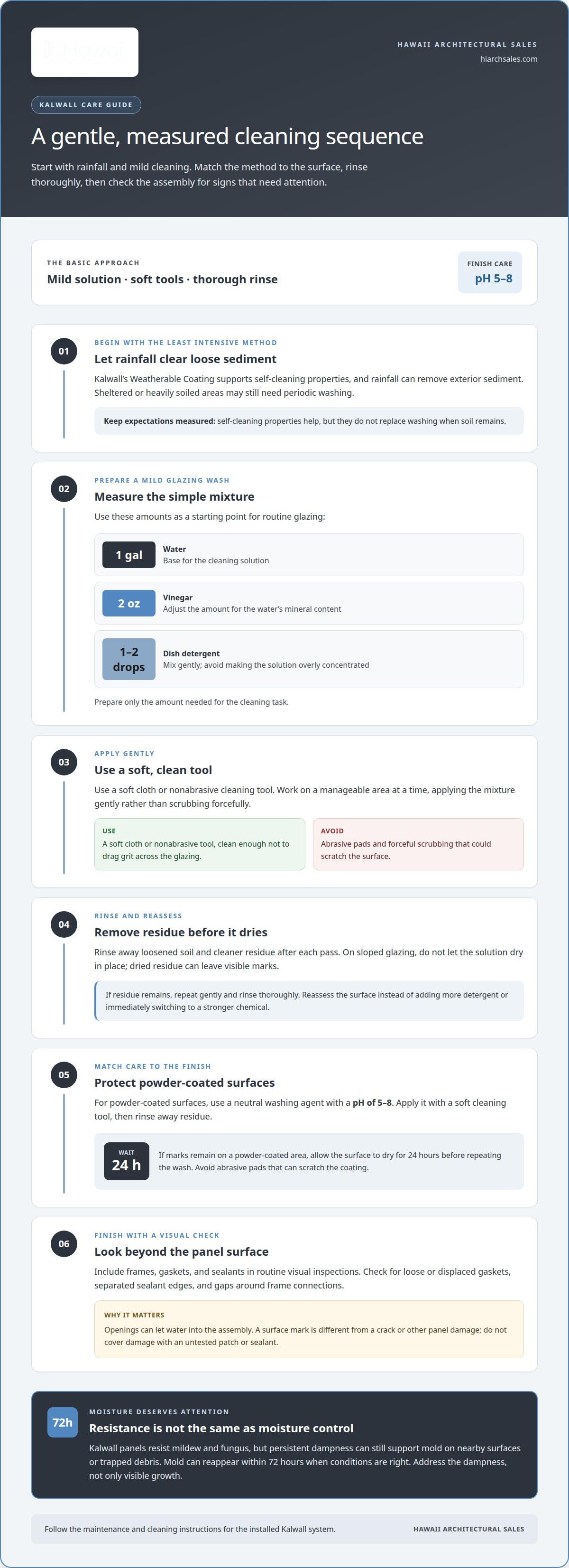
More aggressive cleaning isn’t automatically better for a Kalwall system. A sound approach to cleaning and maintenance for Kalwall systems relies on rainfall to help clear exterior sediment, with periodic washing using normal detergents as needed. For powder-coated surfaces, use neutral washing agents with a pH of 5-8 to care for the finish.
It’s understandable to want Kalwall systems to stay clean and bright without damaging their finish. The right care depends on the surface and its exposure, while managing moisture helps prevent persistent dampness. This guide explains how to clean glazing, care for finishes, and monitor moisture on vertical and sloped structures.
You’ll also learn what self-cleaning properties can and can’t do, when routine washing helps, and why persistent dampness deserves attention. The goal is a practical maintenance approach that supports the appearance and performance of Kalwall assemblies without unnecessary or harsh cleaning.
Key Takeaways
• Use a simple glass-cleaning mixture of water, vinegar, and a small amount of dish detergent to clean glazing without making the solution overly concentrated.
• Kalwall panels resist mildew and fungus, but moisture can still support mold growth. Address damp conditions promptly because mold can reappear in 72 hours when conditions are right.
• Account for orientation when planning care: rainfall helps clear sediment from exterior surfaces, while periodic washing can help maintain cleanliness.
• Match finish care to the surface and soil level, and use a measured, cautious approach when heavier cleaning is needed.
Effective cleaning and maintenance for Kalwall systems starts with matching the cleaning method to the finish. For powder-coated surfaces, use neutral washing agents with a pH of 5-8. Apply the solution with a soft cleaning tool, then rinse away residue. Avoid abrasive pads that can scratch the coating. If marks remain, repeat cleaning after 24 hours. That interval allows the surface to dry before another wash.
Kalwall’s Weatherable Coating supports the panels’ self-cleaning properties and helps resist ultraviolet and heat exposure. Rainfall can remove exterior sediment, but sheltered or heavily soiled areas may need washing. Kalwall panels also resist acids, alkalis, and common solvents, but that doesn’t mean harsh chemicals are suitable for cleaning. Start with a mild detergent and use a more intensive method only if deposits remain.
Include frames, gaskets, and sealants in routine visual inspections. Look for loose or displaced gaskets, separated sealant edges, and gaps around frame connections. Remove surface dirt with a suitable mild cleaner and keep abrasive tools away from coated finishes. Address visible separation promptly, since openings can let water into the assembly.
Damaged Kalwall panels need assessment to determine whether repair or replacement is appropriate. A surface mark is different from a crack or other panel damage. Don’t cover damage with an untested patch or sealant. The repair approach should account for the panel construction and the condition of the surrounding frame, gasket, and sealant.
A consistent plan for cleaning and maintenance for Kalwall systems also distinguishes routine soil from stubborn deposits. Begin with mild detergent, soft application, and thorough rinsing. If a powder-coated area still shows marks, wait 24 hours before repeating the wash. Avoid mixing cleaners or applying solvents simply because Kalwall resists common solvents. Controlled cleaning protects the finish while addressing visible dirt.
For additional finish context, Kalwall Corrosion Resistant Finish (KCRF™) is formulated per AAMA 2605 and meets or exceeds the performance requirements for AAMA 2604.
Glass cleaning solution
For routine glazing, use a mild mixture of water, vinegar, and dish detergent. Combine 1 gallon of water with 2 ounces of vinegar. Adjust the vinegar amount for the water’s mineral content. Add 1-2 drops of dish detergent, then mix gently. This low-detergent solution helps lift ordinary dirt without leaving excess soap behind. Prepare only the amount needed for the cleaning task.
To clean Kalwall panels without scratching or damaging them, use a soft cloth or nonabrasive cleaning tool. Apply the solution gently rather than scrubbing forcefully. Clean a manageable area at a time, then rinse away loosened soil and cleaner residue. Avoid abrasive pads and tools that could scratch the surface. Use a clean tool to avoid dragging grit across the glazing.
Mineral deposits and airborne dirt can make one panel look cloudier than another. Start with a mild mixture and assess the surface as you clean. If residue remains, repeat gently rather than adding detergent or immediately switching to a stronger chemical. Rinse thoroughly after each pass. On sloped glazing, don’t let the solution dry in place, since dried residue can leave visible marks.
For official instructions, consult Kalwall’s maintenance and cleaning documentation for the installed system. Keep the relevant guidance with the project’s building records so cleaning teams can follow it consistently. Kalwall-specific instructions matter because the glazing, finish, and assembly details determine suitable care. If the documentation specifies a different method or cleaner, follow it instead of a general glass-cleaning approach.
Plan cleaning according to the glazing’s condition. Rain may clear loose exterior sediment, while sheltered areas can retain dirt. A gentle wash suits routine soil; persistent marks call for careful reassessment, not abrasive force. Use the diluted vinegar mixture as a starting point and maintain the same soft technique across the area. This helps keep the appearance consistent while reducing avoidable surface wear.
Moisture control and mold prevention
Kalwall panels resist mildew, fungus, corrosion, and termites. That resistance doesn’t remove the need to control moisture around the assembly. Persistent dampness can still support mold on nearby surfaces or trapped debris. After cleaning, mold can reappear within 72 hours when conditions are right. Removing visible growth alone won’t correct an ongoing moisture source.
Inspect accessible interior and exterior surfaces, including panel edges and frame joints. Look for water tracks, recurring droplets, staining, or visible changes to panels. Condensation often appears as moisture spread across a surface, while a leak may leave a localized track or mark. Compare signs with nearby joints, gaskets, and sealant, and note whether they appear after rainfall or during humid indoor conditions.
Condensation forms when moist air meets a cooler surface. Indoor humidity, temperature differences, and airflow can affect where moisture collects. For example, droplets that repeatedly appear on an interior panel may indicate condensation rather than rain entry. Improve indoor airflow where practical and address sources of excess moisture. Monitor the area to see whether dampness returns.
If you find a leak, trace visible water marks toward nearby panel edges and connections. Water can travel before appearing indoors, so a stain may be away from the entry point. Check for damaged panels or separated sealant during the inspection. Record where and how each sign appears, then compare it after wet weather.
For mold prevention, focus on keeping affected areas dry after cleaning. Remove standing moisture and reduce conditions that keep surfaces damp. If growth returns within 72 hours, treat that recurrence as a sign to investigate moisture sources again. Kalwall’s resistance to mildew and fungus is a material property, not a substitute for managing condensation, leaks, and damp surroundings.
Kalwall's daylighting systems can improve solar heat gain control by as much as 900% compared with traditional insulated glass units. That performance concerns solar heat gain control; it should not be treated as evidence that moisture has been removed or that a leak has been corrected. Continue to assess damp areas on their own signs, and confirm that surfaces remain dry after any moisture source is addressed.
Vertical and sloped glazed structure care
Vertical walls and sloped glazing shed water differently, so cleaning should reflect each surface’s exposure and visible soil. Plan washing and inspection around the assembly’s condition, rather than relying on a fixed calendar alone.
Cleaning and Inspection Frequency
Set cleaning and inspection frequency according to visible dirt, rainfall exposure, and signs of moisture or damage. Include the surfaces in routine building care, then clean when sediment or deposits remain. Sheltered sections may retain dirt that exposed faces shed. On sloped assemblies, note where residue gathers. This focuses maintenance on the areas that need attention.
Safety During High-Level Cleaning
High-level cleaning requires an access plan suited to the structure and cleaning task. Kalwall states that its Skyroofs and Skylights exceed OSHA 1910.22 without additional protection such as external screens or fixed railings. This statement applies to those systems, not automatically to every glazed roof or high wall. Kalwall roof and canopy maintenance can be carried out by staff walking across the man-safe roof and canopies.
For vertical structures, consider how to reach the cleaning area without leaning tools against the panels. Choose a method that keeps the tool controlled and avoids impacts to glazing, frames, and joints. For sloped structures, distinguish walkable man-safe roof areas from other surfaces. Don’t assume every roof panel is intended for foot traffic. The assembly type and access conditions matter.
Focus inspections on surface condition and access. Note areas with persistent dirt, visible damage, or water marks, then prioritize them during maintenance. If the task involves a roof or canopy, follow the applicable Kalwall system information and the building’s access procedures. This keeps cleaning decisions specific to the structure, rather than treating vertical walls and roof glazing as interchangeable.
Hawaii Architectural Sales supplies Kalwall systems for projects requiring translucent daylighting. If you’re planning a new assembly or reviewing options, Kalwall may suit the project. The right approach depends on the structure, its orientation, and the project’s daylighting goals.
Hawaii Architectural Sales provides specialized support for these high-performance translucent panels, ensuring you receive the appropriate guidance for your specific installation. Proper product selection is a key part of defining glazing requirements and considering ongoing maintenance needs.
For a Kalwall project discussion, share the structure’s intended application and whether it will be vertical or sloped. This context helps focus the conversation on the relevant system. Contact Hawaii Architectural Sales to discuss your project.
Plan for the building’s next phase
Maintenance planning can inform decisions beyond the next cleaning cycle. Record recurring issues, note which surfaces collect soil, and use those observations when reviewing future building needs. These notes provide a practical reference for facility teams and project discussions, especially when assessing an existing assembly alongside proposed upgrades.
A clear record also helps distinguish routine care from a change in project requirements. If the building’s daylighting needs or design priorities shift, consider how Kalwall fits the broader vision. Hawaii Architectural Sales also supplies ES | Prestige, ES | Elite, and ES | uPVC, giving project teams additional options to discuss. The right direction depends on the project’s goals and the role each system needs to serve.
Use what you’ve learned about cleaning and maintenance for Kalwall systems to make informed decisions about the next stage of your project. Discuss your project with Hawaii Architectural Sales and take the next step with a clearer plan.
Frequently Asked Questions
What cleaning products and methods are recommended for Kalwall translucent panels?
Use a mild cleaning solution and a nonabrasive method suited to the panel surface. Before wet cleaning, carefully remove loose grit so it isn’t dragged across the panel. Work in small areas, then rinse away loosened soil. For example, clean a dusty section before tackling a spot with adhered residue. Follow the maintenance guidance for the specific Kalwall assembly if it gives different instructions.
Can pressure washers or abrasive cleaners be used on Kalwall systems?
Avoid pressure washers and abrasive cleaners unless Kalwall’s applicable instructions explicitly permit them. High-pressure spray can force water toward panel joints, while abrasive products or tools can mark surfaces. For routine soil, use a soft, nonabrasive tool and apply it gently. If a deposit remains, don’t compensate with more pressure or scrubbing; consult the system’s maintenance guidance for an appropriate next step.