Commercial glazing contractor support in Lihue for projects
Commercial glazing contractor support in Lihue helps project teams assess glazing products, align selections with design and performance goals, and coordinate product decisions. Hawaii Architectural Sales supplies architectural systems for projects in Lihue and across Hawaii, including Honolulu, Kai...
Commercial glazing contractor support in Lihue helps project teams assess glazing products, align selections with design and performance goals, and coordinate product decisions. Hawaii Architectural Sales supplies architectural systems for projects in Lihue and across Hawaii, including Honolulu, Kailua-Kona, Kihei, and Lahaina. The right choice depends on the building’s use, openings, and documented requirements.
For architects, engineers, and project teams, glazing decisions need to work in both the drawings and the finished building. Product selection, system type, and coordination all affect how well the result meets its intended purpose.
This guide explains the commercial and industrial glazing support available for projects in Lihue and across Hawaii. It outlines common system categories, the factors that shape selection and project costs, and how to approach the next step. You’ll also see where Hawaii Architectural Sales fits, with product options for a range of architectural needs.
Key Takeaways
• Understand the commercial and industrial glazing support relevant to different project needs in Lihue.
• See how project coordination can extend across Hawaii and what factors shape that support.
• Use practical criteria to assess whether a glazing contractor’s capabilities align with your project.
• Learn which details about service areas and contact information matter when planning a local project.
• Explore how experience, reviews, and portfolio examples can inform a more confident comparison.
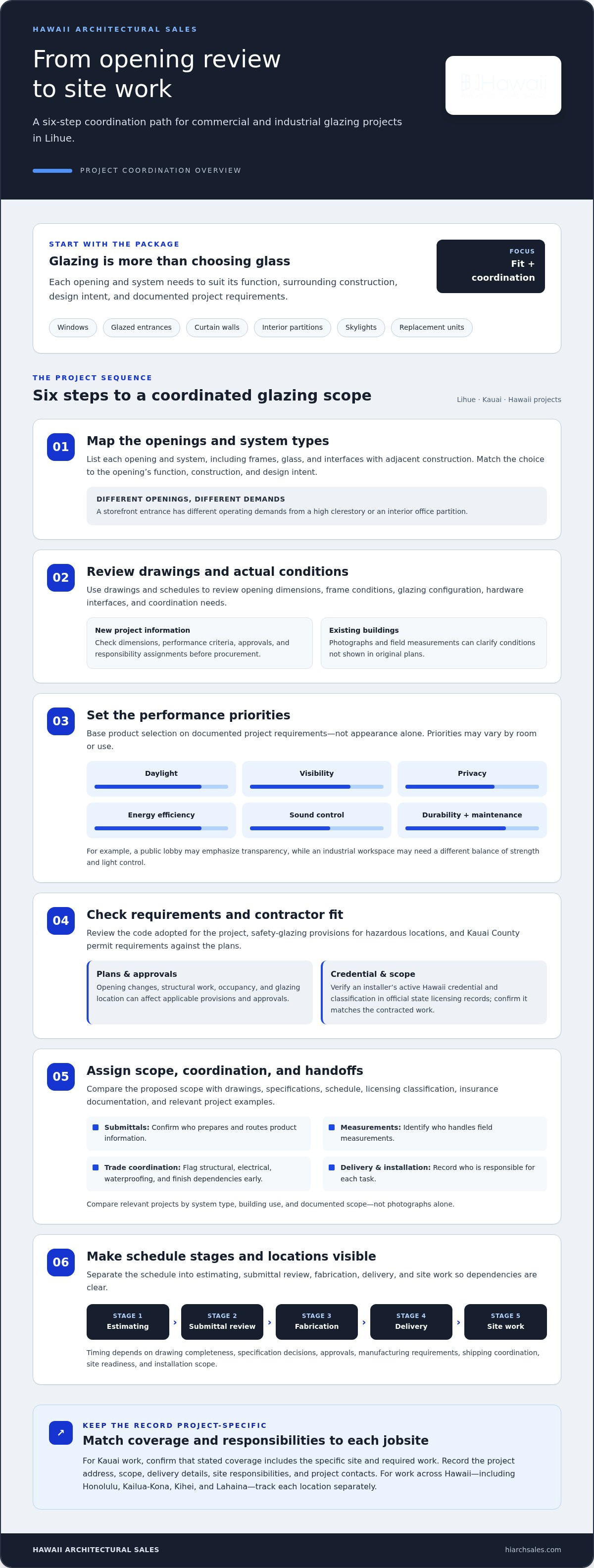
Commercial and industrial glazing involves more than choosing glass. A project may include windows, glazed entrances, curtain walls, interior partitions, skylights, or replacement units. Each opening must suit its function, surrounding construction, and design intent. A storefront entrance, for example, has different operating demands from a high clerestory or an interior office partition.
Product coordination often starts with reviewing drawings and schedules. The team can identify opening dimensions, frame conditions, glazing configuration, hardware interfaces, and coordination needs. Accurate project information helps align the product package with adjacent trades and reduce avoidable design conflicts. For an existing building, photographs and field measurements can clarify conditions that original plans do not show.
Are commercial glazing contractors in Hawaii required to hold a contractor license, and how can it be verified? Before hiring an installer, verify the contractor’s active Hawaii credential and classification for the contracted scope in official state licensing records. Confirm that the credential matches the work described in the agreement.
What building codes, safety-glazing rules, and permits apply to commercial glazing projects in Lihue? Review the code adopted for the project, applicable safety-glazing provisions for hazardous locations, and Kauai County permit requirements against the plans. Opening changes, structural work, occupancy, and glazing location can affect which provisions and approvals apply.
How long do commercial glazing estimates, fabrication, and installation typically take on Kauai? Timing depends on drawing completeness, specification decisions, approvals, manufacturing requirements, shipping coordination, site readiness, and installation scope. A clear schedule separates estimating, submittal review, fabrication, delivery, and site work so dependencies are visible.
What should businesses check before hiring a commercial glazing contractor in Lihue? Compare the proposed scope with drawings, specifications, schedule, licensing classification, insurance documentation, and relevant project examples. Confirm who handles submittals, field measurements, coordination, delivery, and installation, then record responsibilities in the project documents.
Scope
List each opening and system, including frames, glass, and interfaces with adjacent construction.
Documentation
Check drawings, dimensions, performance criteria, approvals, and responsibility assignments before procurement.
Coordination
Identify dependencies with structural, electrical, waterproofing, and finish trades early.
Project fit
Compare comparable commercial work by system type, building use, and documented scope, not photographs alone.
These checks help teams define the glazing package before procurement. Clear specifications and assigned responsibilities give architects, engineers, owners, and contractors a shared basis for coordinating product decisions, delivery, and installation.
Service across Hawaii
For a Lihue project, clarify how product selection, delivery, and site responsibilities will be coordinated. Define each responsibility by jobsite before comparing proposals. The same approach applies to projects in Honolulu, Kailua-Kona, Kihei, and Lahaina.
Lihue and Kauai Service Coverage
For Kauai projects, identify whether a contractor’s stated coverage includes the specific jobsite and required work. A broad Hawaii service-area description does not explain who coordinates measurements, delivery, or site work. Record each responsibility against the project address.
A search for “commercial glazing contractor support Lihue” is a starting point, not a scope definition. A Lihue storefront project, for example, may need product coordination as well as separate on-site work. The proposal should state which party handles each task and how project questions are routed.
Contractor Contact Information
Keep the contractor’s business phone number, address, and project contact together. Note who handles estimating, technical questions, and scheduling. This helps teams direct questions about a specific Kauai opening to the right contact and proposal.
Distinguish the business address from the Lihue jobsite and delivery destination. Compare the written service-area description with the project location and proposed work. A search for “commercial glazing contractor support Lihue” should lead to a project-specific comparison, not an assumption based only on broad geographic wording.
For work across Hawaii, create a coordination record linking each jobsite with its scope and project contacts. A project spanning Honolulu and Kauai, for example, may need separate delivery details and site responsibilities for each location. Keep these arrangements visible in the project documents.
When a project involves more than one island, map the work by location. Link design questions, product decisions, delivery arrangements, and site readiness to the relevant project phase. This makes dependencies clear to architects, owners, and construction teams without treating multiple jobsites as one undifferentiated scope.
Coverage
Match the project address with the contractor’s written service-area statement.
Responsibilities
Assign measurement, delivery coordination, and site work to project roles.
Contacts
Record the business number, address, and contact responsible for each discussion.
Logistics
Document the delivery destination, site access, and schedule dependencies.
Use the same fields when comparing proposals for Lihue, Honolulu, Kailua-Kona, Kihei, or Lahaina. A consistent record helps teams distinguish geographic coverage from the specific tasks included in each project scope.
Which commercial glazing contractors serve Lihue, Kauai?
For a commercial project in Lihue, match the contractor’s documented scope to the glazing package and confirm that its service area includes the site. The project may need a commercial glazing specialist for building openings, a firm coordinating larger façade systems, or a contractor focused on replacement work. What matters is a clear fit between project requirements and assigned responsibilities.
Start with the project type. A new commercial building may need coordinated storefront, entrance, window, or curtain wall work. A renovation may focus on replacing existing units while protecting surrounding finishes and maintaining building operations. An industrial facility may have different opening sizes, access needs, or operating constraints. These distinctions help identify contractors with relevant experience.
Next, distinguish the roles involved. A glazing contractor may manage site measurements, submittals, procurement coordination, and installation, while a product representative can advise on system selection and technical documentation. Some projects involve both roles. The proposal should assign each task clearly, especially when design, manufacture, delivery, and site work involve different parties.
For Lihue and the wider Kauai market, compare the contractor’s stated coverage with the actual jobsite. Confirm whether the proposed scope includes the location, delivery coordination, and required on-site work. A firm serving Hawaii broadly may still define its responsibilities differently for a specific Kauai project. Treat coverage as a project-specific scope item, not just a geographic label.
Match
Compare the contractor’s stated work with the project’s glazing schedule and drawings.
Role
Identify who handles design coordination, measurements, procurement, delivery, and installation.
Experience
Review examples that resemble the building type and glazing system involved.
Coverage
Connect the Lihue address to the written scope and assigned site responsibilities.
Compare evidence relevant to the proposed work. A contractor proposing storefront work should show relevant commercial storefront experience, while a complex façade package calls for experience coordinating that type of system. Review project descriptions for comparable scope, not just broad claims about commercial construction. Compare how each proposal addresses drawings, site conditions, sequencing, and adjacent trades.
Build a shortlist around practical criteria. Record each firm’s name, project contact, stated Kauai coverage, relevant examples, and specific responsibilities. Then compare proposals against the same project documents. This helps Lihue owners and design teams distinguish general construction capability from the glazing expertise their project needs.
What are the phone numbers, addresses, and service areas of Lihue commercial glazing contractors?
For a Lihue project, collect each contractor’s published business phone number, business address, and stated service area in one comparison sheet. Pair those details with the company name and project contact. This keeps calls, proposals, and scope discussions tied to the right firm.
A useful directory distinguishes a general office number from a project contact’s direct number. Record which number handles estimating, technical questions, and scheduling. A Lihue storefront inquiry, for example, may need an estimating contact, while an active job may require a site coordination contact. List each role beside its corresponding number.
Addresses also need context. Record the published business address separately from the project site and any delivery destination. An office location alone does not establish Kauai service coverage. Compare the address with the contractor’s written coverage statement, then relate that statement to the specific Lihue jobsite.
Service-area descriptions vary in detail. One entry may name Kauai; another may refer broadly to Hawaii. Turn each description into a project-specific note: does the stated scope cover the jobsite, delivery coordination, and required on-site work? Include relevant island-to-island coordination instead of assuming a broad geographic phrase answers every logistical question.
Company
Record the full business name exactly as it appears on the proposal.
Phone
Note the published main number and the named project contact’s number.
Address
Separate the business address from the Lihue site and delivery location.
Coverage
Write the stated service area and the tasks included for the project.
Use a consistent format for every contractor. A spreadsheet can include columns for company, phone, address, service-area wording, contact role, and proposal reference. Add a separate note for unresolved coordination items, such as who receives deliveries or routes drawing questions. This makes the comparison useful during procurement, not just initial research.
Before sharing the contact sheet, compare each entry with the contractor’s current proposal and published business information. Correct mismatched company names or outdated contact roles. If one firm uses a central number and another lists a project representative, preserve both details rather than forcing them into one field.
Keep the directory with the project documents. Owners, architects, and construction managers can use the same contact record for bid review, submittals, delivery planning, and site coordination. For a Lihue commercial glazing package, the shared record clarifies whom to contact and what geographic scope the contractor has stated.
How do Lihue commercial glazing contractors compare by experience, reviews, and project portfolio?
Compare contractors against the actual glazing scope, not reputation alone. A Lihue storefront replacement, a new curtain wall, and glazing for an industrial facility require different coordination. Experience matters most when it demonstrates work similar in system type, building use, and project conditions.
Review portfolios for documented scope. A useful example identifies the building type, glazing system, contractor’s responsibilities, and completed work. A photograph of a glass façade shows its appearance, but not whether the contractor managed submittals, field dimensions, delivery, or installation. Look for project descriptions that clarify those details.
Ask how each example relates to your drawings and specifications. A contractor experienced with commercial windows may not have the same background in large-format façade systems. Compare opening types, frame conditions, interfaces with adjacent construction, and occupied-site constraints. These details show whether a portfolio demonstrates relevant technical experience.
Reviews can add context, especially when they describe communication, schedule coordination, document handling, or issue resolution. Separate specific project feedback from broad praise. A review mentioning clear submittals or coordinated deliveries offers more practical insight than a general rating without project details. Consider whether the reviewer’s project resembles yours.
Use a consistent comparison process:
Experience
Match completed work to your building type and glazing system.
Portfolio
Look for project scope, responsibilities, and technical details alongside images.
Reviews
Note repeated comments about communication, coordination, and follow-through.
Proposal
Compare the contractor’s stated role with the portfolio examples and project documents.
Compare the evidence across candidates. One firm may show relevant storefront projects, while another documents complex façade coordination. The better fit depends on the required work, not the number of portfolio entries. Record strengths and unresolved scope differences in the same comparison sheet.
References can help clarify how a project proceeded. Ask about the contractor’s documented responsibilities, handling of design changes, coordination with other trades, and response to site conditions. Keep questions tied to specific work so feedback can be compared with the proposed scope for your Lihue project.
Finally, use the comparison to refine project requirements. Clear drawings, performance criteria, and responsibility assignments help expose gaps between a contractor’s demonstrated experience and the planned work. Use your findings to plan the glazing package around the project’s documented needs.
Hawaii Architectural Sales: ES | Prestige
Hawaii Architectural Sales can support your team’s evaluation of glazing products for a commercial design. Its offerings include ES | Prestige, ES | Elite, and Hopes. These product lines give teams options to consider as they align the glazing package with design intent and documented requirements.
Bring the project drawings, opening schedule, and performance priorities to the product-selection discussion. This keeps the evaluation focused on systems relevant to the building, rather than comparing options without a defined application. For a Lihue project, start with the openings and criteria that matter most to the design team.
Contact Hawaii Architectural Sales to discuss product options, or visit the website.
Move Your Glazing Package Toward a Clear Decision
Turn project priorities into a focused product discussion. Identify the openings with the greatest design or performance demands, then define the criteria your team will use to assess options. This gives architects, engineers, and owners a practical starting point before product decisions become embedded in project documents.
For commercial glazing contractor support in Lihue, Hawaii Architectural Sales offers ES | Prestige, ES | Elite, and ES | uPVC. Discuss these options against the project drawings and requirements to assess which products merit consideration. Keep the conversation grounded in the intended application and the criteria that matter to the project.
Bring your project priorities into the next discussion and identify the product questions that need resolution. Contact Hawaii Architectural Sales to discuss your glazing requirements and take the next step with clarity.
Frequently Asked Questions
What commercial glazing services are available in Lihue, including storefronts, curtain walls, and glass doors?
For Lihue projects, distinguish architectural product selection and supply from on-site installation. Hawaii Architectural Sales represents systems including ES | Prestige, ES | Elite, and ES | uPVC. For a storefront, curtain wall, or glass-door scope, the project drawings and opening schedule help determine which product options are relevant. The company also serves project teams in Honolulu, Kailua-Kona, Kihei, and Lahaina, supplying architectural products for projects across Hawaii.
What building codes, safety-glazing rules, and permits apply to commercial glazing projects in Lihue?
Review the code adopted for the project, applicable safety-glazing provisions for hazardous locations, and Kauai County permit requirements against the plans. Opening changes, structural work, occupancy, and glazing location can affect which provisions and approvals apply.