Compare Window Styles for a Beachfront Home in Lahaina
The best ocean view doesn’t require every window to open. For how to choose windows for a beachfront home in Lahaina, prioritize impact-resistant glazing and pair fixed picture windows with operable windows for ventilation. Low-E coatings can help reflect UV rays and keep interiors cooler on sunny d...
The best ocean view doesn’t require every window to open. For how to choose windows for a beachfront home in Lahaina, prioritize impact-resistant glazing and pair fixed picture windows with operable windows for ventilation. Low-E coatings can help reflect UV rays and keep interiors cooler on sunny days.
It’s easy to focus on the view, but a beachfront window also has to contend with wind, salt air, heat, and moisture. The right combination depends on where each window sits and what it needs to do, from framing a wide ocean view to bringing in a breeze.
This guide explains what coastal windows are and how glazing, frame materials, and climate affect the choice. It compares picture, casement, and sliding styles, then shows how fixed and operable windows can work together to balance views, ventilation, and comfort in a Lahaina home.
Key Takeaways
• Choose glazing based on the home’s exposure to wind, salt air, and sun, not the ocean view alone.
• Compare frame materials for their resistance to moisture and corrosion, along with their insulation and maintenance needs.
• Match window operation to each room’s purpose: fixed glazing frames views, while operable styles provide ventilation.
• Pair picture windows with carefully placed operable windows to balance broad sightlines with airflow.
• Use glass and frame choices together to manage heat gain and support indoor comfort in Lahaina’s warm climate.
Coastal windows are assemblies selected for exposure to salt air, strong winds, moisture, and direct sun. In Lahaina, glazing must serve the view while matching each opening’s exposure and the building’s design. Impact-resistant glass is one option: it uses a strong polymer interlayer between two sheets of glass. If one pane breaks, the interlayer helps hold the glass together rather than letting fragments separate freely.
For a beachfront home, compare impact-rated glazing with secondary storm protection. Impact-rated glass is integrated into the window assembly; separate storm panels provide protection as an additional layer. These are different approaches, not interchangeable labels. Specify the complete window assembly and its design pressure for the opening, rather than judging performance by glass alone. A DP-50 window is rated to withstand the equivalent of 170 mph wind, but that figure should not be treated as a Lahaina code requirement.
Impact-resistant laminated glass can also include a Low-E coating. The laminated construction addresses impact performance, while Low-E coatings reflect UV rays and help keep a home cooler on sunny days. These features address different coastal conditions. Compare the glazing configuration, coating, frame, and operating style as a complete system. A coating does not replace impact protection, and impact-resistant glass alone does not determine a window’s insulation.
For better insulation, consider double- or triple-pane glass rather than single-pane glass. Double-pane windows add insulation and help reduce noise, a useful benefit near busy beachfront areas. Double- or triple-pane units with inert gas between panes provide insulation that can reduce energy costs. The additional panes and gas fill affect heat transfer, while the frame and seals also influence overall window performance. Match the configuration to comfort priorities, not the view alone.
What impact-rated windows are required for homes in Lahaina, Maui, under current building codes? Select impact-rated assemblies according to each opening’s exposure, size, and design pressure. A DP-50 rating corresponds to 50 pounds per square foot, but the coastal-glazing information here does not establish that rating as a Lahaina code minimum.
Impact-resistant glass options include laminated glazing in different pane configurations, such as double- or triple-pane units. Compare these with secondary storm panels as distinct protection strategies. Then assess how the selected window style affects ventilation, since fixed and operable windows serve different functions. For example, a picture window can frame the ocean view while an operable window provides airflow.
What permits and approvals are needed to replace windows in Lahaina, including historic or coastal-zone restrictions? Approval needs depend on property designation and project scope. Identify whether the home is historic or in a coastal zone, and whether replacement changes the opening size or framing, before defining the work.
After selection, rinse coastal glass and frames regularly with fresh water to remove salt buildup. Inspect seals, weatherstripping, and hardware twice a year; these steps help identify wear before it affects operation. Coastal performance depends on the whole assembly, from laminated glass and coatings to frames, seals, and maintenance.
2. What are the best windows for your beach house?
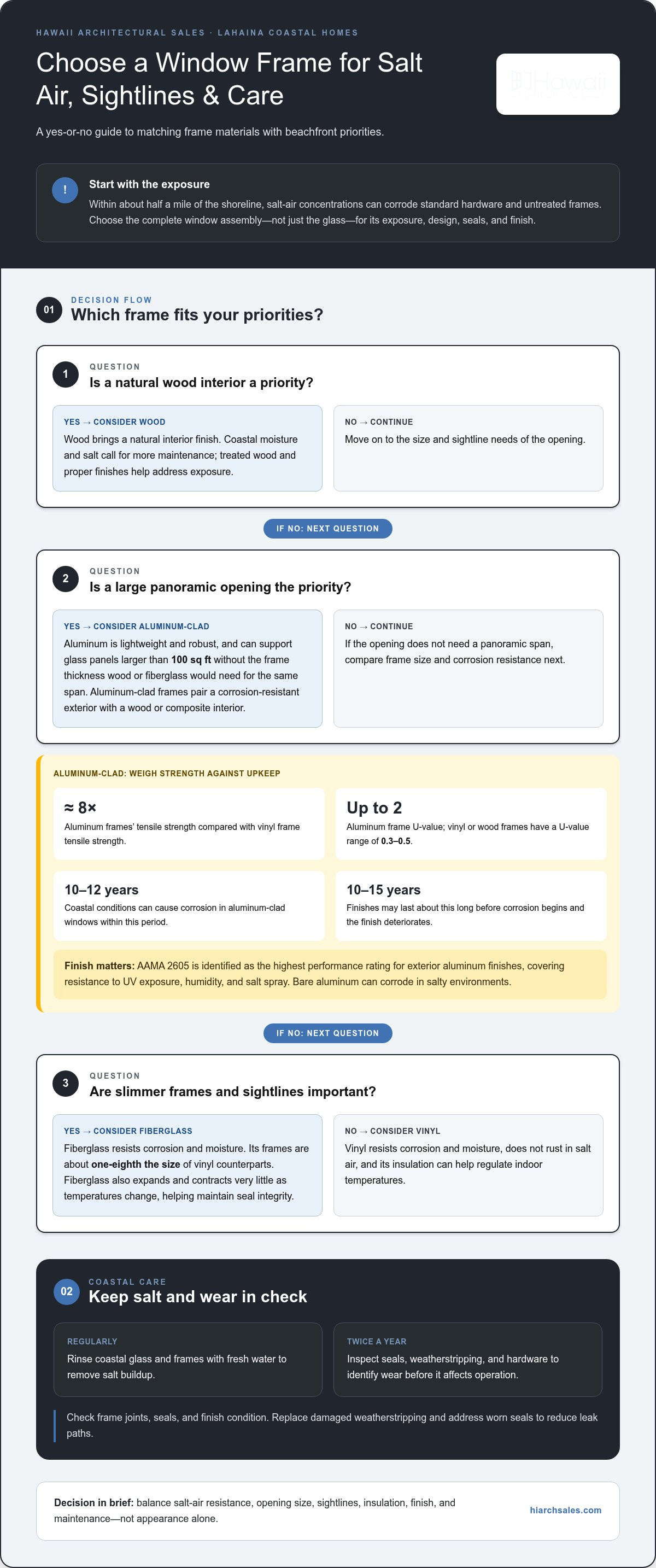
For a Lahaina beachfront home, compare frame materials by salt-air resistance, heat transfer, and maintenance needs. Homes within about half a mile of the shoreline face salt-air concentrations that can corrode standard hardware and untreated frames. Resistant glass addresses glazing exposure, but frames and finishes also need to suit the coastal environment.
Vinyl and fiberglass resist corrosion and moisture, making them practical choices for coastal homes. Vinyl frames don’t rust in salt air, and their insulation can help regulate indoor temperatures. Fiberglass expands and contracts very little as temperatures change, which helps maintain seal integrity. Its frames are about one-eighth the size of vinyl counterparts, an important design consideration when sightlines and frame dimensions matter.
Aluminum is lightweight and robust, so it can support large panoramic windows. It can also support glass panels larger than 100 square feet without the frame thickness wood or fiberglass would need for the same span. Bare aluminum, however, can corrode in salty environments. Aluminum-clad frames pair a corrosion-resistant exterior with a wood or composite interior. Their tensile strength is about 8 times greater than vinyl frame tensile strength, but aluminum frames can have a U-value as high as 2. Vinyl or wood frames have a U-value range of 0.3 to 0.5.
Aluminum-clad construction isn’t maintenance-free. Coastal conditions can cause corrosion in aluminum-clad windows within 10-12 years, while finishes may last about 10-15 years before corrosion begins and the finish deteriorates. The finish matters: AAMA 2605 is identified as the highest performance rating for exterior aluminum finishes, covering resistance to UV exposure, humidity, and salt spray. Compare the finish and frame assembly, not just the visible material.
What window materials best resist salt spray and corrosion in Lahaina beachfront homes? Vinyl and fiberglass resist corrosion and moisture, while aluminum-clad frames combine a corrosion-resistant exterior with a wood or composite interior. Bare aluminum is more vulnerable to salt-related corrosion, so finish selection matters.
Wood frames bring a natural interior finish, but coastal moisture and salt require more maintenance. Treated wood and proper finishes help address these exposures. For any material, check the frame joints, seals, and finish condition as part of routine upkeep. Replace damaged weatherstripping and address worn seals to reduce leak paths; rinse frames and glass with fresh water to remove salt buildup.
How can beachfront homeowners prevent window leaks, condensation, and salt buildup? Inspect seals and weatherstripping twice a year, rinse salt deposits away with fresh water, and maintain ventilation to limit indoor condensation. Fiberglass’s limited expansion and contraction can also help preserve seal integrity.
For projects comparing corrosion resistance with frame design, explore uPVC window options alongside fiberglass and aluminum-clad alternatives.
3. Casement, picture, and sliding window styles
Window style determines how a coastal home balances ocean views, ventilation, and protection from wind-driven weather. Casement, picture, and sliding windows each serve a different purpose. Choose by room and opening: a fixed picture window frames a view, while an operable style supplies airflow. The frame, glass, seals, and hardware still need to suit the exposure.
A casement window has one sash hinged at the side, opening outward. Its sash presses against frame weatherstripping when closed, creating a tight seal against wind and water. Casements also provide full airflow when open, making them useful where breezes are welcome. Since the sash projects outside, consider nearby walkways, landscaping, and other exterior obstructions before placing one.
Picture windows remain fixed, so they don’t open for ventilation. Their uninterrupted glazing can frame a broad view, and fixed construction can support energy efficiency and durability. For example, a living room facing the ocean could use a picture window to preserve the sightline, with a separate operable unit nearby for airflow. This arrangement separates the view function from the ventilation function.
Sliding windows use wide horizontal panes and open to bring in ocean breezes. They suit spaces where an outward-swinging sash would interfere with a deck, path, or exterior screen. Their operating track and seals need attention; check seal integrity as part of regular maintenance. Sliding styles can provide a generous glass area, but the opening and ventilation depend on the sash configuration.
What window styles and opening types work best for beachfront homes exposed to strong winds? Fixed picture windows avoid an operable sash, while casement windows close tightly against weather stripping. Select impact-rated assemblies and suitable design pressure for the exposure; style alone doesn’t establish wind performance.
Traditional double-hung windows offer another option. They have two sashes that slide up or down, allowing ventilation through the opening. Their weatherstripping and locking mechanisms should be durable enough for high winds. Awning windows open outward from the top and can provide ventilation during light rain. As with casements, confirm that the outward-opening sash has clearance from nearby exterior features.
For a beachfront layout, map each room’s needs before choosing styles. Use picture windows where preserving a panoramic view matters most. Place casements or sliding windows where occupants need controllable airflow, and consider awning windows for ventilation during light rain. A bay or bow arrangement combines three or more windows and projects beyond the exterior wall, creating an interior nook and wider views. Its projection and multiple glass panels make placement a design decision, not just a style preference.
Finally, match operation to exposure and upkeep. Check sliding seals, casement locks, and double-hung weatherstripping during routine inspections. Salt buildup can affect hardware across styles, so rinse frames and maintain moving parts. This room-by-room approach helps Lahaina homeowners balance ventilation, views, and coastal performance without expecting one window style to meet every need.
4. Energy efficiency in different climates
In Lahaina’s warm, sunny conditions, prioritize glazing that limits unwanted solar heat gain. Compare the U-factor, which indicates heat transfer through a window, and the solar heat gain coefficient (SHGC), which indicates how much solar heat enters. Low U-factor and low-SHGC glass can help reduce heat gain in warm climates. These ratings address different aspects of performance, so review both rather than relying on one figure.
Low-E coatings help manage sunlight by reflecting UV rays and reducing heat transfer through the glass. They can help keep rooms cooler on sunny days while protecting interior finishes from UV exposure. Coating performance varies by glazing configuration, so consider the window’s orientation and room use. A broad ocean-facing window receives direct sun differently from a shaded opening, affecting comfort and cooling needs.
Pane spacing and gas fill also influence insulation. Double- or triple-pane windows with inert gas between panes provide insulation that can reduce energy costs. Argon gas fills improve insulation by reducing heat transfer between panes. For a beachfront living room, compare a double-pane unit with an argon fill against a single-pane option. The combination of panes, gas, coating, and frame determines how the assembly manages heat.
Frame material contributes to indoor comfort, too. Vinyl resists moisture and corrosion while providing insulation that can help regulate indoor temperatures. Fiberglass expands and contracts very little as temperatures change, which supports seal integrity. A stable seal helps limit unwanted air movement around the glass. For any frame, examine how the glazing, seals, and sash fit together; one efficient component cannot compensate for gaps elsewhere.
Finish selection can help address direct sunlight. Lighter-colored window finishes reflect sunlight and can help keep interiors cool and bright. Consider the exterior finish alongside glazing, especially on sun-exposed elevations. In coastal weather, durability also depends on material and upkeep. Salt deposits can affect frames and hardware, so rinse window surfaces with fresh water and inspect moving parts. A clean, maintained assembly supports performance over time.
Use a room-by-room comparison to narrow choices. First, note which windows receive direct sun and which rooms need stronger daylight control. Next, compare U-factor and SHGC, then review Low-E coatings and pane configuration. Finally, assess frame insulation, seals, and finish. For example, a sunny room with a large fixed window may need different solar control than a shaded room with an operable window. Matching each assembly to its exposure can enhance comfort without sacrificing the view.
Energy efficiency is a system decision, not a glass-only specification. A high-performing coating works alongside insulated panes, a suitable frame, and intact seals. In Lahaina, consider sun exposure, ventilation needs, and coastal durability together. This approach helps you choose windows that manage heat and UV while accounting for local weather and long-term maintenance.
5. Picture windows paired with operable windows
A picture window preserves an unobstructed view, but it doesn’t open for natural ventilation. Pairing it with an operable window gives each opening a clear purpose: fixed glass frames the ocean, while a nearby sash admits airflow. This combination can also create a balanced aesthetic, rather than asking one large window to provide both a panoramic view and ventilation.
Start with the room’s layout. In a living room facing the water, place a picture window where it captures the primary sightline. Then position casement windows beside it or on an adjacent wall to bring in breezes. A casement has one sash hinged at the side and swings outward. Its tight seal against weatherstripping helps regulate indoor temperatures when closed.
For openings where a swinging sash would obstruct a deck or walkway, consider sliding windows. Their wide horizontal glass panes offer a view and can open to admit ocean breezes. Awning windows, which open outward from the top, provide another ventilation option and can allow airflow during light rain. These styles make it possible to tailor ventilation without dividing the main view into multiple operable sections.
Wind exposure affects the operable portion of the design. Choose impact-rated assemblies and appropriate design pressure for the opening; a window style alone doesn’t establish wind performance. During storms, secure and close operable units as intended. Casement and awning windows clamp more tightly against frame weather stripping than other window types, which can support energy efficiency. Their hinges and exterior swing still need clearance from nearby features.
Replacement projects offer a chance to rethink the arrangement, not just match the old window. First, identify the view worth preserving. Next, mark where occupants need ventilation and note exterior obstructions. Then compare fixed picture glazing with casement, sliding, or awning openings. For example, a large fixed center panel with narrower operable windows at the sides can maintain a broad view while providing airflow.
Consider scale as well as operation. Bay or bow windows combine three or more windows and extend beyond the exterior wall, creating an interior nook and panoramic views. Their angled panels capture sunlight from multiple directions, so account for sun exposure alongside the view. In a smaller room, a picture window with one operable sash may provide a simpler, more space-conscious composition.
For a Lahaina beachfront home, the practical takeaway is to separate view and ventilation functions, then coordinate their placement. Match glazing and design pressure to exposure, choose an opening style that suits the room, and preserve clearance for hinged or sliding parts. Explore window options for your layout as you compare fixed and operable configurations.
Hawaii Architectural Sales: ES | Prestige
Hawaii Architectural Sales offers ES | Prestige for beachfront projects. Compare glazing, frame materials, and fixed-versus-operable layouts, then use those priorities to guide product selection. ES | Elite and Hopes are also available alongside ES | Prestige. The company’s products provide durable and efficient, high-value solutions, with custom architectural solutions shaped around project needs.
For a project where ocean views, ventilation, and coastal exposure shape the design, review which offering best fits the window plan. Keep the key decisions together: where fixed picture windows preserve views, where operable units provide airflow, and what environmental demands each opening faces. This gives the product discussion a clear project context.
Contact Hawaii Architectural Sales to discuss ES | Prestige for your project.
Make the Next Window Decision Project-Specific
Choosing windows is ultimately a design decision shaped by how each room should look, feel, and function. Before finalizing plans, identify the openings where the view takes priority and those where daily ventilation matters more. This gives your project team a clear basis for reviewing the design and selecting products that fit the home’s priorities.
If you’re deciding how to choose windows for a beachfront home in Lahaina, Hawaii Architectural Sales can help you consider its ES | Prestige, ES | Elite, and ES | uPVC offerings in relation to your project. Bring your preferred window layout and priorities into the discussion to keep product selection focused on the home’s design.
Coastal windows are selected as complete assemblies for conditions such as salt air, wind, moisture, and intense sun. For a Lahaina home, consider the frame, seals, hardware, and opening style alongside the glass. Understanding how to choose windows for a beachfront home in Lahaina starts with assessing each opening’s location and purpose. A fixed window facing direct ocean exposure has different operating needs from a bedroom window opened for airflow.
Are double-pane windows hurricane proof?
No. Double-pane construction improves insulation, but the number of panes alone doesn’t establish impact resistance or wind performance. Impact-resistant laminated glass uses a polymer interlayer between glass sheets, while a window’s design pressure rating addresses pressure resistance. For a specific opening, assess the complete unit, including its frame and installation conditions. A double-pane window may offer comfort benefits without necessarily being impact-rated.
Can large sliding glass walls work in a hurricane zone?
Large sliding glass walls can be considered when the full assembly is designed for the project’s wind exposure. Glass size, frame, tracks, locks, seals, and opening dimensions all affect the assembly’s performance. A wide view alone doesn’t establish suitability. For a Lahaina ocean-facing room, compare the system’s documented impact and design-pressure performance with the opening’s exposure, then consider how the track and seals will be maintained in salt air.
How close to the ocean does a home need to be before corrosion becomes a serious issue?
Homes within about half a mile of the shoreline can face salt-air concentrations that cause premature corrosion of standard hardware and untreated frames. Direct ocean spray and persistent humidity can add exposure, so distance isn’t the only consideration. Look for early signs such as finish deterioration, stiff hardware, or corrosion around joints. Rinsing salt from glass and frames and maintaining moving parts helps manage coastal buildup.
How do I know if I have hurricane or impact windows?
Look for product labels, manufacturer documentation, or records identifying the window’s impact rating and design pressure. Laminated glass may have a visible interlayer at its edge, but appearance alone doesn’t verify the complete assembly’s rating. Check that the documentation applies to the installed frame and window configuration, not just a glass component. If records are unavailable, a careful inspection can identify the product details to compare.
What are the best windows for your beach house?
The best choice depends on each opening’s exposure, view, ventilation needs, and maintenance demands. A clear framework for how to choose windows for a beachfront home in Lahaina is to match each window’s function to its room. For example, a fixed picture window can frame the water, with an operable unit nearby for airflow. Compare frame material and glazing together, then consider sun exposure and salt-cleaning needs.
What other benefits does impact glass offer?
Impact-resistant laminated glass can help hold broken glass together through its polymer interlayer. Double-pane windows can also add insulation and help reduce noise, which may matter near active beachfront areas. Low-E coatings reflect UV rays and can help keep interiors cooler on sunny days. These are distinct benefits: impact resistance, insulation, sound reduction, and solar control depend on different parts of the glazing assembly.
Which window frames and hardware are recommended for coastal Hawaii climates?
Vinyl and fiberglass frames resist corrosion and moisture; aluminum can also work when adequately treated. For coastal window hardware, 304- or 316-grade stainless steel rollers are recommended, with 316-grade suited to direct ocean spray or extreme humidity. Rinse frames regularly and inspect seals, weatherstripping, and moving parts. Hawaii Architectural Sales offers ES | uPVC for projects in Lahaina, Honolulu, Lihue, Kailua-Kona, and Kihei.