ES Elite Windows Hawaii: A Professional Comparison and Specification Guide
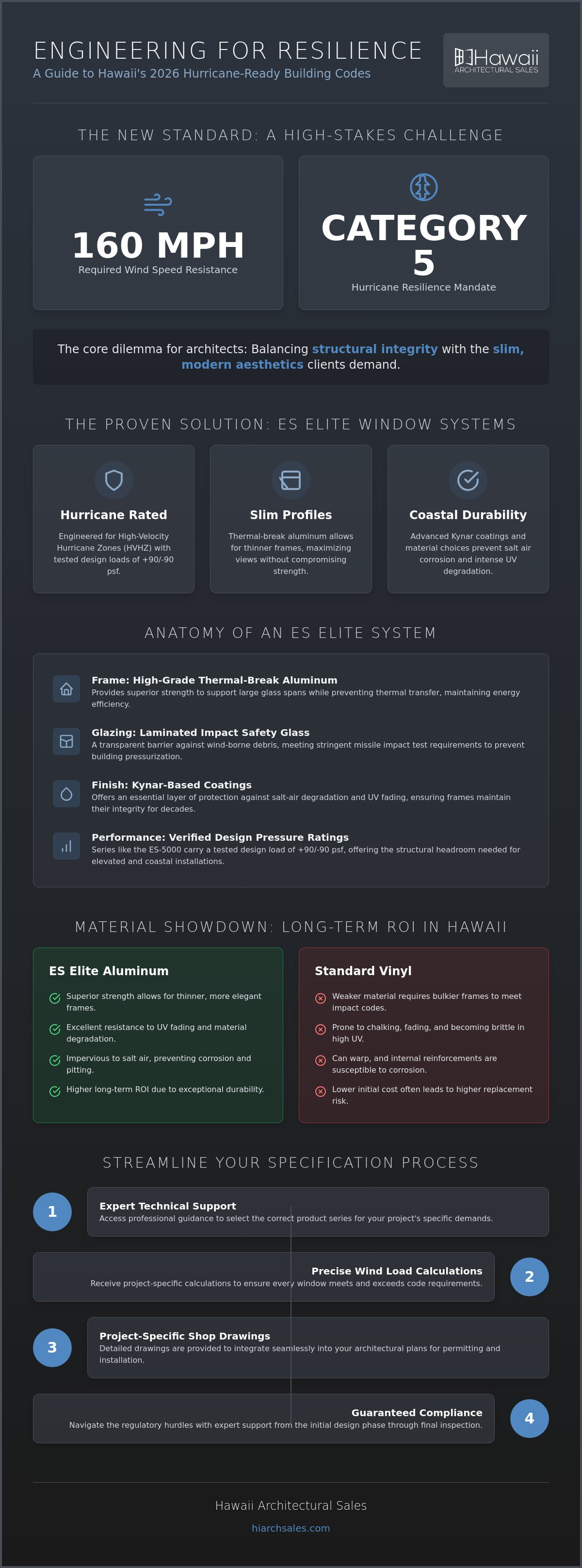
As of March 2026, Hawaii’s building code mandates that new structures withstand wind speeds of up to 160 mph, requiring Category 5 hurricane resilience for every project. For architects and contractors, this shift turns the selection of fenestration from an aesthetic choice into a high-stakes engine...
As of March 2026, Hawaii’s building code mandates that new structures withstand wind speeds of up to 160 mph, requiring Category 5 hurricane resilience for every project. For architects and contractors, this shift turns the selection of fenestration from an aesthetic choice into a high-stakes engineering challenge. You recognize that standard aluminum finishes often fail against salt air corrosion within years; meeting these stringent High-Velocity Hurricane Zone requirements often means sacrificing the thin-profile designs your clients demand. Specifying ES Elite windows Hawaii provides a solution that balances these structural mandates with the refined architectural lines necessary for modern residential projects.
This guide provides a technical analysis of the ES Elite line, focusing on its performance as a high-value workhorse for the local market. We will compare specific design loads, such as the +90/-90 psf ratings of the ES-5000 series, against the latest 2026 code requirements. You'll gain a clear understanding of how these systems integrate coastal durability with structural integrity. We also identify how localized technical support from Hawaii Architectural Sales ensures your specifications meet every regulatory hurdle from the initial design phase through final inspection.
• Identify how thermal-break aluminum systems achieve the slim sightlines essential for modern Hawaii residential design while maintaining structural integrity.
• Confirm compliance with the 2026 Hawaii building code by specifying ES Elite windows Hawaii, which are engineered for 160 mph wind speeds and High-Velocity Hurricane Zones.
• Compare the technical specifications of the ES Elite and ES Prestige lines to determine the most efficient price-to-performance ratio for your project scale.
• Evaluate the long-term ROI of aluminum systems over vinyl by analyzing performance against Hawaii’s intense UV exposure and corrosive salt air.
• Streamline the specification process by accessing professional technical support, wind load calculations, and project-specific shop drawings.
The ES Elite system is a high-performance, thermal-break aluminum solution engineered for the most demanding environmental conditions. It serves as a primary specification for high-end residential and commercial developments throughout Honolulu and Hawaii's exposed coastal regions. Hawaii Architectural Sales operates as the authorized technical representative for this line, offering the precise engineering data required to integrate these systems into complex building envelopes. By choosing ES Elite windows Hawaii, architects secure a product that balances structural rigidity with the refined profiles necessary for contemporary island aesthetics.
Modern architectural philosophy in the islands focuses on the seamless transition between interior and exterior spaces. This indoor-outdoor living approach requires expansive glass areas that don't compromise the safety of the occupants. The ES Elite line provides the structural backbone for these large-span openings. It allows for thinner frames than traditional impact systems, ensuring that the natural landscape remains the focal point of the design. These systems are not merely windows; they're engineered components designed to withstand the unique pressures of a tropical maritime climate.
Key Features of the ES Elite System
The foundation of the ES Elite system is its high-grade aluminum alloy frame. This material provides the tensile strength needed to support large glass weights while resisting the deformation often seen in lesser materials under high wind loads. Advanced glazing options allow for precise control over the Solar Heat Gain Coefficient (SHGC), which is vital for maintaining energy efficiency in Hawaii’s year-round sun. Most configurations utilize laminated safety glass to meet stringent impact requirements, providing a transparent barrier against wind-borne debris. Additionally, the hardware is specifically selected for its corrosion resistance, meeting the updated 2026 standards for durability in high-salinity environments.
Aesthetics and Customization for Island Projects
Customization is a core advantage of the ES Elite system. Architects can specify Kynar-based coatings, which provide an essential layer of protection against salt-air degradation and UV fading. These finishes ensure the window frames maintain their visual integrity for decades despite constant exposure to the elements. The system offers significant configuration flexibility, including casement, fixed, and large-span sliding options. This versatility allows designers to maintain a consistent visual language across a project, whether they're specifying a single-hung unit for a bedroom or a massive fixed window for a great room. The result is a cohesive, high-performance envelope that respects the architectural intent while exceeding local building codes.
Hawaii's shift toward more stringent structural requirements mirrors the standards set by Florida's High-Velocity Hurricane Zones (HVHZ). Because the islands lack an independent testing laboratory for large-scale fenestration, Florida Product Approval has become the industry benchmark for local performance. Specifying ES Elite windows Hawaii ensures that your project aligns with these rigorous protocols. It provides a verified baseline of performance for coastal and high-exposure environments where standard products fail to meet the necessary safety thresholds.
The updated Hawaii State Building Code now requires new constructions to withstand wind speeds of up to 160 mph. This mandate necessitates windows that have successfully passed large and small missile impact testing. In wind-borne debris regions such as Lihue or Lahaina, the glass must remain intact after a strike to prevent internal pressurization. For high-rise towers in Kaka’ako, the design pressure (DP) ratings are even more critical. The ES-5000 Casement Window carries a tested design load of +90/-90 psf, offering the structural headroom needed for elevated coastal installations. Architects should verify these test reports during the permitting phase to ensure compliance with the March 2026 updates.
Hurricane Impact Certification and Testing
Impact certification involves a two-part protocol: the missile strike and subsequent cyclic pressure loading. ES Elite systems are engineered to survive both phases without breach. This resilience is achieved through high-strength interlayers in the glass and reinforced frame joinery. Verified test reports are essential for project permitting in Hawaii. These documents prove that the specific window configuration can handle the calculated pressures of a Category 5 event. Architects can consult with a technical representative to obtain the precise engineering data required for their specific building height and location.
Corrosion Resistance in Salt-Air Environments
Standard aluminum finishes frequently fail in microclimates like Kailua-Kona or Kihei. Salt spray and high UV levels accelerate oxidation, which can eventually compromise the structural integrity of the frame. ES Elite systems utilize specialized surface treatments that create a chemical barrier against chloride ion penetration. These coatings are essential for maintaining warranty compliance in designated salt zones. While regular maintenance like freshwater rinsing is still required, the initial chemical advantage of the ES Elite line significantly extends the replacement cycle. Laminated glass also provides a secondary benefit here by filtering up to 99% of UV rays, protecting interior finishes from the intense Hawaiian sun.
Selecting between ES Elite and ES Prestige requires a clear understanding of project priorities. Both lines share a common engineering heritage, utilizing the same high-performance glazing and corrosion-resistant hardware. However, they're positioned for different architectural roles. ES Elite windows Hawaii are the preferred specification for large-scale multi-family developments and high-exposure commercial projects where balancing budget with extreme structural performance is critical. Prestige serves as the premium alternative for luxury residential projects where the design vision demands the absolute minimum in visual obstruction.
Choosing Elite doesn't mean sacrificing technical capability. In many cases, the ES Elite system offers higher design pressure (DP) ratings for specific window types than its slimmer counterparts. This makes it the superior choice for high-rise applications in Kaka’ako or wind-exposed coastal sites where structural integrity is the primary concern. Prestige is typically reserved for projects where the "glass-to-wall" ratio is the defining feature and the budget allows for specialized luxury manufacturing. Architects often specify Elite for the majority of a project while utilizing Prestige for focal points where maximum transparency is non-negotiable.
Profile Comparison and Visual Sightlines
The most visible difference between these systems is the profile depth. Prestige frames are engineered for an ultra-slim aesthetic that maximizes the daylight opening. Elite frames are slightly more robust, providing the versatility needed for a wider variety of configurations. While the ES Prestige line prioritizes the narrowest possible sightlines for a minimalist aesthetic, the ES Elite line utilizes slightly deeper profiles to achieve superior structural design pressures across larger openings. This structural versatility allows architects to specify larger spans without requiring additional reinforcement bars that would otherwise break the visual plane.
Thermal Performance and Energy Efficiency
Both systems utilize advanced thermal break technology to mitigate heat transfer, which is essential for meeting Hawaii’s energy codes. They support high-performance low-E coatings that reduce solar heat gain while maintaining high light transmittance. These features help projects achieve LEED certification by maintaining a stable interior environment. Integrated thermal breaks prevent aluminum frames from conducting exterior tropical heat into air-conditioned spaces, ensuring long-term energy efficiency across all island climate zones. This results in a high-performance building envelope that reduces the cooling load on mechanical systems.
Determining the appropriate fenestration system requires analyzing the specific environmental stressors of the site. A common objection during the value engineering phase is whether aluminum systems are too expensive compared to vinyl alternatives. In Hawaii’s high-UV environment, the ROI of aluminum is significantly higher. Vinyl often fails due to thermal expansion and UV degradation, leading to seal failure and operational issues within a decade. Aluminum frames maintain their structural profile and finish integrity for decades. This durability makes ES Elite windows Hawaii the standard for luxury custom homes, boutique hotels, and large multi-family developments.
Engaging an architectural window distributor Hawaii during the early design stages helps avoid costly late-stage revisions. Technical representatives provide the wind load calculations and shop drawings necessary to ensure these systems meet both the aesthetic vision and the 2026 building codes. This collaborative approach ensures that the specified window configurations are certified for the exact wind zone of the project, reducing risk for both the architect and the contractor.
High-Rise and Commercial Applications
Managing wind loads at elevation in urban Honolulu requires systems with high Design Pressure (DP) ratings. ES Elite windows provide the necessary structural headroom for towers in Kaka’ako where pressures can exceed standard residential limits. These systems also offer superior acoustic insulation, which is a critical requirement for urban project sites near high-traffic corridors. For projects requiring a unified facade, these windows integrate seamlessly with commercial curtain wall systems Hawaii. This ensures a consistent visual language across the entire building envelope while maintaining thermal and structural performance.
Coastal Residential Considerations
Coastal projects demand a balance between expansive views and extreme-weather safety. ES Elite systems are a primary choice for hurricane rated windows Hawaii because they offer the large-span capabilities homeowners desire without compromising on impact protection. Specifying ES Elite windows Hawaii allows for custom sizing that supports unique architectural openings while maintaining full compliance with coastal safety mandates. Whether it's a massive fixed lite or a specialized sliding configuration, the engineering behind the Elite line supports the indoor-outdoor lifestyle while meeting the latest hurricane resilience standards. To explore specific configurations for your next project, contact our technical team for a consultation.
Successful execution of high-performance building envelopes depends on more than just product selection. For architects and contractors, the transition from design intent to physical installation requires a high level of technical coordination. Unlike retail showrooms that focus on volume sales and residential hardware, Hawaii Architectural Sales operates as a dedicated manufacturer’s representative. We provide the specialized engineering data and logistical oversight necessary for complex, large-scale projects. When specifying ES Elite windows Hawaii, you gain access to a strategic partner that bridges the gap between the factory and the job site.
Our role centers on material supply and technical consultancy rather than installation services. This distinction is critical for professional specifiers who require precise shop drawings, wind load calculations, and structural data to satisfy building department requirements. We act as a consultant to the design team, ensuring that every window configuration selected is appropriate for the specific elevations and pressures of the project. This authoritative support reduces the risk of project delays or permitting failures during the construction phase.
The Value of Local Technical Expertise
Navigating the unique challenges of the Hawaiian building envelope requires a deep understanding of local microclimates and regulatory shifts. We facilitate direct coordination between local architects and the ES engineering team to solve complex design hurdles. This partnership allows for the seamless integration of the full suite of ES products. For projects where thermal efficiency is the primary driver, we can also provide data on ES uPVC windows Hawaii. This comprehensive access ensures that your project utilizes the most effective material for its specific environmental exposure.
Streamlining the Procurement Process
Managing island logistics requires a methodical approach to lead times and shipping schedules. We oversee the procurement process to ensure that materials arrive on-site in alignment with the construction timeline. This includes ensuring all components comply with the specific requirements of the Honolulu and Lihue building departments. For projects slated for 2026, early engagement is essential to secure production slots and finalize technical details. To initiate a request for quote (RFQ) or to review specific engineering data, you should Contact Hawaii Architectural Sales for ES Elite Technical Specifications. Our team is prepared to provide the documentation and logistical support required to bring your architectural vision to completion with ES Elite windows Hawaii.
Specifying fenestration for Hawaii’s 2026 building code requires more than high-quality glass; it demands verified engineering and localized expertise. The ES Elite line provides the structural versatility and hurricane-rated performance necessary for both urban high-rises and coastal residential projects. Integrating ES Elite windows Hawaii into your specifications provides a verified path to meeting the 160 mph wind speed requirements while maintaining the slim sightlines that define modern island living.
Hawaii Architectural Sales has served as an authorized ES representative since 1985. We specialize in Hawaii building code compliance and provide comprehensive technical support for architects and engineers. Our team is ready to assist with wind load calculations and project-specific shop drawings to streamline your next development. Contact Hawaii Architectural Sales for Technical Specs & Quotes to ensure your project meets the highest standards of safety and design. We look forward to supporting your vision for a resilient and sophisticated building envelope.
Are ES Elite windows hurricane-rated for all Hawaii islands?
Yes, ES Elite windows are tested to meet Miami-Dade High-Velocity Hurricane Zone (HVHZ) standards and are suitable for all islands. They're designed to comply with the 160 mph wind speed requirements of the 2026 Hawaii building code. These systems are impact-rated for both large and small missiles. This ensures safety in wind-borne debris regions from Lihue to Lahaina where structural integrity is a mandatory requirement.
How does the ES Elite line handle corrosion in high-salt coastal areas?
The ES Elite system utilizes specialized surface treatments and high-grade aluminum alloys to resist chloride ion penetration. These coatings create a chemical barrier that prevents the oxidation typically seen in standard aluminum finishes. Using ES Elite windows Hawaii ensures that the frames maintain their structural integrity and aesthetic finish even in high-salinity microclimates like Kailua-Kona or Kihei. It's a pragmatic choice for long-term coastal durability.
What is the typical lead time for ES Elite windows in Hawaii?
Lead times typically range from 12 to 16 weeks following the final approval of shop drawings. These timelines are influenced by specific manufacturing schedules and the complexities of island logistics. It's important to account for these durations during the early planning stages. We recommend engaging our technical team during the design phase to secure production slots and ensure timely delivery to the job site.
Can ES Elite windows be customized for non-standard architectural openings?
Yes, the ES Elite system supports extensive customization for non-standard architectural lites and oversized openings. This flexibility allows architects to specify unique dimensions without compromising on hurricane impact certification or structural performance. Our team provides the necessary engineering support to ensure that custom configurations meet the required design pressures. It's an ideal solution for projects that demand specific visual profiles and high-load capabilities.
Do ES Elite windows provide energy efficiency in tropical climates?
ES Elite windows utilize advanced thermal break technology and high-performance glazing to optimize energy efficiency in the islands. These systems are designed to achieve low Solar Heat Gain Coefficients (SHGC), which is essential for reducing cooling loads in Hawaii’s tropical climate. The integrated thermal breaks prevent external heat conduction. This helps projects meet local energy codes while contributing toward LEED certification goals for high-performance building envelopes.
What is the difference between ES Elite and ES Prestige in terms of price?
The ES Elite line is positioned as a high-performance workhorse offering a competitive price-to-performance ratio for mid-to-high-rise residential and commercial projects. In contrast, ES Prestige is a premium architectural line designed for luxury projects where ultra-slim sightlines are the primary requirement. Elite provides the structural rigidity needed for high-exposure sites at a more accessible entry point. It's the preferred choice for large-scale developments requiring extreme-weather resilience.
Does Hawaii Architectural Sales provide installation for ES Elite products?
No, Hawaii Architectural Sales doesn't provide installation services or general contracting. We operate as the authorized technical representative and material supplier for the ES Elite line. Our role focuses on providing architects and engineers with technical data, shop drawings, and logistical support. We ensure materials are specified correctly and delivered on time to your chosen contractor. This allows us to focus on technical excellence and engineering support.
Which finishes are recommended for ES Elite windows near the ocean?
We recommend Kynar-based coatings for all ES Elite windows Hawaii specified for coastal or high-exposure sites. These high-performance finishes offer superior resistance to salt spray, UV degradation, and chemical erosion. They ensure the long-term aesthetic integrity of the window frames despite constant exposure to the elements. These specialized coatings are vital for maintaining warranty compliance and protecting the developer's investment in harsh island environments.