High-performance Building Materials and Finishes in Kailua-Kona
Performance starts with the right material for the project, not just the right finish. For a high-performance building materials supplier serving Kailua-Kona projects, the priority is matching product guidance and finish options to the building’s design and site conditions. Corrosion on raw material...
Performance starts with the right material for the project, not just the right finish. For a high-performance building materials supplier serving Kailua-Kona projects, the priority is matching product guidance and finish options to the building’s design and site conditions. Corrosion on raw materials or components can significantly shorten a finished product’s service life, according to the U.S. Environmental Protection Agency.
Architects, engineers, and project teams know that material choices shape a building’s appearance and long-term performance. The challenge is balancing those needs when selecting products for a particular application. This article explains how to assess construction materials and finishes, use product guidance, and connect with a supplier serving Kailua-Kona. Use the framework to compare options and plan a focused project discussion.
Key Takeaways
• Learn how to assess construction materials and finishes in relation to a project’s design and intended application.
• See which project details help make supplier conversations about materials and product guidance more focused.
• Understand why selecting components as part of a complete building system matters for long-term performance.
• Explore how ES | Prestige, ES | Elite, ES | uPVC, and Hopes may fit projects seeking high-performance building products.
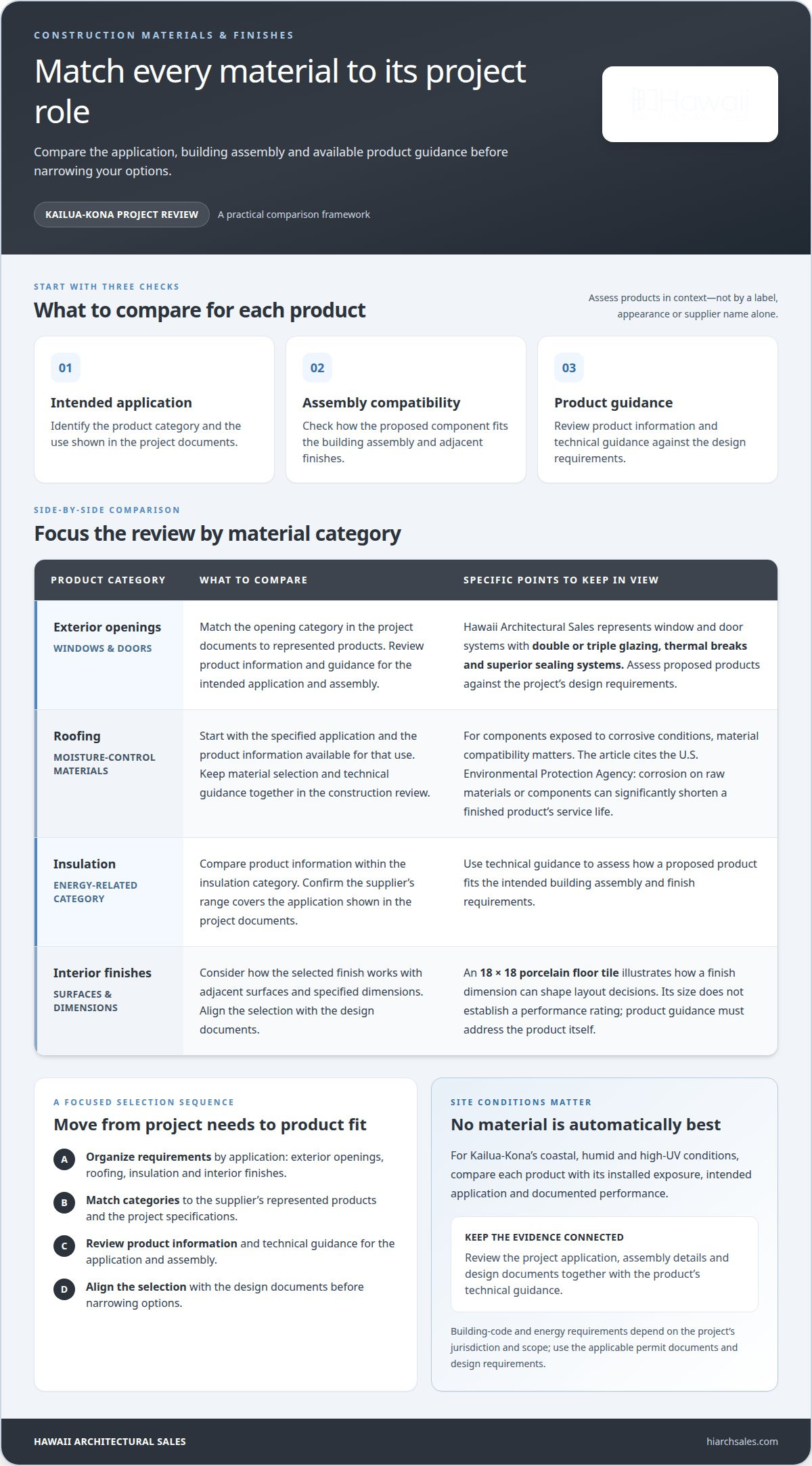
Big Island suppliers differ by the construction categories they represent, so compare product range before narrowing choices. For Kailua-Kona projects, organize requirements by application: exterior openings, roofing, insulation, and interior finishes. Then assess whether a supplier’s catalog addresses those categories and can support the project’s specifications. Availability is product-specific, not a single measure of a supplier’s overall range.
High-Performance Building Products
Energy-Efficient Windows, Doors, and Insulation
For energy-efficient windows, doors, and insulation, compare product information within each category. A supplier’s range is relevant when it covers the opening or insulation application shown in the project documents. Technical guidance helps designers assess how a proposed product fits the intended assembly and finish requirements.
A supplier’s name alone does not show whether its products match a project’s energy goals. In Kailua-Kona, identify the product category first, then review product information and application guidance. Hawaii Architectural Sales represents window and door systems with double or triple glazing, thermal breaks, and superior sealing systems.
For roofing and moisture-control materials near Kailua-Kona, focus on the specified application and the product information available. The U.S. Environmental Protection Agency notes that corrosion on raw materials or components can significantly shorten the service life of a finished product. Keep material selection and technical guidance together in the construction review.
Kailua-Kona store location and contact details
For a Kailua-Kona project, location and contact information help establish where a supplier operates and how to begin a product discussion. Use a supplier’s published business details to plan the next step.
Store Location
A useful location listing identifies the business name, street address, and the area it serves. These details help distinguish a physical showroom or office from a supplier that works through project inquiries. For construction teams coordinating site visits, a street address supports route planning and meeting logistics. A Kailua-Kona location alone does not establish that a supplier maintains a walk-in retail store.
Before planning an in-person visit, use the supplier’s published location information as your reference. Match the location to the purpose of the visit, such as discussing product options or reviewing project documents. This avoids confusing a service area with a storefront.
Contact Details
Make the purpose of your project inquiry clear. Use the company’s contact channel to describe the project scope, relevant product categories, and specifications. Focus on the building application and the materials under consideration so the discussion can address product fit.
For example, an architect can organize an inquiry around window or door requirements, while a contractor may lead with project specifications. Contact details should be tied to the supplier’s actual business listing, not inferred from a city name or search result snippet.
Does Hawaii Architectural Sales provide installation or general contracting? No. The company supplies and represents architectural products, but does not offer installation services or general contracting. Keep these roles distinct when planning a project: the supplier can discuss represented products and product guidance, while installation and construction are separate project responsibilities.
A practical contact sequence is straightforward: identify the relevant product category, prepare the project context, then use the supplier’s published contact channel. Include the Kailua-Kona project location and the decision you need to make. This gives the supplier a clear basis for directing the discussion toward relevant materials and product guidance.
Technical and product guidance
Technical guidance connects product information to a building’s intended use. For Kailua-Kona projects, review the application, assembly details, and design documents together before selecting materials.
Hawaii building codes and energy requirements depend on the rules that apply to the project’s jurisdiction and scope. Use the project’s permit documents and design requirements to identify the provisions governing each material choice.
No single material is automatically best for Kailua-Kona’s coastal, humid, and high-UV conditions. Compare products with the exposure at their installed location, intended application, and documented performance. For components exposed to corrosive conditions, material compatibility matters: corrosion on raw materials or components can significantly shorten a finished product’s service life, according to the U.S. Environmental Protection Agency.
Before selecting specialty products for a Big Island project, align them with the construction documents. Check specified dimensions, configuration, finish, and intended use against the product information. Confirm that components work together as an assembly rather than assessing one product in isolation. For windows and doors, compare the selected system with the opening and adjoining construction details.
• Match product dimensions to the drawings and opening schedules.
• Review finish and material requirements for the installation location.
• Check product documentation against the project’s performance criteria.
• Coordinate related components, interfaces, and assembly details.
• Align the order with project sequencing and required specifications.
For energy goals, use the project’s stated criteria to compare relevant product documentation. A label or general description alone doesn’t establish suitability for a particular assembly. Record the selected product and its documented requirements in the project coordination process. This helps architects, engineers, and construction teams keep the specification, material order, and intended application aligned before procurement.
Which building materials suppliers in Kailua-Kona offer high-performance products?
Supplier fit depends on the products represented and their relevance to the project, not on a broad “high-performance” label. In Kailua-Kona, match the project’s specified categories with the supplier’s product range, then assess whether product information supports the intended application. Hawaii Architectural Sales represents building envelope products, including window and door systems and specialized architectural components.
Use a category-by-category review. A supplier may focus on building openings, daylighting, roofing, or other specialized systems, while another may offer a different mix. Compare the supplier’s represented categories with the project schedule and identify where product guidance is needed. A name alone doesn’t establish whether a product suits a particular assembly.
For example, a project requiring specific windows and doors needs a supplier whose range addresses those categories. Teams considering skylights or daylighting systems should review the relevant product offerings and technical information. Keep comparisons tied to documented products and intended uses rather than unsupported claims about performance or availability.
Before choosing a supplier, organize the project requirements into a short review:
• List each required product category from the project documents.
• Match categories to the supplier’s represented product range.
• Review product guidance for the intended application.
• Coordinate product choices with specifications and related components.
This approach helps distinguish a specialist supplier from a general materials source. It also creates a focused discussion about product fit, technical information, and project needs. Assess a high-performance building materials supplier in Kailua-Kona against the project’s actual requirements, rather than assuming every supplier covers every category.
For a focused starting point, review represented building product categories and consider how they align with your project specifications. That connection is most useful when the project calls for specialized products and the design team needs category-specific guidance.
Look for Kailua-Kona suppliers whose represented product ranges include windows and doors, and check product guidance against the intended application. Compare any insulation offerings with the project requirements as a separate category.
Start with suppliers whose represented product categories include roofing, then review product guidance for the intended application and related components. Compare moisture-resistant materials against the project specifications as a separate category.
Hawaii Architectural Sales
Hawaii Architectural Sales helps project teams connect material requirements with relevant represented products and product guidance. Turn to the team when your Kailua-Kona project needs a focused discussion about specified products, design intent, or how a product category fits the building plan.
Its offerings include ES | Prestige, ES | Elite, and Hopes. Share the project’s intended application and relevant specifications to keep the conversation centered on product fit. This is useful when architects, engineers, or construction teams are evaluating options for a defined project requirement.
Connect your design intent with the product categories under consideration. A clear project brief gives the discussion a practical starting point: identify the application, relevant specifications, and decisions your team needs to make. This keeps product conversations focused on the project rather than broad performance claims.
Choosing a high-performance building materials supplier in Kailua-Kona is most useful when the represented products align with your project requirements. Hawaii Architectural Sales offers ES | Prestige, ES | Elite, and ES | uPVC, with double or triple glazing, thermal breaks, and superior sealing systems designed for insulation and lower energy bills. Discuss your plans with the team to identify which product category merits closer consideration.
Bring your project needs into the conversation and take the next step at a pace that works for your team. Contact Hawaii Architectural Sales to discuss your project and product requirements. A focused conversation can help move your specifications toward a considered materials decision.
Frequently Asked Questions
What high-performance building materials are available from Kona suppliers?
Available products vary by supplier; Hawaii Architectural Sales represents several architectural product categories for projects in Kailua-Kona. Its offerings include window and door systems from Hopes, plus Kalwall translucent panels, Super Sky skylights, AWV architectural louvers, and Balco expansion joint systems. These categories can support different design needs, from building openings and daylighting to specialized architectural components.
Which materials perform best in Kailua-Kona's coastal, humid, and high-UV climate?
No single material is automatically best for Kailua-Kona’s coastal, humid, and high-UV conditions. Compare products with the exposure at their installed location, intended application, and documented performance. For corrosive conditions, consider material compatibility.