ROI of High-Performance Windows in Honolulu: Costs and Value
The highest-rated window isn’t automatically the best investment. The ROI of high-performance windows in Honolulu depends on how well the product suits the home, the project scope, and the value the upgrade adds over time. Energy savings matter, but comfort, coastal exposure, and neighborhood expect...
The highest-rated window isn’t automatically the best investment. The ROI of high-performance windows in Honolulu depends on how well the product suits the home, the project scope, and the value the upgrade adds over time. Energy savings matter, but comfort, coastal exposure, and neighborhood expectations also shape the return.
It’s reasonable to want a clear estimate before deciding whether replacement is worthwhile. In Honolulu, start by comparing window performance, then weigh the project scope against potential energy savings and resale value.
This article explains how U-factor and solar heat gain coefficient (SHGC) relate to Hawaii’s climate, which factors influence replacement costs, and how to assess an upgrade against neighborhood value. Use this framework to judge whether high-performance windows fit your home and investment goals.
Key Takeaways
• Use U-factor and SHGC ratings to assess how a window may affect insulation and solar heat gain in Honolulu’s climate.
• Judge replacement value by weighing potential energy savings against project scope, existing window condition, and long-term benefits.
• Match window quality and design to neighborhood expectations to support resale appeal without over-improving.
• Understand how window material, size, and replacement scope shape Honolulu project costs before comparing the investment with its expected value.
Energy efficiency ratings, including U-factor and SHGC
Window ratings help Honolulu homeowners compare insulation and solar heat control. Consider them alongside electricity use and project scope to assess potential return on investment.
U-Factor and Solar Heat Gain Ratings
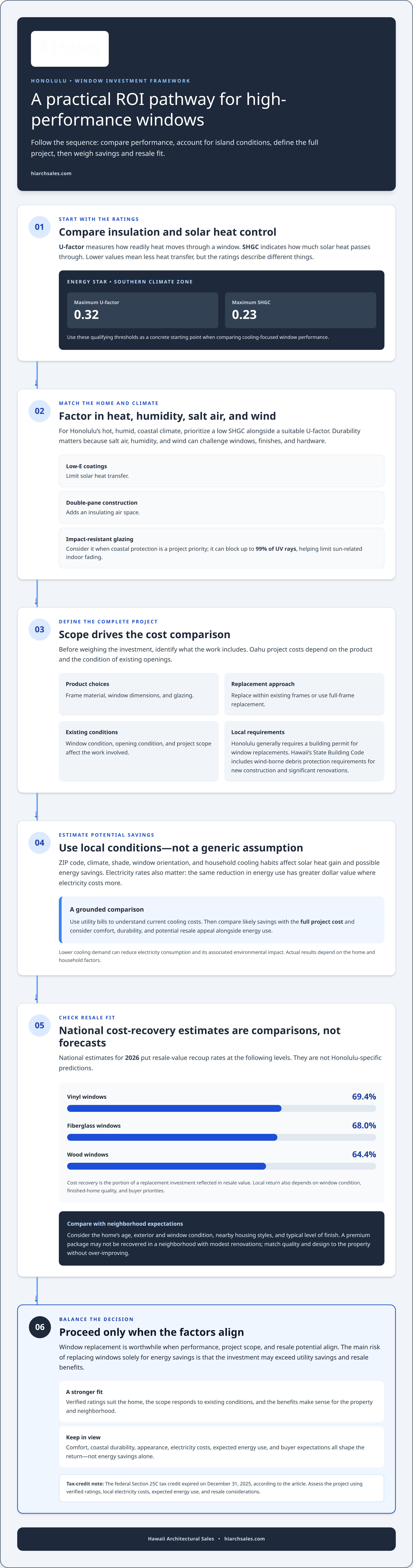
U-factor measures how readily heat moves through a window, while SHGC indicates how much solar heat passes through it. Lower values mean less heat transfer for both ratings, but the two describe different performance characteristics. For Hawaii’s ENERGY STAR Southern climate zone, qualifying windows have a maximum U-factor of 0.32 and maximum SHGC of 0.23. These thresholds give homeowners a concrete starting point when comparing efficient windows for cooling-focused performance.
Window Performance in Honolulu’s Coastal Climate
Low-E coatings limit solar heat transfer, double-pane construction adds an insulating air space, and impact-resistant windows can combine protective glazing with energy performance. For Honolulu’s hot, humid, coastal climate, prioritize a low SHGC alongside a suitable U-factor; choose impact resistance when protection from coastal exposure is also a project priority. Impact-resistant windows can block up to 99% of UV rays, which can help limit sun-related fading indoors.
ZIP code helps frame energy savings because climate, shade, window orientation, and household cooling habits affect how much solar heat enters a home. Electricity rates also shape the financial result: the same reduction in energy use has greater dollar value where electricity costs more. Hawaii homeowners can use utility bills to understand current cooling costs, then compare likely savings with the upgrade’s full cost.
Lower cooling demand can reduce electricity consumption and its associated environmental impact. Efficient, durable windows may also support resale appeal by improving comfort and potentially lowering utility costs. Their contribution to home value depends on the property and buyer expectations in the neighborhood.
The federal Section 25C tax credit expired on December 31, 2025, according to the Internal Revenue Service. For a sound assessment of the ROI of high-performance windows in Honolulu, weigh verified ratings, local electricity costs, expected energy use, and resale considerations rather than relying on a tax credit.
Are New Windows Worth It in Hawaii?
Window replacement is worthwhile when performance, project scope, and resale potential align. In Hawaii, the return depends on more than energy savings alone.
Replacement Costs and Oahu Pricing Factors
Window replacement costs depend on frame material, dimensions, glazing, and whether the project replaces windows within existing frames or uses full-frame replacement. On Oahu, the project scope and condition of existing openings also affect the work involved. Compare the complete project scope with expected energy savings and other benefits. Weather exposure can help determine which materials and performance features suit the home.
Resale Value and Cost Recovery
Cost recovery describes how much of a replacement investment is reflected in resale value. National estimates for 2026 put resale-value recoup rates at 69.4% for vinyl, 68.0% for fiberglass, and 64.4% for wood windows. These figures offer a comparison, not a Honolulu-specific forecast. For homeowners, the return also depends on the windows’ condition, the quality of the finished home, and local buyer priorities.
Durability, Maintenance, and Replacement Risks
Salt air, humidity, and wind expose Honolulu windows and frames to demanding coastal conditions. Exterior finishes can wear, and salt-laden air can affect hardware, so durability matters when choosing products. The main risk of replacing windows solely for energy savings is that the investment may exceed the utility savings and resale benefits. The condition of existing windows and the project scope both matter.
Hawaii’s State Building Code includes wind-borne debris protection requirements for new construction and significant renovations. The Honolulu Department of Planning and Permitting generally requires a building permit for window replacements.
For a practical comparison of window choices, explore window product options suited to the project’s priorities.
Matching upgrades to neighborhood value
Window choices should suit a home’s architecture and the neighborhood’s typical level of finish. A property surrounded by modest renovations may not recover the cost of a premium window package. In a neighborhood with consistent design quality, replacement windows that preserve the home’s proportions and appearance may be a better fit.
Assess the property as a whole: its age, exterior condition, window condition, and nearby housing styles. Then define the upgrade’s main purpose, such as reducing solar heat gain, improving comfort, or refreshing curb appeal. A clear objective helps keep window selection focused instead of defaulting to the most expensive option.
Choose windows to suit the property’s design and performance needs. Hawaii Architectural Sales offers various product lines designed for island conditions. Its window and door systems are available with double or triple glazing, thermal breaks, and superior sealing systems, designed for insulation and lower energy bills. These features offer concrete criteria to discuss when comparing products for a Honolulu home.
Honolulu’s outdoor living patterns also matter. A lanai or covered patio can contribute to a home’s appeal, so window upgrades should complement the connection between indoor and outdoor spaces. For example, preserving sightlines and choosing windows that suit existing openings can create a more cohesive result than a dramatic design change.
Use estimates to plan the project, not as a direct measure of neighborhood value. Compare the proposed scope with the home’s condition and the level of finish nearby properties establish. Replacing worn or poorly performing windows may be more proportionate than changing every opening. The right balance aligns performance, appearance, and project scale with the residential setting.
Honolulu window cost estimates
A useful Honolulu window replacement cost estimate starts with the project scope, not a single statewide figure. Window dimensions, frame material, glazing, opening condition, and replacement method all affect the total. A project price depends on these factors and is provided after a quote request.
For a clear comparison, specify the windows, preparation, and work required at each opening. Replacing a window within an existing frame differs from full-frame replacement, which can involve additional work. The number of openings also matters: a project involving five windows and a whole-home upgrade have different scopes, even with similar window selections.
Compare products by their stated features and fit for the home. Hawaii Architectural Sales offers windows with double or triple glazing, thermal breaks, and superior sealing systems, designed to provide insulation and lower energy bills. Consider how these features relate to the home’s exposure and performance priorities, rather than assuming that a particular frame material or specification guarantees a return.
Energy savings are only one part of the calculation. A window with a higher initial cost may offer features that suit a home’s exposure or design priorities, while a focused replacement may better fit the project’s goals. Compare expected energy benefits with the project scope, the condition of current windows, and likely resale value. The highest-performance specification is not automatically the best financial choice.
Ask for estimates based on the same opening count, frame type, glazing, and replacement scope. This makes differences easier to interpret. For example, two estimates may appear far apart because one includes full-frame work and the other retains existing frames. A like-for-like comparison gives homeowners a more useful basis for judging cost against cooling, insulation, durability, and potential return.
Hawaii Architectural Sales offers window options for homeowners and project teams balancing performance, design, and investment priorities. Once you’ve considered local costs, energy use, and neighborhood value, comparing products is a practical next step. ES | Prestige, ES | Elite, and Hopes are options to consider as you define the project’s goals and preferred aesthetic.
Bring the intended scope and priorities into the discussion, including the openings involved, desired performance, and architectural context. These details help focus the conversation on suitable window choices instead of treating the highest specification as the default. Contact Hawaii Architectural Sales to discuss options for your Honolulu project.
Make the Next Window Decision Project-Specific
The ROI of high-performance windows in Honolulu is best assessed against the priorities of a specific home, not a generic upgrade target. Decide what matters most: cooling performance, coastal durability, architectural fit, or a balanced combination. That priority can guide product discussions and keep the project aligned with its intended value.
Hawaii Architectural Sales offers ES | Prestige, ES | Elite, and ES | uPVC. These options support a focused conversation about window choices and your project’s design requirements. Bring the intended scope and key priorities to the discussion so the options can be considered in context.
A sound decision doesn’t require the most complex specification. It requires a considered match between the home, its exposure, and the outcomes you value. With those criteria in view, you can move from broad estimates to a clearer direction for the project.
Contact Hawaii Architectural Sales to discuss window options for your Honolulu home. A well-defined next step can make the investment decision more practical and intentional.
Frequently Asked Questions
What Is the Payback Period?
The payback period is the time needed for accumulated energy-bill savings to equal an upgrade’s upfront cost. Estimate it by dividing the project cost by the annual energy savings attributable to the windows. Higher cooling use or electricity rates can shorten payback; a larger project scope or smaller change in consumption can extend it. Consider resale value separately from energy savings.
How much can high-performance windows reduce cooling costs in Honolulu's climate?
Hot-climate estimates put cooling-cost reductions from window replacement at 15% to 25%, but Honolulu results depend on the home’s starting point. Older glazing and strong afternoon sun may leave more opportunity to reduce cooling demand than already-upgraded windows. Electricity use, orientation, shading, and air-conditioning habits affect bill savings. Treat this range as a planning reference, not a household-specific forecast.
What is the typical payback period for energy-efficient window replacement in Honolulu?
There isn’t one payback period that applies to every Honolulu home. Estimate it using the project scope and annual cooling-bill reduction for that property, then consider maintenance and resale recovery separately. Higher electricity use, sun-exposed windows, and inefficient existing units can increase savings potential. A smaller performance gap between existing and replacement windows can mean a longer payback period.
Are there Hawaii or Honolulu rebates, tax credits, or incentives for energy-efficient windows?
The federal Section 25C tax credit expired on December 31, 2025, according to the Internal Revenue Service, so exclude it from a new project’s expected return. Eligibility and program terms matter, so account for a rebate only when the project meets the program’s requirements.
What factors influence window replacement ROI, including home type, orientation, and existing windows?
ROI depends on the home’s construction, window orientation, existing glazing, and cooling use. For example, a west-facing room with older single-pane windows may have different heat gain and savings potential from a shaded room with newer glazing. Project scope and the condition of existing frames also matter. Compare performance and expected benefits by exposure and existing condition, rather than assuming every opening will deliver identical savings.