Steel vs Aluminum Windows in Hawaii: How Their Strength Compares
Steel is stronger, but it is not automatically the more durable choice in Hawaii. Steel frames can offer greater strength, while aluminum’s corrosion resistance may be an advantage in coastal conditions.That tradeoff matters in an island climate. Strength is only one consideration: salt-air exposure...
Steel is stronger, but it is not automatically the more durable choice in Hawaii. Steel frames can offer greater strength, while aluminum’s corrosion resistance may be an advantage in coastal conditions.
That tradeoff matters in an island climate. Strength is only one consideration: salt-air exposure, protective finishes, and maintenance also affect long-term performance. Compare the materials across strength, coastal upkeep, and service-life expectations. The strongest frame may require more maintenance, and the frame material alone does not determine how long a window performs well.
Key Takeaways
• Compare complete window systems, not frame material alone; profiles, seals, hardware, glazing, and installation quality all affect performance.
• For coastal exposure, consider how the frame’s finish protects it and what upkeep that finish requires.
• Account for steel’s need for periodic inspections and protective-coating care when planning long-term maintenance.
• Use expected lifespan as a planning guide, then weigh how exposure and maintenance may influence a window’s service life.
Steel provides greater frame strength, while aluminum balances strength with lighter weight and practical fabrication. When homeowners consult with Hawaii Architectural Sales, they learn to compare the complete window system, including its impact performance, structural design, and wind-load rating.
Aluminum Window Strength
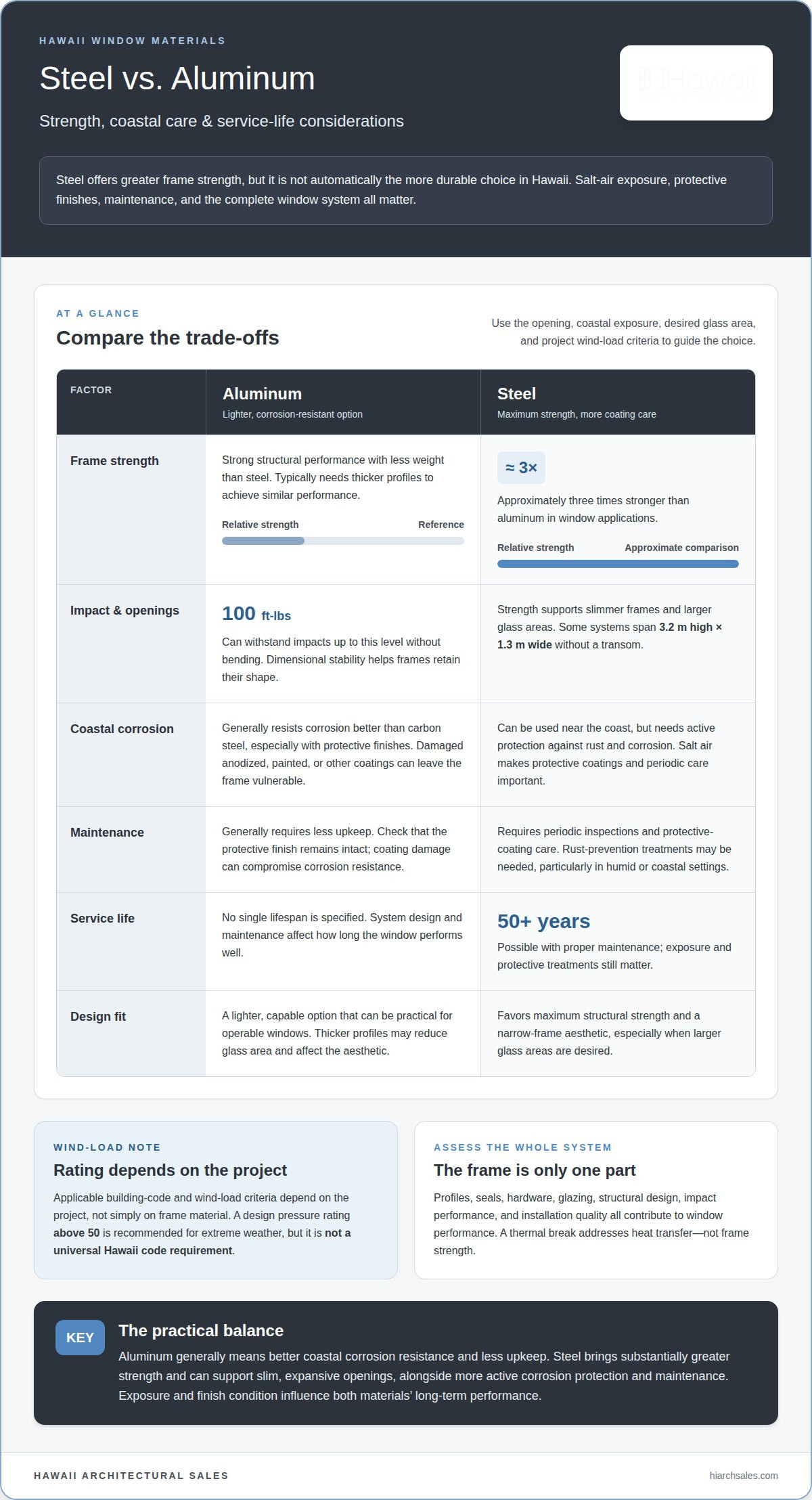
Aluminum frames provide structural strength with less weight than steel, making them a practical choice for operable windows. Aluminum can withstand impacts up to 100 ft-lbs without bending, and its dimensional stability helps frames retain their shape. However, aluminum generally needs thicker profiles than steel to achieve similar performance, which can reduce glass area and affect the aesthetic.
Steel Window Strength
Steel window systems are approximately three times stronger than aluminum in window applications. That strength supports slimmer frames and larger glass areas; some steel systems span 3.2 m high by 1.3 m wide without a transom. Steel can also last 50+ years with proper maintenance. Its greater strength doesn’t remove the need to assess the complete assembly, including glazing and hardware.
For Hawaii replacement windows, the applicable building-code and wind-load criteria depend on the project, not simply on frame material. A design pressure rating above 50 is recommended for extreme weather, but that figure isn’t a universal Hawaii code requirement. The rating must suit the project’s exposure and building conditions.
Window material
Frame strength
Impact and structure
Long-term consideration
Aluminum
Strong, lighter, typically thicker profiles
Impact resistance up to 100 ft-lbs
System design and maintenance affect lifespan
Steel
Approximately three times stronger
Supports slim profiles and larger openings
Can last 50+ years with proper maintenance
Choose based on the opening, desired glass area, and project wind-load criteria. Steel favors maximum structural strength and a narrow-frame aesthetic; aluminum offers a lighter, capable option with substantial impact resistance. A thermal break addresses heat transfer, not frame strength, so treat it as a separate performance consideration.
Is aluminum easier to maintain than steel in coastal environments?
Near the ocean, aluminum generally resists corrosion better than carbon steel, especially with protective finishes. Properly specified aluminum suits Hawaii’s humid, salty climate, but damaged coatings can expose frames to corrosion.
Aluminum Corrosion Resistance
Aluminum is a practical choice for humid, salt-exposed architectural applications because it resists corrosion. Anodized finishes, painted coatings, and specialized surface treatments protect frames. Anodizing also helps aluminum resist corrosion. Unlike carbon steel, aluminum doesn’t require rust-prevention treatments as part of its protection. However, its resistance depends partly on the finish: damage to the protective coating can leave the frame vulnerable.
Steel Corrosion Protection
Steel can be used in coastal settings, but it needs active protection against corrosion and rust. Salt air makes protective coatings and periodic maintenance important, and steel frames may need rust-prevention treatments, particularly in humid or coastal environments. With regular maintenance and protective treatments, steel windows can last in salt-air environments. Their structural advantages come with more attention to surface protection than aluminum typically requires.
Moisture adds to the risk. According to the U.S. Environmental Protection Agency, surface moisture facilitates pollutant deposition and corrosive electrochemical reactions on metals. In coastal locations, the condition of a frame’s protective finish is therefore important to long-term performance.
For aluminum, protect the anodized, powder-coated, or painted surface, since coating damage can compromise corrosion resistance. For steel, periodic inspection and protective-coating maintenance help preserve the frame. The care needs differ: aluminum relies on an intact protective finish, while steel needs ongoing attention to rust prevention and coatings.
For projects near the ocean, weigh corrosion resistance against maintenance needs. Aluminum generally requires less upkeep in coastal applications. Steel remains an option when its architectural character or structural performance is central, provided its protective treatments receive regular care.
Maintenance requirements
In Hawaii, maintenance frequency depends on exposure and finish condition, rather than one schedule for both materials. Steel needs regular inspection and protective-coating care; aluminum generally requires less upkeep.
Aluminum frames generally have low maintenance requirements. They do not need varnishes, periodic sealing, or special treatments against moisture or pests. However, their anodized, painted, or other protective surface treatment still matters: damaged coatings can leave aluminum vulnerable to corrosion. In humid environments, checking the finish is a practical part of upkeep.
Steel requires more consistent attention. Periodic inspections and protective-coating maintenance help preserve the frame, and rust-prevention treatments may be needed in humid or coastal settings. Inspect the finish for damage and address coating needs before corrosion develops. Salt exposure makes this especially important.
No single maintenance schedule suits every Hawaii project. Coastal exposure, humidity, and finish condition influence how often a frame needs attention. For steel, regular inspection and coating care are central. Aluminum can require minimal upkeep while its protective finish remains intact. This difference affects ongoing maintenance, not just the initial material choice.
Maintenance also supports overall window performance. Profiles, seals, hardware, glazing, and installation quality all contribute to how a system performs. A damaged seal or poorly operating component can affect the window even when its frame remains sound. Include these elements in routine condition checks rather than focusing only on visible frame surfaces.
Proper upkeep contributes to service life, but the expected lifespan differs by material and care. Properly specified aluminum systems can serve for 20 to 25 years or more. Steel systems can serve for 50+ years with proper coatings and maintenance. These are not interchangeable schedules: steel’s longer potential service life comes with more active care, while aluminum offers greater flexibility for projects prioritizing minimal maintenance.
Thermal breaks help address heat transfer, while intact seals and sound hardware support system performance and energy efficiency. Consider these thermal and operating components alongside each frame’s coating needs when planning maintenance.
Aluminum and steel window lifespans
Expected service life helps turn material differences into a project decision. For Hawaii buildings, compare lifespan estimates alongside exposure, protective finish, system design, and installation quality. The comparison is most useful when these conditions are considered together.
Aluminum window systems commonly last 30-50+ years when properly installed and maintained. Steel systems often last 40-75+ years when properly protected and maintained. These ranges indicate a potential advantage for steel, but they aren’t a guarantee for every opening. Coastal exposure and protective-finish condition influence long-term performance. For teams comparing steel vs aluminum window durability in Hawaii, the expected maintenance plan is part of the lifespan assessment.
Installation quality matters because a window performs as a complete assembly. Profiles, seals, hardware, glazing, and the fit between frame and opening all contribute to durability. Poorly matched components in a custom opening can undermine either material’s benefits. A well-designed system aligns these elements with the opening and its expected conditions.
Steel’s strength can support slim profiles and larger glazed openings, which may suit designs calling for narrow sightlines. Aluminum offers a different balance, with lighter frames that can suit adaptable window configurations. Comparing steel vs aluminum window durability in Hawaii also means weighing design priorities against exposure and maintenance needs. Profile choice alone does not establish service life.
Distinguish the frame’s expected service life from that of its working parts. Seals and hardware may need attention before the frame reaches the end of its useful life. A window may need component maintenance without requiring full-frame replacement. This distinction helps project teams plan lifecycle decisions without treating every repair as a complete system failure.
For a Hawaii project, use steel’s longer potential service-life range as a planning factor alongside its protection and maintenance requirements. Aluminum may better suit projects prioritizing corrosion resistance and lower maintenance effort. Compare exposure, desired profiles, and the care plan before selecting a material. To discuss window system options for a project, discuss your design requirements.
Hawaii Architectural Sales
Hawaii Architectural Sales helps connect window priorities with architectural product options. For projects where coastal maintenance, frame design, and long-term performance matter, compare those needs against the complete window system rather than choosing by material alone.
Hawaii Architectural Sales offers ES | Prestige, ES | Elite, and Hopes. Architects and project teams can consider these products while defining the project’s aesthetic and requirements. The right comparison depends on how strength, exposure, maintenance expectations, and design goals align.
To move from comparison to selection, define the opening’s role, desired sightlines, coastal exposure, and maintenance expectations in a clear product brief. These priorities give the material comparison a practical purpose: selecting a system that supports the project’s design direction and long-term requirements. For teams comparing steel vs aluminum window durability in Hawaii, bringing these considerations together helps focus product discussions.
Hawaii Architectural Sales offers ES | Prestige, ES | Elite, and ES | uPVC. Consider these as part of the broader window-system decision, guided by project needs rather than a material label alone. Aligning the brief with the design and performance goals helps move the project from evaluation toward selection.
For a project-specific discussion of window options, contact Hawaii Architectural Sales. A considered brief is a strong starting point for moving your design forward.
Frequently Asked Questions
Durability of Aluminum in Real-World Conditions: Is There a Difference?
Yes. Aluminum frames resist rot, cracking, and pest damage, but real-world durability also depends on finish condition and system components. A frame may remain intact while seals or hardware need attention. If a protective coating is damaged, corrosion can become a concern. Assessing the whole window assembly gives a more useful picture than judging the frame material alone.
What Are the Installation and Weight Differences?
Aluminum is lighter than steel, which can affect frame handling and structural planning for an opening. Steel’s greater strength can support slim profiles, while aluminum systems balance weight and strength differently. Steel window installation requires professional installation. In either case, the frame, glazing, hardware, and opening dimensions all matter to the finished assembly.
Which Material Is Better for Different Projects?
Steel suits projects where narrow frame profiles, larger glass areas, or high structural strength are priorities. Aluminum may suit projects that place greater emphasis on corrosion resistance and lower maintenance demands. For a renovation with limited capacity for upkeep, aluminum may be practical; for a design centered on slim sightlines, steel may better match the architectural brief.
How durable are steel windows in Hawaii’s humid, salty coastal climate?
Steel can provide long service in coastal conditions when protective coatings receive regular care. Steel systems can last 50+ years with proper coatings and maintenance. For projects in Honolulu, Lihue, Kailua-Kona, Kihei, and Lahaina, include exposure and ongoing coating upkeep in the durability plan. The frame’s protection is central to managing rust risk in humid, salt-air environments.
What are the typical lifespans of steel versus aluminum windows in Hawaii?
Broad planning ranges are 30-50+ years for aluminum systems and 40-75+ years for steel systems when properly installed and maintained. These are general service-life ranges, not a Hawaii-specific replacement schedule. Exposure, protective finishes, installation quality, seals, and hardware can all affect when a window needs repair or replacement. Consider the frame and its working components separately.
How do steel and aluminum windows compare for wind, impact, and storm resistance in Hawaii?
Steel has greater structural strength, while aluminum window frames can withstand impacts up to 100 ft-lbs without bending. Neither material alone establishes a window’s storm performance. The complete system, including glazing, frame profiles, hardware, and installation, must suit the project’s wind-load conditions. Treat impact resistance and wind-load performance as separate criteria during product selection.