Technical Support for Architectural Products: A 2026 Hawaii Engineering Guide
Specifying a high-end glazing system in Honolulu shouldn't feel like a gamble against the next Category 5 hurricane. While aesthetic vision drives the design, the reality of Hawaii's 160 mph wind speed proposals and aggressive salt-air corrosion creates a high-stakes engineering challenge. You under...
Specifying a high-end glazing system in Honolulu shouldn't feel like a gamble against the next Category 5 hurricane. While aesthetic vision drives the design, the reality of Hawaii's 160 mph wind speed proposals and aggressive salt-air corrosion creates a high-stakes engineering challenge. You understand that a single incorrect specification leads to significant liability and project delays. Utilizing professional technical support architectural products ensures your design intent survives these environmental pressures while meeting the 2026 regulatory standards.
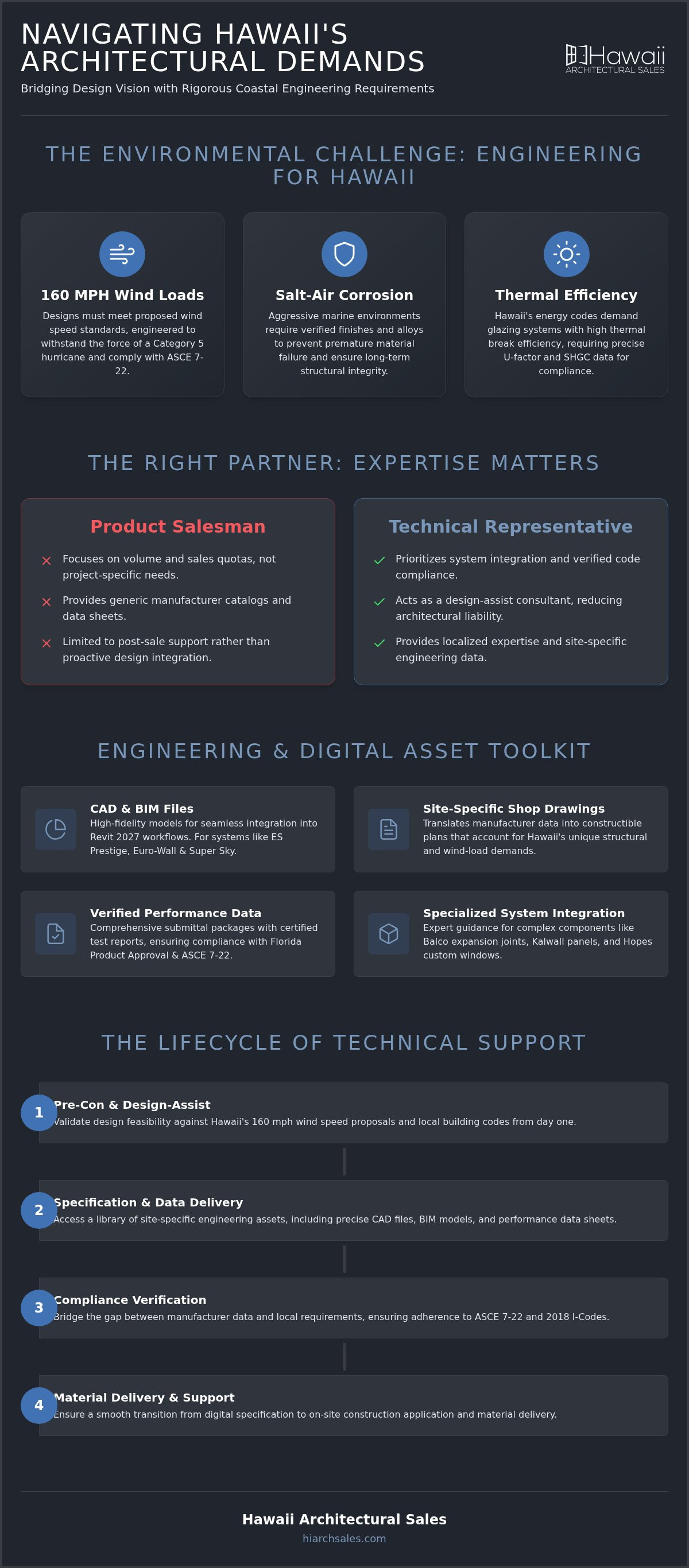
This guide demonstrates how specialized technical support bridges the gap between sophisticated design intent and Hawaii's rigorous coastal engineering requirements. You'll learn how to leverage localized expertise to secure verified compliance with ASCE 7-22 wind standards and obtain the precise CAD and BIM files needed for Revit 2027 workflows. We examine the streamlined specification process for premium systems like ES Prestige and Euro-Wall, ensuring your building envelope remains durable, efficient, and fully compliant with the latest Hawaii State Building Codes.
Key Takeaways
• Learn how dedicated technical support architectural products validate design feasibility while adhering to Hawaii's 160 mph wind speed proposals.
• Discover how to access site-specific engineering assets, including CAD and BIM files for premium systems like ES Prestige and Super Sky.
• Understand the technical relationship between Florida Product Approval and ASCE 7-22 standards to ensure localized compliance in coastal environments.
• Streamline your specification process with design-assist services that bridge the gap between manufacturer data and practical construction application.
The Role of Technical Support in Modern Hawaii Architecture
Technical support architectural products represent the critical bridge between laboratory-tested performance and the practical realities of a Hawaii job site. In the field of Architectural Engineering, this support involves providing precise engineering data, certified test reports, and granular specification guidance. It's not a post-sale courtesy. Instead, it's a fundamental requirement for validating that a building envelope can withstand local environmental pressures. The primary goal is to reduce architectural liability through verified performance data. Without this foundation, a project risks non-compliance with the 2018 I-Codes currently enforced across the islands.
Hawaii's unique microclimates necessitate higher levels of technical scrutiny than mainland projects. A development in the rain-heavy Manoa valley faces different hydraulic pressures than a beachfront build in Wailea. Professional technical support architectural products account for these variations by providing site-specific data that goes beyond a general manufacturer's catalog. This ensures that the systems you specify are actually fit for the specific geographic coordinates of your project.
The Technical Representative vs. The Product Salesman
A standard salesman focuses on volume and quotas. A technical representative prioritizes system integration and code compliance. This distinction is vital during the design-assist phase of luxury residential or commercial projects. We don't just provide a frame; we analyze how that frame interacts with the entire building envelope. Localized expertise in Honolulu allows for on-site consultations that a mainland-based representative can't provide. This presence ensures that specified systems like Euro-Wall or Hopes are correctly integrated into the structural requirements of the project. We act as a consultant to ensure the design intent remains intact while meeting safety standards.
Addressing the #1 Architectural Risk: Material Failure
Material failure in Hawaii is often driven by the aggressive marine environment. In coastal areas like Lihue or Kihei, salt-air corrosion can compromise structural integrity within years if the wrong finish or alloy is specified. Technical support provides the data required to verify that systems like ES Prestige meet long-term durability standards. Beyond corrosion, Hawaii's energy codes demand high thermal break efficiency. Support teams provide the U-factor and SHGC data necessary to ensure compliance while maintaining the aesthetic intent of large-scale glazing. This level of scrutiny is essential as the state considers increasing wind speed design requirements to 160 mph for specific locations to align with Category 5 hurricane standards.
Engineering Assets: Leveraging CAD, BIM, and Performance Data
Technical support architectural products provide the digital backbone for modern project delivery. It's no longer sufficient to rely on generic brochures or outdated PDFs. Architects need precise CAD and BIM files for systems like Euro-Wall and Super Sky to ensure accurate spatial coordination from the earliest design phases. Site-specific shop drawings represent the most critical asset in this category. They translate laboratory manufacturer data into a constructible plan that accounts for Hawaii's unique structural and wind-load demands. For projects utilizing Kalwall translucent panels, we offer advanced daylighting models. These simulations help predict exactly how light interacts with the building interior, optimizing energy efficiency while reducing reliance on artificial lighting.
Integrating High-Performance Systems into Digital Workflows
Digital workflows require high-fidelity BIM data to be effective. Incorporating ES Elite window models within Revit 2027 allows for the seamless integration of thermal and structural parameters directly into the project model. This precision extends to specialized components like Balco expansion joint systems. Correctly modeling these for seismic movement is essential in Hawaii's active geological zones. Similarly, complex skylight spans from Super Sky benefit from detailed 3D modeling to manage intricate geometries and drainage slopes. This level of digital coordination reduces field errors and ensures that the high-performance envelope performs as intended. Many members of AIA Honolulu find that early integration of these assets simplifies the permit process and clarifies coordination with structural consultants.
Performance Testing and Verified Data Sheets
A comprehensive submittal package must contain verified performance data rather than just marketing claims. In Hawaii's aggressive marine environment, interpreting ASTM testing results for salt spray is mandatory to ensure coastal durability. We provide these verified data sheets to prove that finishes will withstand the corrosive air in locations like Lihue or Kihei. Solar heat gain is another priority for Hawaii's energy code compliance. NFRC ratings are critical for meeting specific SHGC requirements, particularly in Honolulu's high-density urban core. For multi-family residential projects, acoustic performance data is also vital for managing urban noise. Accessing this technical depth through technical support for architectural products ensures that every specification is backed by laboratory-certified results.
Hawaii-Specific Compliance: Managing Wind Loads and Salt Exposure
Hawaii's regulatory environment demands a high level of engineering precision. By August 2026, navigating the ASCE 7-22 wind load standards has become a standard requirement for island projects. These updated provisions require architects to account for localized wind speeds that often exceed 145 mph. Professional technical support architectural products serve as the critical "technical cross-walk" between national testing standards and local building codes. Because Hawaii lacks its own large-scale testing facilities for building envelopes, Florida Product Approval (FPA) remains the industry benchmark. Systems that pass the rigorous High-Velocity Hurricane Zone (HVHZ) requirements in Florida provide the necessary performance data for Hawaii's coastal developments. This includes specifying hurricane-rated folding glass walls from Euro-Wall that are engineered to maintain structural integrity under extreme cyclic pressure.
Wind-Borne Debris and Impact Ratings
Impact-rated glass is a non-negotiable requirement for developments in Lihue and Kailua-Kona. These regions face high risks from wind-borne debris during hurricane events. Technical support verifies the Design Pressure (DP) ratings of ES Prestige windows to ensure they align with site-specific wind maps. We provide the engineering assets to confirm these systems can withstand the 150+ mph wind speeds defined in ASCE 7-22 Appendix W. This level of verification is essential for reducing architectural liability. It ensures that the specified glazing doesn't just look the part but actually performs under the catastrophic loads proposed in current legislative trends like HB356.
Corrosion Resistance for Coastal Envelopes
Salt-air exposure is a constant threat to building longevity in Hawaii. Selecting the wrong material leads to pitting, oxidation, and eventual structural failure. We provide technical guidance on material selection, comparing high-grade aluminum with the superior corrosion resistance of ES uPVC. For projects requiring a slim-profile aesthetic, Hopes steel windows offer unmatched strength when paired with advanced protective coatings. This scrutiny extends to ventilation systems. Specifying AWV louvers with Kynar finishes ensures that architectural metal components survive the salt-heavy environments of Kihei or Lihue. Integrating salt resistant window frames during the design-assist phase protects the building envelope from premature degradation. Our technical team assists in selecting the precise finishes and alloys required to meet Hawaii's durability standards.
The Lifecycle of Technical Support: From Pre-Con to Material Delivery
The pre-construction phase is where technical support adds the most value. A specialized Hawaii architectural window distributor assists with the MasterSpec process, ensuring that performance requirements for wind-borne debris and salt-air resistance are clearly defined. During schematic design, we help customize daylighting solutions with Kalwall translucent panels to optimize solar heat gain. By providing comprehensive technical support architectural products, we identify potential system conflicts before they reach the job site. For instance, we verify that the structural opening for a Euro-Wall folding system is compatible with the specified header deflection. Resolving these issues digitally prevents costly field modifications and delays.
During the bidding phase, our role shifts to contractor education. We ensure that bidding general contractors understand the technical requirements of specified systems like ES Prestige. This prevents the submission of "equal to" products that may lack the verified performance data needed for Hawaii's 160 mph wind speed proposals. Clear technical documentation during the bid stage protects the architect's specification from being undercut by non-compliant alternatives.
Logistics and Post-Sales Technical Documentation
Managing the "Hawaii Factor" requires specialized logistical support. Island-wide shipping logistics for oversized glazing or heavy steel systems from Hopes require precise coordination. We manage these delivery schedules to align with the project's construction phases. Once materials arrive, we provide detailed installation oversight documentation. While we don't perform the installation, we ensure that the contractor has the manufacturer-approved shop drawings and site-specific instructions needed for a successful build. This documentation is critical for maintaining the system's warranty. Finally, we provide long-term care and maintenance manuals for systems like Euro-Wall to ensure they withstand Hawaii's corrosive environment for decades. For project-specific guidance on your next development, contact our Honolulu-based technical team.
Partnering with Hawaii Architectural Sales for Project Success
Hawaii Architectural Sales serves as the essential link between high-performance global manufacturing and the specific needs of Hawaii’s development community. As the authorized representative for brands like ES Prestige and Euro-Wall, we provide the localized technical support architectural products require to succeed in this unique environment. Our Honolulu-based team translates complex manufacturer data into actionable engineering solutions for projects across the islands. We prioritize engineering precision and strict code compliance in every consultation, ensuring that your building envelope remains a long-term asset. This partnership allows developers to specify world-class systems with the confidence that they will meet local Hawaii County or Honolulu County amendments.
Our Technical Portfolio and Brand Partnerships
Our expertise encompasses the most demanding systems in the industry. We provide deep-dive technical guidance for ES Elite glazing, Hopes Steel windows, and Kalwall translucent panels. This specialized knowledge gives Honolulu architects a distinct competitive edge. You gain access to a partner who understands how these systems interact with Hawaii’s specific environmental loads. Our resource library also includes comprehensive data for Super Sky skylights and Balco expansion joints, allowing for total envelope coordination. We help you select the right finishes and profiles to ensure aesthetic goals never compromise structural integrity. This localized perspective ensures that global products are correctly adapted for the intense UV and salt exposure found in the Pacific.
Advancing Your 2026 Projects with Technical Precision
The complexity of modern building codes requires a partner with established regional expertise. Leveraging our 40+ years of experience in the Hawaii market allows your team to bypass common specification pitfalls. Whether you're designing a high-density commercial tower in Kaka’ako or a luxury coastal residence in Kapalua, our team provides the technical data needed for a seamless build. We help you navigate the transition between design intent and field application. We invite you to schedule a technical consultation for your next project to ensure full compliance with the latest 2026 engineering standards and wind speed requirements. Contact Hawaii Architectural Sales for Technical Support to begin the design-assist process and secure the engineering assets your project demands.
Securing the Future of Hawaii’s Building Envelopes
Designing for Hawaii's coastal environments requires more than aesthetic vision. It demands a rigorous commitment to engineering precision and localized expertise. As legislative proposals push for 160 mph wind speed standards, the bridge between manufacturer data and field application becomes your most valuable asset. Accessing specialized technical support architectural products ensures that your specifications meet the latest ASCE 7-22 requirements while surviving the corrosive salt air of the islands. This proactive approach reduces architectural liability and streamlines the complex MasterSpec process from pre-construction through material delivery.
Hawaii Architectural Sales offers over 40 years of market expertise as the authorized representative for high-performance systems like ES | Prestige and Euro-Wall. We provide the site-specific shop drawings and BIM assets needed to validate your design intent. Don't leave your project's compliance to chance. You can Request Technical Engineering Data for Your Project today to ensure your next build is both resilient and legally compliant. We look forward to helping you achieve a durable building envelope that performs for decades.
Frequently Asked Questions
How do I obtain CAD or BIM files for ES Prestige windows?
You can request high-fidelity CAD details and Revit-ready models directly through our technical team. We provide digital assets specifically formatted for Revit 2027 to ensure seamless integration into your architectural engineering workflow. These files include precise thermal and structural parameters. Utilizing professional technical support architectural products during the schematic phase allows you to identify spatial conflicts early. This proactive coordination reduces field errors and ensures that the specified ES Prestige systems align with your project's digital twin.
Does Hawaii Architectural Sales provide site-specific shop drawings?
We provide comprehensive shop drawings that translate manufacturer laboratory data into site-specific construction plans. These drawings are tailored to the exact geographic coordinates and structural requirements of your Hawaii project. While we don't perform the installation, our technical documentation ensures that the contractor has a clear roadmap for assembly. This level of detail is essential for verifying that high-performance envelopes meet the rigorous wind-load demands of the 2018 International Building Code enforced across the islands.
What is the difference between Florida Product Approval and Hawaii code compliance?
Florida Product Approval (FPA) serves as the testing benchmark because Hawaii lacks large-scale testing facilities. However, Hawaii code compliance requires cross-referencing this data with ASCE 7-22 wind standards and local county amendments. Our technical support architectural products bridge this gap by providing the technical cross-walk needed to validate FPA-rated systems for Hawaii's specific microclimates. We ensure that the Design Pressure (DP) ratings and impact certifications meet the unique requirements of the Hawaiian Islands, such as the proposed 160 mph wind speed thresholds.
Can you provide technical data for wind-borne debris protection in Honolulu?
Yes, we provide certified impact test reports and technical data sheets for all our hurricane-rated systems. This documentation verifies that specified glazing meets the wind-borne debris requirements for Honolulu and other high-velocity zones. We analyze the site-specific wind maps to confirm that your project utilizes the correct impact-rated glass. This data is critical for reducing liability and ensuring that the building envelope can withstand the catastrophic pressures defined in current Hawaii legislative trends like HB356.
How does technical support assist in meeting Hawaii's energy efficiency codes?
We provide the necessary NFRC ratings, including U-factor and Solar Heat Gain Coefficient (SHGC) data, to ensure compliance with the 2018 International Energy Conservation Code. Our team assists in selecting glazing configurations that balance natural daylighting with thermal performance. By providing verified thermal break efficiency data for systems like ES Elite, we help you meet Hawaii’s stringent energy requirements. This technical scrutiny is vital for optimizing building performance in high-density urban environments like Honolulu where heat gain is a primary concern.
Do you offer on-site technical consultations for projects on Maui or Kauai?
Our localized expertise extends to all islands, including Maui, Kauai, and Hawaii Island. We provide on-site technical consultations in Lihue, Kahului, and beyond to assist with system integration and pre-construction planning. Having a local presence allows us to address site-specific environmental challenges that mainland representatives might overlook. We act as a strategic ally during the design-assist phase, ensuring that your architectural vision is supported by sound engineering principles regardless of the project's island location.
What technical documentation is provided for Kalwall translucent systems?
We provide advanced daylighting models and comprehensive thermal performance sheets for all Kalwall systems. This documentation allows you to predict how natural light interacts with the building interior while maintaining energy efficiency. You'll receive specific data on light transmission, insulation values, and structural load capacities. These assets are essential for schematic design, helping you optimize the building envelope for both aesthetic impact and long-term durability. Our technical team ensures these translucent panels meet all Hawaii-specific building code requirements.
How do I verify the DP rating for Euro-Wall door systems?
Design Pressure (DP) ratings for Euro-Wall systems are verified through project-specific engineering data sheets. These ratings depend on panel size, configuration, and the specific hardware specified for the project. We provide the certified test reports required to prove that your chosen configuration can withstand the wind loads defined by ASCE 7-22. It's important to verify these ratings during the specification phase to ensure the system remains compliant with Hawaii's rigorous coastal engineering standards and high-velocity hurricane zone requirements.