The Architect’s Guide to Balco Joint Systems in Hawaii (2026)
In the corrosive atmosphere of the Hawaiian Islands, an expansion joint is either a building's strongest defense or its quickest point of failure. You understand that designing for the Pacific requires more than just standard specifications. It demands materials that can survive 160 mph winds and re...
In the corrosive atmosphere of the Hawaiian Islands, an expansion joint is either a building's strongest defense or its quickest point of failure. You understand that designing for the Pacific requires more than just standard specifications. It demands materials that can survive 160 mph winds and relentless salt-air exposure without compromising structural integrity. Specifying Balco joint systems Hawaii allows you to address these environmental threats while maintaining the aesthetic and functional standards your clients expect.
Managing the complex intersection of seismic requirements and fire-rating compliance is a constant challenge for island architects. This guide provides the technical clarity you need to select the correct Balco series for your specific project conditions. You'll learn how to ensure long-term durability in high-movement zones and where to find dedicated local technical support to streamline your specification process. We'll examine the latest 2026 building code updates and specialized covers for parking structures and coastal resorts to ensure your next project is both compliant and resilient.
Key Takeaways
• Learn how expansion joint systems serve as a primary defense against seismic shifts and thermal expansion in Pacific structural designs.
• Identify the technical differences between JointSpan™ and QuakeSpan™ to select the optimal Balco joint systems Hawaii for your specific project requirements.
• Understand the critical role of 316 stainless steel in preventing salt-air corrosion and ensuring long-term durability in coastal environments.
• Master the coordination between expansion joints and architectural louvers to maintain structural integrity and ventilation across the building envelope.
• Access professional strategies for navigating Hawaii's unique logistics and building codes through local technical representation and sampling.
Understanding Expansion Joint Systems in Hawaii’s Built Environment
An Expansion joint is a deliberate structural gap designed to safely absorb the movement of building materials. These systems prevent internal stresses from causing cracks or structural failure as materials react to external forces. In Hawaii, these gaps are essential components of the building envelope, often requiring specialized Balco joint systems Hawaii to meet local performance standards. They ensure that a structure remains flexible yet secure during its entire lifecycle. Proper engineering allows these systems to act as a release valve for the energy stored within a building's mass.
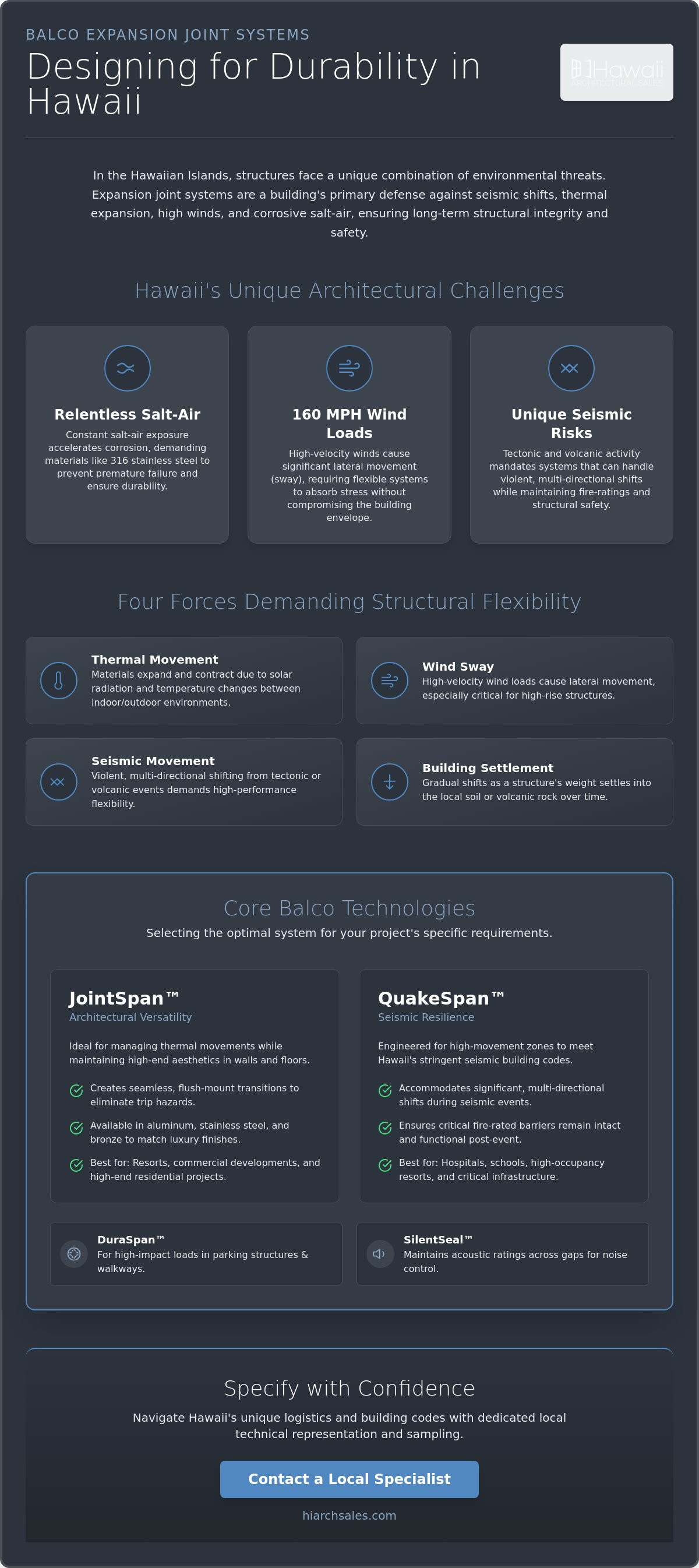
Architects must design for four primary movement types to maintain structural integrity. Thermal movement occurs as materials expand in the heat and contract in the cool. Wind sway involves lateral movement caused by high-velocity wind loads, which is a critical concern for high-rise developments in Honolulu. Seismic movement includes the violent, multi-directional shifting experienced during tectonic or volcanic events. Finally, settlement movement accounts for the gradual shifts as a building's weight settles into the local soil or volcanic rock.
Thermal Expansion in Tropical Climates
Hawaii's consistent high humidity creates a unique set of challenges for material expansion. While temperature swings might seem less extreme than in mainland environments, the constant moisture and solar radiation accelerate the expansion rates of aluminum, steel, and concrete. Large-scale Honolulu commercial developments require continuous joint systems to manage these forces effectively. Specifying Balco joint systems Hawaii ensures that the transition between air-conditioned interiors and humid exterior facades remains sealed and functional. This precision prevents buckling and moisture intrusion, which are common failures in poorly planned joints.
Seismic Movement and Hawaii Building Codes
The Hawaiian Islands face distinct seismic risks from both tectonic plate movement and localized volcanic activity. These forces require structures to accommodate sudden shifts that differ from standard mainland seismic patterns. Hawaii building codes include specific amendments to the International Building Code (IBC) that dictate higher seismic design categories. Balco systems are engineered to meet these stringent standards. They offer high-performance covers that remain functional after significant movement events. These systems provide the necessary flexibility to protect the building's skeleton while ensuring that critical fire-rated barriers stay intact. This reliability is vital for maintaining the safety of hospitals, schools, and high-occupancy resorts across the islands.
Core Balco Technologies: From JointSpan™ to QuakeSpan™
High-performance architecture in the Pacific requires systems that balance aesthetics with extreme durability. Balco offers a specialized suite of products designed for these exact conditions. JointSpan™ provides versatile architectural covers for walls and floors, while DuraSpan™ manages the high-impact loads found in parking structures and pedestrian walkways. For projects requiring maximum acoustic separation, SilentSeal™ maintains sound ratings across expansion gaps. This is an essential feature for luxury hospitality and mixed-use developments where noise control is a priority. Integrating Balco joint systems Hawaii into your project means selecting a technology tailored to the specific movement profile of the structure.
Whether it's the subtle thermal shifts of a boutique hotel or the massive displacements of a transit hub, these systems provide a reliable, engineered solution. Each product line undergoes rigorous testing to ensure it meets fire-rating and load-bearing requirements. If you are currently detailing a complex structural transition, you can consult with a local specialist to review specific load requirements and material finishes for your site.
Architectural JointSpan Applications
In luxury Kihei resorts, the visual impact of an expansion joint is just as important as its function. JointSpan™ allows architects to choose from aluminum, stainless steel, or bronze to match the high-end finishes of the building envelope. Surface-mount options are available for retrofit applications, but flush-mount systems are preferred for creating seamless floor transitions. These designs eliminate trip hazards and maintain a clean aesthetic. These covers are engineered to remain level and secure even as the building moves beneath them, ensuring long-term performance in high-traffic areas.
Seismic Resilience with QuakeSpan
Hawaii Island presents some of the most challenging seismic conditions in the United States. QuakeSpan™ systems are specifically designed for base-isolated buildings and high-seismic zones where joint openings can reach 30 inches or more. These systems utilize advanced centering bar technology. This mechanism ensures the cover plate returns to its original position after a movement event. This technology is vital for essential facilities like hospitals and emergency centers. It ensures that hallways and egress paths remain unobstructed and safe for occupants during and after a seismic shift. By accommodating multi-directional movement, QuakeSpan™ protects the building's structural integrity while maintaining the safety of its inhabitants.
Engineering for the Islands: Salt Air and Environmental Resilience
The Pacific environment presents a unique set of corrosive challenges that can quickly degrade standard building components. In coastal areas like Lahaina or Waikiki, salt-air intrusion acts as a constant abrasive force on exposed metal surfaces. Standard aluminum covers, while suitable for inland mainland projects, often succumb to heavy pitting and oxidation within a few years of installation. Specifying Balco joint systems Hawaii ensures your project utilizes materials engineered to withstand these aggressive conditions. Durability in the islands isn't just about structural strength; it's about material chemistry and surface protection.
Architects must prioritize finishes that provide a long-term barrier against chloride-induced corrosion. Kynar 500® coatings and high-micron anodized finishes offer the necessary resistance for exterior applications. These treatments prevent the salt from reaching the base metal, extending the lifecycle of the expansion joint system significantly. For projects within five miles of the coastline, these specifications are not optional upgrades but essential requirements for building longevity.
Corrosion-Resistant Material Selection
Choosing between aluminum, stainless steel, and brass requires a clear understanding of the local micro-climate. While aluminum is cost-effective, 316 stainless steel is the preferred choice for high-salinity environments due to its superior resistance to corrosion. ASTM B117 salt spray testing is a standardized method used to evaluate the corrosion resistance of materials and surface coatings when exposed to a controlled saline environment over a specific duration. Results from these tests prove that high-grade stainless steel maintains its integrity far longer than standard alloys. Maintenance protocols also differ by location. Windward Hawaii sites, which face salt-laden trade winds, require more frequent freshwater rinsing than drier leeward locations to prevent salt crusting and buildup.
Fire and Weather Barrier Integration
Movement gaps shouldn't become weak points in the building's weather or fire protection strategy. MetaGuard™ water barriers are designed to integrate seamlessly with Balco systems to prevent moisture intrusion into the building envelope. This is vital in Hawaii's high-rainfall zones where wind-driven rain can penetrate unprotected gaps. Additionally, maintaining life-safety ratings requires UL-listed fire barrier systems that can accommodate the same multi-directional movement as the joint cover itself. In high-rise Honolulu residential towers, smoke seals are equally critical. These seals prevent the vertical migration of smoke through expansion gaps during a fire event, providing occupants with essential time for safe egress. Ensuring these systems are coordinated during the design phase prevents costly field modifications and ensures full code compliance.
Specifying Balco Systems for Hawaii Commercial Projects
Successful specification for island structures requires a holistic view of the building envelope. You don't just select a cover based on gap width; you choose a system that integrates with every adjacent material. In Hawaii, where thermal movement and seismic loads are significant, the specification process must be precise. Utilizing Balco joint systems Hawaii provides the necessary engineering support to handle these variables. This approach ensures that the building remains watertight and structurally sound while meeting all local regulatory requirements. Proper coordination during the design phase prevents costly field errors during the construction of complex commercial projects.
Designers often find that expansion joints must work in tandem with other specialty systems. Specifying AWV architectural louvers Honolulu alongside expansion joints ensures that air intake and structural movement are managed within a unified design language. This synergy is particularly important in high-rise mechanical floors or parking structures. Partnering with a dedicated architectural window distributor Hawaii provides the technical coordination necessary to prevent conflicts between glazing systems and movement gaps. You can request a technical review for your current project specifications to ensure all envelope components are properly aligned.
Coordination with the Building Envelope
Aligning expansion joint locations with window mullions and facade panels is critical for maintaining a clean architectural aesthetic. It's essential to manage thermal movement at the intersection of glass curtain walls and masonry. These materials expand at different rates, and the joint system must accommodate that delta without stressing the glazing. Technical considerations also extend to the roof. Roof-to-wall and roof-to-roof expansion transitions require specific detailing to maintain the integrity of the waterproofing membrane. Balco systems provide the necessary transitions to bridge these gaps, ensuring a continuous barrier against the elements.
ADA and Safety Compliance
Public safety is a primary concern in high-traffic resort and retail environments. Selecting slip-resistant floor covers is a requirement for ADA compliance and liability reduction. You can minimize trip hazards by using recessed frames and tapered cover plates. These designs allow for a smooth transition between different floor finishes, such as stone and carpet. In industrial or back-of-house areas, the focus shifts to load-bearing capacity. Joints in loading docks or maintenance areas must be engineered for heavy-load traffic, including forklifts and delivery trucks. Balco’s heavy-duty systems are designed to withstand these point loads without deforming or failing over time.
Partnering with Hawaii Architectural Sales for Technical Support
Hawaii's isolated geography and unique regulatory environment demand a level of technical support that goes beyond a standard manufacturer's representative. Partnering with Hawaii Architectural Sales provides architects and engineers with a direct link to specialized expertise on the ground. We understand that specifying Balco joint systems Hawaii involves more than selecting a part number; it requires a deep understanding of local logistics and seismic codes. Our team acts as a consultant throughout the design and construction phases. We help you navigate the complexities of island-based building projects while ensuring your structural movement solutions are both compliant and cost-effective.
Accessing physical samples and accurate technical data is essential for Honolulu design firms working under tight deadlines. We provide the necessary documentation to support your design intent and facilitate the approval process. Our services include detailed material take-offs and budgeting assistance. This precision helps developers avoid the costly surprises often associated with specialty building materials. By identifying the exact requirements early, we ensure that the project stays on track and within its financial parameters. Our localized knowledge allows us to anticipate challenges before they impact your schedule.
Technical Consulting and Specification Support
Our consultation process begins with a thorough review of your architectural drawings. We examine the structural gaps to ensure the selected joint system matches the anticipated movement and load requirements discussed in earlier sections. If your project features non-standard structural conditions, we coordinate with Balco’s engineering team to provide custom-engineered solutions. This direct communication bridge eliminates the delays common in large-scale manufacturing relationships. We translate your specific design needs into technical reality, ensuring that every expansion joint performs as intended within the unique Hawaii built environment.
Streamlined Procurement for Island Developers
Logistics are often the most challenging aspect of Hawaii construction projects. We leverage established relationships to manage the flow of materials from the factory to your job site in Lihue, Kona, or Hilo. Consolidated shipping is a primary advantage of our service. By grouping specialty building materials, we reduce freight costs and minimize the risk of damage during transit. This organized approach provides island developers with a more predictable supply chain. Our goal is to reduce project risk through accurate material supply and expert guidance. Contact us today for a consultation on your next Hawaii building project to see how we can support your structural movement needs.
Securing Structural Integrity for the Pacific Environment
Designing for the Hawaiian Islands requires a precise approach to movement and material resilience. You've seen how specialized engineering manages the intersection of seismic shifts and aggressive salt-air corrosion. By selecting the appropriate Balco joint systems Hawaii, you ensure that your building envelope remains both functional and visually pristine despite the region's environmental demands. Successful project delivery depends on early coordination and technical accuracy during the specification phase.
Hawaii Architectural Sales brings over 40 years of local architectural sales expertise to your project. As an Authorized Balco Representative for Hawaii, we're specialists in high-performance building envelope systems. We provide the technical data and logistical support needed to navigate complex island codes and delivery schedules. Consult with a Hawaii Balco expert today to review your project requirements and secure the right solutions for your design. Your next development deserves the stability of proven expertise and engineered precision.
Frequently Asked Questions
How do I choose between a seismic and a thermal expansion joint?
Selection depends on the anticipated movement source and structural design requirements. Thermal joints primarily accommodate the gradual expansion and contraction caused by temperature fluctuations. Seismic joints are engineered for larger, multi-directional displacements triggered by tectonic or volcanic activity. If your project is in a high seismic design category, a seismic system is required to maintain structural integrity and safety during a major movement event.
Are Balco expansion joints compliant with Hawaii’s hurricane and wind load codes?
Balco systems are engineered to meet stringent wind load requirements, including Hawaii's 2026 building code updates that mandate resistance to 160 mph winds. These systems undergo rigorous testing to ensure they remain secure under extreme pressure. Proper specification and installation are critical for ensuring the joint cover doesn't become a point of failure or a projectile during a Category 5 hurricane event.
What is the best material for expansion joint covers in coastal Hawaii environments?
Type 316 stainless steel is the superior material for projects located in coastal or high-salinity environments. While aluminum is standard for many inland applications, it often suffers from pitting and oxidation in Hawaii's salt air. Stainless steel provides the necessary corrosion resistance to maintain both structural performance and aesthetic appearance. Kynar-coated aluminum remains a viable alternative for less aggressive interior or leeward zones.
Can Balco systems be customized for specific joint widths or angles?
Balco joint systems Hawaii
can be customized to accommodate non-standard joint widths, complex angles, and unique structural transitions. Our technical team works with architects to provide custom-engineered solutions that go beyond standard catalog specifications. Whether you're dealing with irregular facade geometries or exceptionally wide seismic gaps, these systems can be tailored to fit the specific movement profile of your design.
How do fire barriers work within an expansion joint system?
Fire barriers are installed within the joint opening, beneath the architectural cover, to maintain the continuity of fire-rated walls and floors. These systems are UL-listed and tested to accommodate the same range of movement as the joint itself. They prevent the passage of flames, heat, and smoke through the expansion gap, ensuring the building meets life-safety codes without compromising structural flexibility or aesthetics.
Do expansion joint covers require regular maintenance in Hawaii?
Regular maintenance is essential for joint covers in Hawaii, particularly for exterior systems on the windward sides of the islands. Salt and debris can accumulate in the tracks or on the plates, potentially hindering movement or accelerating surface corrosion. A consistent schedule of freshwater rinsing and periodic technical inspections ensures the system remains functional and maintains its finish in high-salinity environments.
What is the difference between JointSpan and QuakeSpan systems?
The primary difference lies in the movement capacity and the mechanical design of the system. JointSpan™ systems are architectural covers designed for standard thermal and wind-induced movement in walls, floors, and ceilings. QuakeSpan™ is a specialized seismic system engineered for massive multi-directional shifts. It utilizes centering bar technology to ensure the cover plate returns to its neutral position after a significant seismic event occurs.
How can I get Balco product samples in Honolulu?
You can obtain Balco joint systems Hawaii samples and technical data by contacting Hawaii Architectural Sales directly. We maintain a local inventory of materials to support Honolulu design firms and island developers. Our team provides physical samples that allow you to verify finishes and material quality before finalizing your specifications. This local support ensures your project moves forward with accurate data and reliable material selections.