UPVC window maintenance for coastal cleaning and seal care
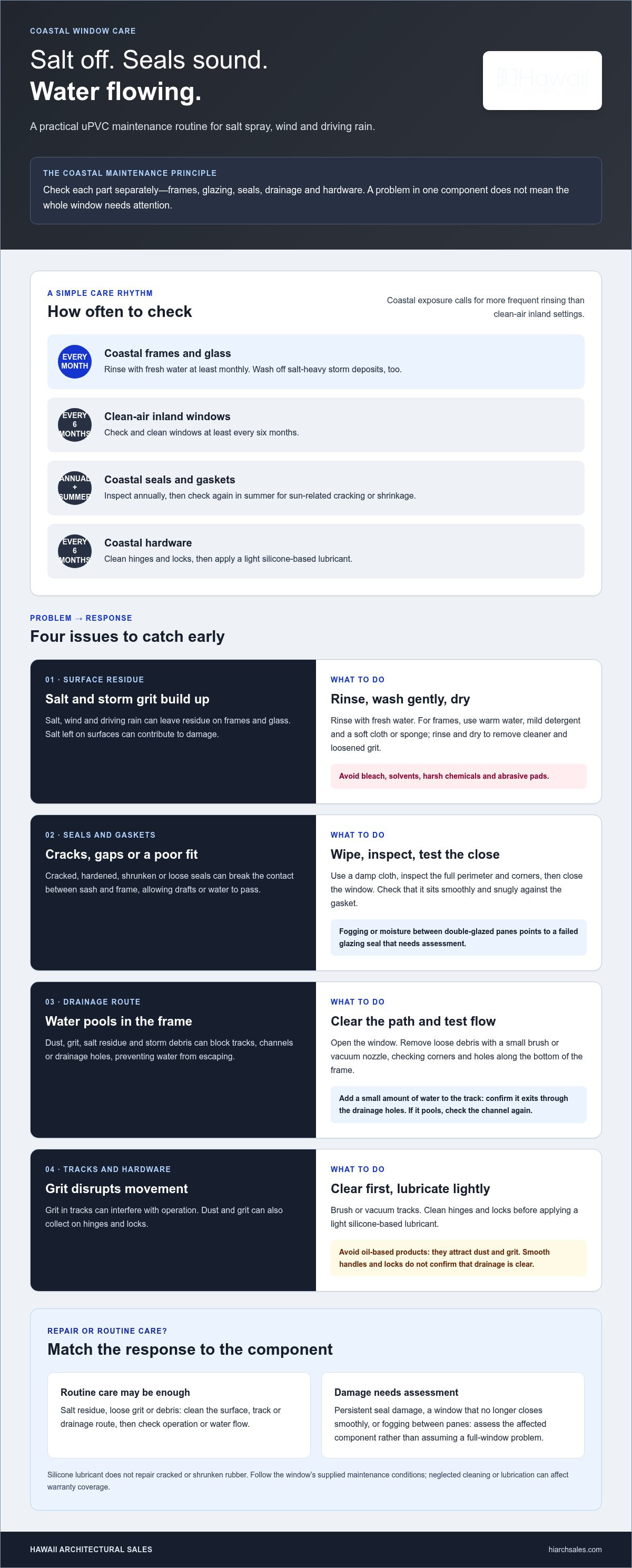
Coastal uPVC windows need more frequent care than windows in clean-air inland settings. Rinse frames and glass with fresh water at least once a month; check and clean inland windows at least every six months. For effective uPVC window maintenance in salt spray environments, keep salt off surfaces, i...
Coastal uPVC windows need more frequent care than windows in clean-air inland settings. Rinse frames and glass with fresh water at least once a month; check and clean inland windows at least every six months. For effective uPVC window maintenance in salt spray environments, keep salt off surfaces, inspect seals annually and clear drainage channels so water can escape.
Salt, wind and driving rain can leave residue on frames and glass. Worn seals or blocked drainage can also let drafts or water become bigger problems. Check whether a specific part needs attention before assuming the entire window is at fault.
This guide covers cleaning schedules for coastal and inland windows, seal and gasket inspections, and how to spot drainage problems. It also explains when routine care may be enough and when damage points to a component that needs repair or replacement.
Key Takeaways
• Use mild detergent and a soft cloth for uPVC frames, and avoid bleach, solvents and abrasive pads that can damage the surface.
• Look for cracked, hardened or gapped seals; fogging between double-glazed panes can signal a failed glazing seal.
• Clear debris from drainage holes and tracks, then check that water can flow out rather than pooling in the frame.
• Salt and coastal weather can accelerate wear, so assess each component separately: clean or lubricate where appropriate, and address damaged seals or blocked drainage.
Rinse coastal frames and glass with fresh water monthly; check and clean windows in clean-air homes every six months. A uPVC window maintenance routine in salt spray environments should also account for storm residue and how each window operates.
Removing salt from frames and glass
Fresh-water rinsing removes salt deposits before they build up on window surfaces. Rinse coastal frames and glass at least monthly, including after salt-heavy storms. Wash away storm deposits on a mild day rather than leaving them on the glass. Regular cleaning matters near the shore because salt left on surfaces can contribute to damage.
Mild detergent frame care
Clean uPVC frames with warm water, mild detergent and a soft cloth or sponge. Rinse the frames, then dry them to remove cleaner and loosened grit. Avoid bleach, solvents, harsh chemicals and abrasive pads, which can damage the finish. In clean-air inland settings, a check and clean every six months is a practical routine; coastal exposure calls for more frequent rinsing.
Seal and gasket cleaning
Wipe rubber seals and gaskets with a damp cloth, then check for cracks, hardening, shrinkage or gaps. An annual inspection is a useful coastal routine; inspect again in summer for sun damage. A snug fit when the window closes helps limit drafts. Follow the maintenance conditions supplied with the window, as neglecting required cleaning or lubrication can affect warranty coverage.
Track care and hardware lubrication
Clear tracks with a small brush or vacuum nozzle before grit interferes with window movement. Clean hinges and locks before applying a light silicone-based lubricant; avoid oil-based products because they attract dust and grit. Coastal hardware benefits from lubrication every six months. For uPVC window maintenance in salt spray environments, include hardware care in the routine. Professional maintenance costs in the United States depend on access, window condition and repairs; the price is provided after a quote request.
Inspecting and replacing seals and gaskets
Regular inspections can help distinguish a worn gasket from a problem elsewhere in the window. In coastal homes, check the seals annually, then assess whether cleaning, adjustment or replacement is appropriate.
Seal and gasket damage checks
Inspect each visible seal for cracks, shrinkage, hardened sections, gaps or loose edges. These faults can break the seal between sash and frame, allowing drafts or water to pass. Check the full perimeter, including corners, where small gaps can be easy to miss. Then close the window and see whether it sits smoothly and snugly against the gasket.
Rubber seal and gasket inspection
Wipe rubber seals with a damp cloth before inspecting them; salt and grime can hide surface damage. Look for uneven compression, flattened sections or areas pulled away from the frame. In coastal settings, check seals annually and inspect them again in summer for cracking or shrinkage from sun exposure. Fogging or moisture trapped between double-glazed panes points to a failed glazing seal that needs assessment.
Seal and gasket replacement
Replacing a damaged gasket can restore a continuous contact line, but the replacement must suit the window’s profile and fit evenly around its perimeter. Avoid treating silicone lubricant as a repair for cracked or shrunken rubber; lubrication does not restore damaged material. PVC-U maintenance guidance expects seals and gaskets to remain effective for at least 10 years under normal conditions, but coastal exposure may affect their condition. Consider replacement when damage persists or the window no longer closes smoothly.
After replacing a seal, close the window and check that the sash compresses it evenly, with no visible gaps. If drafts remain, inspect the frame alignment and the full sealing path before assuming another gasket is needed. Checking each component helps identify the actual problem and avoid unnecessary replacement.
Drainage slots and water management
Drainage channels and holes let water leave the frame instead of pooling inside it. Coastal grit, dust and storm debris can block this route, so include drainage checks in your window care routine.
Clearing drainage channels
Clear dust, grit and debris from tracks and drainage channels to help prevent blockages and pooling. Open the window and remove loose debris with a small brush or vacuum nozzle. Check the corners, where residue can collect. Clear tracks help the window move smoothly, while open drainage channels let water flow away from the frame.
After cleaning, pour a small amount of water into the track and check whether it exits through the drainage holes. If water pools, look for visible debris along the route and clear it gently. Repeat the flow check after heavy rain or a coastal storm, which can carry grit onto the frame. Smooth handles and locks do not mean drainage is clear; check these separately.
Clearing drainage holes
Drainage holes are typically along the bottom of the uPVC frame. Check their openings for compacted dust, salt residue or leaves, especially after storms or heavy rain. Use a small brush to remove visible debris without pushing it farther into the opening. Clear holes let collected water drain instead of sitting inside the frame.
Check that the opening is clear, then test drainage by adding a small amount of water to the track. Confirm that it flows out through the holes. If water pools despite clear openings, inspect the channel again for grit or a blockage. Keeping the route open helps manage water and protect the window assembly. Check drainage separately from seals, hardware and energy efficiency, assessing each part on its own.
How salt spray and coastal weather affect window materials
Salt deposits, humidity, wind and driving rain can accelerate wear on coastal windows. Exposure varies by site, so assess the frame, glazing, seals and hardware separately.
Typical lifespan figures offer context, not a direct measure of salt-air durability. Typical lifespan figures offer context, but actual service life varies with material quality, exposure, maintenance and component condition. Softwood timber typically lasts 20 to 30 years, while hardwood timber can exceed 50 years. Salt exposure, maintenance and component condition all affect what homeowners notice over time.
Inspect moving parts and hardware for corrosion, stiffness or damage, then decide whether cleaning, repair or replacement addresses the problem. The U.S. Department of Housing and Urban Development says aluminum components in coastal environments need anodized or vinyl finishes because they deteriorate rapidly. For uPVC, check for persistent drafts, damaged seals, water entry or glazing failure before considering a full window replacement.
For new or replacement windows, match the frame, hardware and glazing choices to the site’s coastal exposure. Glazing and insulation options affect thermal performance, while intact seals help limit paths for air and water. Installation and perimeter sealing also matter: even a suitable product cannot perform as intended if water can enter around the frame. Review the whole assembly, including the frame-to-wall junction, rather than judging durability by frame material alone.
Where damage is limited to one component, a targeted repair may address it; widespread deterioration or recurring problems can support considering replacement. Salt-air conditions can make cumulative damage visible within a few years, so document changes during routine inspections. For coastal projects, explore uPVC window options alongside the exposure and performance needs of the building.
Hawaii Architectural Sales: ES | Prestige
When coastal wear, recurring repairs or replacement planning raise broader window questions, Hawaii Architectural Sales offers premium coastal solutions. Use inspection findings to guide the discussion: note affected components, persistent drafts, glazing concerns and the building’s exposure to salt spray. This context helps align product decisions with project requirements, rather than treating every maintenance issue as a reason to replace the entire window.
For projects comparing available options, Hawaii Architectural Sales also provides specialized product lines tailored to severe weather conditions. The right next step depends on whether the project calls for targeted maintenance or a wider product review. Contact Hawaii Architectural Sales or visit hiarchsales.com to discuss uPVC window maintenance in salt spray environments for your specific project.
Plan the next step for your windows
Use each inspection to build a clearer picture of how your windows perform over time. Note recurring issues, affected areas and whether the same component needs attention again. These records can help distinguish a one-off maintenance task from a broader product decision.
Consistent uPVC window maintenance in salt spray environments also supports informed planning for future projects. Consider the building’s exposure and the performance needs of each opening before deciding whether to maintain existing windows or explore another option. Start with the assembly’s condition and the demands placed on it, rather than a one-size-fits-all replacement rule.
For a project discussion connected to your window requirements, contact Hawaii Architectural Sales for help. A considered next step can make coastal window decisions more straightforward and keep the focus on durable, practical performance.
Frequently Asked Questions
Component by component: repair or replace?
Repair a component when damage is localized and the surrounding parts still function properly. Consider broader replacement if faults affect several parts or return after repairs. For example, one loose gasket is different from a window with frame distortion, glazing failure and recurring water entry. Assess the extent of the fault, how the window operates and whether it closes evenly before choosing a remedy. When extensive wear warrants upgrading the entire unit, professional installers such as Galaxy Home Remodeling can help homeowners select durable, high-efficiency replacements suited to challenging weather.
What fails first near the sea?
No single component always fails first; exposure and condition vary by window and site. Salt and moisture can contribute to corrosion on metal hardware, while sun and weather can affect seals. Look for changes in how handles, locks and hinges operate, as well as visible seal damage. Comparing exposed and sheltered windows in the same building can help show where deterioration is concentrated.
How often should uPVC windows be cleaned in coastal salt spray environments?
Rinse coastal frames and glass with fresh water monthly, and clean them monthly. In clean-air inland settings, check and clean windows every six months. After a storm leaves visible salt deposits, rinse affected surfaces rather than waiting for the next scheduled clean. A calendar reminder can help keep coastal cleaning consistent.
What cleaning products and methods safely remove salt deposits from uPVC window frames?
Clean uPVC frames with warm water, mild detergent and a soft cloth or sponge, then rinse. For glass, use standard glass cleaner or a vinegar-and-water solution with a lint-free cloth or squeegee. Avoid pressure washing, as high-pressure water can pass through seals and enter the frame cavity. A gentle garden-hose setting provides a more suitable way to rinse coastal residue.
How should window hinges, locks, and other metal hardware be maintained near salt water?
Clean hinges and locks before applying a silicone-based lubricant, then wipe away excess. Clear grit from tracks with a small brush or vacuum nozzle so debris does not interfere with moving parts. If a handle or lock remains stiff after cleaning and lubrication, inspect how it operates and check the surrounding fitting for damage. Persistent stiffness may indicate a problem beyond routine surface cleaning.
Does salt spray damage uPVC window frames, seals, or glazing, and what are the warning signs?
Salt spray can leave surface residue and accelerate wear, but its effects vary across components. Look for cracked or gapped seals, corrosion on hardware, water entering the frame, or fogging between double-glazed panes. In Honolulu, Lihue, Kailua-Kona, Kihei and Lahaina, assess each window’s actual exposure and condition. Visible salt deposits alone do not mean a frame needs replacement.