Water intrusion prevention windows Hawaii for storm and rain protection
A leak around a window is a warning sign, not a diagnosis. Effective water intrusion prevention starts with understanding how rain enters, then matching the window’s fit and sealing to the home’s exposure. Hawaii’s wet season runs from October through April, according to the National Weather Service...
A leak around a window is a warning sign, not a diagnosis. Effective water intrusion prevention starts with understanding how rain enters, then matching the window’s fit and sealing to the home’s exposure. Hawaii’s wet season runs from October through April, according to the National Weather Service in Honolulu, and wind direction can change how rain reaches an opening.
It’s understandable to focus first on the window itself. But damp patches, peeling paint, or water near a frame can point to gaps, worn seals, or moisture entering elsewhere. Replacing a window without identifying the source may leave the underlying problem unresolved.
This guide explains how to trace possible leaks, assess how Hawaii’s weather affects window performance, and understand how alignment and sealing help limit water entry. It also covers when an older window system may need closer evaluation, so you can make a more informed decision about protecting your home.
Key Takeaways
• Look for damp spots, peeling paint, or other signs of moisture to help trace where water is entering.
• Inspect window openings after prolonged rain or strong winds, and identify the moisture source before deciding on a repair or replacement.
• Consider how Hawaii’s wet-season rain and changing wind direction expose gaps, older seals, and poorly fitted windows.
• Proper window alignment and sealing support performance in storm conditions; explore suitable window options when an existing system needs attention.
1. Hurricane and storm protection for Hawaii homes
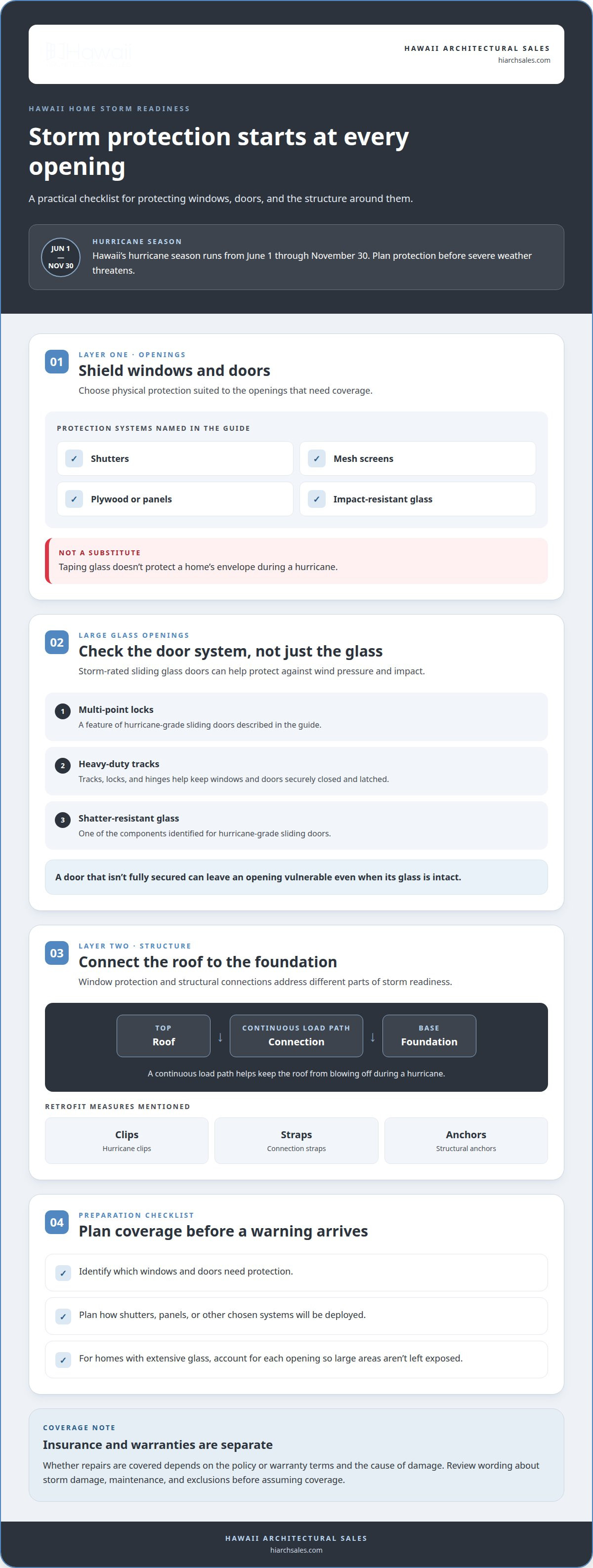
Hawaii’s hurricane season runs from June 1st to November 30th, so storm readiness matters before a warning arrives. A broken window can let rain, wind, and debris enter, exposing rooms and finishes to further damage. Taping glass doesn’t protect a home’s envelope during a hurricane. Use a suitable window protection system, such as shutters, mesh screens, plywood, panels, or impact-resistant glass.
Home hardening also involves the structure beyond its windows. A continuous load path connects the roof to the foundation and helps keep the roof from blowing off during a hurricane. Retrofitting this connection can include hurricane clips, straps, and anchors. These measures work alongside window protection: one addresses how the structure is connected, while the other shields openings from wind and debris.
Large glass openings need particular attention. Storm-rated sliding glass doors can help protect them from wind pressure and impact. Hurricane-grade sliding doors typically use multi-point locks, heavy-duty tracks, and shatter-resistant glass. Reinforced locks, hinges, and tracks help keep windows and doors securely closed and latched during storms. A door that is not fully secured can leave an opening vulnerable even when its glass is intact.
Preparedness also means choosing protection before severe weather threatens. Identify which windows and doors need coverage, and plan how shutters, panels, or other systems will be deployed. Don’t treat adhesive tape as a substitute for physical protection. In a home with extensive glass, consider how to protect each opening without leaving large areas exposed.
Are window leak repairs covered by homeowners insurance or warranties in Hawaii? Homeowners insurance and product warranties are separate documents; coverage depends on the policy or warranty terms and the cause of the damage. Review the wording for storm damage, maintenance, and exclusions before assuming repairs are covered.
2. Hawaii wet-season rain and wind exposure
Hawaii’s wet season runs from October through April, according to the National Weather Service in Honolulu. On Oahu, northeast trade winds prevail for much of the year, but Kona lows can shift winds from the south or southwest. A window that sheds rain under one wind direction may face direct, wind-driven rain under another. This makes the home’s exposure and the opening’s condition important parts of assessing moisture entry.
Traditional jalousie windows have gaps between overlapping slats, so they don’t truly seal against wind-driven rain. If rain reaches an interior sill during a storm, consider the slat design, frame fit, and surrounding seals. A water intrusion prevention plan for windows in Hawaii should assess the whole opening, not just the glass. Water near a window may enter around its frame or through an adjoining wall.
Salt and moisture also put pressure on window hardware over time. Stainless steel or other corrosion-resistant hardware can help withstand corrosion in Hawaii’s salty, moisture-rich climate. The window type alone doesn’t determine resistance: fit, sealing, and hardware condition all affect how the assembly performs when rain blows toward it.
After prolonged rain or strong trade winds, note whether moisture appears at the sill, along one frame edge, or farther across the wall. Record which side of the home faced the wind, then compare the damp area with nearby openings and exterior seals. These observations can help distinguish an opening-related issue from water entering elsewhere.
Don’t treat a forecast for a drier winter as assurance that heavy or wind-driven rain won’t occur. For water intrusion prevention around windows in Hawaii, consider a tightly fitting system and corrosion-resistant hardware suited to the exposure. Jalousie gaps are less suited to blocking wind-driven rain. Matching window type, fit, and hardware to the conditions helps guide a practical evaluation.
3. Professional installation and sealing
Professional installation helps windows perform as expected when they’re properly sealed, aligned, and reinforced for Hawaii’s conditions. A frame that sits out of square, for example, can leave uneven gaps even when the sash closes. The installation must account for the opening, frame condition, and water drainage path, not just the window unit. Effective water intrusion prevention for windows in Hawaii depends on these details working together.
Flashing should direct water away from the opening and integrate with the wall’s water-management layers. Sealing the frame-to-wall joint helps limit entry, while drainage details allow incidental moisture to escape. Caulk alone can’t replace correctly installed flashing or open drainage paths. The right details depend on the window opening and how it meets the surrounding wall.
For Honolulu, the City and County of Honolulu Department of Planning and Permitting lists window replacement among work types that generally don’t require a building permit, though applicable codes still apply. Project and location can affect requirements. A general permit exemption doesn’t remove applicable code obligations for window, flashing, and water-resistance details.
Homeowners can reduce intrusion risk by arranging an inspection after prolonged rain or strong winds, then addressing the source rather than covering a stain. An assessment can consider alignment, frame condition, exterior sealing, and drainage. Moisture at a corner, for example, may indicate a different entry path than water collecting along the sill.
During maintenance, inspect seals for gaps or separation and keep weep holes clear. These openings drain water, so sealing them can trap moisture. Keep exterior drainage paths open and check caulking where the frame meets the wall. For water intrusion prevention for windows in Hawaii, installation quality and maintenance both matter: the opening’s components need to function as a system.
For homes in Hawaii, weather-resistant entry doors with tight-sealing weatherstripping can help keep moisture out.
4. Identifying water intrusion sources
Start with the location and pattern of the moisture, not the assumption that the window is leaking. Damp spots on walls can indicate water has absorbed through the wall, while peeling paint can point to moisture beneath the interior surface. A stain at the window corner may relate to the opening, but nearby wall marks can suggest a wider entry path.
Inspect the area after prolonged rain or strong trade winds, when water exposure may reveal a weakness. Note whether dampness appears at the sill, along one frame edge, or farther across the wall. Compare the wet area with the exterior window perimeter and adjacent surfaces. This record helps distinguish water entering through the opening from moisture traveling through the wall.
Other signs offer clues, not a complete diagnosis. Cracks at window corners or doorways may warrant inspection for foundation shifting; wet wood frames expanding can also contribute to cracking. Persistent damp areas can support mold or mildew growth, and a musty odor may accompany decay associated with mold, mildew, or dry rot. Rust on nearby metal items can point to dampness and evaporation.
Look for white, chalky efflorescence on cement walls. It can signal moisture movement, and the associated chemical breakdown of bonding agents may affect structural integrity. Warped or discolored paneling can also indicate moisture exposure. These signs call for tracing the water path rather than treating only the visible mark.
Before choosing window maintenance, repair, or replacement, determine the moisture source. For an older window, evaluate frame condition, weather stripping, exterior sealing, glass performance, ventilation, and installation method together. Gaps, poor sealing, or improper fit can admit water and wind, but replacing a window won’t address moisture entering elsewhere. The practical takeaway: map each sign to its location, inspect the opening and surrounding wall, then address the identified source.
Hawaii Architectural Sales
Hawaii Architectural Sales supplies window systems for homeowners evaluating water entry, storm exposure, and the condition of existing openings. ES | Prestige, ES | Elite, and Hopes offer options to consider when planning a replacement or specifying windows for a project. Their double or triple glazing, thermal breaks, and superior sealing systems support insulation and lower energy bills. The right choice depends on the opening, its exposure, and the project’s performance needs.
If moisture appears around a window, first use the signs described above to identify the likely source. Then consider whether a different window system suits the project’s needs. Contact Hawaii Architectural Sales to discuss its window offerings and your project.
Make the Next Window Decision with Confidence
Use signs of moisture to guide the next decision, rather than treating every stain as a window failure. A clear record of where water appears and when it follows rain can help focus the assessment and keep the project aligned with the home’s actual needs. That practical approach makes water intrusion prevention for windows in Hawaii part of a broader plan for a sound, weather-ready home.
If you’re considering window options for a new project or an existing opening, connect your findings to the requirements for that space. The window system should suit the building and its exposure, while the surrounding installation and drainage details support the intended performance.
Contact Hawaii Architectural Sales to discuss window options for your project. A well-informed next step can help you move toward a more resilient home.
Frequently Asked Questions
What are common causes of window leaks in Hawaii’s tropical climate?
Common causes include gaps, weak seals, and a poor fit between the window and its opening. Older jalousie designs can also let wind-driven rain pass between slats. Water near a window may instead travel through the surrounding wall, so the visible damp patch doesn’t always show the entry point. Compare indoor moisture locations with the window edges and nearby wall surfaces before deciding what needs attention.
How do wind-driven rain and hurricanes affect window water intrusion in Hawaii?
Wind can push rain toward joints and openings that receive little direct exposure in calmer weather. A change in wind direction may expose another side of the home, making the same window behave differently from one storm to the next. During a hurricane, broken glass can leave an opening for rain and debris. The location and pattern of water after a storm can help identify which openings were exposed.
What are the signs of hidden water damage, mold, or rot around windows?
Persistent dampness in a dark area can support mold or mildew growth, while mold on wood can contribute to decay and dry rot. Look for paneling that has warped or changed color, and note musty odors near window trim or adjoining walls. These clues may appear before the source is obvious. Record where they occur and whether they worsen after rain to help guide a closer assessment.