Alternatives to Glass Curtain Walls: A Hawaii Architect’s Guide
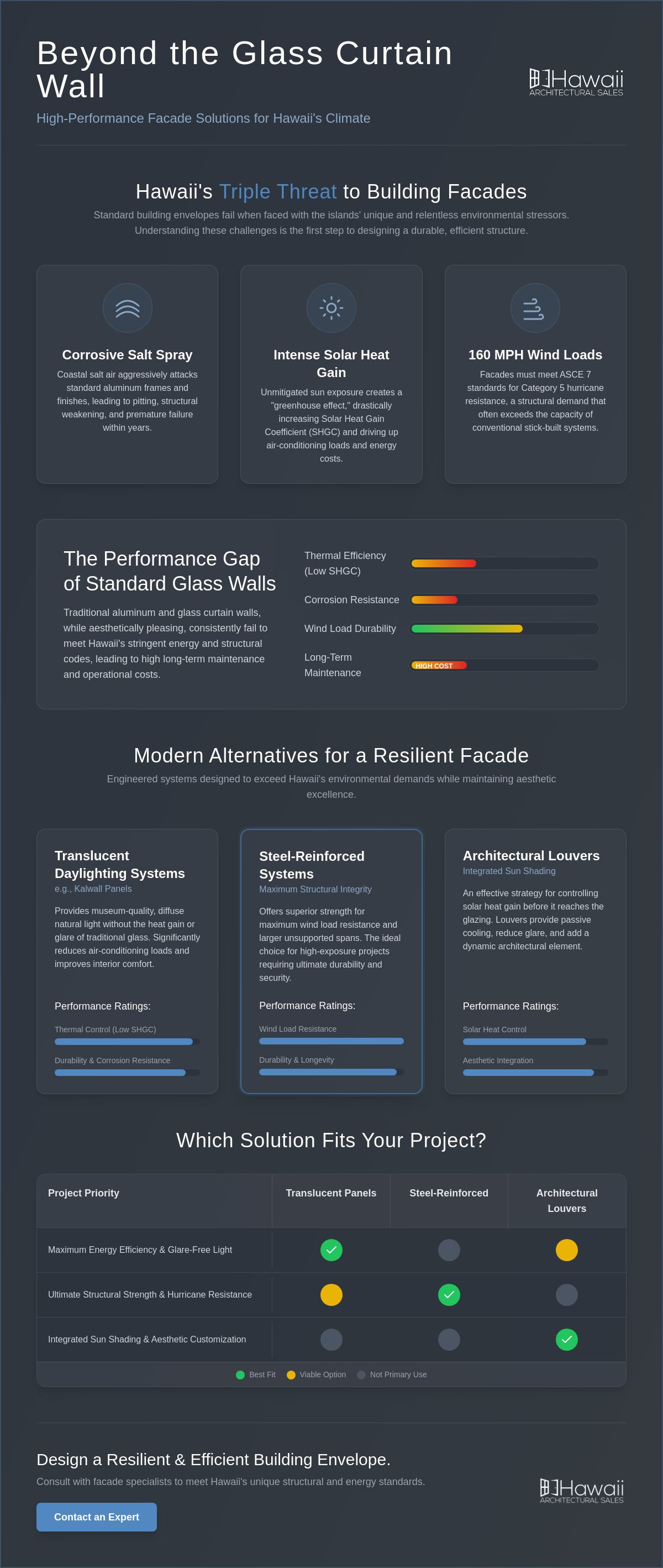
What if the traditional glass curtain wall is actually the biggest liability for your coastal Hawaii project? While expansive glazing defines modern island aesthetics, the "triple threat" of salt spray, intense solar heat, and 160 mph wind load requirements often pushes standard aluminum systems to...
What if the traditional glass curtain wall is actually the biggest liability for your coastal Hawaii project? While expansive glazing defines modern island aesthetics, the "triple threat" of salt spray, intense solar heat, and 160 mph wind load requirements often pushes standard aluminum systems to their breaking point. You've likely dealt with the frustration of premature frame corrosion or the challenge of balancing high-transparency views with the stringent 2018 IECC energy codes. This guide explores the best alternatives to glass curtain walls Hawaii professionals use to ensure durability, thermal efficiency, and aesthetic excellence.
We understand that a building envelope must do more than just look sophisticated; it has to perform under pressure. This guide provides a technical overview of high-performance facade systems designed specifically for Hawaii's unique environmental demands. You'll discover how translucent daylighting, reinforced window walls, and advanced thermal breaks offer superior insulation and reduced long-term maintenance. We'll preview the most durable options that allow you to maintain a modern aesthetic while exceeding the latest structural and energy standards.
Key Takeaways
• Analyze the specific environmental stressors, including salt-air corrosion and intense UV exposure, that compromise standard aluminum curtain walls in tropical zones.
• Discover technical alternatives to glass curtain walls Hawaii professionals implement to achieve superior thermal insulation and meet 160 mph wind load standards.
• Compare the performance of translucent structural panels against traditional glass to significantly reduce air-conditioning loads and improve interior comfort.
• Assess the benefits of steel-reinforced systems and architectural louvers for projects requiring maximum structural durability and integrated sun shading.
• Determine the most effective building envelope solution based on your project's distance from the coast and specific functional requirements.
Commercial Curtain Wall Systems in Hawaii: The Baseline
In commercial architecture, the facade serves as the primary barrier between a building’s interior and the volatile Pacific environment. A curtain wall (architecture) is a non-structural outer covering designed to keep the weather out while supporting only its own weight and the environmental loads imposed upon it. For decades, the standard glass and aluminum system has been the default for Honolulu high-rises. These systems are favored for their ability to provide expansive views and rapid installation via stick-built methods. However, as energy codes tighten and maintenance costs in coastal zones climb, many designers are investigating alternatives to glass curtain walls Hawaii to address long-term performance gaps.
Performance in the tropics is measured by three critical metrics: U-value, Solar Heat Gain Coefficient (SHGC), and Visible Transmittance (VT). While U-value measures thermal conductivity, SHGC is the most vital metric for Hawaii projects. It determines how much solar radiation enters the building and directly impacts air-conditioning loads. Traditional glazing often struggles to keep SHGC low without using heavy tints that compromise VT. This balance is difficult to maintain, leading architects to seek more efficient building envelope solutions that don't sacrifice natural light for thermal comfort.
The "Standard" Aluminum and Glass Build
6063-T6 aluminum is the industry workhorse for local construction. It offers a high strength-to-weight ratio and is easily extruded into complex mullion profiles. Standard Insulated Glass Units (IGUs) for island use typically feature low-E coatings to mitigate the intense tropical sun. The challenge arises in high-exposure areas like Waikiki or Kakaʻako. Standard powder coatings or anodized finishes often succumb to salt-air corrosion within a few years. This degradation leads to pitting and structural weakening of the mullions, which is why many firms now look for more resilient alternatives to glass curtain walls Hawaii.
Hawaii-Specific Performance Requirements
Facade design must account for extreme pressure and energy mandates. Recent standards require new structures to withstand wind speeds up to 160 mph. This necessitates the seamless integration of hurricane rated windows Hawaii into the building envelope. Compliance with the 2018 International Energy Conservation Code (IECC) also dictates stricter insulation requirements for commercial projects. These regulatory pressures are driving a shift toward high-performance systems that offer better resilience and thermal resistance than traditional stick-built glazing.
Wind Loads
Systems must meet ASCE 7 standards for Category 5 hurricane resistance.
Thermal Efficiency
2018 IECC compliance requires precise control over solar heat gain.
Corrosion Resistance
Coastal projects demand high-performance finishes or alternative materials to prevent salt-air failure.
Why Seek Alternatives to Glass Curtain Walls in Hawaii?
Standard glass facades often fall short of the technical and environmental requirements unique to the islands. While they offer high aesthetic appeal, the practical downsides in a tropical climate are significant. Architects are increasingly looking for alternatives to glass curtain walls Hawaii to mitigate excessive solar heat gain and the relentless effects of salt-air exposure. These high-performance systems provide the durability and efficiency that traditional glazing simply cannot match in high-exposure zones.
Thermal Performance Challenges
In leeward Hawaii, standard glass often creates a greenhouse effect that traps heat and forces HVAC systems to work at peak capacity. Balancing Visible Transmittance (VT) with cooling loads is a constant struggle for designers. The Solar Heat Gain Coefficient (SHGC) represents the fraction of solar radiation admitted through a window; in Honolulu, even a minor increase in this value can lead to exponentially higher energy costs. High-performance facades must address these issues without relying solely on dark tints that obscure the view or reduce interior wellness. If you're struggling with these thermal variables, consulting with a specialist for specialized facade solutions can help align your design with local energy goals.
The Durability Gap in Coastal Zones
Coastal environments are notoriously hostile to standard architectural finishes. Projects within 1,000 feet of the ocean face a constant barrage of salt spray, leading to filiform corrosion and pitting on standard aluminum mullions. This isn't just an aesthetic concern; it's a structural liability that compromises the building envelope over time. Additionally, salt crystallization on the glass itself creates a hazy appearance that is difficult and expensive to clean. According to the Building Envelope Design Guide, selecting materials based on site-specific environmental exposure is critical for long-term viability. When standard aluminum fails, architects must pivot to more resilient materials that withstand the "triple threat" of sun, salt, and wind.
In the dense urban corridors of Honolulu, the transparency of traditional curtain walls often conflicts with the need for occupant privacy. Floor-to-ceiling glass leaves little room for seclusion in high-rise residential or commercial settings. The maintenance cycle for large glass spans in trade wind zones is also grueling. Wind-blown salt and debris require frequent professional cleaning to maintain the building’s intended appearance. By exploring alternatives to glass curtain walls Hawaii, architects can specify systems that offer diffused light, enhanced privacy, and significantly lower maintenance requirements.
Translucent Daylighting Systems: The Kalwall Alternative
Translucent structural sandwich panels represent a sophisticated shift in facade engineering. While previous sections detailed the vulnerabilities of glass, Kalwall provides a composite alternative that addresses those gaps through material science. Architects looking for alternatives to glass curtain walls Hawaii often choose these systems for their ability to deliver museum-quality daylight without the associated heat gain of clear glazing. These panels consist of a structural aluminum or thermally broken grid core with translucent face sheets, creating a lightweight yet incredibly strong building envelope.
The primary benefit lies in the diffusion of light. Unlike traditional glass that creates sharp shadows and intense glare, translucent panels scatter light deep into interior spaces. This eliminates the need for motorized shades or heavy tints. In high-density areas like Honolulu, these systems provide a critical privacy barrier for hospitals and schools; they allow natural light to enter while obscuring the view from the street. This balance of transparency and seclusion is difficult to achieve with standard glazing.
The Kalwall Advantage for Hawaii Facades
Kalwall surfaces are engineered with high-performance finishes that resist the salt and dirt buildup common in trade wind zones. These self-cleaning properties reduce the maintenance burden significantly compared to standard glass facades. Structurally, these panels offer exceptional impact resistance. They meet stringent hurricane debris standards without the need for external shutters or secondary layers. This makes them a reliable choice for critical infrastructure and coastal projects. Designers also appreciate the flexibility to integrate these panels with standard framing, allowing for hybrid designs that mix transparency with high-performance translucent sections.
Thermal Insulation and Energy Savings
Thermal performance is where translucent panels truly outperform traditional glazing. While high-performance IGUs struggle to achieve high R-values, translucent sandwich panels can be specified with advanced insulation to reach significantly higher thermal resistance. This superior insulation directly correlates with reduced air-conditioning loads. Research into advanced facades, such as the Building-Integrated Photovoltaic curtainwall, highlights the growing necessity for energy-efficient envelopes in hot climates like Hawaii.
By using diffuse light, building owners see a reduction in the need for artificial lighting. This lowers the internal heat gain from light fixtures, creating a compounding effect on energy savings. In Honolulu commercial spaces, these systems have proven to be effective alternatives to glass curtain walls Hawaii. They meet the 2018 IECC requirements with ease while providing a modern, glowing aesthetic at night that enhances the urban skyline.
Premium Alternatives: Steel Frames and Architectural Louvers
While aluminum is the most common choice for commercial facades, it often lacks the structural capacity required for extreme spans in high-wind zones. Steel-framed systems offer a robust solution, providing three times the strength of aluminum. This material advantage allows architects to specify significantly slimmer profiles while maintaining the integrity of the building envelope. These systems serve as high-end alternatives to glass curtain walls Hawaii, particularly for projects where minimalist sightlines and maximum durability are non-negotiable. By utilizing steel, designers can push the limits of transparency without compromising the safety or longevity of the structure.
Hopes Steel Windows as a Facade Solution
Solid hot-rolled steel is uniquely suited for the corrosive Pacific environment when properly finished. Unlike hollow aluminum extrusions, solid steel profiles resist the internal condensation issues that often lead to hidden structural failure. By utilizing Hopes steel windows Hawaii, designers can achieve a sophisticated "curtain wall look" with much thinner sightlines than traditional systems allow. These systems are often treated with advanced finishes that exceed standard powder coating performance, providing a critical layer of salt-air protection for coastal high-rises.
AWV Architectural Louvers for Facade Ventilation
Not every square foot of a building envelope needs to be transparent. For parking structures and mechanical levels, architectural louvers provide a functional and aesthetic alternative to glass. AWV systems integrate ventilation directly into the facade, allowing for natural airflow while maintaining a cohesive exterior. These designs are engineered to be storm-resistant, effectively preventing water penetration during intense Kona storms. Integrating these elements into the building envelope reduces the overall solar heat gain of the structure by replacing glass with opaque, ventilated surfaces.
Structural Integrity
Steel mullions support larger glass spans with significantly less deflection than aluminum.
Ventilation
Integrated louvers reduce the need for mechanical cooling in non-occupied spaces like parking decks.
Aesthetic Consistency
Custom finishes allow architects to match louver colors to primary curtain wall mullions for a seamless look.
Hybrid envelopes often combine glass, steel, and opaque panels to balance performance and cost. This approach allows for expansive views in living areas while utilizing more durable materials in high-stress or mechanical zones. If you are designing for a high-velocity hurricane zone and need to balance aesthetics with extreme wind load requirements, contact our team for a technical consultation on steel and louver integration.
Choosing the Right Solution for Your Hawaii Project
Selecting the optimal building envelope requires a precise balance between design intent and environmental reality. In the islands, proximity to the shoreline is the most critical variable in material selection. Projects located within 1,000 feet of the ocean face salt-air corrosion that dictates material choice more than initial cost. While standard aluminum systems are common, specifying alternatives to glass curtain walls Hawaii becomes essential for coastal projects where long-term durability is the priority. A building's functional requirements must also be weighed; residential high-rises often prioritize views, while institutional buildings may require the thermal performance of composite systems.
Lifecycle budgeting should account for a 20-year maintenance horizon rather than just the initial installation cost. Standard glass facades in trade wind zones require frequent cleaning and may face premature seal failure due to intense UV exposure. In contrast, systems like Kalwall or steel-framed glazing offer reduced maintenance cycles and greater structural longevity. Engaging with a local architectural products representative Hawaii during the schematic design phase allows for a technical analysis of these variables before specifications are finalized.
Comparison Framework: Glass vs. Translucent vs. Steel
When evaluating different systems, architects should compare materials based on wind load capacity, salt resistance, and thermal insulation. Standard glass serves projects where transparency is paramount; translucent panels offer the highest thermal resistance and glare control; and steel systems provide the ultimate structural capacity for extreme wind loads. The "sweet spot" for many modern Honolulu projects is a mixed-material facade. This approach utilizes high-performance glass for primary view corridors while integrating translucent panels or steel-reinforced sections in areas with high solar exposure or extreme structural requirements.
Technical Support and Specification
Code compliance is a moving target in local construction. Hawaii Architectural Sales provides essential support to ensure that every facade system meets the 2018 IECC energy standards and the mandatory 160 mph wind load requirements. We assist developers and architects by providing samples and coordinating full-scale mock-ups, which are crucial steps for Honolulu high-rise projects. These physical evaluations help stakeholders visualize the aesthetic impact and verify the performance of alternatives to glass curtain walls Hawaii before construction begins.
The transition from a standard curtain wall to a high-performance alternative requires detailed technical coordination. Our team acts as a consultant to bridge the gap between high-end manufacturing and practical island application. To ensure your building envelope is engineered for the specific demands of the Pacific environment, the next step is a formal review of your project's performance goals. Contact us today to request a technical consultation for your building envelope and explore our full range of commercial facade solutions.
Elevating Facade Performance in the Pacific
Hawaii Architectural Sales brings over 40 years of local experience to every project. We serve as the authorized representative for industry leaders like Kalwall, Hopes, and AWV, ensuring your specifications meet stringent hurricane and salt-air compliance standards. Our team provides the technical guidance needed to navigate complex local codes while maintaining a modern architectural vision. Consult with Hawaii’s building envelope experts at Hawaii Architectural Sales to refine your next design for the unique demands of the islands. We look forward to partnering with you on your next high-performance project.
Frequently Asked Questions
What is the most salt-resistant alternative to a glass curtain wall in Hawaii?
Translucent structural panels and solid steel systems with marine-grade finishes offer the highest resistance to salt-air corrosion. Unlike standard aluminum, translucent panels like Kalwall are composed of non-corrosive composites that don't pit or oxidize. Solid hot-rolled steel profiles also provide superior longevity when treated with specialized coatings, making them reliable alternatives to glass curtain walls Hawaii for projects within 1,000 feet of the shoreline.
How do translucent wall systems like Kalwall compare to glass in hurricane zones?
Translucent wall systems provide exceptional impact resistance that often exceeds the performance of standard glazing. These structural sandwich panels are engineered to meet stringent hurricane debris standards without requiring external shutters or secondary layers. While glass can be hurricane-rated, translucent systems offer inherent structural integrity and remain intact under the extreme pressure found in Category 5 wind zones, protecting the building’s interior from breaching.
Can I achieve a slim-profile modern look without using standard aluminum curtain walls?
Steel-framed systems are the premier solution for achieving minimalist sightlines without sacrificing strength. Because steel is three times stronger than aluminum, mullions can be significantly thinner while supporting larger spans of glass. This allows architects to maintain a sophisticated, modern aesthetic with profiles that are much narrower than traditional aluminum curtain wall systems, even in areas with high wind load requirements.
What are the energy code requirements for commercial facades in Honolulu?
Commercial facades must comply with the 2018 International Energy Conservation Code (IECC) as adopted by the City and County of Honolulu. This code mandates specific Solar Heat Gain Coefficient (SHGC) limits and thermal insulation values for the building envelope. Utilizing alternatives to glass curtain walls Hawaii, such as translucent panels, helps projects meet these stringent requirements by naturally diffusing light and reducing the solar heat gain that clear glass typically admits.
Are steel-framed windows better than aluminum for high-wind areas in Hawaii?
Steel-framed windows offer superior performance in high-wind areas due to their high modulus of elasticity. They experience much less deflection under extreme pressure compared to aluminum extrusions. This structural rigidity is critical for meeting Hawaii’s 160 mph wind speed standards. Steel systems ensure the building envelope remains stable and secure during extreme weather, providing a higher safety margin for high-rise developments in coastal corridors.
How do architectural louvers improve the performance of a building envelope?
Architectural louvers from AWV improve performance by integrating natural ventilation into the facade, which reduces the cooling load for non-conditioned spaces. By replacing glass with louvers in parking decks or mechanical levels, designers eliminate unnecessary solar heat gain. Modern storm-resistant designs also prevent water penetration during intense Kona storms, ensuring that the building remains dry while allowing for the airflow required by mechanical systems.
What is the maintenance difference between a glass facade and a translucent panel system?
Translucent panel systems require significantly less maintenance than traditional glass facades. Their surfaces are engineered to resist the salt and dirt buildup common in Hawaii’s trade wind zones. While glass requires frequent, costly professional cleaning to prevent salt etching and maintain transparency, translucent systems like Kalwall are essentially self-cleaning. This leads to substantial long-term savings on building operations and facade upkeep in coastal environments.
Is it possible to mix glass curtain walls with other materials like Kalwall or steel?
Mixing glass curtain walls with materials like Kalwall or steel is a highly effective strategy for optimizing building performance. Many architects use a hybrid approach, specifying glass for primary view corridors while utilizing translucent panels for privacy or thermal control in other areas. This allows for a custom aesthetic that balances the desire for transparency with the practical need for durability and energy efficiency in the tropical sun.