Commercial Steel Windows & Doors in Hawaii: 2026 Guide
Can a window frame with a profile thinner than two inches actually withstand a Category 5 hurricane while resisting the constant salt spray of Waikiki? Architects and developers in the islands know that the 2018 Hawaii State Building Code mandates extreme resilience, often requiring wind load calcul...
Can a window frame with a profile thinner than two inches actually withstand a Category 5 hurricane while resisting the constant salt spray of Waikiki? Architects and developers in the islands know that the 2018 Hawaii State Building Code mandates extreme resilience, often requiring wind load calculations for speeds up to 150 mph. Balancing these rigid safety standards with the desire for modern, minimalist steel windows and doors commercial systems is a constant challenge. You need a solution that won't corrode in Lihue or fail under the pressure of ASCE 7-16 wind requirements.
This 2026 guide provides the technical roadmap for specifying fenestration that satisfies both the regulatory environment and the high-performance demands of the Pacific. You will learn how to identify corrosion-resistant finishes and select brands like Hopes or ES | Prestige that carry the necessary impact ratings for island compliance. We also cover how to leverage local technical support to ensure your project meets the unique coastal stressors found in Hawaii's Special Management Areas. By the end of this article, you will have the expertise to select durable, code-compliant steel solutions for any commercial application.
Key Takeaways
• Evaluate how the inherent structural strength of steel enables expansive glass facades and narrow sightlines that maximize Pacific views without sacrificing security.
• Identify advanced finishing technologies designed to protect steel windows and doors commercial systems against the high-corrosion salt spray of Hawaii’s coastal regions.
• Master the technical requirements for hurricane-rated glazed openings to ensure full compliance with the 2018 Hawaii State Building Code and ASCE 7-16 wind load mandates.
• Streamline the specification and delivery process by collaborating with a local technical representative who understands the unique logistical and regulatory demands of island construction.
The Structural and Aesthetic Advantages of Commercial Steel Windows
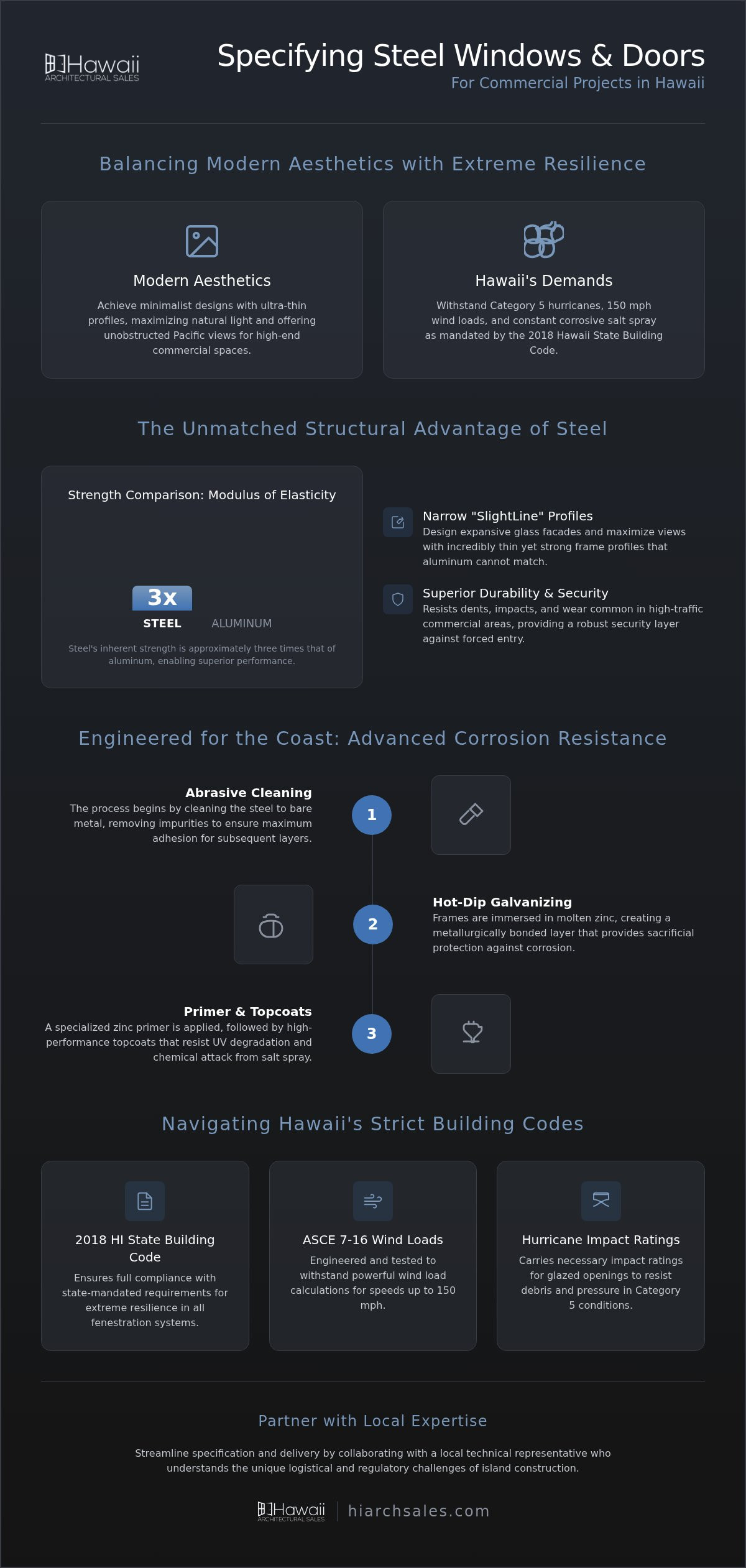
Steel's structural properties allow for design freedom that standard aluminum systems simply cannot match. In high-traffic commercial environments across the islands, durability is a non-negotiable requirement for long-term value. Choosing steel windows and doors commercial systems provides a high modulus of elasticity, which is approximately three times that of aluminum. This inherent strength allows architects to design expansive glass facades for lobbies and entryways while maintaining incredibly narrow frame profiles. These systems offer unmatched longevity, resisting the dents and wear typical of standard storefronts. From historic restorations to modern industrial designs, steel provides a sophisticated aesthetic that complements Hawaii's diverse architectural landscape. Beyond aesthetics, the material's density makes it naturally resistant to impacts, providing a robust security layer for commercial tenants.
Hot-Rolled Steel vs. Cold-Rolled Alternatives
Hot-rolled steel is produced by passing the metal through rollers at temperatures exceeding 1,700°F. This manufacturing process increases material density and eliminates internal stresses, making it the preferred choice for heavy commercial glazing. Unlike cold-rolled alternatives, hot-rolled profiles offer superior load-bearing capacities and much thinner profile thicknesses. This allows for the support of massive glass lites without the need for bulky intermediate reinforcements. The precision of these profiles ensures tight tolerances for glazing beads and weather stripping, which is essential for maintaining the building envelope's integrity. It's a pragmatic solution for engineers who must balance aesthetic requirements with the structural demands of high-performance commercial projects.
Maximizing Natural Light with Minimal Framing
Steel's superior strength-to-weight ratio is the foundation for "SlightLine" designs that prioritize visibility. These profiles maximize the glass-to-frame ratio, providing unobstructed Pacific views for luxury hospitality and retail spaces. Integrating these frames with architectural daylighting solutions Honolulu significantly enhances the psychological well-being of occupants by maximizing natural light penetration. High-performance Commercial Steel Windows ensure that security isn't compromised for the sake of beauty. The material's natural hardness provides a robust barrier against forced entry, even with minimal framing. This combination of aesthetic versatility and structural security makes steel an essential component of high-end commercial design. By reducing the visual mass of the frame, architects can create a seamless transition between the interior space and the surrounding tropical environment.
Engineering for Hawaii: Corrosion Resistance and Thermal Performance
Coastal commercial projects in Waikiki and Lahaina face some of the most aggressive atmospheric conditions in the world. Salt spray and high humidity quickly degrade standard metal frames, leading to oxidation and structural pitting within just a few years of exposure. To ensure longevity, Corrosion Resistance and Thermal Performance must be prioritized during the initial specification phase. High-quality steel windows and doors commercial installations rely on advanced metallurgical treatments that go far beyond surface-level aesthetics. These systems are engineered to withstand decades of exposure while maintaining their structural integrity and visual appeal in tropical climates.
Finishing Systems for High-Salt Environments
Precision finishing is the primary defense against the Pacific's corrosive environment. For instance, Hopes Windows utilizes the Power of 5™ finishing system, a rigorous multi-stage process that includes abrasive cleaning, hot-dip galvanizing, and a specialized zinc primer. This foundation is followed by high-performance topcoats that resist UV degradation and chemical attack. Maintenance protocols are essential for warranty compliance in coastal zones, typically requiring regular freshwater rinsing to remove accumulated salt deposits. Adhering to these documented procedures ensures the finish remains intact and the manufacturer's protection stays in force. It's a pragmatic approach to protecting a significant capital investment.
Thermal Efficiency in Tropical Commercial Zones
While corrosion is a visible threat, solar heat gain is a silent driver of operational costs for Hawaii businesses. Modern steel windows and doors commercial systems utilize thermal break technology to isolate the interior and exterior frame components. This barrier prevents the conductive transfer of heat into the conditioned space, which is critical for meeting Hawaii's energy codes based on the 2015 IECC. Pairing these frames with high-performance glazing allows for a lower Solar Heat Gain Coefficient (SHGC), directly reducing the load on commercial HVAC systems. This synergy between frame and glass ensures that expansive views don't come at the expense of energy efficiency.
Beyond performance, steel offers significant sustainability benefits as a recyclable material with an exceptionally long service life. Its durability reduces the frequency of replacement, lowering the total carbon footprint of the building envelope. Architects looking to balance these complex environmental requirements should consult with a local technical representative to verify project-specific material performance and ensure long-term reliability.
Comparing Premium Commercial Steel Fenestration Systems
Selecting the ideal series for a project requires balancing structural requirements with design intent. While Hopes Windows offers several specialized systems, each serves a distinct role in the building envelope. The Evo300™ Series is the premier choice for projects where thermal performance is the primary driver, featuring a sophisticated thermal break that meets the most stringent energy codes. Conversely, the Jamestown175™ Series acts as the structural workhorse for the commercial industry. Its deep frame sections allow for oversized openings that would otherwise require heavy intermediate reinforcements.
For architects prioritizing the "SlightLine" aesthetic mentioned previously, the SlightLine175™ offers the thinnest possible profiles without sacrificing the material's inherent strength. This series is often specified for luxury hospitality projects where unobstructed views are paramount. For public institutions and historic renovations, the University Series™ provides a faithful replication of early 20th-century steel designs while integrating modern glazing technology. These systems ensure that Wind Loads and Hurricane Ratings are maintained even in sensitive restoration contexts.
Selecting the Right Series for Your Project
High-traffic retail environments require robust hardware and profiles that resist daily wear, making the Jamestown175™ a reliable specification. Luxury hospitality developers often prefer the SlightLine175™ to minimize visual mass. When designing multi-story curtain walls, engineers must account for the substantial weight of steel. This often involves collaborating with a local technical representative to calculate dead loads and wind pressure resistance. Customization options for these steel windows and doors commercial systems include unique mullion profiles and specialized hardware finishes that complement high-end interiors.
Performance Data Comparison
Understanding the technical benchmarks for each series is critical for code compliance. The following table outlines typical performance ranges for major Hopes series used in Hawaii.
Series
Thermal Performance (U-Value)
Max Frame Depth
Ideal Application
Evo300™
High (Thermal Break)
3.00"
Energy-Efficient Envelopes
Jamestown175™
Standard
1.75"
Oversized Commercial Openings
SlightLine175™
Standard
1.75"
Narrowest Sightlines
University Series™
Standard
Varies
Historic Replication
Compliance with air infiltration and water penetration standards is verified through rigorous NFRC testing. Structural load limits vary significantly based on frame depth and glazing thickness. It's vital to confirm that the selected series can support the specific wind pressures of your project's location. Detailed performance data sheets are available to assist with technical specifications and island code compliance.
Navigating Compliance: Wind Loads and Hurricane Ratings
Hawaii's regulatory environment for commercial construction is defined by its exposure to extreme Pacific weather. The 2018 Hawaii State Building Code mandates that structures withstand wind speeds reaching up to 150 mph in certain coastal and elevated regions. In these high-velocity zones, specifying hurricane rated windows Hawaii is a critical structural requirement to prevent envelope failure. Unlike aluminum, which may require bulky reinforcements to meet these pressures, steel windows and doors commercial systems leverage the material's natural rigidity to handle extreme design pressures. This strength ensures that the building remains sealed against the elements, protecting both the interior assets and the structural integrity of the project.
Compliance is verified through rigorous testing standards, specifically ASTM E1886 and E1996. These protocols simulate the impact of wind-borne debris, often referred to as the large missile impact test, followed by thousands of positive and negative pressure cycles. Steel systems consistently outperform other materials in these tests because they don't deform under the intense stress of high-velocity winds. This performance is essential for commercial high-rises and hospitality projects where the failure of a single opening can lead to catastrophic internal pressurization.
The Role of Florida Product Approval
Hawaii building departments frequently look for Florida Product Approval (FPA) as a benchmark for island compliance. Because Florida's High Velocity Hurricane Zone (HVHZ) requirements are among the strictest in the nation, FPA certification provides a reliable data set for Hawaii engineers. Navigating FPA documentation for systems like Hopes or ES | Prestige ensures that the specified products have already undergone third-party validation for extreme weather. It's a pragmatic way to streamline the permitting process while guaranteeing that the fenestration meets local island codes. Architects should verify that the specific series and glazing configurations align with the FPA's listed design pressures for their project's exact location.
Specifying Impact-Rated Steel Systems
Modern impact-rated systems integrate high-performance laminated glass with reinforced steel frames to achieve high Design Pressure (DP) ratings. These ratings are particularly vital for coastal high-rises where wind speeds increase with elevation. While safety is the priority, these steel windows and doors commercial solutions don't force a compromise on architectural sightline goals. Steel's strength-to-weight ratio allows for the same narrow profiles discussed in previous sections, even when housing the thicker, heavier glass required for impact resistance. This balance of safety and aesthetics is why steel remains the premier choice for high-end commercial envelopes in the Pacific.
Partnering with an Architectural Product Distributor in Hawaii
Success in Hawaii's commercial sector depends on specialized knowledge of the local building environment. Sourcing steel windows and doors commercial products involves complex logistical hurdles and strict code requirements. Partnering with a local distributor provides architects with a direct link to manufacturers while ensuring all specifications meet island-specific demands. Hawaii Architectural Sales operates as a technical consultant, focusing on material supply and expertise rather than installation. This specialization allows us to provide deeper insights into high-performance envelopes without the distractions of general contracting. It's a pragmatic approach that prioritizes reliability and long-term value for the developer.
Technical Support for Architects and Engineers
We provide comprehensive support throughout the design phase, assisting with shop drawings and submittal packages to ensure accuracy. This technical oversight is vital for complex projects using Hopes or ES | Prestige systems. Our team consults on custom hardware selections and specialized glass types that resist both salt-air corrosion and high wind loads. Whether your project is in Lihue, Kailua-Kona, or Honolulu, we offer on-island representation to resolve technical challenges before they reach the job site. Accessing authorized Euro-Wall distributor Hawaii services ensures that your large-scale opening solutions are backed by manufacturer-approved technical support.
Streamlining the Commercial Procurement Process
Managing the architectural supply chain in the Pacific requires precise coordination. Oversized components, such as multi-story steel frames, demand specialized logistics to ensure they arrive on-site without damage or delay. Our methodical process handles the following critical tasks:
• Coordination between mainland manufacturers and local general contractors to align delivery with construction phases.
• Verification of material consistency across large-scale developments to maintain aesthetic and performance standards.
• Management of lead times and shipping schedules to mitigate the risks associated with trans-Pacific transport.
By centralizing the procurement of steel windows and doors commercial systems, we reduce the risk of specification errors. Our role is to bridge the gap between high-end manufacturing and practical island application. This direct, purposeful flow respects the project timeline and ensures the final building envelope performs as engineered. We act as a strategic ally, ensuring that every component specified meets the rigorous demands of the Hawaiian environment.
Securing the Future of Hawaii’s Commercial Envelopes
Specifying high-performance fenestration in the Pacific requires a balance of aesthetic vision and technical rigor. As detailed in this guide, steel provides the structural integrity and narrow sightlines essential for modern architecture while offering unmatched resistance to Hawaii's aggressive environmental stressors. By integrating advanced finishing systems and thermal break technology, these systems ensure long-term durability and energy code compliance. Meeting the 2018 Hawaii State Building Code requires a pragmatic approach to wind loads and impact resistance, where impact-rated frames provide the ultimate protection for commercial assets.
Navigating the complexities of steel windows and doors commercial specifications is more efficient with a seasoned technical partner. Hawaii Architectural Sales is an authorized Hopes Windows representative with decades of experience in island architectural sales. We specialize in Hawaii building code compliance and provide the expert guidance needed to ensure your project's success from the initial design phase through material delivery. Contact Hawaii Architectural Sales for Technical Specifications to access our localized expertise and comprehensive support. We're ready to help you build a more resilient and beautiful Hawaii.
Frequently Asked Questions
Is steel or aluminum better for commercial windows in Hawaii?
Steel is superior for projects requiring maximum structural integrity and narrow sightlines. In Hawaii's 150 mph wind zones, steel provides the necessary rigidity without the bulky reinforcements often required for aluminum. It offers better long-term resistance to impact and structural deformation in high-velocity hurricane zones. While aluminum is a common utility choice, steel's strength-to-weight ratio allows for larger glass spans that maximize expansive coastal views.
How do you prevent steel windows from rusting near the ocean?
Rust prevention relies on advanced metallurgical coatings like hot-dip galvanizing and high-performance zinc primers. Systems such as Hopes Windows use a multi-stage finishing process that includes abrasive cleaning and specialized topcoats. These layers create a chemical and physical barrier against salt-air oxidation. Regular maintenance, including freshwater rinsing, is essential to preserve the finish integrity in aggressive coastal environments like Waikiki or Lahaina.
What is the maximum glass size for a commercial steel pivot door?
Maximum glass sizes vary by series and wind load requirements, but steel's strength allows for significantly larger lites than aluminum. Heavy-duty pivot systems can often support glass panels exceeding 10 feet in height and 6 feet in width. Engineering for these oversized openings requires calculating the specific design pressures of the project location. You should consult with a technical representative to verify the structural limits for your specific island site.
Do Hopes steel windows meet Hawaii hurricane impact codes?
Yes, specific series of Hopes windows are engineered to meet the 2018 Hawaii State Building Code and ASTM E1996 large missile impact standards. These steel windows and doors commercial systems often carry Florida Product Approval, which is the benchmark for high-velocity hurricane zones. They're designed to remain intact during extreme pressure cycles, preventing building envelope failure and catastrophic internal pressurization during major Pacific storm events.
How does the cost of commercial steel windows compare to aluminum?
Steel systems represent a higher initial capital investment compared to standard aluminum storefronts. This cost reflects the material's superior durability, structural capacity, and specialized corrosion-resistant finishes. For commercial developers, the long-term value is found in reduced maintenance, increased security, and the ability to achieve narrow architectural profiles. Steel's longevity in high-traffic and coastal environments often results in a lower total cost of ownership over the building's lifecycle.
Can commercial steel doors be fire-rated for high-rise buildings?
Many commercial steel door systems can be configured with fire-ratings ranging from 20 to 90 minutes. These ratings are achieved through specialized glazing and internal reinforcements that maintain structural integrity during extreme heat. In high-rise applications, fire-rated steel doors provide a sophisticated aesthetic that matches non-rated systems in the building. This consistency allows architects to maintain a unified design language while satisfying stringent life-safety codes and egress requirements. For high-performance fire protection solutions, you can visit 興達防火玻璃工程有限公司 to explore specialized fire-rated glass and door options.
Maintenance for steel windows and doors commercial installations in salt-air zones involves regular freshwater rinsing to remove chloride deposits. This simple process prevents salt buildup from attacking the protective topcoat. Hardware components should be inspected and lubricated every six months to ensure smooth operation. Adhering to the manufacturer's documented maintenance schedule is a requirement for warranty compliance and ensures the system's longevity in aggressive coastal climates.
Does Hawaii Architectural Sales provide installation for commercial projects?
Hawaii Architectural Sales does not provide installation services or general contracting. We operate as an authorized distributor and technical consultant, focusing on material supply and architectural support. Our role is to assist architects and engineers with specifications, shop drawings, and submittal packages. We coordinate directly with manufacturers and local contractors to ensure that high-performance materials are delivered to the project site according to the engineering requirements.