Commercial Window Products in Hawaii: A Specification Guide for Architects and Developers
Designing for the Hawaiian Islands isn't just about framing a view; it's about engineered survival. With 2026 building standards now mandating that structures withstand wind speeds of up to 160 mph, the choice of commercial window products Hawaii has become one of the most critical technical decisio...
Designing for the Hawaiian Islands isn't just about framing a view; it's about engineered survival. With 2026 building standards now mandating that structures withstand wind speeds of up to 160 mph, the choice of commercial window products Hawaii has become one of the most critical technical decisions in any project. You're likely already aware that the standard specifications used on the mainland won't hold up against our relentless salt air and extreme wind-load requirements. Balancing these structural demands with the latest energy codes and the desire for large glass spans is a constant challenge for even the most seasoned architects and developers.
This guide provides the technical clarity you need to select high-performance systems that excel in coastal environments. We'll help you master the nuances of hurricane-rated glass and identify the most reliable brands for the local market. By comparing premium solutions like ES | Prestige, Euro-Wall, and Hopes, we'll outline a path to long-term durability. We'll examine the specific wind-borne debris regulations and energy efficiency goals that will define Hawaii’s commercial landscape through 2045, ensuring your next development is both compliant and resilient.
Key Takeaways
• Learn to navigate AAMA ratings and understand why Florida Product Approval (FPA) serves as a critical benchmark for Hawaii’s high wind-load zones.
• Evaluate the performance trade-offs between aluminum and uPVC commercial window products Hawaii to ensure frame durability against salt-spray corrosion.
• Discover how to optimize building envelopes using advanced Low-E coatings and daylighting systems like Kalwall to meet stringent state energy codes.
• Understand the strategic role of an architectural representative in bridging the gap between manufacturer specifications and local project requirements.
• Identify the specific glazing technologies required to balance large-span aesthetic goals with long-term structural integrity in coastal environments.
Understanding Commercial Window Products in Hawaii
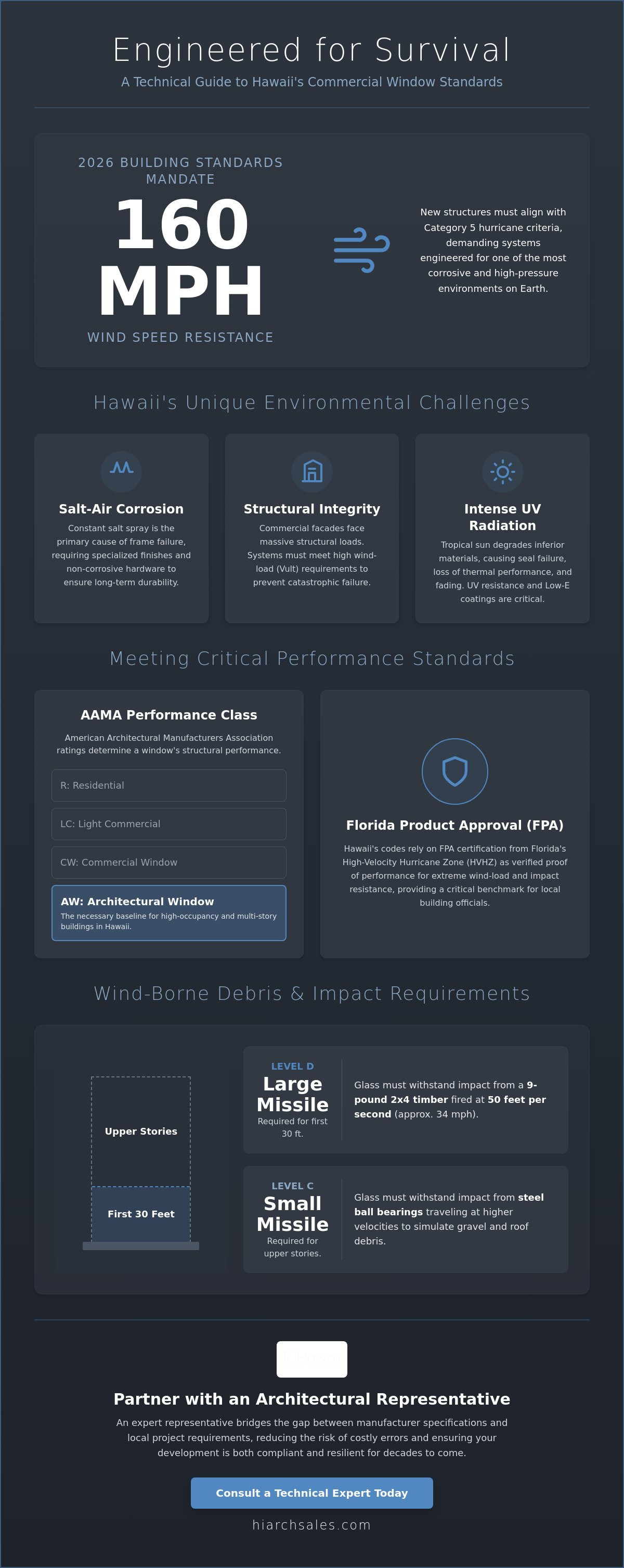
Hawaii's commercial building sector is at a pivotal point in 2026. State-mandated standards now require new structures to withstand wind speeds of up to 160 mph, effectively aligning with Category 5 hurricane criteria. This shift has fundamentally changed how developers and architects approach commercial window products Hawaii. It's no longer just about aesthetics; it's about engineering a building envelope that can survive one of the most corrosive and high-pressure environments on earth. The 2026 market is defined by a move toward advanced materials that offer both structural resilience and thermal efficiency.
Differentiating between residential and commercial systems is the first step in a successful specification. While residential windows focus on ease of operation and lower price points, commercial systems prioritize structural integrity and long-term performance. Understanding Window Types is essential for architects who must account for massive glass spans and the high-traffic demands of modern office towers or hospitality projects. Commercial-grade systems utilize heavier extrusions and reinforced glazing to meet these extreme pressures, providing a level of safety that residential products simply cannot match.
An architectural representative serves as a strategic consultant throughout the procurement cycle. They bridge the gap between high-end manufacturing and the practical application of local building codes. By providing technical support during the design phase, they ensure that the selected systems meet both the project’s vision and Hawaii's stringent energy efficiency goals. This partnership reduces the risk of specification errors that could lead to costly delays or failures in the field.
The Impact of Coastal Microclimates on Glazing
Environmental conditions vary significantly between Windward and Leeward coasts. Windward projects face constant moisture and salt-laden trade winds, making salt-air corrosion the primary cause of frame failure. In these zones, specifying non-corrosive hardware and specialized finishes is mandatory. Leeward projects, conversely, must prioritize UV resistance and solar heat gain control. The intense tropical sun on the drier sides of the islands can quickly degrade inferior materials, leading to seal failure and loss of thermal performance.
Commercial vs. Residential: The Performance Gap
Multi-story commercial facades face structural loads that would shatter a residential frame. Commercial products are tested for higher wind-load requirements (Vult) and offer superior durability for high-traffic storefronts. These systems also feature longer maintenance cycles. Their high-performance finishes are designed to resist chalking and fading for decades, even under the stress of tropical UV exposure. This longevity is vital for developers who need to protect their long-term investment in the island's harsh climate.
Critical Performance Standards for Island Commercial Windows
Specifying commercial window products Hawaii requires a sophisticated understanding of AAMA (American Architectural Manufacturers Association) ratings. For high-occupancy buildings and multi-story structures, the Architectural (AW) class is the necessary baseline. These ratings ensure the system can withstand repeated pressure cycles and maintain structural integrity over decades. While AAMA provides a foundation for air and water infiltration, Hawaii’s building codes often rely on Florida Product Approval (FPA) for hurricane validation. Florida's High-Velocity Hurricane Zone (HVHZ) standards are the most rigorous in the nation. Since Hawaii faces similar extreme wind-load challenges, FPA certification serves as verified proof of performance for local building officials and insurers.
Navigating Vult requirements is a matter of life safety and project liability. As of 2026, updated building standards mandate that structures withstand wind speeds of up to 160 mph. Designers must distinguish between large missile and small missile impact requirements based on building height and proximity to the ground. Large missile impact (Level D) is typically required for the first 30 feet of a facade. It involves testing where a nine-pound 2x4 timber is fired at the glass at 50 feet per second. Small missile testing uses steel ball bearings at higher velocities for upper-story glazing. If you're refining a complex specification, consulting with a technical representative can help ensure your project meets these evolving county-level amendments.
Impact Ratings and Hurricane Resilience
The 2026 evolution of impact glass technology has introduced thinner, lighter laminates that don't sacrifice structural strength. In high-intensity wind zones like Lihue and Kailua-Kona, these advancements allow for larger glass spans without the weight penalties of older systems. Architects are increasingly integrating hurricane rated windows Hawaii to satisfy the 160 mph mandate. These systems ensure the building envelope remains sealed even if the outer pane shatters, preventing the internal pressurization that often leads to catastrophic roof failure.
Thermal Performance and Energy Code Compliance
Energy code compliance in tropical climates focuses heavily on the Solar Heat Gain Coefficient (SHGC). In Hawaii, keeping solar heat out is the primary driver of mechanical efficiency. Target SHGC values for commercial window products Hawaii often fall below 0.25 to minimize cooling loads. High-performance thermal breaks within the frames are also essential. They prevent heat from conducting through the aluminum, which is a common failure point in older commercial designs. While U-factor is less critical here than in temperate climates, it remains a factor in overall envelope performance under the 2018 IECC standards.
Comparing High-Performance Window Systems
Aluminum frames dominate the landscape of commercial window products Hawaii due to their inherent structural rigidity and design flexibility. Within this category, selecting between the ES | Prestige and ES | Elite lines is a matter of balancing engineering requirements with design intent. The ES | Prestige series is engineered for high-performance applications where maximum structural loads are a priority. It's often the preferred choice for high-rise developments that face extreme wind pressures at elevated altitudes. Conversely, the ES | Elite series offers a broader range of aesthetic configurations, making it ideal for retail storefronts and mid-rise office complexes that require a specific architectural profile.
While aluminum is the industry standard, ES | uPVC systems are gaining significant traction in coastal zones. These systems offer a unique advantage: total immunity to salt-air corrosion. In environments where aluminum might eventually pit or oxidize, uPVC remains chemically inert. This material also provides exceptional thermal performance, which is vital for meeting the energy savings goals of the 2018 IECC. For developers, this translates to lower long-term maintenance costs and a more efficient building envelope that won't degrade under the stress of a tropical environment.
ES Prestige vs. ES Elite: Selecting the Right Line
The structural differences between these two lines define their application. The ES | Prestige series features heavier wall thicknesses and reinforced internal chambers to meet the most demanding AAMA ratings. It's built for the high-stakes world of high-rise commercial facades where structural deflection must be minimized. The ES | Elite series focuses on versatility. It allows architects to achieve modern aesthetics with various finishes and profiles that complement contemporary Hawaiian design. Both lines provide the reliability needed for the island's unique climate, but their selection depends on the project's specific height and wind-load requirements.
The Resurgence of Steel and uPVC in Hawaii
Architectural steel is seeing a revival in the luxury commercial and hospitality sectors. Hopes Windows are the definitive choice for projects that demand the thinnest possible sightlines without sacrificing strength. Steel's modulus of elasticity is three times that of aluminum, allowing for massive glass spans with minimal framing. This creates a sophisticated, timeless look that's difficult to replicate with other materials.
For projects where maintenance is the primary concern, ES | uPVC offers a compelling alternative. Comparing finishes is also critical for longevity. While anodized finishes provide a hard surface, high-performance powder coatings often offer superior color retention against the abrasive nature of volcanic ash and salt spray. For specialized applications like daylight harvesting, systems like Kalwall or Super Sky move beyond traditional glass. They provide diffused natural light that reduces glare and solar heat gain, creating more comfortable interior environments for occupants while significantly reducing the building's cooling load.
Specifying for Longevity: Energy Efficiency and Glazing
Energy efficiency in the tropics is a technical battle against solar radiation. While structural wind loads are vital for safety, the long-term viability of commercial window products Hawaii depends on managing thermal gain. High-performance glazing utilizes spectrally selective Low-E coatings to filter out infrared heat while allowing maximum visible light to pass through. This technology is essential for reducing the cooling loads that drive 78% of commercial building emissions in the islands. For large-scale facades, architects must also account for thermal expansion. Integrating proper expansion joints and Balco systems ensures the building envelope remains intact as materials naturally expand and contract under the intense Hawaiian sun.
Architectural louvers from AWV provide a dual benefit for modern envelopes. They offer necessary ventilation for utility spaces and parking structures while providing integrated shading for adjacent glazing. By reducing the direct solar load on the glass, these louvers extend the life of window seals and specialized coatings. If you're designing for high-density urban environments, you can contact our team to review performance data for integrated louver and window systems.
Advanced Glazing Solutions
Spectrally selective coatings are now the standard for high-rise developments. These coatings are engineered to provide a high light-to-solar-gain ratio, which is critical for meeting the latest Hawaii energy codes. For a deeper dive into these requirements, see our high performance glazing Honolulu technical guide. Beyond thermal performance, designers must choose between laminated and tempered glass. Laminated glass is the preferred choice for its superior acoustic dampening and safety, as it remains within the frame even if the glass is compromised.
Daylighting and Skylight Systems
Designing with Super Sky allows for large-span commercial skylights that transform interior lobbies and atriums into light-filled environments. These systems are engineered to handle the unique drainage and wind-load requirements of the Pacific. To balance this natural light with occupant comfort, Kalwall translucent panels offer a sophisticated alternative to traditional glass. They provide soft, diffused light that eliminates glare and hot spots, significantly improving employee productivity and comfort. These panels offer exceptional insulation values, allowing for daylight harvesting without the massive solar heat gain associated with standard clear glazing.
While optimizing the building envelope for light and efficiency, architects often consider the interior flow and security of these spaces. For those interested in integrating innovative, handcrafted solutions like bookcase or mirror systems from Hide-A-Way Doors, click here.
Partnering with an Architectural Product Representative
Distinguishing between a standard distributor and an architectural representative is vital for complex projects. A distributor typically focuses on high-volume transactions with limited technical oversight. In contrast, a manufacturer’s representative acts as a technical consultant throughout the design and construction phases. For commercial window products Hawaii, this distinction ensures that the specific engineering requirements of the Pacific are met before the first order is placed. Hawaii Architectural Sales provides this localized expertise, ensuring that high-performance brands like Hopes or ES | Prestige are correctly specified for their intended environment.
The procurement of commercial window products Hawaii requires a partner who understands both the aesthetic and regulatory demands of the region. Technical support begins long before procurement. We assist with wind load calculations to ensure compliance with the latest 160 mph standards. Our team provides detailed shop drawings and technical data sheets that streamline the approval process with local building officials. This level of involvement reduces the risk of project delays caused by non-compliant specifications or engineering errors.
Value-Added Services for Architects
Our role involves more than just providing a catalog of options. We provide comprehensive support that includes sample procurement for client presentations and assistance with specification writing. This ensures that "or-equal" substitutions don't compromise the building's structural integrity or energy performance. We also facilitate coordination between manufacturers and local contractors, bridging the gap between design intent and field application. It's a partnership built on technical precision and long-term reliability.
• Provision of technical data sheets and AAMA certification documents.
• Review of code compliance for specific county-level amendments.
• On-site consultation to address unique structural challenges.
Project Delivery Across the Islands
Logistics in Hawaii present unique challenges that mainland suppliers often overlook. Ensuring material integrity during inter-island shipping is a core competency. Whether a project is located in Lihue, Kihei, or Lahaina, we manage the complexities of container logistics and site delivery. This oversight prevents the damage and delays common in multi-island projects. By centralizing the technical and logistical aspects of the glazing package, we allow architects to focus on design while we handle the intricacies of the supply chain. You can contact Hawaii Architectural Sales for a project consultation to review your specific site requirements and ensure the success of your building envelope.
Secure Your Project’s Future with Technical Precision
Successfully specifying commercial window products Hawaii requires moving beyond aesthetic appeal to prioritize structural engineering and environmental resilience. You've seen how AAMA ratings and Florida Product Approval provide a necessary framework for safety in high-velocity hurricane zones. Selecting the right materials, whether it's the thermal efficiency of ES | uPVC or the thin sightlines of Hopes steel, ensures that your project remains both functional and visually striking for decades. It's a technical balance that defines the longevity of any island development.
Since 1985, Hawaii Architectural Sales has served as a steady partner to the island's design community. As an authorized representative for premium brands like ES, Euro-Wall, and Hopes, we specialize in specifications for high-wind and high-salt environments. We bridge the gap between manufacturer capabilities and the unique demands of Pacific construction. Our role is to ensure your building envelope is both compliant and durable from the initial design phase through final delivery.
What are the best window frame materials for salt-air environments in Hawaii?
uPVC and high-performance aluminum with architectural-grade finishes are the most effective materials for coastal zones. ES | uPVC systems are fundamentally immune to salt-air corrosion because they are chemically inert. For aluminum systems, specifying a high-quality powder coating or anodized finish is necessary to prevent the pitting and oxidation common in tropical environments.
Do I need hurricane-rated windows for commercial buildings in Honolulu?
Yes, impact-resistant glazing is a mandatory requirement for new commercial construction. As of 2026, Hawaii building standards mandate that structures withstand wind speeds of up to 160 mph. Selecting commercial window products Hawaii that meet these wind-borne debris region standards is essential for life safety and code compliance.
What is the difference between ES Prestige and ES Elite window lines?
ES | Prestige is engineered for high-performance and high-rise applications where maximum structural load resistance is the priority. It features heavier extrusions to handle extreme pressure cycles. ES | Elite provides greater aesthetic flexibility and a wider variety of profiles, making it ideal for retail storefronts and mid-rise office developments.
How does the Solar Heat Gain Coefficient (SHGC) affect commercial energy costs?
A lower SHGC directly reduces the mechanical cooling load, which is the largest energy expense for Hawaii’s commercial buildings. Since large buildings drive 78% of commercial emissions in the state, specifying glass with an SHGC below 0.25 is a critical strategy for meeting both energy codes and long-term operational budgets.
Can I use steel windows in a coastal Hawaii project?
Steel windows like Hopes are suitable for coastal projects when they are specified with advanced, multi-stage protective finishes. These systems provide the thinnest sightlines and highest structural strength available. Their durability in high-salt environments depends on the quality of the factory-applied coatings and regular maintenance cycles.
What is the role of a manufacturer’s representative like Hawaii Architectural Sales?
A manufacturer’s representative acts as a technical consultant rather than a simple distributor. They support the design phase by providing wind-load calculations, shop drawings, and technical data sheets. This partnership ensures that the specified commercial window products Hawaii align with both the architectural vision and local building regulations.
Are Kalwall panels suitable for high-wind areas like Maui?
Kalwall translucent panels are specifically engineered to meet high-wind and impact-resistance requirements. They are an excellent choice for Maui’s windward coasts, providing soft, diffused daylight without the solar heat gain of traditional glass. These systems maintain their structural integrity while significantly improving the building's thermal performance.
How do I ensure my commercial windows meet Hawaii County building codes?
Compliance requires adhering to the 2018 International Building Code with specific Hawaii-level amendments. It's vital to verify the Vult wind-speed requirements for your specific project zone. Working with an architectural representative during the specification phase helps you navigate these county-level codes and ensures all technical documentation is ready for submittal.