High Salt Environment Windows in Hawaii: The 2026 Architect’s Guide
What if the most critical component of your coastal building envelope is engineered to fail in less than two years? In Hawaii’s Zone 4 environment, "marine-grade" is often a marketing term rather than a technical reality. You've likely seen standard aluminum frames pit and hardware seize within mont...
What if the most critical component of your coastal building envelope is engineered to fail in less than two years? In Hawaii’s Zone 4 environment, "marine-grade" is often a marketing term rather than a technical reality. You've likely seen standard aluminum frames pit and hardware seize within months of a project's completion. Specifying high salt environment windows Hawaii requires more than just picking a brand; it demands a deep understanding of the 2026 building codes and the chemical realities of salt-saturated air.
We understand that your reputation relies on the long-term durability of the materials you select. This guide provides the technical framework to ensure your specifications meet the 160 mph wind load mandates and 4,000-hour salt spray resistance standards. We'll analyze the performance of ES Prestige and uPVC systems, detail the requirements for Type 316 stainless steel fasteners, and provide the data you need to prevent glass clouding and structural degradation in the islands' most demanding microclimates. By mastering these technical requirements, you can deliver projects that maintain their aesthetic and structural integrity for decades.
Key Takeaways
• Define the U.S. Department of Defense "Zone 4" classification and how it dictates your material selection process for extreme environments.
• Compare the long-term corrosion resistance of 6063-T6 aluminum alloys against high salt environment windows Hawaii solutions like ES | uPVC.
• Identify why Type 316 marine-grade stainless steel is the non-negotiable standard for rollers, hinges, and all moving hardware components.
• Learn to navigate the 160 mph wind load requirements by utilizing Florida Product Approval (FPA) benchmarks for structural compliance.
• Discover how partnering with a local technical representative ensures design accuracy and streamlines supply chain logistics across the islands.
Understanding the "Extremely Severe" Salt Environment in Hawaii
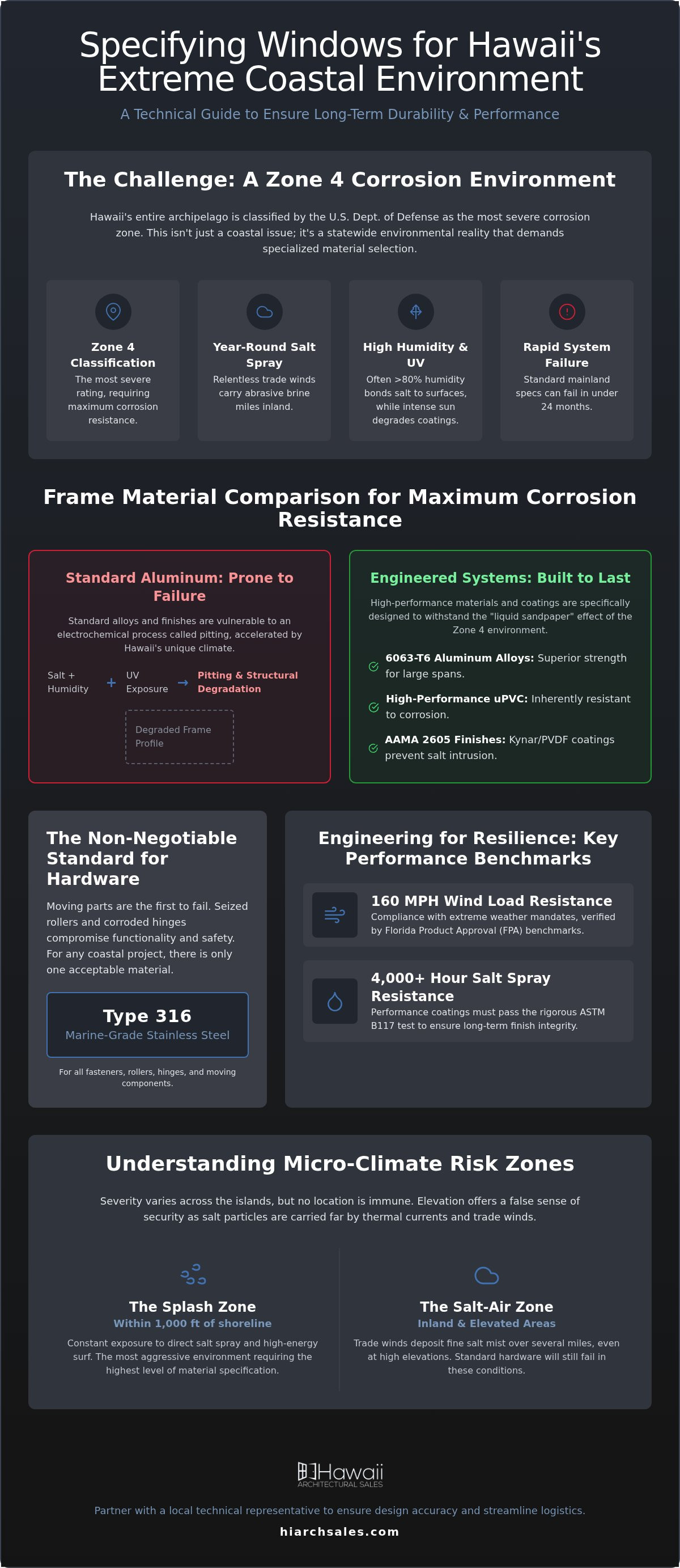
Hawaii’s geography presents a unique challenge for building materials. The U.S. Department of Defense classifies the islands as a "Zone 4" corrosion environment, the most severe category possible. This designation isn't just a label; it’s a warning for architects and engineers. While mainland coastal areas might experience seasonal salt exposure, Hawaii faces a relentless, year-round assault. This environment creates what professionals call a "liquid sandpaper" effect. High humidity, often exceeding 80%, bonds with airborne salt particles to form a microscopic abrasive brine that rests on every exposed surface.
Trade winds play a critical role in this delivery system. Unlike stagnant coastal regions, Hawaii’s consistent winds carry salt spray miles inland, often reaching high-elevation sites that architects assume are safe from marine influence. Standard mainland window specifications frequently fail in under 24 months because they don't account for this constant exposure. Specifying high salt environment windows Hawaii projects require starts with acknowledging that the entire state is effectively a salt-spray test chamber that never turns off.
The Chemistry of Coastal Corrosion
The degradation of window frames isn't just a surface aesthetic issue. It’s driven by the electrochemical process of corrosion. When salt water contacts standard aluminum, it acts as an electrolyte, facilitating the flow of electrons between different areas of the metal. This leads to pitting, a localized form of corrosion that creates deep cavities in lower-grade alloys. Intense UV exposure in the islands accelerates this. Sunlight breaks down the chemical bonds in standard protective coatings, allowing salt to bypass the finish and attack the structural aluminum directly.
Micro-Climates Across the Islands
Environmental severity varies significantly between windward and leeward coasts. Lihue’s wind-driven salt concentrations differ vastly from the conditions in Kailua-Kona, where volcanic emissions can add acidity to the salt air. We categorize sites into two primary risk areas to help guide material selection:
The Splash Zone
Areas within 1,000 feet of the shoreline where direct salt spray and high-energy surf are constant.
The Salt-Air Zone
Inland and elevated areas where trade winds deposit fine salt mist over several miles.
Elevation often provides a false sense of security. Because salt particles are lightweight, they easily ride thermal currents up mountain slopes. A project at 1,200 feet on Maui can suffer the same hardware failure as a beachfront villa if the material selection isn't strictly tailored for high salt environment windows Hawaii standards. Understanding these micro-climates is the first step in ensuring long-term building envelope integrity.
Comparing Frame Materials for Maximum Corrosion Resistance
Selecting the right frame material is the most critical decision an architect makes when designing for the Hawaiian coast. The material must resist Zone 4 conditions without compromising structural performance. High-performance aluminum systems, such as the 6063-T6 alloys used in the ES | Prestige line, provide the strength needed for expansive glass walls while maintaining a slim profile. To survive the aggressive environment, these frames require high-performance finishes like Kynar (PVDF) that meet AAMA 2605 standards. These coatings are rigorously evaluated using the ASTM B117 Salt Spray Test to ensure they can withstand thousands of hours of accelerated exposure.
Architectural steel from Hopes offers a distinct aesthetic for projects requiring the ultimate in strength and narrow sightlines. These systems are specifically engineered with specialized coatings to prevent the rapid oxidation that typically plagues steel in the tropics. Similarly, thermal breaks play a dual role. Beyond energy efficiency, they decouple the exterior and interior frame components. This reduces the thermal stress on seals and finishes in high-heat, high-humidity environments.
ES | Prestige and Elite Aluminum Systems
These systems are engineered for high-end coastal developments where structural integrity is non-negotiable. While anodized finishes offer a hard surface, they can be susceptible to filiform corrosion in Hawaii’s intense humidity. High-performance powder coatings are generally preferred for high salt environment windows Hawaii specifications. They provide a more resilient barrier against salt penetration and maintain their color under extreme UV exposure.
UPVC: The Non-Corrosive Alternative
ES | uPVC represents a superior solution for extreme coastal proximity. By removing metal from the frame's exterior, you eliminate the primary catalyst for building envelope failure. These systems are chemically inert to salt air. While standard vinyl often lacks the structural rigidity for large openings, multi-chambered uPVC profiles provide the necessary stability for luxury residential applications. If you're refining your material schedule, you can review technical specifications with a local representative to ensure the chosen system matches your project’s exposure level.
Beyond the Frame: Marine-Grade Hardware and Glazing Seals
The frame is only half the battle. Hardware often fails before the frame shows its first sign of pitting. In the context of high salt environment windows Hawaii, specifying Type 316 marine-grade stainless steel for all moving parts is a non-negotiable requirement. While Type 304 stainless steel may suffice for inland properties, it lacks the molybdenum content required to resist the localized pitting caused by chloride exposure. For properties within 1,000 feet of the shoreline, 316-grade hardware is the baseline standard for performance.
Rollers, hinges, and locks in sliding systems are the most vulnerable components. These parts are frequently hidden from view, allowing salt mist to accumulate undisturbed. Without the correct material specification, salt crystallization creates a mechanical seizure that can render a multi-panel sliding door inoperable. Euro-Wall systems are engineered specifically for these conditions, utilizing high-performance alloys and specialized hardware configurations that maintain their functionality even in Zone 4 environments. They focus on the mechanics of the system as much as the aesthetics.
Hardware Failure Points
Galvanic corrosion occurs when dissimilar metals meet in the presence of salt air. This electrochemical reaction can effectively weld a lock or hinge shut in a matter of months. Pivot doors and large-scale sliding systems are particularly susceptible because their weight places extreme stress on moving parts already compromised by corrosion. High-end architectural lines mitigate this by using self-lubricating components and specialized coatings that prevent metal-to-metal contact. This design logic ensures that the hardware continues to glide smoothly despite the abrasive nature of airborne salt particles.
Sealing the Building Envelope
The integrity of glazing seals is what prevents the "cloudy glass" phenomenon commonly seen in coastal Honolulu developments. When a seal fails, moisture and salt penetrate the space between glass panes, leading to permanent etching and structural degradation of the insulated glass unit. We recommend dual and triple weatherstripping strategies to create a redundant barrier against the elements. These seals must remain flexible under intense UV exposure to prevent air and water infiltration during extreme weather events. As an authorized Euro-Wall distributor Hawaii, we offer the technical guidance needed to specify systems that protect the entire building envelope. These advanced sealing technologies are essential for meeting the 160 mph wind load requirements while maintaining the clarity and performance of the glazing over time.
Engineering Compliance: Wind Loads and Florida Product Approval
Hawaii’s updated 2026 building codes mandate that new structures withstand wind speeds of up to 160 mph. This requirement represents a significant increase from previous standards and places Hawaii in direct alignment with the high-velocity hurricane zones of the Atlantic. Because of these similarities, Florida Product Approval (FPA) is now the gold standard for specifying high salt environment windows Hawaii projects. FPA numbers provide verifiable data that a window system has undergone rigorous testing for cyclical pressure and wind-borne debris resistance.
A critical oversight in many specifications is the failure to account for how corrosion degrades structural performance. In a Zone 4 environment, the structural rating of a window is only as good as its resistance to salt air. If the aluminum frame pits or the internal fasteners oxidize, the assembly’s ability to withstand a 160 mph gust is compromised. Structural integrity and salt-air durability are inseparable. A window that loses its finish also loses the protection that maintains its design pressure (DP) rating over its lifespan.
Impact Rated Glass Doors and Windows
In wind-borne debris regions, impact-rated glazing is a legal necessity. This usually involves laminated glass that meets Large Missile Impact benchmarks. These systems must resist a nine-pound 2x4 timber traveling at 50 feet per second. For Honolulu high-rises, this protection is vital for maintaining the building envelope during a storm. You can find specific engineering data in our technical guide on hurricane rated windows Hawaii. It’s important to distinguish between cosmetic damage to the frame and structural failure of the glass-to-frame bond, both of which are exacerbated by salt exposure.
Testing Standards for Salt Spray
Testing protocols must address both wind and chemistry. While the ASTM B117 salt spray test is a common baseline, it doesn't fully replicate the real-world conditions of the islands. Architects should prioritize finishes that meet the AAMA 2605 standard, which requires 4,000 hours of salt spray resistance and 10 years of South Florida exposure testing. This ensures the coating maintains its adhesion and protective qualities under the combined stress of UV radiation and brine. Designing for a 160+ mph wind load baseline requires a holistic approach that includes every screw, seal, and sash. You can contact our technical representatives to review Florida Product Approval documentation for your specific project site.
Specifying High-Performance Systems with a Local Partner
The transition from architectural intent to a high-performance building envelope requires more than a standard product catalog. For high salt environment windows Hawaii projects, the authorized distributor serves as the technical bridge between the manufacturer and the project site. This partnership is essential during the design phase to ensure every chosen system is optimized for its specific micro-climate. While a product might be "mainland-ready," it's rarely "Hawaii-ready" without localized adjustments to its finish, hardware, and sealing strategies.
Navigating the supply chain for neighbor islands like Maui, Kauai, and the Big Island introduces additional layers of complexity. High-performance window systems require specialized handling to maintain the integrity of Kynar finishes and laminated glass during transit. A local partner manages these logistics, ensuring the materials delivered to the job site match the exact specifications required by the 2026 building codes. This technical support extends from initial shop drawings to final material distribution, providing a single point of accountability for the window package.
Consultation for Architects and Developers
Value engineering often leads to compromises that result in premature building failure. We help architects identify where they can optimize costs without sacrificing the salt resistance necessary for Zone 4 environments. This might involve customizing ES Prestige aluminum systems for leeward exposures or specifying Hopes steel windows for high-visibility entryways. Selecting an architectural window distributor Hawaii professionals trust ensures these technical nuances are addressed before the first frame is manufactured.
The Hawaii Architectural Sales Advantage
We provide comprehensive envelope solutions that go beyond standard window frames. Our expertise includes daylighting strategies and technical representation for premium brands such as Kalwall and Super Sky. These systems are often integrated into complex commercial and luxury residential designs that demand high thermal performance and structural durability. For custom technical specifications or to review the performance data of our high salt environment windows Hawaii offerings, you can contact Gene directly. This direct access to technical expertise allows for a more fluid design process and ensures the finished project meets the most stringent environmental and regulatory standards in the islands.
Securing the Longevity of Hawaii’s Building Envelopes
Hawaii’s Zone 4 environment demands a shift from standard specifications to engineered solutions. It’s clear that success in 2026 requires integrating 160 mph wind load resilience with materials that withstand the islands' unique electrochemical stressors. Whether you’re selecting ES | uPVC for shoreline proximity or 316-grade stainless steel hardware for high-rise applications, the technical details determine the project’s ultimate durability. Designing for high salt environment windows Hawaii mandates a holistic view of the building envelope, where every fastener and seal plays a role in structural integrity.
Hawaii Architectural Sales has served the local architectural community since 1985. As an authorized ES | Prestige distributor, we provide the localized expertise necessary to navigate these extremely severe environments. Consult with our technical experts on your next coastal project to ensure your specifications meet the highest performance standards. We look forward to helping you build resilient, high-performance structures that stand the test of time.
Frequently Asked Questions
What is the best window frame material for beachfront homes in Hawaii?
For direct coastal exposure in Honolulu or Kihei, ES | uPVC is the superior choice because it is chemically inert to salt. Unlike metal, it cannot oxidize or pit. For projects requiring larger spans, high-performance aluminum systems like ES | Prestige are excellent when finished with a Kynar coating that meets AAMA 2605 standards. These materials ensure the longevity of high salt environment windows Hawaii projects by resisting the relentless abrasive effect of trade winds.
Does aluminum pit and corrode in Hawaii salt air?
Yes, standard aluminum will pit and corrode quickly in Hawaii’s Zone 4 environment. Lower-grade alloys lack the structural density to resist chloride penetration, leading to structural degradation within 24 months. To prevent this, we specify 6063-T6 aluminum alloys protected by high-performance powder coatings or PVDF finishes. These systems are tested to withstand 4,000 hours of salt spray, ensuring the frame maintains its integrity and aesthetic appearance despite constant exposure to coastal brine.
What is 316 stainless steel and why is it required for coastal hardware?
Type 316 stainless steel is a marine-grade alloy containing molybdenum, which provides significantly higher resistance to chloride-induced pitting than standard Type 304 steel. In coastal regions like Lahaina and Lihue, salt air causes standard hardware to seize and fail. Using 316-grade fasteners and moving parts is essential for any project within 1,000 feet of the shoreline. It’s the non-negotiable standard for ensuring that rollers, hinges, and locks remain functional in extremely severe environments.
Are uPVC windows strong enough for Hawaii’s high wind loads?
Modern uPVC systems, specifically the ES | uPVC line, are engineered with multi-chambered profiles and internal reinforcements to meet Hawaii’s 160 mph wind load requirements. These are not standard residential vinyl windows found on the mainland. They are high-performance architectural systems designed to handle the cyclical pressures and impact requirements of the 2026 building codes. They provide an ideal balance of structural strength and total immunity to salt-air corrosion for luxury coastal residences.
How does salt air affect the warranty on architectural windows?
Most manufacturers offer tiered warranties based on the project's proximity to the ocean. In Hawaii, a standard warranty may be voided if the windows are installed within a certain distance of the shoreline without a specified marine-grade finish. Architects must ensure that the selected system includes a coastal-specific warranty. Maintaining a detailed maintenance log, documenting regular fresh-water rinsing of the frames and hardware, is often a mandatory requirement for keeping these warranties in effect.
Why do architects in Hawaii look for Florida Product Approval?
Florida Product Approval (FPA) serves as a rigorous benchmark for high-velocity hurricane zones. Since Hawaii’s 2026 building codes mirror many of Florida’s stringent wind and impact requirements, FPA numbers provide verifiable proof of performance. This testing ensures that high salt environment windows Hawaii specifications can withstand extreme design pressures and large-missile impacts. Relying on FPA data allows architects in Kailua-Kona and Honolulu to specify products with documented structural reliability and safety.
How often should windows be maintained in a high-salt environment?
Maintenance frequency depends on the project's proximity to the surf. For beachfront homes, we recommend a fresh-water rinse of all exterior surfaces at least once a month to remove accumulated salt crystals. For inland properties, quarterly cleaning is usually sufficient. It’s vital to clear salt from the tracks and weep holes of sliding systems to prevent mechanical seizure. Regular maintenance is a pragmatic step that protects your long-term investment and ensures continued operational ease.
Can I get hurricane-rated windows that are also salt-resistant?
Yes, high-performance systems like ES | Prestige and Euro-Wall are designed specifically for this intersection of needs. These systems utilize laminated, impact-rated glass to meet 2026 wind-borne debris codes while employing marine-grade finishes and 316 stainless steel hardware for corrosion resistance. By combining structural engineering with advanced material science, these windows provide a complete building envelope solution. This dual-focus approach is essential for any high-stakes construction project located in Hawaii’s Zone 4 extremely severe environment.