How to Design with Kalwall Translucent Systems in Hawaii
Designing for daylight in the Pacific shouldn't mean choosing between natural illumination and a manageable cooling bill. In a climate where solar heat gain is relentless and salt-air corrosion is a constant threat, specifying Kalwall translucent systems Hawaii provides a way to bridge the gap betwe...
Designing for daylight in the Pacific shouldn't mean choosing between natural illumination and a manageable cooling bill. In a climate where solar heat gain is relentless and salt-air corrosion is a constant threat, specifying Kalwall translucent systems Hawaii provides a way to bridge the gap between high-end design and pragmatic performance. You're likely already navigating the complexities of the state's 2026 building standards, which now require resistance to wind speeds of up to 160 mph in certain exposed regions. It's a high-stakes environment where every envelope choice must balance aesthetics with extreme durability.
This article demonstrates how to master daylight harvesting while managing the unique thermal and environmental challenges of the islands. You'll learn to achieve perfectly diffuse natural light without the typical thermal penalty, ensuring your projects remain cool and energy-efficient. We will cover the technical requirements for hurricane-impact resistance, strategies for managing tropical heat gain, and how these systems help you comply with the latest state energy conservation codes. By the end, you'll have a clear framework for delivering high-performance buildings that thrive in Hawaii's unique climate.
Key Takeaways
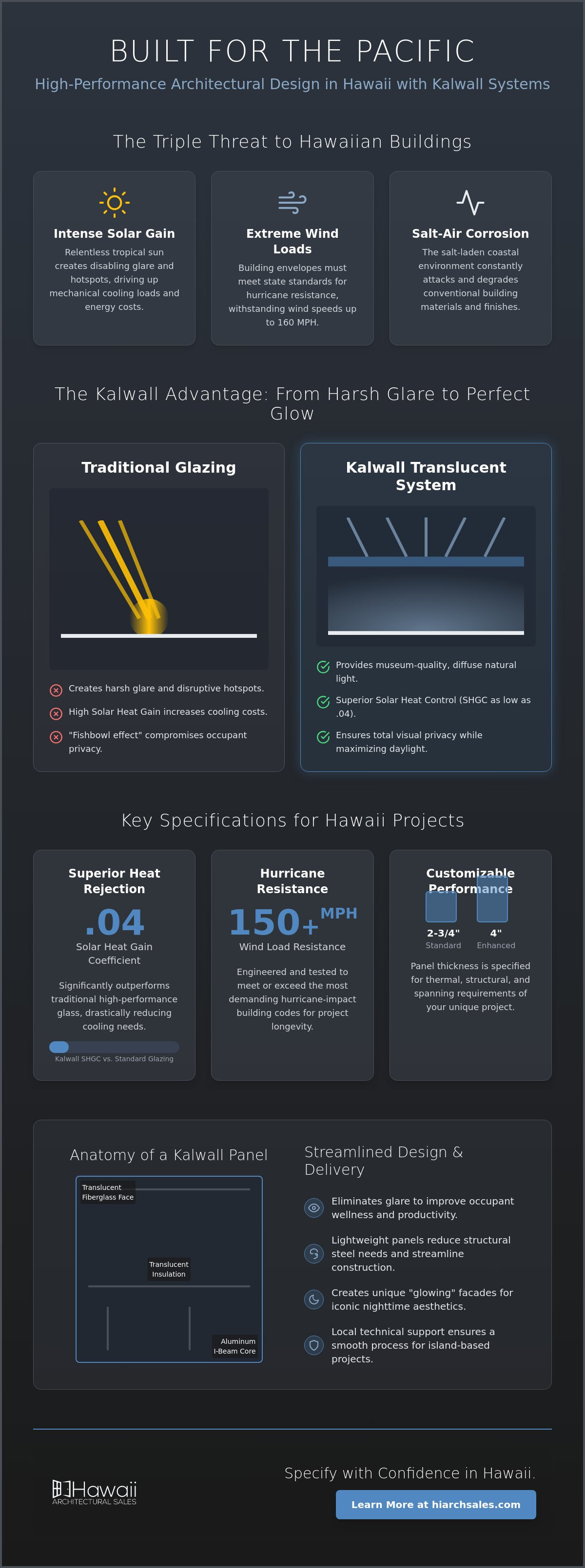
• Understand how structural composite sandwich panels provide museum-quality diffuse light while eliminating the glare and hotspots of traditional glazing.
• Identify the ideal Solar Heat Gain Coefficient and panel thickness to minimize mechanical cooling loads for Kalwall translucent systems Hawaii.
• Learn to use site-specific sun path analysis to determine the most effective percentage of translucent surface area for your building envelope.
• Ensure project longevity by specifying systems engineered for 150+ MPH wind loads and specialized finishes that prevent salt-air oxidation.
• Streamline the design and delivery process by leveraging localized technical support and logistical expertise for island-based projects.
Understanding Kalwall Translucent Systems for Hawaii Projects
Kalwall is more than a simple glazing alternative. It is a structural composite sandwich panel engineered for high-performance durability in demanding environments. The system utilizes a translucent fiberglass face sheet bonded to an internal aluminum or thermally broken grid, creating a lightweight yet incredibly strong component. This internal structure is often treated with specialized corrosion-resistant finishes to withstand the salt-laden air common in coastal regions. For architects working in the islands, Kalwall translucent systems Hawaii serve as a versatile building envelope solution. These systems are suitable for everything from expansive facades to complex skyroofs. Because the panels are self-supporting, they often reduce the need for heavy secondary structural steel, which streamlines construction and lowers material costs on remote project sites.
The Science of Diffuse Light in Tropical Latitudes
Tropical latitudes present a specific lighting challenge that standard glass cannot easily solve. The sun sits high in the sky for most of the year, creating harsh vertical light that leads to disabling glare and extreme heat gain. When Designing Daylight Harvesting Systems, professionals must prioritize light quality over mere quantity. Kalwall panels scatter incoming sunlight into a balanced, museum-quality glow that reaches deep into the floor plate. This diffusion eliminates the hotspots and deep shadows that typically plague tropical interiors. Occupants in Hawaii offices experience better wellness and productivity because they aren't forced to close blinds or use artificial lights to combat eye strain. While traditional glass often requires heavy tinting or external louvers, Kalwall’s specialized resins provide superior UV resistance and thermal stability without compromising the aesthetic of the light.
Why Hawaii Architects Prioritize Translucent Envelopes
Privacy and security are essential in high-density urban environments like Honolulu. Architects frequently specify Kalwall translucent systems Hawaii to eliminate the "fishbowl" effect seen in glass-heavy designs. These panels provide total visual privacy from the street level while flooding the interior with soft, natural illumination. This functionality is particularly valuable for schools, medical facilities, and athletic gyms where occupant comfort and security are the primary goals. Beyond these practical applications, translucent systems offer a unique "glowing" aesthetic for iconic island landmarks. At night, internal lighting transforms the building into a luminous beacon, creating a sophisticated architectural statement on the island skyline without the light pollution associated with transparent glass. This balance of performance and visual impact makes it a preferred choice for modern Hawaiian design.
How to Specify Kalwall Panels for Tropical Thermal Performance
Designing for Tropical Thermal Performance requires a shift in priority from simple insulation to aggressive heat rejection. In Hawaii, the primary objective is minimizing the Solar Heat Gain Coefficient (SHGC) to reduce the permanent cooling load on HVAC systems. Kalwall translucent systems Hawaii allow designers to fine-tune this balance by selecting specific panel configurations. For most island projects, a 2-3/4" thick panel is the standard specification. However, a 4" panel is often utilized for projects requiring enhanced thermal barriers or larger structural spans. By integrating translucent insulation (TI) within the sandwich panel, you can achieve superior thermal performance while maintaining the desired visible light transmission (VLT) for the space.
Balancing U-Value and Solar Heat Gain (SHGC)
In the islands, a low SHGC is often more critical than a low U-value because solar radiation is the primary driver of interior temperature. Kalwall systems can achieve an SHGC as low as .04, which is significantly more effective at rejecting heat than most thermal break window systems Hawaii architects traditionally specify. This performance is vital for meeting Hawaii’s strict energy conservation codes, which mandate high-performance building envelopes to reduce state-wide energy consumption. Using these systems helps you exceed IECC requirements while providing a comfortable environment that doesn't rely solely on mechanical cooling.
Selecting the Right Translucent Face Sheets
The choice of face sheet determines both the longevity and the interior atmosphere of the building. Hawaii's intense Pacific radiation can degrade standard materials, so architects should specify face sheets with "Erosion Barrier" technology. This glass-reinforced surface protects against fiber bloom and UV degradation over decades of exposure. White face sheets provide the highest level of light diffusion and a clean interior aesthetic, whereas crystal face sheets offer a higher VLT for deeper light penetration. If you're currently drafting a spec for a commercial project, it's helpful to consult with a technical specialist to determine the exact VLT-to-SHGC ratio for your specific site conditions.
Specifying the right combination of face sheets and insulation ensures long-term color stability. Kalwall’s specialized resins are formulated to resist yellowing, even under constant exposure to high-index UV rays. This reliability is a cornerstone of the system's value, ensuring that the building’s aesthetic and performance don't diminish over time. By matching the panel thickness and insulation type to the building's orientation, you can create a highly efficient envelope that masters the tropical sun.
A Step-by-Step Guide to Designing Daylight Harvesting Systems
Designing a successful daylight harvesting system in the Pacific requires a departure from standard mainland practices. Because the sun reaches near-zenith positions in the islands, architects must use a calculated engineering approach rather than a purely aesthetic one. Implementing Kalwall translucent systems Hawaii starts with a rigorous sun path analysis to understand how solar radiation interacts with the building's specific coordinates throughout the year. This data allows you to determine the optimal percentage of the building envelope to be translucent, balancing natural illumination with the thermal limits of the HVAC system.
When reviewing technical specifications for translucent panels, designers should focus on daylight autonomy. This metric predicts the percentage of annual daytime hours that a space can reach a target illuminance level using only natural light. In Hawaii, where electricity costs are among the highest in the nation, achieving high daylight autonomy significantly impacts long-term operational expenses. It's a pragmatic way to justify the initial investment through documented energy savings.
Orienting the Building Envelope for Maximum Harvest
Effective orientation is the foundation of passive design. In Honolulu and surrounding areas, North and South exposures generally provide the most consistent light with manageable heat gain. East and West elevations often present challenges due to low-angle morning and afternoon sun. While traditional glazing would require heavy exterior shading or motorized blinds in these positions, the light-scattering properties of Kalwall panels neutralize the harsh angles. They transform direct, piercing rays into usable, glare-free light.
For large-scale commercial or industrial spaces, incorporating these panels into skyroofs is a proven strategy for deep-plan illumination. This approach brings light into the core of the building, reducing the "dark core" often found in deep-plate structures. Combining translucent sections with strategic vision glass at eye level allows occupants to maintain a connection to the outdoors while the Kalwall translucent systems Hawaii handle the bulk of the lighting load. This hybrid approach creates a balanced occupant experience that feels open yet thermally protected.
Integrating with Artificial Lighting Controls
A daylighting system is only as effective as the controls that manage it. To maximize the return on investment, the panels must be integrated with automated lighting control systems. These systems use photosensors to monitor interior light levels in real-time. When natural light is sufficient, the sensors trigger the dimming or shut-off of artificial LED fixtures. It's a seamless transition that most occupants don't even notice.
Proper integration can allow artificial lights to remain dimmed or off during 70% of daylight hours. This synergy directly reduces the building's carbon footprint and extends the lifespan of the interior lighting components. By treating daylight as a primary building utility rather than a luxury, architects can deliver projects that are both environmentally responsible and economically superior. This methodical approach ensures that the design performs as intended under the unique Hawaiian sun.
Engineering for Island Realities: Wind Loads and Salt Air
Designing a high-performance building envelope in the Pacific requires more than just thermal management. It demands a structure capable of surviving extreme mechanical stress and chemical exposure. Hawaii’s updated 2026 building standards now require new constructions in exposed or elevated areas to withstand wind speeds of up to 160 mph. These Category 5 hurricane requirements mean every component of the facade must be engineered for maximum resilience. Kalwall translucent systems Hawaii are specifically designed to meet these stringent criteria. The lightweight nature of these composite panels also provides a secondary benefit for seismic design. By reducing the overall mass of the building envelope, you lower the base shear forces on the primary structure during a seismic event, which is a vital consideration for projects in volcanic zones.
Meeting Hawaii’s High Wind Load Standards
Structural integrity starts with the internal grid core of the sandwich panel. This core provides an exceptional span-to-weight ratio, allowing for large translucent spans without the need for heavy secondary steel support. To verify performance, architects often look to Florida Product Approval data as a reliable benchmark for Hawaii’s wind zones. Kalwall systems are tested for large missile impact resistance and meet ASTM E1886/E1996 standards. This level of testing ensures the envelope remains intact even when subjected to wind-borne debris during a major storm. Our technical team works directly with engineers to develop custom attachment details for steel or concrete structures, ensuring the system integrates perfectly with local island building practices.
Corrosion Resistance in Coastal Zones
Coastal proximity introduces the constant threat of aluminum oxidation and finish degradation. Standard anodized finishes often fail prematurely when exposed to the salt-laden air of the islands. To prevent this, we specify high-performance organic coatings such as Kynar 500 for all exposed aluminum frames. These coatings provide a chemically resistant barrier that maintains its color and structural integrity for decades. Another critical engineering detail is the use of non-conductive thermal breaks. These breaks prevent galvanic corrosion between dissimilar materials, which is a common failure point in poorly specified coastal facades.
Extending the life of a facade in a high-salt environment requires both the right materials and a proactive maintenance plan. We recommend regular freshwater rinsing of the exterior surfaces to remove salt buildup and prevent pitting. This simple step, combined with the superior durability of the translucent face sheets, ensures your building remains a high-performing asset long after completion. If you are designing a project within five miles of the coast, request a technical consultation to review the specific coating requirements for your site's corrosion zone.
Specifying Kalwall with a Local Hawaii Representative
Successful implementation of a high-performance building envelope depends on more than just technical specifications. It requires a partnership with a representative who understands the regional nuances of Pacific construction. Hawaii Architectural Sales serves as the essential link between the manufacturer and the local design team, providing comprehensive technical support from the initial schematic phase through to final material delivery. By engaging a local expert early in the process, architects can ensure that Kalwall translucent systems Hawaii are optimized for both performance and budget. This collaboration prevents costly design revisions by identifying potential structural or thermal conflicts before they reach the construction phase.
From Schematic Design to Material Delivery
Early-stage involvement allows our team to assist with shop drawing reviews and the development of custom attachment details tailored to island-specific substrates. We provide architects with direct access to Kalwall panels Honolulu technical data, including physical samples that demonstrate light transmission and color stability under local conditions. Logistics management is another critical service we provide. Shipping large-scale architectural components to the islands involves complex ocean freight coordination and on-island handling. We manage these logistics proactively to ensure materials arrive on-site in pristine condition and according to the project schedule, minimizing the risk of downtime for the general contractor.
Why Local Distribution Matters for Hawaii Architects
Local distribution provides a level of accountability and accessibility that mainland-only suppliers cannot match. Our representatives are available for on-site consultations across all islands, whether the project is located in Lihue, Kailua-Kona, or downtown Honolulu. This physical presence is vital for troubleshooting field conditions and ensuring the installation aligns with the design intent. We also maintain deep familiarity with local building departments and the specific permit requirements for each county. This localized knowledge helps streamline the approval process for specialized translucent systems.
Effective coordination with contractors is essential for the success of specialized building systems. We assist with budget estimating and provide clear documentation that helps contractors understand the unique installation requirements of structural sandwich panels. This support reduces the likelihood of change orders and ensures the project stays within its financial parameters. By choosing a partner with established regional expertise, you gain a strategic ally committed to the long-term durability and functionality of the building. Our goal is to ensure that every project utilizing Kalwall translucent systems Hawaii meets the highest standards of modern architectural design while thriving in the state's demanding environmental conditions.
Engineering High-Performance Daylight for the Islands
Designing for the Pacific requires a specialized approach that balances light quality with extreme environmental resilience. By prioritizing low Solar Heat Gain Coefficients and specifying corrosion-resistant finishes, you ensure your building performs efficiently for decades. Mastering Kalwall translucent systems Hawaii allows you to meet the state's stringent 2026 wind load requirements while delivering perfectly diffuse natural light to interior spaces. It's a proven method for reducing artificial lighting reliance without compromising the building envelope's integrity.
Successful execution depends on early-stage technical coordination and a deep understanding of local logistics. Hawaii Architectural Sales provides the localized expertise needed to navigate these complexities. With over 40 years of experience in Hawaii building envelope solutions, our team understands the nuances of high-wind engineering and coastal corrosion protection. We serve as an authorized representative for all Hawaiian Islands, bridging the gap between advanced manufacturing and practical island application.
Are Kalwall translucent systems hurricane rated for Hawaii?
Yes, Kalwall systems are engineered to meet Hawaii's stringent hurricane wind load requirements. These systems are tested for large missile impact resistance and comply with ASTM E1886 and E1996 standards. In regions where updated building codes mandate resistance to wind speeds of up to 160 mph, these panels provide a lightweight yet high-strength solution. This structural integrity ensures the building envelope remains secure during extreme weather events common in the Pacific.
How do Kalwall panels handle the intense UV radiation in the islands?
Kalwall panels utilize specialized resins and a permanent erosion barrier technology to manage intense Pacific UV radiation. This protective surface prevents fiber bloom and surface degradation that often affects lower-quality composites. The translucent face sheets are formulated to maintain color stability and structural integrity over decades of exposure. This high level of UV resistance ensures that the panels don't yellow or become brittle in Hawaii's high-index sunlight environments.
Can Kalwall systems help a project achieve LEED certification in Hawaii?
Yes, Kalwall translucent systems Hawaii contribute significantly to multiple LEED credit categories. These systems excel in the Indoor Environmental Quality category by providing museum-quality diffuse light and high daylight autonomy. Additionally, their superior thermal performance helps reduce the building's overall energy consumption, supporting Energy and Atmosphere credits. By lowering the reliance on artificial lighting and mechanical cooling, these systems help architects achieve higher sustainability ratings for island projects.
What is the typical lifespan of a Kalwall panel in a coastal salt-air environment?
With the correct specification of high-performance organic coatings, a Kalwall system typically lasts 25 years or more in coastal environments. Specifying Kynar 500 finishes for the aluminum framing is essential to prevent oxidation from salt-laden air. The fiberglass face sheets are inherently non-corrosive, making them ideal for projects located near the ocean. Regular maintenance further extends this lifespan, ensuring the system remains both functional and aesthetically pleasing in harsh marine climates.
Is it possible to integrate operable windows into a Kalwall wall system?
It's entirely possible to integrate operable windows or fixed vision glazing into a Kalwall wall system. This hybrid approach allows occupants to benefit from both diffuse natural light and direct views or ventilation. The system's flexible grid design accommodates various window types while maintaining a cohesive building envelope. This integration is frequently used in Hawaii schools and offices to provide fresh air while the translucent panels manage solar heat gain.
How does the cost of Kalwall compare to high-performance curtain wall glass?
The cost of Kalwall translucent systems Hawaii is often more competitive than high-performance curtain wall glass when considering the total building system. Because the panels are lightweight and self-supporting, they frequently reduce the amount of secondary structural steel required. Additionally, the long-term energy savings from reduced artificial lighting and lower HVAC loads provide a superior return on investment. The system offers a high-performance alternative that balances initial capital expenditure with lower operational costs.
Does Kalwall require special cleaning or maintenance in Hawaii?
Maintenance for these systems is straightforward and primarily involves regular freshwater rinsing to remove salt buildup. In coastal Hawaii zones, rinsing the exterior surfaces prevents the accumulation of corrosive deposits on the aluminum framing. The translucent face sheets are designed to be self-cleaning to an extent, as rainfall helps wash away surface dust. This low-maintenance profile is a significant advantage for commercial property owners who want to minimize long-term facility management expenses.