Modern Pivot Door Systems: A Technical Guide for Hawaii Architects
In the Hawaiian islands, a pivot door is a structural engineering challenge disguised as a high-end design statement. Specifying pivot doors for coastal luxury properties requires more than an eye for aesthetics; it demands a rigorous understanding of the 2018 International Building Code and Hawaii'...
In the Hawaiian islands, a pivot door is a structural engineering challenge disguised as a high-end design statement. Specifying pivot doors for coastal luxury properties requires more than an eye for aesthetics; it demands a rigorous understanding of the 2018 International Building Code and Hawaii's specific wind design provisions. You likely recognize the frustration of seeing a beautiful wood entry warp under high humidity or watching standard hardware fail after just one season of salt spray exposure. It's a common pain point for firms working across Honolulu, Maui, and Kauai where environmental demands are uncompromising.
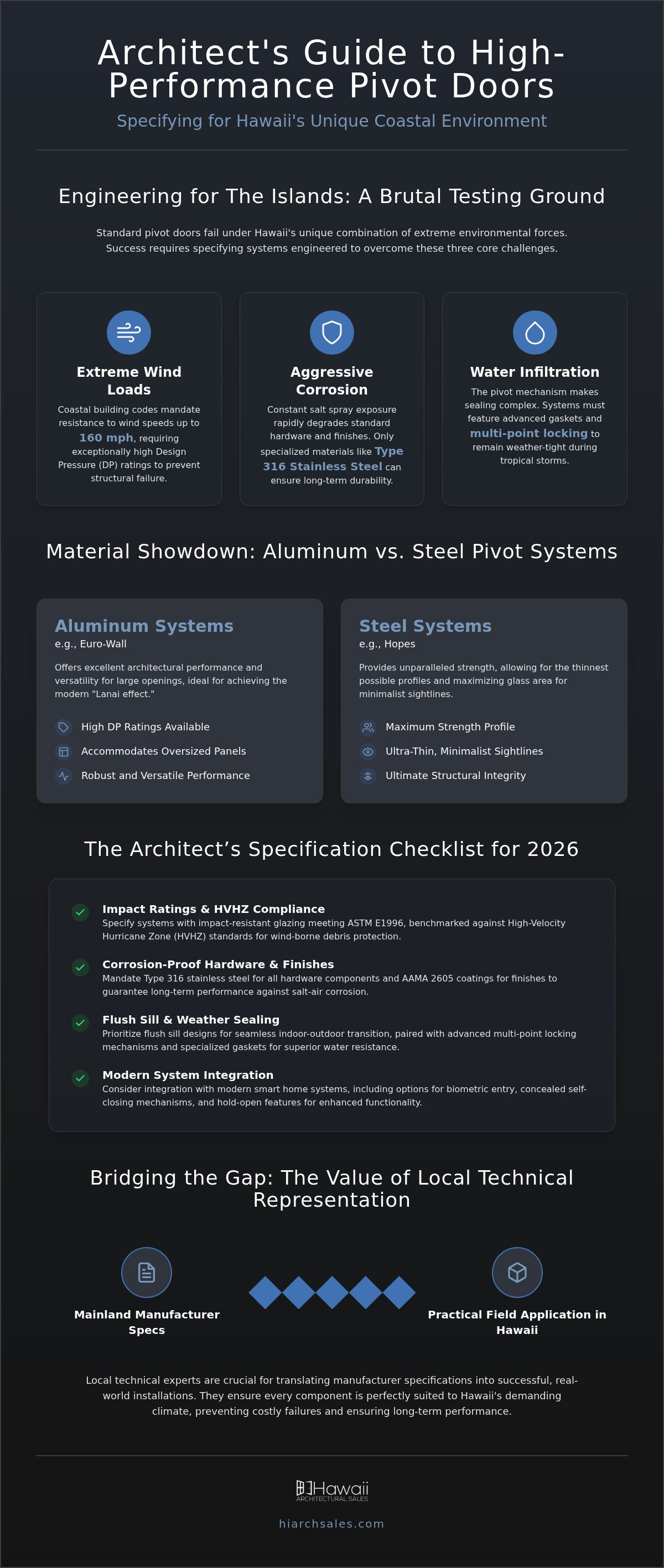
This guide helps you master the technical requirements for high-performance systems that withstand our unique environment. You'll learn to identify pivot door systems with the high Design Pressure (DP) ratings necessary for 160 mph wind zones. We'll also explore material standards like AAMA 2605 coatings and Type 316 stainless steel hardware that ensure long-term durability. By the end of this article, you'll have a clear roadmap for selecting resilient materials and finding the local technical support needed to bridge the gap between manufacturer specs and practical field application.
Key Takeaways
• Understand the critical Design Pressure (DP) ratings and wind load requirements necessary to meet Hawaii's stringent coastal building codes.
• Compare the architectural performance of Euro-Wall aluminum systems against the high-strength, ultra-thin steel profiles offered by Hopes.
• Identify the specific material standards, including Type 316 stainless steel, required to prevent hardware failure and corrosion in salt-heavy environments.
• Master the 2026 specification checklist for modern pivot doors, covering everything from flush sill design to biometric entry integration.
• Learn how local technical representation bridges the gap between mainland manufacturing and the practical demands of Hawaii’s unique climate.
What is a Pivot Door and Why is it the Ultimate Hawaii Entryway?
A pivot door represents a departure from standard architectural openings. Instead of relying on side-mounted butt hinges, a pivot system rotates on a vertical axis supported by a top and bottom spindle. This mechanical shift fundamentally changes how a door interacts with the building envelope. For those asking What is a pivot door? in a technical context, it's an engineering solution that transfers the weight of the panel directly into the floor rather than the frame. This allows for significantly larger openings that traditional hardware simply cannot sustain.
In Hawaii's luxury residential market, this system is more than a stylistic choice. It's the primary tool for achieving the "Lanai effect," where the boundary between interior living spaces and the coastal environment disappears. Standard hinges often fail under the weight of the massive panels required for panoramic views. Pivot doors accommodate these oversized dimensions, providing a grand entrance that remains functional and stable over time. However, Hawaii requires a higher standard of engineering than the mainland. Our unique combination of high wind loads and salt-air corrosion means that a standard "off-the-shelf" pivot system will likely fail within years, if not months.
The Mechanics of Modern Pivot Hinges
The core advantage of a pivot system lies in its weight distribution. By placing the pivot point at the top and bottom of the panel, architects can specify doors weighing 1,000 lbs or more without compromising operation. This offset pivot point allows for a balanced swing, making even the most substantial panels feel weightless to the user. Modern systems from manufacturers like Euro-Wall and Hopes integrate specialized hardware, including self-closing mechanisms and hold-open features. These are essential for high-traffic entryways where consistent performance and safety are non-negotiable. Unlike mainland applications, these hinges must be engineered for extreme precision to maintain a weather-tight seal against tropical storms.
Architectural Impact in Island Design
Pivot doors serve as a functional "moving wall" in Honolulu and Maui estates. They allow for minimalist sightlines because the hardware is often concealed within the door and floor. This creates a clean aesthetic that integrates perfectly into contemporary tropical architecture. Beyond aesthetics, these systems enhance natural ventilation. Because pivot doors can be held open at specific angles, they act as scoops for trade winds, facilitating passive cooling throughout the home. This functionality is critical in Hawaii, where energy efficiency and indoor-outdoor flow are top priorities. Hawaii Architectural Sales ensures that every specified system meets the rigorous durability requirements of our local climate, bridging the gap between high-end manufacturing and practical island application.
Engineering for the Island: Wind Loads and Salt-Air Resistance
Hawaii’s coastal environment is a brutal testing ground for architectural openings. High wind loads and constant salt-air exposure quickly expose weaknesses in mainland-standard specifications. For pivot doors, the most critical metric is the Design Pressure (DP) rating. As of 2026, state building codes require new constructions to withstand wind speeds up to 160 mph. This mandates a pivot system capable of handling extreme structural loads without failing. Water infiltration management is equally challenging. Because these doors rotate on a spindle, creating a continuous weather seal is more complex than with traditional hinges. Architects must specify systems with advanced multi-point locking and specialized gaskets to prevent water from breaching the envelope during tropical storms.
Impact Ratings and Hurricane Compliance
Hawaii’s wind-borne debris thresholds are strict. Sites with design wind speeds of 130 mph or greater require impact-resistant glazing that meets ASTM E1996 standards. Many architects look to Florida Product Approval and High-Velocity Hurricane Zone (HVHZ) testing as a benchmark for local compliance. Large-missile impact testing ensures the glass and frame assembly remain intact during a Category 5 event. It's often necessary to specify hurricane rated windows Hawaii alongside these entry systems to maintain a consistent performance envelope. This holistic approach prevents structural failure caused by internal pressurization during a breach.
Corrosion Protection for Coastal Hardware
Salt-air corrosion is the primary cause of hardware failure in coastal zones like Lahaina or Kailua-Kona. Standard Type 304 stainless steel often shows pitting within 200 to 500 hours of exposure. To ensure longevity, specify Type 316 stainless steel for all exposed fasteners and pivot mechanisms. Research on salt-air resistance confirms that 316-grade steel provides superior chloride resistance due to its molybdenum content. For aluminum pivot doors, AAMA 2605 powder coatings are the industry standard. These coatings provide ten years of performance in high-UV, high-salinity environments. Thermal break technology also plays a role; it prevents salt-crust buildup at bridge points and improves overall thermal efficiency. If you're designing for a beachfront project, consulting with Hawaii Architectural Sales can help you navigate these specific material requirements.
Material Comparison: Aluminum vs. Steel Pivot Systems
While wood is often marketed for its traditional aesthetic, it remains a liability in Hawaii's high-UV and high-humidity environment. Timber panels frequently warp, swell, or require annual refinishing to remain functional. For high-performance pivot doors, architects typically specify aluminum or steel. These materials provide the structural rigidity needed for oversized openings while offering significantly better longevity in coastal zones. The choice between them usually depends on the specific project's requirements for sightline thickness, maintenance levels, and budget.
Thermal performance is another critical factor in material selection. Hawaii's intense solar radiation requires systems that manage heat gain effectively. Both aluminum and steel systems can be engineered with thermal breaks to reduce conductivity. When paired with low-emissivity glazing, these systems achieve the Solar Heat Gain Coefficients (SHGC) necessary to maintain interior comfort without overtaxing cooling systems. While steel offers a higher level of inherent strength, aluminum remains the most versatile and cost-efficient solution for the majority of island developments.
Euro-Wall Aluminum Systems
Euro-Wall systems are widely considered the gold standard for low-maintenance coastal luxury. Aluminum is naturally resistant to oxidation, and when treated with high-performance powder coatings, it can withstand decades of salt-spray exposure. These systems utilize advanced multi-point locking hardware that secures the panel at several points along the frame, ensuring a tight weather seal against tropical storms. One of the primary advantages of aluminum is its weight-to-strength ratio, which allows for panels reaching heights of 14 feet or more. Architects can access localized support and technical specifications through an authorized Euro-Wall distributor Hawaii to ensure every detail meets local code requirements.
Hopes Custom Steel Windows and Doors
For ultra-luxury residential projects or historic restorations in Honolulu, Hopes Custom Steel Windows and Doors offer an unmatched aesthetic. Solid hot-rolled steel allows for ultra-thin sightlines that aluminum cannot replicate, providing a minimalist "Old World" feel. Despite the common perception that steel rusts, Hopes uses a comprehensive pre-treatment process. This includes a zinc thermal spray and specialized primers that create a robust barrier against corrosion. Steel is the preferred choice when the design calls for maximum glass spans with the smallest possible frame profile. While the material is heavier and requires more precise structural planning, its durability and timeless architectural impact make it a premier choice for high-stakes island design.
The Architect’s Specification Checklist for 2026
Specifying pivot doors for 2026 requires a shift from purely aesthetic considerations to integrated technical performance. The sill design is the first critical decision point. While flush tracks provide the seamless transition desired in Honolulu luxury homes, they require a sophisticated sub-floor drainage system to handle tropical downpours. Conversely, weather-rated raised sills provide superior protection against water infiltration but create a small threshold. Architects must also consider solar heat gain. Low-E coatings are essential to mitigate the intense UV exposure found across the islands, ensuring that massive glass panels don't turn living spaces into greenhouses.
Managing insects without compromising the pivot aesthetic is often overlooked. Integrated retractable screening solutions now allow for wide-span openings that maintain clean lines when not in use. These systems should be specified early in the design phase to ensure the pockets are properly recessed into the building envelope. This early-stage coordination prevents the need for surface-mounted tracks that disrupt the minimalist profile of the entry.
Sealing and Weatherstripping
The rotation point of a pivot door is its primary vulnerability. Unlike a traditional hinge that allows for a continuous gasket, the pivot axis requires specialized sealing solutions. Specifying heavy-duty drop-down seals and perimeter brush gaskets is necessary to maintain an airtight seal. This is a vital component of high-performance architectural glass systems Honolulu. Without these specific components, the building envelope will fail to meet efficiency standards during high-wind events. It's essential to verify that the specified gaskets are UV-stable to prevent degradation from Hawaii's constant sun exposure.
Automation and Smart Integration
As panel sizes increase, manual operation can become a challenge for some users. Motorized pivot operators are now standard for panels exceeding 800 lbs, providing smooth, controlled movement. These systems integrate seamlessly with smart-home platforms like Control4 or Crestron, allowing for biometric entry and remote monitoring. For commercial applications, automation ensures ADA compliance by reducing the force required to operate the door. It also provides a higher level of security through electronic strikes that lock automatically upon closing. If you're ready to finalize your project's hardware schedule, consult with our technical team to ensure all components are compatible with Hawaii's environmental demands.
The Value of Technical Representation in Hawaii
Buying pivot doors directly from mainland manufacturers often introduces significant risk to a Hawaii project. Mainland engineers frequently lack the localized context of our unique microclimates. We bridge the gap. A specification that works in coastal California may fail in the high-velocity hurricane zones of Oahu or the salt-heavy air of Maui. Hawaii Architectural Sales operates as a technical consultant rather than a simple supplier. This ensures that every specified system meets the rigorous demands of our region, providing reliable performance from Lihue to Kailua-Kona.
Manufacturer Support vs. Retail Sales
There is a fundamental difference between a retail vendor and an authorized technical representative. Retailers focus on the transaction. Technical reps focus on the precision of the specification. Architects gain access to essential resources like detailed CAD drawings, BIM models, and comprehensive shop drawing reviews. This level of support is critical for complex pivot doors where structural tolerances are incredibly slim. Navigating international shipping logistics and long lead times is another area where local expertise is invaluable. We manage the complexities of getting oversized, high-value panels to the islands safely and on schedule. This proactive management is why technical representation is a cornerstone of a successful architectural window distributor Hawaii partnership.
From Specification to Delivery
Our professional involvement extends well beyond the initial order and specification phase. We coordinate directly with local contractors to ensure that site delivery is seamless and that structural openings are prepared according to the manufacturer’s exact requirements. We don't install. Instead, we provide the technical expertise that makes high-end design possible in a tropical environment. Because we don't provide general contracting, our focus remains entirely on technical accuracy and warranty advocacy. If a component is damaged during transit or a hardware adjustment is needed after delivery, we provide the localized support mainland companies simply cannot offer. This presence ensures that the long-term performance of the building envelope is never compromised by distance or communication gaps. To begin refining your project's technical requirements, Contact Hawaii Architectural Sales for a professional consultation on your next pivot door project.
Secure the Building Envelope with High-Performance Specifications
Specifying pivot doors in Hawaii requires a balance of architectural vision and rigorous engineering. Success depends on selecting systems that meet the 160 mph wind speed requirements while resisting the constant threat of salt-air corrosion. By prioritizing high DP ratings and specifying Type 316 stainless steel hardware, you ensure that these grand entries remain functional and weather-tight for decades.
Hawaii Architectural Sales has served as a technical partner for the island's design community since 1985. As authorized representatives for Euro-Wall and Hopes, we provide the localized expertise necessary to navigate complex building codes and environmental challenges. We support high-stakes projects across Oahu, Maui, Kauai, and the Big Island, ensuring every detail aligns with the specific demands of your coastal site.
Yes, specific pivot doors from manufacturers like Euro-Wall are engineered with the high Design Pressure (DP) ratings required for Hawaii's 160 mph wind zones. These systems undergo rigorous large-missile impact testing to meet ASTM E1996 standards. It's essential to verify the specific DP rating for your project's elevation and island location. Our team provides technical data to ensure the specified assembly complies with the 2018 International Building Code and local amendments.
How do pivot doors handle water infiltration in tropical storms?
Managing water infiltration in oversized pivot systems requires a combination of advanced gaskets and multi-point locking hardware. Unlike traditional hinges, pivot axes use specialized drop-down seals and perimeter brush gaskets to maintain a weather-tight envelope. For flush-sill designs common in Honolulu, we recommend integrated sub-floor drainage systems. These components work together to prevent water breach during intense tropical storms while maintaining the minimalist aesthetic of the entryway.
What is the maximum size for a Euro-Wall pivot door?
Euro-Wall pivot systems are designed for massive openings, reaching maximum heights of 14 feet or more. These oversized panels are made possible by the bottom-pivot spindle design, which transfers the weight directly into the floor rather than the frame. This allows architects to specify wider and taller entries than traditional side-hinged doors can support. We provide CAD drawings and shop reviews to help integrate these large-scale systems into your structural plans.
Does Hawaii Architectural Sales provide installation for pivot doors?
Hawaii Architectural Sales does not provide installation or general contracting services. We operate as an authorized manufacturer's representative and technical consultant. Our role is to bridge the gap between premium manufacturers like Hopes and local developers by providing technical expertise, material distribution, and warranty advocacy. We coordinate with your selected local contractors to ensure that site delivery is seamless and that all technical specifications are met during the building process.
How do you prevent salt-air corrosion on steel pivot doors?
Corrosion prevention for steel pivot doors starts with advanced pre-treatment processes. Hopes steel systems utilize a zinc thermal spray and specialized primers to create a robust barrier against Hawaii's salt-heavy air. Additionally, we recommend specifying Type 316 stainless steel for all exposed hardware and fasteners. This material combination provides superior chloride resistance compared to standard steel or Type 304 stainless, ensuring the door remains structurally sound in coastal environments like Lahaina or Kihei.
Can pivot doors be automated for smart home systems?
Pivot systems can be fully automated using motorized operators designed for heavy, oversized panels. These operators integrate with smart home platforms like Control4 or Crestron to allow for biometric entry, remote monitoring, and hands-free operation. Automation is particularly beneficial for large-scale commercial entries in Honolulu where ADA compliance is a priority. These motorized systems ensure smooth, controlled movement while maintaining the security of electronic multi-point locking hardware.
What is the typical lead time for custom architectural pivot doors in Hawaii?
Typical lead times for custom architectural systems vary based on material selection and current manufacturing schedules. Because these systems are custom-engineered on the mainland, architects should account for shipping and island logistics when planning their project timelines. We actively manage the coordination between manufacturers and local sites to minimize delays. Contacting our technical team early in the design phase allows us to provide more accurate projections for your specific project in Kailua-Kona or Lihue.
Are pivot doors energy efficient in hot climates?
Modern pivot doors are highly energy efficient when specified with the correct components. We recommend utilizing thermal break technology to reduce heat conductivity through the frames. When paired with high-performance Low-E glazing, these systems achieve the Solar Heat Gain Coefficients (SHGC) necessary to mitigate Hawaii's intense solar gain. This combination keeps interior spaces comfortable and reduces the load on cooling systems, even when using massive glass panels that characterize tropical luxury architecture.