Salt Resistant Window Frames: A Technical Guide for Hawaii Coastal Architecture
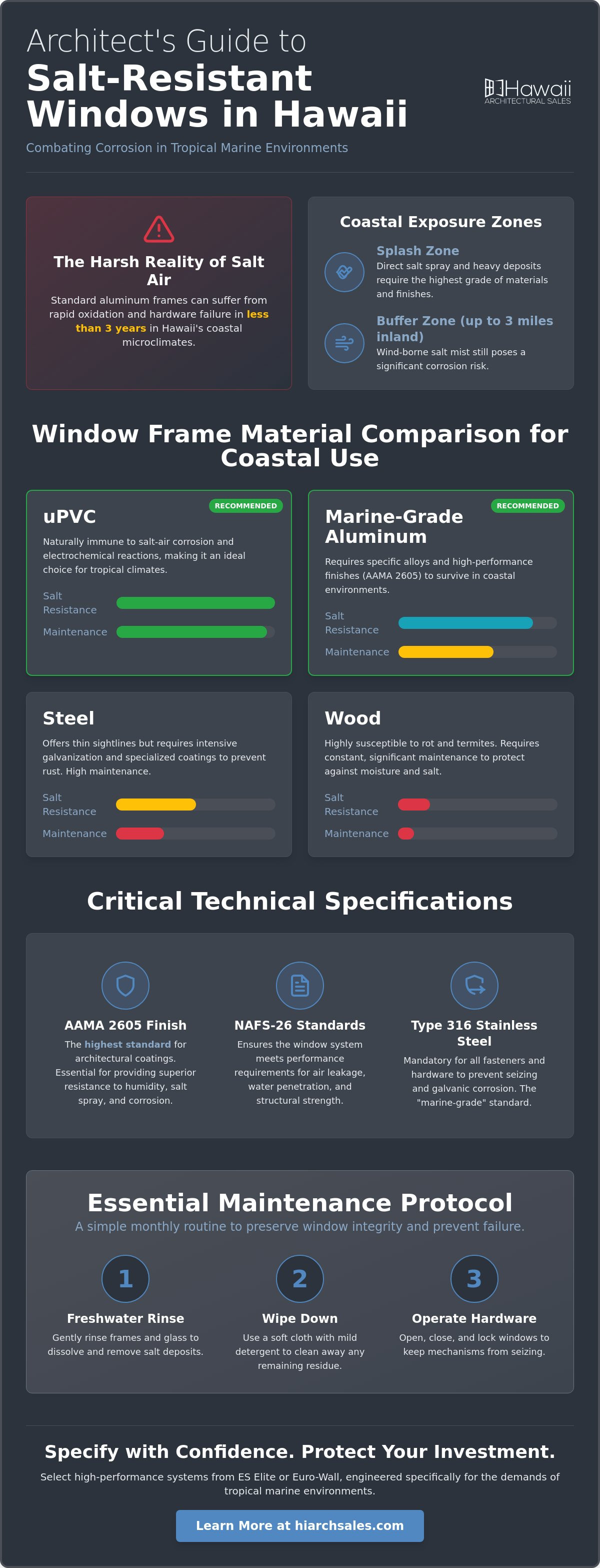
In Hawaii’s coastal microclimates, the salt air isn't just a scenic feature; it’s a relentless chemical agent that can compromise a standard aluminum frame in less than three years. Architects and developers often face the reality of rapid oxidation and seized hardware that lead to premature replace...
In Hawaii’s coastal microclimates, the salt air isn't just a scenic feature; it’s a relentless chemical agent that can compromise a standard aluminum frame in less than three years. Architects and developers often face the reality of rapid oxidation and seized hardware that lead to premature replacement costs in beachfront estates. Specifying high-performance salt resistant window frames is no longer a luxury; it’s a structural necessity for long-term durability in tropical marine environments.
This commitment to engineering for longevity is equally important when selecting the structure itself. For those exploring resilient and modern housing options, you can discover more about Custom Modular Home Sales (per-unit build and delivery fees) and how prefabricated designs can offer a durable solution for coastal living.
You likely recognize that standard coastal coatings often fail to meet the actual demands of the North Shore or the Kona Coast. This technical guide explains how to specify window systems that won't succumb to corrosion or mechanical failure. We will detail the critical importance of AAMA 2605-certified finishes and the latest NAFS-26 performance standards. You will also learn about the maintenance protocols required for coastal glazing and how to select materials, such as uPVC or marine-grade aluminum, that provide the resilience demanded by Hawaii’s unique building codes and the 3000-foot high water line fastener requirements.
Key Takeaways
• Understand why marine-grade aluminum and uPVC are the most resilient materials for resisting Hawaii's unique electrochemical salt reactions.
• Identify the technical specifications for salt resistant window frames, focusing on the necessity of AAMA 2605-certified finishes.
• Implement a monthly freshwater maintenance protocol to eliminate corrosive deposits and prevent hardware from seizing in high-humidity areas.
• Review critical regional requirements, including the mandate for Type 316 stainless steel fasteners and NAFS-26 performance standards.
• Select high-performance systems from ES Elite or Euro-Wall that are engineered specifically for the demands of tropical marine environments.
Understanding Salt Air Corrosion in Hawaii Coastal Environments
Salt-air corrosion is essentially an electrochemical process. When chloride ions from the ocean settle on a metal surface, they react with moisture to form a highly conductive electrolyte. This reaction facilitates the flow of electrons, leading to the rapid degradation of the material. Hawaii presents a particularly aggressive environment for this process. The state's consistent high humidity ensures that surfaces remain damp, providing the necessary medium for sustained electrochemical activity. This constant moisture accelerates the rate at which salt deposits can penetrate protective finishes.
Architectural planning in Hawaii requires a clear distinction between the "Splash Zone" and the "Buffer Zone." Properties in the Splash Zone receive direct salt spray and heavy deposits, requiring the highest grade of salt resistant window frames to prevent immediate failure. The Buffer Zone experiences a finer, wind-borne salt mist that can travel significant distances inland. The coastal zone is defined as any property within 3 miles of the shoreline. On the Kona Coast, the environmental challenge is compounded by volcanic smog, or Vog. When sulfur dioxide from volcanic activity mixes with salt air and moisture, it creates a mild acidic solution that significantly accelerates the corrosion of standard architectural metals.
The Chemistry of Oxidation and Pitting
Aluminum naturally forms a protective oxide layer, but chloride ions are small enough to penetrate this barrier. Once the barrier is breached, pitting corrosion begins. This localized attack creates deep, microscopic holes that can compromise the structural integrity of the frame over time. Another common failure is filiform corrosion, which manifests as thread-like filaments creeping beneath paint or powder coatings. This typically occurs when moisture and salt find a small defect or scratch in the finish. Manufacturers often use a Salt spray test to measure how well a coating can resist these specific chemical attacks before a product is brought to market.
Economic Impact of Poor Specification
Specifying inadequate materials leads to severe financial consequences. In Honolulu’s luxury high-rises, the cost of replacing failed window systems often includes expensive scaffolding, specialized labor, and potential structural repairs. Many standard manufacturer warranties specifically exclude damage caused by salt spray, leaving owners with no recourse when frames begin to oxidize. Selecting high-performance systems like ES | Elite or ES | Prestige ensures that the installation meets the technical demands of a marine environment while protecting the long-term value of the asset. Failure to account for these variables during the design phase almost guarantees a cycle of premature failure and costly remediation.
Comparing Window Frame Materials for Salt Resistance
Selecting the right substrate is the most critical decision in coastal specification. While aesthetic preferences often drive the initial conversation, the chemical realities of the Pacific dictate the final material list. High-performance salt resistant window frames must balance structural rigidity with chemical inertness. Architects in Hawaii typically choose between four primary materials, each offering a distinct profile of durability and maintenance requirements.
Aluminum
The industry standard for modern architecture, though it requires specific marine-grade alloys and high-end finishes to survive the splash zone.
uPVC
A material that is naturally immune to salt-air corrosion and electrochemical reactions, making it an increasingly popular choice for tropical humidity.
Steel
Offers unmatched thin-sightline aesthetics but requires intensive galvanization and specialized coatings, such as those found in Hopes Steel Windows, to prevent rust.
Wood
Highly susceptible to rot and termite pressure in Hawaii. Even when treated, wood frames require significant maintenance to protect against the combined assault of moisture and salt.
Marine-Grade Aluminum and Thermal Breaks
Standard aluminum alloys often fail in coastal environments because they lack the specific magnesium or manganese content required for marine durability. High-performance lines like ES Prestige windows Hawaii utilize specialized alloys that provide superior resistance to the pitting corrosion discussed earlier. These systems are often paired with high-performance finishes that meet AAMA 2605 standards to ensure the exterior surface remains intact for decades.
Thermal breaks play a secondary but vital role in salt resistance. By preventing the transfer of heat, these polyamide strips also reduce internal condensation. This is important because trapped moisture inside a frame can become a reservoir for salt crystals, leading to "inside-out" corrosion that remains hidden until structural failure occurs. Aluminum remains the preferred choice for high-wind load zones because it maintains its shape under the intense pressures of trade winds and storm events. For technical guidance on wind-load requirements, you can consult the experts at Hawaii Architectural Sales.
The Rise of Architectural uPVC in Hawaii
The use of ES | uPVC is growing rapidly in multi-family projects across Lihue and Kihei. Unlike metal, uPVC does not conduct electricity, which means the electrochemical reaction that causes corrosion simply cannot occur. Modern architectural uPVC is engineered with advanced UV stabilizers to prevent the yellowing or brittleness traditionally associated with older vinyl products in the intense Hawaii sun. This makes it a low-maintenance alternative to powder-coated aluminum, as it never requires repainting and can be cleaned with a simple freshwater rinse. While it may not offer the same ultra-slim sightlines as steel, its thermal efficiency and absolute resistance to salt make it a pragmatic solution for long-term coastal resilience.
Technical Specs: AAMA Ratings and Corrosion-Resistant Finishes
Specifying the correct surface finish is just as vital as selecting the base material. In the fenestration industry, the Fenestration & Glazing Industry Alliance (FGIA) sets the benchmarks through AAMA standards. These ratings determine how a coating will perform under intense UV radiation and salt-spray exposure. For Hawaii’s coastal architecture, the distinction between these ratings often represents the difference between a finish that lasts decades and one that chalks or peels within years. While AAMA 2603 and 2604 are common in residential construction, they lack the chemical resilience required for beachfront environments.
The choice between powder coating and anodizing also impacts long-term performance. Anodizing is an electrolytic process that integrates the finish into the aluminum itself, providing a hard, metallic surface. However, if not specified as Class I (0.7 mils or thicker), anodizing can be prone to pitting in high-salt areas. High-performance powder coatings, particularly those using Polyvinylidene Fluoride (PVDF) resins like Kynar 500, provide a superior chemical barrier. These coatings are preferred for luxury estates because they're chemically inert and resist the abrasive nature of wind-blown sand and salt. Engineers rely on the ASTM B117 salt spray test to validate these materials. This test subjects samples to a continuous salt fog to simulate years of coastal wear in a compressed timeframe, providing a measurable baseline for durability.
Specifying AAMA 2605 for Maximum Longevity
AAMA 2605 is the highest performance standard for architectural coatings. To earn this rating, a finish must withstand 4,000 hours of rigorous salt spray testing and 10 years of South Florida outdoor exposure without significant failure. Architects in Honolulu must demand AAMA 2605 for all exterior metal components to ensure the system can handle the combined assault of high humidity and intense tropical UV. AAMA 2605 finishes retain color and gloss significantly longer than 2604, preventing the faded, "chalky" appearance common on older coastal buildings. This specification is a prerequisite for any project seeking to maintain its aesthetic and structural integrity in a marine environment.
Hardware and Gasket Considerations
The frame is only as reliable as the hardware that holds it together. While 304-grade stainless steel is often labeled "stainless," it frequently develops surface rust in Hawaii. Grade 316 stainless steel is the marine-grade necessity because it contains molybdenum, which provides specific resistance to chloride-induced pitting. Beyond the metal, the gaskets must be made of EPDM (Ethylene Propylene Diene Monomer). This material resists embrittlement caused by salt air and UV exposure, ensuring the window remains airtight. Properly designed salt resistant window frames also include optimized weep holes. These drainage paths prevent salt-water pooling within the frame tracks, which is a primary cause of internal corrosion and hardware failure. Using high-performance systems like Euro-Wall ensures that these technical details are engineered into the product from the start.
How to Maintain Windows in a High-Salt Environment
Specifying high-performance salt resistant window frames is only the first step in ensuring coastal durability. Even the most advanced AAMA 2605 finishes require a rigorous maintenance schedule to prevent the accumulation of crystalline salt. Without intervention, salt deposits act as a desiccant, holding moisture against the frame and accelerating the electrochemical decay process. For properties located within the splash zone, a monthly fresh water rinse is the absolute minimum requirement to maintain the integrity of the finish.
Maintenance should focus on removing salt before it hardens into abrasive crystals. Use only mild, non-abrasive detergents and soft cloths for cleaning. Harsh chemicals or abrasive pads can create microscopic scratches in the protective coating, providing an entry point for filiform corrosion. Beyond the surface, it's essential to inspect and lubricate hinges, rollers, and tracks. Use only silicone-based sprays for this purpose. Petroleum-based lubricants can attract sand and salt, creating a grinding paste that destroys hardware over time. You should also monitor gaskets for "salt-jacking." This occurs when salt buildup behind a seal expands as it crystallizes, eventually pushing the gasket away from the frame and compromising the window's weather-tightness.
The Beachfront Cleaning Protocol
A systematic approach to cleaning ensures that maintenance doesn't inadvertently damage the system. Follow these steps to protect your investment:
Initial Rinse
Use low-pressure fresh water to wash away loose salt and sand.
Mild Wash
Apply a solution of pH-neutral soap and water using a soft sponge.
Detailing
Pay close attention to the bottom tracks and weep holes where salt-water pooling is most common.
Final Rinse
Thoroughly remove all soap residue with fresh water and dry the frames with a clean microfiber towel.
You should never use power washers on architectural window seals. The high-pressure stream can force water and salt behind the gaskets or into the internal cavities of the frame, leading to hidden corrosion. During cleaning, look for early signs of finish failure, such as bubbling or small white powdery spots. Identifying these issues early allows for localized repair before the damage becomes a structural liability.
Professional Inspection for Commercial Properties
For high-density residential and resort projects, individual unit maintenance is often inconsistent. Establishing an annual audit for commercial window products Hawaii is the most effective way to ensure long-term performance. These inspections should be documented carefully. Many high-end manufacturers require proof of regular maintenance to uphold warranty coverage in coastal zones. Training on-site facilities staff is also critical. They must be able to recognize the specific signs of corrosion in specialized components like AWV architectural louvers or Euro-Wall folding door tracks. If you need assistance developing a project-specific maintenance plan, you can consult with Hawaii Architectural Sales to ensure your specifications meet the necessary longevity standards.
Selecting High-Performance Solutions: The Hawaii Architectural Sales Advantage
Hawaii's unique environmental pressures require more than off-the-shelf products. Achieving long-term performance for salt resistant window frames depends on selecting systems engineered specifically for high-velocity hurricane zones and tropical marine climates. Hawaii Architectural Sales serves as a bridge between high-end manufacturing and the practical application of these technologies across the islands. We understand that a specification for a project in Kapolei differs significantly from one on the beachfront in Hanalei.
The ES | Prestige and ES | Elite lines represent the pinnacle of aluminum engineering for coastal regions. These systems were developed to withstand the aggressive salt-air and high-wind environments of Florida and Hawaii. For projects where minimizing maintenance is the primary objective, ES | uPVC provides a chemically inert alternative. Because uPVC doesn't react with chloride ions, it eliminates the risk of oxidation and pitting entirely. This material choice is particularly effective for multi-family developments where consistent individual maintenance is difficult to enforce.
Luxury coastal architecture often demands expansive openings that create a seamless indoor-outdoor flow. Euro-Wall provides salt-resistant folding and pivot doors designed to operate smoothly even in the most demanding beachfront locations. These systems utilize marine-grade hardware and specialized finishes to prevent the seizing and corrosion common in standard sliding door systems. By focusing on the mechanical integrity of the hinges and rollers, Euro-Wall ensures that large-scale glass walls remain functional for years after installation.
Proven Brands for Island Conditions
Selecting the right brand involves balancing aesthetic goals with technical requirements. ES | Prestige offers the structural strength needed for high-wind loads without sacrificing the refined profiles expected in modern design. For projects requiring a historic or ultra-slim aesthetic, Hopes Steel Windows provides unmatched sightlines. These steel systems utilize specialized coastal coatings that are engineered to resist the rust and decay typically associated with ferrous metals in Hawaii.
Daylighting is another critical factor in Hawaii’s high-performance facades. Integrating architectural daylighting solutions Honolulu often involves complex specifications. Systems from Kalwall and Super Sky utilize corrosion-resistant frames that allow for massive spans of light. These products maintain the building envelope's integrity against salt air while providing the thermal performance required to manage Hawaii’s intense solar heat gain.
Partnering with a Local Representative
Navigating the complexities of coastal specifications is a collaborative process. Buying through an authorized distributor like Hawaii Architectural Sales ensures that every component meets the correct regional specifications and building codes. We don't just supply products; we act as technical consultants for projects from Lihue to Lahaina. Our localized knowledge helps prevent the costly specification errors that lead to premature material failure.
Our team provides comprehensive support for architects during the initial design and specification phases. We help identify the correct AAMA ratings, hardware grades, and material substrates to ensure your project remains resilient for decades. Contact Hawaii Architectural Sales today for a project-specific consultation to review your fenestration requirements and select the most durable solutions for your coastal project.
Advancing Coastal Resilience in Hawaii Architecture
Hawaii’s coastal environments demand a technical approach to fenestration that prioritizes chemical resistance and structural integrity. By specifying materials like uPVC or marine-grade aluminum and insisting on AAMA 2605-certified finishes, you can effectively mitigate the risks of pitting and oxidation. These high-performance salt resistant window frames provide a reliable barrier against the state's aggressive humidity and salt air, ensuring that beachfront estates maintain their value and functionality. This focus on durability is a priority for luxury real estate specialists like DeFeo Luxury Properties, who emphasize that material integrity is vital for protecting high-end coastal investments, whether in Hawaii or along Florida's Gulf Coast. Longevity in these microclimates is not accidental; it's the result of precise engineering and a commitment to rigorous maintenance protocols.
Since 1985, Hawaii Architectural Sales has specialized in navigating the unique environmental requirements of the islands. We represent premier AAMA 2605-certified brands, such as ES Prestige, and offer deep expertise in high-wind and high-salt architectural systems. Consult with our technical experts on your next coastal project to ensure your specifications meet the highest industry standards. With the right partnership and technical oversight, your coastal designs will stand as a durable testament to modern architectural excellence.
Frequently Asked Questions
What is the best material for window frames near the ocean in Hawaii?
uPVC and marine-grade aluminum with AAMA 2605 finishes are the most effective materials for Hawaii's coastal zones. uPVC is naturally immune to electrochemical corrosion, while high-performance aluminum systems like ES | Prestige provide the structural strength required for high wind loads. Material selection depends on the project's specific balance between aesthetic requirements and environmental exposure.
Do aluminum window frames rust in salt air?
Aluminum does not rust in the traditional sense, but it undergoes a process called oxidation and pitting. Chloride ions from salt air penetrate the metal's natural oxide layer, creating microscopic holes that compromise structural integrity. Using salt resistant window frames with specialized architectural coatings is necessary to prevent this degradation in marine environments.
How often should I wash my windows if I live on the beach?
Beachfront properties require a freshwater rinse at least once per month to prevent salt crystal buildup. This schedule removes corrosive deposits before they can harden or etch the finish. For commercial properties or high-density developments, regular maintenance is often a requirement for upholding manufacturer warranties in coastal areas.
What is an AAMA 2605 rating and why is it important for coastal windows?
An AAMA 2605 rating is the highest performance standard for architectural coatings, requiring a finish to withstand 4,000 hours of salt spray testing. It’s critical for Hawaii coastlines because it ensures the frame will resist chalking, fading, and chemical erosion for at least ten years. Without this rating, standard finishes often fail within 36 months in tropical marine climates.
Is uPVC better than aluminum for salt resistance?
uPVC offers superior salt resistance because it is a non-conductive material that cannot undergo electrochemical corrosion. It's an ideal maintenance-free solution for humid coastal projects. Aluminum remains the preferred choice for larger spans or high-wind load requirements, provided it's treated with a marine-grade finish to protect the metal substrate from the electrolyte reaction.
Can salt air damage the glass itself, or just the frames?
Salt air can damage glass through etching and the accumulation of stubborn mineral deposits. When salt spray dries on a window, the crystals can become abrasive and difficult to remove without scratching the surface. Regular cleaning is essential not only for the frames but also to maintain the clarity and structural integrity of the glazing itself over time.
Does Hawaii Architectural Sales provide installation services for these windows?
Hawaii Architectural Sales is a specialized distributor and technical consultant; we don't provide installation services or general contracting. We partner with architects and engineers to specify high-performance systems and bridge the gap between manufacturing and application. Our role is to ensure that the products selected meet the stringent environmental and regulatory demands of the region.
What type of hardware should be used in a marine environment?
Type 316 stainless steel is the mandatory hardware standard for any marine environment. Unlike 304-grade stainless, 316 contains molybdenum, which provides specific resistance to chloride-induced pitting. Using inferior hardware in Hawaii’s coastal zones typically leads to seized hinges and mechanical failure within a few years of exposure to the salt air.