Super Sky Commercial Skylights: A Technical Reference for Hawaii Architects
Can a building envelope truly remain high-performing when it is constantly bombarded by salt spray and 120 mph wind gusts? For Hawaii architects, the tropical climate is more than a design backdrop; it is a relentless stress test for every material specified. You already know that standard solutions...
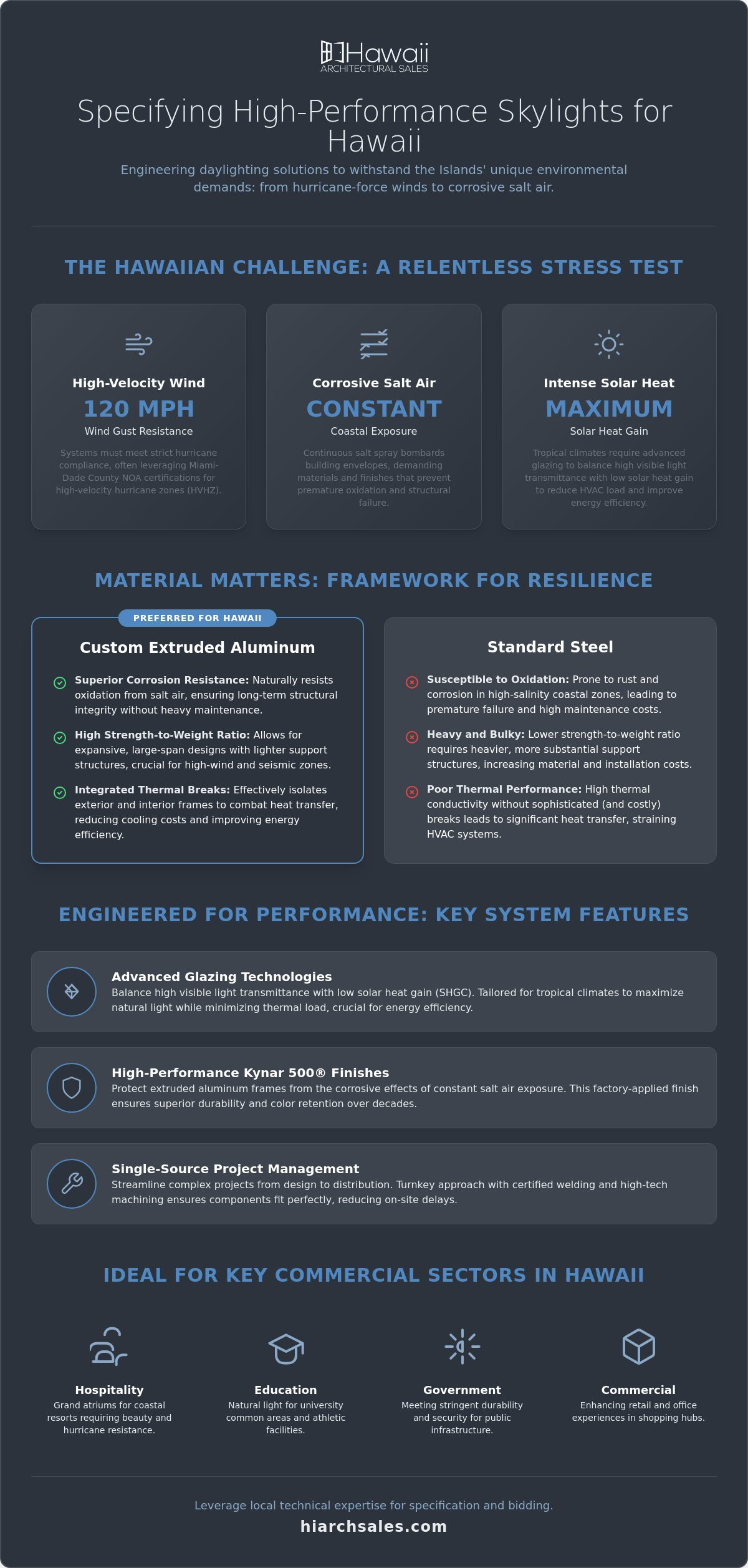
Can a building envelope truly remain high-performing when it is constantly bombarded by salt spray and 120 mph wind gusts? For Hawaii architects, the tropical climate is more than a design backdrop; it is a relentless stress test for every material specified. You already know that standard solutions often fail under the pressure of high solar heat gain and strict hurricane compliance. Specifying Super Sky commercial skylights requires a deep understanding of how these systems integrate with local building codes and unique environmental demands.
This technical reference provides the essential data you need to select the most durable configurations for your commercial projects. You'll learn how to navigate the latest Hawaii County Code updates, which include ordinances through June 30, 2026, and leverage Miami-Dade County NOA certifications for high-velocity hurricane zones. We will preview advanced glazing options and extruded aluminum frame configurations designed to meet energy efficiency goals while providing the long-term reliability your high-performance designs require. By focusing on precision engineering and localized technical support, you can ensure your building envelope remains both compliant and resilient.
• Understand why custom extruded aluminum is the preferred structural material for Hawaii projects, offering superior durability and weight-to-strength ratios compared to steel.
• Learn to balance high visible light transmittance with low solar heat gain using advanced glazing technologies tailored specifically for tropical climates.
• Identify high-performance finishes like Kynar 500 that protect Super Sky commercial skylights from the corrosive effects of constant salt air exposure.
• Explore structural configurations and system designs that enable expansive, large-span daylighting without compromising building envelope integrity.
• Streamline the specification and bidding process by leveraging the local technical expertise available through Hawaii Architectural Sales.
Super Sky commercial skylights represent the pinnacle of custom extruded aluminum engineering. Unlike standard off-the-shelf units, these systems function as integral components of a building’s structural envelope. Architects in Hawaii face specific challenges that require more than just aesthetic appeal. They need systems capable of withstanding high wind loads and corrosive salt air while maximizing natural light. Super Sky has moved beyond the traditional concept of a roof window to provide fully engineered daylighting solutions that prioritize structural integrity and long-term thermal performance.
The Evolution of Large-Span Daylighting
With an 80-year legacy of innovation, Super Sky has refined the manufacturing process to meet modern architectural demands. The shift from basic assembly to high-tech machining and certified welding ensures that every component meets rigorous tolerance standards. This precision is vital when applying daylighting principles to large-scale projects. By integrating these systems into architectural daylighting solutions Honolulu designers can create expansive, light-filled spaces that don't sacrifice safety or efficiency. The use of custom extruded aluminum allows for lighter structures with higher strength-to-weight ratios than traditional steel frames, which is a critical advantage in seismic and high-wind zones.
Core Capabilities for Commercial Infrastructure
Managing large-span commercial builds in the islands requires a level of coordination that standard distributors often lack. Super Sky offers single-source project management, which simplifies the transition from preliminary design to final material distribution. This turnkey approach is particularly beneficial for complex geometries such as pyramids, polygons, and expansive ridge skylights. By controlling the entire process, the manufacturer ensures that every custom component fits perfectly upon arrival, reducing on-site delays. These capabilities are essential for several key sectors across the islands:
Hospitality
Creating grand, sunlit atriums in coastal resorts that require both beauty and hurricane resistance.
Education
Improving student well-being through natural light in university common areas and athletic facilities.
Government
Meeting stringent durability and security requirements for high-traffic public infrastructure.
Commercial Centers
Enhancing the retail and professional experience in Honolulu office buildings and shopping hubs.
The ability to span massive distances without heavy internal supports allows for greater design freedom. Whether it's a new commercial center in Kakaʻako or a renovation of a government facility, these systems provide the technical foundation needed for high-performance building envelopes. Using Super Sky commercial skylights means architects don't have to choose between expansive views and structural compliance. The result is a durable, light-filled environment that stands up to the rigors of a tropical climate.
Hawaii’s high-humidity and high-salinity environment makes material selection a critical engineering decision. While steel offers high strength, its susceptibility to oxidation in coastal zones often leads to premature structural failure and high maintenance costs. Extruded aluminum is the superior alternative for Super Sky commercial skylights because it naturally resists corrosion while maintaining a high strength-to-weight ratio. This allows for lighter support structures that can still withstand 120 mph wind gusts, which is a common requirement for projects across the islands.
Beyond material durability, these aluminum frames incorporate sophisticated thermal breaks to combat Hawaii’s intense solar heat. Aluminum is an efficient conductor; without a thermal break, exterior heat would transfer directly into the building interior, straining HVAC systems. By isolating the exterior and interior frame components, these systems help architects achieve energy efficiency goals. All configurations are engineered to comply with International Building Code skylight standards, ensuring that every design meets documented safety and impact requirements.
Primary Geometry Options for Island Projects
The flexibility of extruded aluminum allows for a wide range of geometries tailored to specific functional needs. Selecting the right shape is essential for both aesthetics and environmental performance:
Pyramid and Ridge
These configurations are ideal for traditional designs and provide excellent water shedding during heavy tropical rainstorms.
Vault and Dome
These systems are designed for expansive atriums and large public spaces, providing high-volume daylighting without heavy internal supports.
Single Pitch and Radial
These options offer precise customization for unique building footprints or curved architectural features.
Point Supported and Metal Framed Canopies
Architects often require a seamless transition from interior spaces to exterior walkways, particularly in resort and retail environments. Super Sky’s point-supported glass systems utilize discreet hardware to create a minimalist, modern aesthetic with unobstructed views. These systems are engineered to handle the same rigorous wind loads as roof-mounted units, providing a consistent safety profile across the building envelope. These solutions integrate effectively with other architectural glass systems Honolulu professionals specify for high-performance facades. If you are refining a complex building envelope, you can consult with a technical specialist to evaluate which structural configuration best fits your project’s specific environmental loads.
Managing solar radiation in Hawaii requires a specialized approach to glass selection. Super Sky commercial skylights allow for the integration of diverse glazing types that address the extreme UV exposure and heat common in the islands. The priority for Hawaii architects is achieving a low Solar Heat Gain Coefficient (SHGC), often targeting values below 0.25, without significantly compromising Visible Light Transmittance (VLT). This balance ensures that interiors remain bright while the building's thermal load is minimized. It's a technical necessity in the tropics.
Electrochromic and Photovoltaic Integration
Dynamic light control is becoming a standard for high-performance buildings. Electrochromic glass automatically adjusts its tint in response to real-time solar intensity, which drastically reduces glare and heat gain during peak sun hours. This technology is particularly effective for large commercial atriums where manual shading is impractical. Additionally, Building Integrated Photovoltaics (BIPV) offer a sustainable path for island design by turning the skylight itself into a power-generating asset. These smart technologies work together to lower HVAC requirements and support LEED certification goals.
High-Performance Insulated Glass Units (IGUs)
The foundation of a high-performance skylight is the IGU. For tropical climates, selective Low-E coatings are essential. These coatings are engineered to reflect the infrared spectrum (heat) while allowing the visible spectrum (light) to pass through. When specifying these units, architects must also account for safety. Laminated safety glass is required for all overhead glazing to prevent injury in the event of breakage. To further enhance the thermal break window systems Hawaii projects demand, these IGUs can be filled with Argon or Krypton gas, providing superior insulation against external temperature spikes.
In some designs, direct sunlight is less desirable than soft, even illumination. For these projects, there is a strong synergy between Super Sky commercial skylights and Kalwall translucent systems Hawaii architects often specify for diffused light. While glass provides clarity and views, translucent panels provide superior insulation and eliminate hot spots. This combination allows for a versatile daylighting strategy that covers every area of a commercial facility. By layering these technologies, you can achieve a building envelope that is both aesthetically striking and thermally efficient.
Designing for Hawaii requires an engineering mindset that prioritizes long-term resilience over simple aesthetics. The primary challenge for any building envelope in the islands is the relentless combination of salt-laden air and high-velocity wind patterns. Super Sky commercial skylights address these issues through a combination of superior material finishes and structural testing that exceeds standard requirements. Architects must specify systems that can withstand these conditions without requiring constant maintenance or risking structural failure during a tropical storm.
Corrosion Resistance and High-Performance Finishes
In coastal environments like Lihue or Kihei, the selection of a frame finish is the single most important factor for skylight longevity. Standard coatings often succumb to pitting and oxidation within a few years of installation. To prevent this, architects should specify AAMA 2605 compliant coatings, such as Kynar 500, which provide maximum resistance to UV degradation and chemical corrosion. These finishes maintain their color and structural integrity even when subjected to constant salt spray. This level of protection aligns with the durability standards found in ES Prestige windows Hawaii professionals use for high-exposure residential and commercial facades. Specialized anodizing is another viable option for projects requiring a metallic finish with high abrasion resistance.
Wind Load and Hurricane Engineering
Hurricane compliance is a non-negotiable aspect of Hawaii building design. Super Sky holds a current Miami-Dade County Notice of Acceptance (NOA No. 24-1007.05) for their standard tubular aluminum skylight system with insulated glass. This certification is valid until November 18, 2029, and confirms the system's performance in high-velocity hurricane zones. Engineering for these projects involves calculating specific pressure coefficients that account for unique island wind patterns and building elevations. For skylights located 30 feet or less above grade, both large and small missile impact resistance are mandatory to ensure the envelope remains intact during a storm event.
Water infiltration is equally critical during the intense rain that accompanies tropical weather. Super Sky utilizes a "Total Flush Glazed System" and high-performance silicone sealants to protect against moisture intrusion. This engineering prevents the internal leaks that often plague large-span daylighting projects. Every system is tested to ensure it meets or exceeds the wind speed requirements specified in the latest Hawaii building codes, which often exceed 120 mph in designated zones. If you are currently designing a facility in a high-exposure area, you can contact Hawaii Architectural Sales for specific wind load data and impact rating documentation for your project site.
Specifying high-performance building envelope components requires more than just a product catalog. It demands a partnership with a representative who understands the local regulatory environment and the specific physical challenges of the islands. Hawaii Architectural Sales serves as the authorized expert representative for Super Sky commercial skylights in the region. This local presence ensures that architects have a direct line to technical expertise, bridging the gap between high-end manufacturing and practical application on the job site. As a specialized distributor, the firm provides the material expertise and supply chain management necessary to navigate the complexities of island construction.
Local Technical Support for Hawaii Architects
The design phase for large-span daylighting projects often involves rigorous permit approvals and code compliance checks. Hawaii Architectural Sales assists by providing detailed shop drawings and engineering data tailored to local requirements. This support is vital when ensuring that a design meets the latest Hawaii County Code ordinances or specific wind load zones. By assisting with specification writing, the team helps architects avoid common pitfalls related to environmental compliance and material compatibility. For a broader look at how a partner should support your design process, refer to our guide on selecting an architectural window distributor Hawaii professionals trust for complex builds. Having a consultant who can verify impact ratings and thermal performance data locally saves significant time during the bidding and permitting stages.
From Design Assistance to Material Delivery
Initiating a project review with the Hawaii Architectural Sales team allows for early-stage optimization of the building envelope. During this phase, technical specialists evaluate the proposed geometries and environmental loads to recommend the most efficient Super Sky commercial skylights configuration. This proactive approach ensures that the specified system is not only aesthetically aligned with the architectural vision but also structurally sound and cost-effective. Once the design is finalized, the firm manages the logistics of material delivery to the islands, coordinating closely with contractors to ensure that components arrive on-site in sequence with the construction schedule.
The role of a distributor in Hawaii is to act as a strategic ally throughout the building process. From preliminary sketches to the final delivery of engineered systems, having a local point of contact reduces the risks associated with specialty building envelopes. If you are refining the daylighting strategy for a new commercial center, hospitality resort, or government facility, leveraging local expertise is the most reliable way to ensure project success. Contact Hawaii Architectural Sales for Super Sky Technical Support to begin a technical review of your project’s specific requirements.
Specifying the right daylighting solution in Hawaii requires a balance of structural resilience and thermal performance. You've seen how high-performance finishes and hurricane-rated engineering ensure long-term durability in coastal zones. By utilizing selective Low-E coatings and thermally broken aluminum frames, you can achieve energy efficiency goals without sacrificing natural light. Integrating Super Sky commercial skylights into your design provides a verified path to meeting stringent local building codes while delivering the aesthetic impact your clients expect.
As the authorized representative for Super Sky in Hawaii, Hawaii Architectural Sales provides the localized technical support necessary for these complex installations. With over 35 years of architectural product expertise, our team has a proven track record of supporting the islands' most challenging building envelopes. We provide the shop drawings, engineering data, and supply chain coordination you need to move from design to delivery with confidence. Request a Technical Consultation for Your Super Sky Project to begin your technical review. We look forward to helping you engineer a more resilient and light-filled future for Hawaii’s commercial infrastructure.
What are the best skylight shapes for high-rainfall areas in Hawaii?
Pyramid and ridge configurations are the most effective for high-rainfall areas because they facilitate rapid water shedding. These sloped geometries prevent pooling, which is critical during intense tropical storms. By directing runoff efficiently toward the building’s drainage system, these shapes reduce the risk of moisture intrusion. Architects often select these profiles for projects in wetter regions like Hilo or the windward side of Oahu.
How does Super Sky ensure corrosion resistance for coastal properties in Honolulu?
Super Sky utilizes extruded aluminum frames paired with high-performance finishes to resist salt air corrosion. For coastal properties in Honolulu, specifying AAMA 2605 compliant coatings like Kynar 500 is essential. These finishes provide a durable barrier against UV degradation and chemical oxidation. Specialized anodizing is also an option for projects requiring enhanced abrasion resistance in harsh maritime environments.
Can Super Sky commercial skylights be integrated with solar panels?
Super Sky commercial skylights
can be integrated with Building Integrated Photovoltaics (BIPV) to generate renewable energy. This technology replaces standard glazing with power-generating glass modules that convert sunlight into electricity. It's an ideal solution for sustainable island designs that aim to reduce reliance on the local grid. This integration allows the building envelope to function as both a daylighting source and a power plant.
What wind load ratings are available for Super Sky systems in Hawaii?
Systems are engineered to meet the specific pressure coefficients required by the Hawaii State Building Code, which often mandates resistance to 120 mph wind gusts. Super Sky holds a current Miami-Dade County Notice of Acceptance (NOA No. 24-1007.05) for tubular aluminum systems. This certification confirms the product's performance in high-velocity hurricane zones. Technical specialists can provide site-specific engineering data to ensure compliance with local impact requirements.
How do Super Sky products help in achieving LEED certification for Hawaii projects?
These products contribute to LEED certification by maximizing natural daylighting and reducing the need for artificial lighting. High-performance glazing with a low Solar Heat Gain Coefficient (SHGC) helps lower HVAC energy consumption, supporting the Energy and Atmosphere category. Additionally, the use of recyclable aluminum and sustainable manufacturing processes contributes to the Materials and Resources credits. This makes Super Sky commercial skylights a strategic choice for green building initiatives.
What is the difference between Super Sky and Kalwall for commercial daylighting?
The primary difference lies in visual clarity and light quality. Super Sky systems utilize glass to provide clear views and direct sunlight, which is ideal for atriums and architectural focal points. In contrast, Kalwall uses translucent sandwich panels to provide soft, diffused light while offering superior thermal insulation. Many architects specify both systems on a single project to balance aesthetic views with high-performance light harvesting.
Does Hawaii Architectural Sales provide installation for Super Sky skylights?
Hawaii Architectural Sales does not provide installation services or general contracting. The firm operates as an authorized distributor and technical representative, focusing on material expertise and supply chain management. They provide architects with shop drawings and engineering data while coordinating material logistics with the project’s general contractor. This ensures that the engineered systems are delivered to the site according to the construction schedule.
Are electrochromic glass options available for Super Sky ridge skylights?
Electrochromic glass is available for ridge skylights and most other custom configurations. This smart glass technology allows the tint to adjust automatically based on the intensity of the sun, providing real-time glare control. By dynamically managing solar heat gain, electrochromic options significantly reduce the cooling load in large commercial spaces. This feature is particularly beneficial for Hawaii projects where manual shading is difficult to maintain.