The Architect’s Guide to Selecting a High-End Window Supplier in Kailua-Kona
Designing for the Kona Coast requires a shift in perspective where the fenestration is treated as a critical structural defense rather than a mere aesthetic choice. Architects understand that the intersection of luxury design and environmental survival is where most projects face their greatest tech...
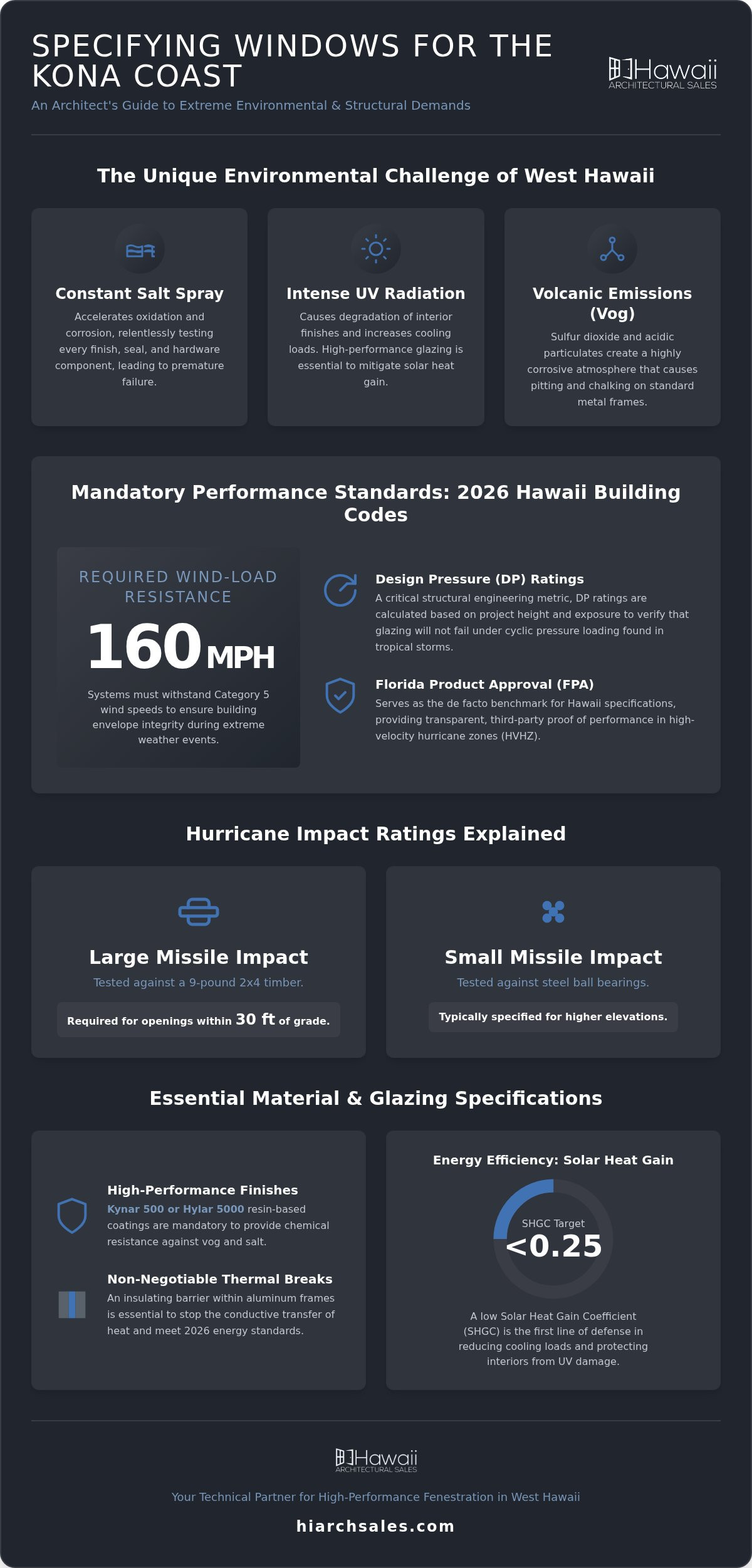
Designing for the Kona Coast requires a shift in perspective where the fenestration is treated as a critical structural defense rather than a mere aesthetic choice. Architects understand that the intersection of luxury design and environmental survival is where most projects face their greatest technical hurdles. Finding a reliable high-end window supplier in Kailua-Kona means identifying a partner who understands that salt spray, intense UV radiation, and volcanic emissions will relentlessly test every finish and seal.
It's not just about the view; it's about maintaining the integrity of the building envelope against Category 5 wind speeds. This guide provides the technical framework necessary to specify coastal-hardened systems that exceed the 160 mph wind-load requirements of the 2026 Hawaii building codes while maintaining the narrow sightlines demanded by modern luxury architecture. We will examine the essential performance ratings for impact-resistant glazing, the necessity of specialized finishes to combat vog-related degradation, and how to select a technical partner that bridges the gap between high-end manufacturing and local site conditions.
Key Takeaways
• Identify the specific glazing finishes and materials required to resist the combined corrosive effects of salt spray and vog on the Kona Coast.
• Verify compliance with the latest Hawaii building codes, including mandatory 160 mph wind-load and impact-resistant standards for coastal zones.
• Evaluate high-performance systems from ES Prestige and Euro-Wall to achieve luxury aesthetics without compromising on structural durability.
• Leverage the expertise of a technical high-end window supplier in Kailua-Kona to streamline the specification process and ensure long-term system performance.
Selecting High-End Windows for Kailua-Kona’s Unique Environment
In Hawaii, the definition of "high-end" extends beyond aesthetic appeal to encompass extreme environmental resilience. For an architect, selecting a high-end window supplier in Kailua-Kona is a decision that dictates the long-term viability of the building envelope. The Kona Coast presents a rare combination of intense UV exposure, constant salt spray, and vog, creating a highly corrosive atmosphere. While a window might look modern in a showroom, its true value is measured by how it performs after five years of exposure to sulfur dioxide and Pacific salt air. It's not just about the view; durability is the priority.
Standard retail windows often fail in West Hawaii because they lack the heavy-duty hardware and specialized coatings required for this latitude. We frequently see residential projects where standard finishes peel or internal mechanisms seize within a decade. Hawaii Architectural Sales functions as a technical partner to prevent these failures. We represent manufacturers like ES | Prestige who prioritize high-performance glazing and coastal-hardened frames. Our role is to ensure that the chosen systems align with the specific microclimate of the job site, from sea-level estates to upland slopes.
The Impact of Salt and Vog on Window Finishes
The chemical composition of vog, which includes sulfur dioxide and acidic particulates, accelerates the oxidation of metal frames. High-end specifications for Kona must include Kynar 500 or Hylar 5000 resin-based finishes. These coatings provide the chemical resistance necessary to withstand the unique weather patterns that trap volcanic emissions against the coastline. Aluminum and steel frames without these high-performance coatings are prone to pitting and chalking. Even with premium finishes, architects should advise clients on maintenance. Regular rinsing is essential. This prevents salt crystallization from compromising the protective layers of luxury glazing in high-salt zones.
Managing Heat Gain in West Hawaii Architecture
Energy efficiency in West Hawaii is primarily a battle against solar heat gain. High-performance glazing is the first line of defense in reducing cooling loads and protecting interior finishes from UV degradation. Architects must target a low Solar Heat Gain Coefficient (SHGC), often below 0.25, to meet modern performance expectations. Under the 2026 energy standards, thermal breaks are non-negotiable for aluminum systems. These breaks serve as an insulator within the frame, stopping the conductive transfer of heat into the living space. Every specified system must also be engineered to handle the specific wind load of the site. This balances the need for expansive glass with the structural requirements of a high-wind region.
Technical Performance Standards: Wind Loads and Impact Ratings
Specifying windows for the Kona Coast is an exercise in structural engineering. A reliable high-end window supplier in Kailua-Kona must provide systems that do more than meet minimum standards; they must exceed the extreme demands of wind-borne debris regions. Under the 2026 updates to Hawaii's building codes, new structures are required to withstand wind speeds of up to 160 mph. This mandate shifts the focus from simple aesthetics to Design Pressure (DP) ratings. Architects must calculate these ratings based on the specific exposure category and mean roof height of the project to ensure the glazing won't fail during a Category 5 event.
Because Hawaii lacks a local testing facility for high-velocity hurricane zones, Florida Product Approval (FPA) has become the de facto benchmark for local specifications. FPA certification provides the technical data necessary to verify that a window system can handle the cyclic pressure loading found in tropical storms. We prioritize manufacturers that hold these certifications, as they offer the most transparent proof of performance for high-stakes residential projects.
Hurricane Rated Windows in Hawaii
Understanding the nuances of hurricane rated windows Hawaii depends on distinguishing between Large Missile and Small Missile impact ratings. Large Missile testing involves a nine-pound 2x4 timber fired at the glass, a requirement for openings within 30 feet of grade. Small Missile testing uses steel ball bearings and is typically reserved for higher elevations. Both ES Prestige and Euro-Wall systems are engineered to meet these stringent safety codes. These systems use laminated glass with high-strength interlayers that remain intact even if the outer lite shatters, preserving the building's internal pressure and preventing roof lift-off.
Structural Integrity of Wide-Span Openings
The engineering challenges intensify when designing wide-span bifold or multi-slide systems. These expansive glass walls must maintain strict deflection limits to ensure the panels don't bind or leak under heavy wind loads. For Big Island structures, seismic considerations also play a role in how these systems are anchored. Ensuring air and water infiltration resistance during a horizontal rain event requires precision-engineered sills and high-performance gaskets. Early collaboration with a technical consultant can ensure these performance metrics are integrated during the design phase rather than as a costly afterthought.
Premium Window Systems: Comparing ES Prestige and Euro-Wall
Selecting the appropriate fenestration system requires a balance between structural necessity and the client's vision for the home's silhouette. As a technical high-end window supplier in Kailua-Kona, we guide architects through the performance trade-offs between aluminum and steel systems. While aluminum remains the dominant choice for coastal Hawaii due to its natural corrosion resistance, the choice between manufacturers like ES Prestige and Euro-Wall usually comes down to the specific opening types and sightline requirements of the project. Each manufacturer offers distinct engineering advantages that cater to different architectural priorities.
ES | Prestige and Elite: High-Performance Aluminum
The ES | Prestige line is widely considered the gold standard for high-performance aluminum in the islands. These systems are engineered to meet ASTM E1996 standards for impact resistance, providing a robust solution for luxury residential projects. The Prestige and Elite series offer a variety of frame depths and thermal break configurations to manage heat gain effectively. For projects with extremely high thermal efficiency requirements, ES uPVC offers a viable alternative that eliminates the conductive nature of metal frames while maintaining the brand's signature durability and finish quality.
Euro-Wall: Mastering the Indoor-Outdoor Transition
When the design calls for massive, unobstructed openings, Euro-Wall becomes the primary specification. As an authorized Euro-Wall distributor Hawaii, we provide the technical support needed to integrate their specialized multi-slide, bifold, and pivot door systems. Euro-Wall is unique in its ability to offer large-format glass panels with flush sills that transition seamlessly between interior and exterior spaces. Their engineering focuses on hardware that can support the weight of impact-rated glass while still operating with minimal effort. This makes them ideal for the indoor-outdoor lifestyle central to West Hawaii architecture.
For estates requiring the thinnest possible sightlines, Hopes Steel windows provide a level of structural depth and strength that aluminum cannot match. Steel frames allow for much larger spans of glass with minimal visible framing, though they require specific finishing protocols to survive the salt air. Choosing between these materials involves weighing the minimalist aesthetics of steel against the inherent coastal resilience of aluminum systems. Each project demands a curated approach to ensure the chosen system withstands the local climate without sacrificing the intended design language.
The Architect’s Checklist for Specifying Luxury Glazing
A systematic approach to specification is the only way to ensure long-term performance on the Kona Coast. Given the high-stakes nature of luxury residential construction, a high-end window supplier in Kailua-Kona must be evaluated based on their ability to meet specific technical milestones. This checklist serves as a roadmap for architects to verify that every component, from the glass thickness to the smallest hinge, is optimized for the West Hawaii environment.
Step 1: Environmental Assessment.
Determine the precise distance to the shoreline and the project's elevation. These factors dictate the severity of salt spray exposure and the specific wind load requirements for the site.
Step 2: Code Compliance Verification.
Confirm that all systems meet the 160 mph wind-speed mandate and hold valid Florida Product Approval or equivalent impact certifications.
Step 3: Hardware and Finish Selection.
Mandate 316 stainless steel for all exposed hardware and high-performance resin-based coatings for all aluminum surfaces to combat vog and salt air.
Step 4: Logistics and Lead Time Planning.
Account for current 2026 shipping schedules and ocean freight durations to ensure the fenestration arrives in alignment with the framing schedule.
Hardware and Corrosion Resistance
Specifying 316 stainless steel hardware is a critical requirement for Kona projects. While 304 stainless steel is common in less demanding regions, it often fails when exposed to the constant salt air of the Big Island. Salt crystals penetrate moving parts in bifold and sliding systems, leading to mechanical binding and surface pitting. Modern architectural design often favors concealed hardware, which provides an added layer of protection by sheltering internal mechanisms from direct environmental contact. This approach maintains the minimalist aesthetic while extending the operational life of the system.
Logistics: Getting High-End Systems to Kailua-Kona
The role of an architectural window distributor Hawaii is to manage the complex supply chain between mainland manufacturing and the job site. Coordination is essential because Hawaii Architectural Sales operates on a distribution-only model. We focus on technical representation and supply, meaning architects must coordinate with local installers early in the process. Risk mitigation during ocean freight is a priority. We ensure that systems are properly crated and handled to prevent damage during the multiple stages of island delivery. If you are ready to review technical drawings for an upcoming project, contact our technical team today to discuss your specific requirements.
Hawaii Architectural Sales: Your Technical Partner in West Hawaii
In the search for a high-end window supplier in Kailua-Kona, architects often encounter retail showrooms tailored for residential replacement projects. Hawaii Architectural Sales operates on a fundamentally different model. As an independent manufacturer’s representative and distributor founded in 1985, we provide the technical depth required for large-scale, luxury construction. Our 40-plus years of experience in the Hawaiian market allows us to identify potential points of failure before materials ever reach the job site. We bridge the gap between a complex architectural vision and the material realities of the Kona Coast, ensuring that luxury aesthetics never compromise structural performance.
Our Role in Your Project
We serve as the primary technical link between the design team and high-performance manufacturers. Our role involves providing authorized representation for industry-leading brands, including ES Prestige, Euro-Wall, Hopes, and Kalwall. We don't simply process orders; we provide detailed submittals, assist with wind load verification, and offer engineering support to ensure that every specified system aligns with the project’s structural requirements. This manufacturer-direct support is essential during the design phase, particularly when integrating wide-span openings or custom glazing solutions into sensitive building envelopes. Architects benefit from having a single point of contact who understands both the manufacturer’s limitations and the island’s regulatory demands.
Why a "Supply-Only" Model Benefits Your Project
Our supply-only model is a deliberate choice that allows us to focus entirely on product expertise and material logistics. By omitting installation and general contracting services, we eliminate potential conflicts of interest and dedicate our resources to high-level quality control. We coordinate closely with your chosen general contractor and professional installer to ensure that the delivery of premium architectural systems is synchronized with the construction schedule. This specialization ensures that the focus remains on the precision of the product itself. We manage the complex logistics of ocean freight and island delivery, ensuring that high-value components arrive in pristine condition. This model provides the flexibility for architects to work with their preferred site teams while maintaining access to specialized technical guidance that standard retail shops cannot provide.
Advancing Architectural Standards on the Kona Coast
Specifying fenestration for West Hawaii projects demands a rigorous focus on technical performance and environmental resilience. Architects must look beyond aesthetics to ensure every system meets the 160 mph wind-load requirements and resists the corrosive effects of salt air and vog. Identifying a specialized high-end window supplier in Kailua-Kona is the most effective way to bridge the gap between ambitious design and long-term durability. By prioritizing Florida Product Approval and high-performance finishes like Kynar, you protect both the building envelope and your client's investment.
Since 1985, Hawaii Architectural Sales has provided authoritative technical support as an authorized representative for premium brands like ES Prestige and Euro-Wall. We focus on delivering precise engineering data and logistical reliability rather than simple retail transactions. Our deep understanding of coastal-hardened glazing ensures that your architectural vision remains secure against the unique challenges of the Big Island. Contact Hawaii Architectural Sales for Technical Specifications to review your project’s specific requirements and ensure full code compliance. We look forward to serving as your technical ally in the building process.
Frequently Asked Questions
Does Hawaii Architectural Sales provide window installation in Kailua-Kona?
Hawaii Architectural Sales does not provide installation services or general contracting in Kailua-Kona. We operate as a dedicated manufacturer’s representative and distributor. Our role focuses on technical product expertise, material logistics, and engineering support for architects and developers. By maintaining a supply-only model, we ensure the highest level of quality control for premium architectural systems. We work alongside your chosen general contractor to coordinate delivery and verify that all technical specifications are met.
What is the best window material for a home on the Kona Coast?
High-performance aluminum with a Kynar 500 resin-based finish is generally the most effective material for the Kona Coast. This combination provides the chemical resistance necessary to withstand volcanic smog and constant salt spray. For projects requiring maximum thermal efficiency, the ES uPVC line is a viable alternative. This material eliminates the conductive heat transfer common in metal frames while providing excellent durability against Hawaii’s intense UV radiation and corrosive atmosphere.
Are ES Prestige windows hurricane-rated for Hawaii building codes?
Yes, ES Prestige window systems are impact-rated and designed to comply with the 2026 Hawaii building codes. These systems are tested to meet Florida Product Approval standards, which serve as the benchmark for high-wind load performance in the islands. As a leading high-end window supplier in Kailua-Kona, we provide the necessary technical data to verify that these systems can withstand wind speeds of up to 160 mph and resist wind-borne debris.
What is the typical lead time for Euro-Wall systems in Hawaii?
Lead times for Euro-Wall systems vary based on the complexity of the custom order and current manufacturing capacity for 2026. Because these systems are precision-engineered for wide-span openings, architects should plan for ocean freight durations and island delivery schedules. We recommend contacting our technical team early in the design phase to receive the most accurate timeline for your specific project. This proactive approach ensures that the fenestration arrives in alignment with the framing schedule.
How does vog affect window warranties and finish choices?
Vog, or volcanic smog, contains sulfur dioxide which creates an acidic environment that can degrade standard window finishes. This acidity accelerates the oxidation of metal frames, potentially voiding standard warranties if the finish is not rated for such conditions. We specify high-performance Kynar coatings for Kona projects because they offer superior chemical resistance. Architects should confirm that finish choices meet manufacturer requirements for corrosive environments to ensure the longevity of the warranty and the system.
Can I get custom-sized steel windows from Hopes in Hawaii?
Yes, custom-sized steel windows from Hopes are available through Hawaii Architectural Sales. We provide authorized representation for Hopes, allowing architects to specify handcrafted steel systems that offer the thinnest sightlines and maximum structural depth. These systems are ideal for luxury estates where the design requires large spans of glass with minimal visible framing. Our team provides the technical submittals and engineering support needed to integrate these custom steel solutions into high-end Kona projects.
What is the difference between ES Elite and ES Prestige lines?
The ES Prestige line is the gold standard for high-performance residential glazing, offering robust impact ratings and specialized coastal finishes. The ES Elite line provides a comparable level of luxury aesthetic but is often utilized for different structural profiles or performance tiers. Both lines are distributed by Hawaii Architectural Sales and are engineered for the Hawaiian climate. Choosing between them depends on the specific design pressure requirements and thermal performance targets of your architectural project.
How do I specify salt-resistant hardware for my coastal project?
To ensure durability in high-salt environments, you must specify 316 stainless steel hardware for all moving parts and fasteners. While 304 stainless steel is common, it is prone to pitting and binding when exposed to constant Pacific salt air. A high-end window supplier in Kailua-Kona can also provide systems with concealed hardware. This design choice shelters internal mechanisms from direct environmental exposure, extending the operational life of bifold and sliding door systems while maintaining a minimalist aesthetic.