UPVC Window Systems in Hawaii: A Technical Guide for Coastal Performance
In the corrosive atmosphere of coastal Hawaii, traditional aluminum frames aren't just an aesthetic choice; they're a predictable maintenance liability that begins to degrade the moment they're installed. You've likely seen the results firsthand: metal hardware pitting in the salt air and standard v...
In the corrosive atmosphere of coastal Hawaii, traditional aluminum frames aren't just an aesthetic choice; they're a predictable maintenance liability that begins to degrade the moment they're installed. You've likely seen the results firsthand: metal hardware pitting in the salt air and standard vinyl warping under the intense 2026 UV standards. It's a frustrating cycle that compromises both the building envelope and your long-term project ROI. By specifying high-performance uPVC window systems Hawaii architects can finally eliminate these vulnerabilities while meeting the state's rigorous 160 mph wind speed requirements.
This technical guide details why uPVC is the superior engineered material for our unique environment and how it provides a maintenance-free lifespan of over 20 years. We'll explore the specific advantages of the ES | uPVC line, including its chemical immunity to salt-air oxidation and its ability to maintain a Solar Heat Gain Coefficient below 0.25 for commercial energy compliance. You'll gain a clear framework for specifying these systems to ensure your next project achieves maximum thermal insulation, structural resilience, and full alignment with current building codes.
Key Takeaways
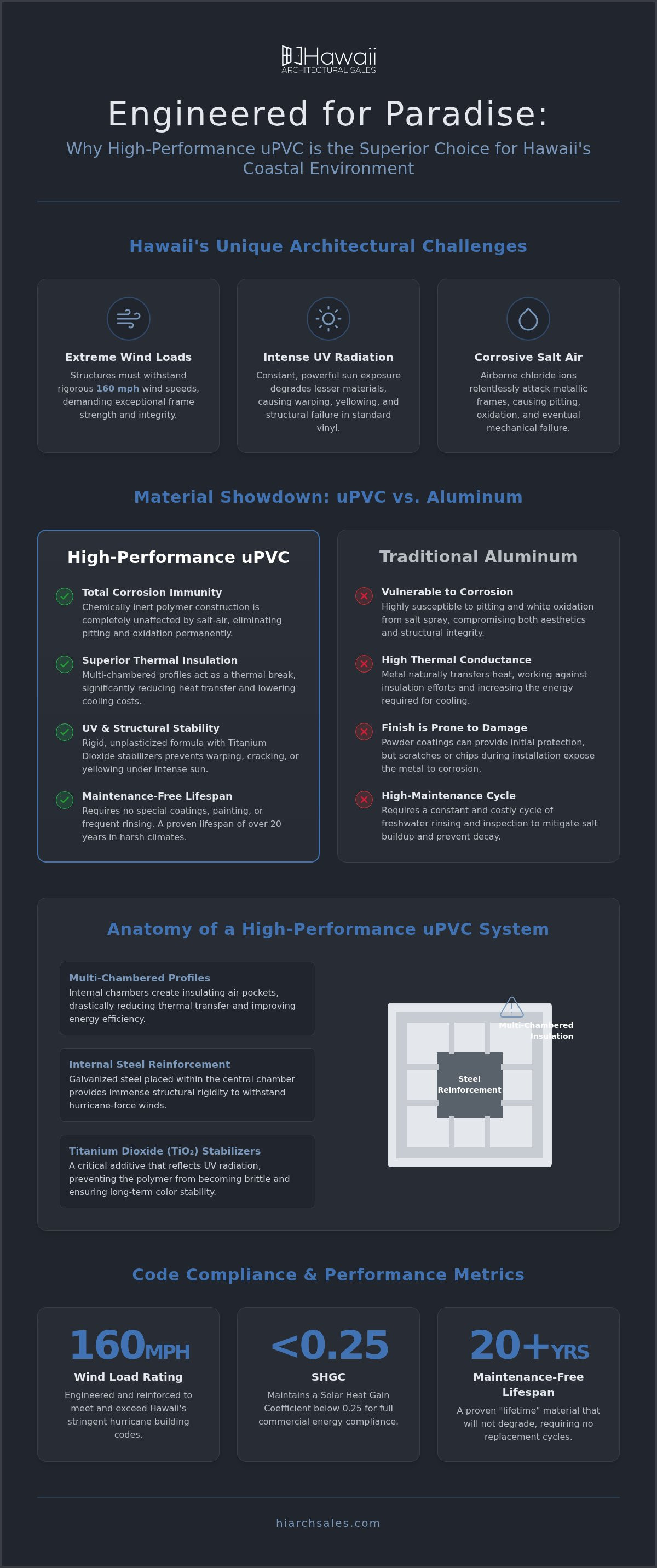
• Understand why uPVC’s chemically inert composition provides total immunity to salt-air corrosion, eliminating the pitting and oxidation common in metallic frames.
• Discover how multi-chambered profiles and Titanium Dioxide stabilizers combat Hawaii’s extreme UV index and reduce solar heat gain for improved energy efficiency.
• Learn the engineering requirements for specifying uPVC window systems Hawaii to ensure compliance with 160 mph wind load ratings and impact-resistance standards.
• Evaluate the role of internal steel reinforcement in maintaining the structural integrity of the building envelope during high-velocity hurricane events.
• Identify the technical specifications and customization options of the ES | uPVC product line for high-performance commercial and luxury residential applications.
What are uPVC Window Systems and Why Do They Matter in Hawaii?
Unplasticized Polyvinyl Chloride, or uPVC, is a rigid and chemically stable polymer specifically engineered for high-performance fenestration. Unlike standard PVC, uPVC contains no plasticizers. This omission is the primary reason the material maintains its structural integrity and shape under extreme environmental stress. In the technical context of uPVC window systems, this polymer serves as a superior alternative to traditional timber or aluminum. It's a cornerstone of modern sustainable architecture because it provides exceptional thermal resistance and requires minimal energy for production and recycling.
The "unplasticized" element is critical for preventing frame warping in Hawaii's intense heat. Plasticizers are additives that make vinyl flexible, but they eventually leach out when exposed to the sun's radiation. This process causes standard vinyl to become brittle and lose its form. By using a rigid, unplasticized formulation, uPVC remains stable and keeps its tight seals even in the highest temperatures of Honolulu or Kapolei. This stability has led to its global adoption as the preferred material for high-performance building envelopes in coastal regions.
uPVC vs. Traditional Vinyl: The Critical Difference
The distinction between uPVC and standard vinyl is a matter of molecular stability. Standard vinyl utilizes chemical plasticizers to achieve flexibility, which is a significant weakness in tropical climates. These additives degrade under intense thermal stress, leading to the yellowing and warping often seen in low-cost residential products. uPVC provides a rigid profile that resists thermal expansion and contraction, ensuring the frame maintains its airtight seal for decades. Professionals categorize it as a "lifetime" building material because it doesn't require the frequent replacement cycles associated with less stable polymers. It's a pragmatic solution for projects where long-term durability is the primary metric of success.
The Rise of uPVC in Hawaii’s Architectural Landscape
Architects across the islands are increasingly shifting away from aluminum to combat the relentless coastal oxidation found in areas like Kihei and Lahaina. Aluminum frames are highly susceptible to pitting and structural degradation when exposed to salt-laden air. The adoption of uPVC window systems Hawaii represents a strategic move toward materials that are chemically inert. These systems integrate seamlessly with Hawaii's signature indoor-outdoor design philosophy. They offer the thin sightlines and expansive glass areas required for luxury residences while providing a building envelope that remains unaffected by the tropical climate. This transition is particularly evident in new commercial developments where cooling loads and maintenance costs are critical operational concerns.
Corrosion Resistance: uPVC vs. Aluminum in Salt-Air Environments
Hawaii's coastal environment presents an electrochemical challenge for traditional building materials. Salt air contains chloride ions that aggressively attack metallic surfaces. On aluminum frames, these ions penetrate the protective oxide layer, initiating a process known as pitting corrosion. This leads to unsightly white oxidation, structural weakening, and eventually, the mechanical failure of the window's moving parts. Even high-quality powder coatings can't fully protect the metal if the finish is scratched or chipped during installation or maintenance.
In contrast, uPVC is a non-metallic, chemically inert polymer. It doesn't participate in the electrochemical reactions that cause oxidation. When you specify uPVC window systems Hawaii, you're selecting a material that is naturally immune to salt-air degradation. Whether your project is in a high-exposure zone like Lihue or a beachfront property in Kihei, these frames won't peel, flake, or corrode. This chemical stability ensures the building envelope remains intact without the constant threat of metallic decay.
Eliminating the 'Salt Spray' Maintenance Cycle
Beachfront properties often require a rigorous maintenance schedule for metal windows, including frequent fresh-water rinsing to prevent salt buildup. This is a hidden operational cost that many owners don't anticipate. Because uPVC frames are non-porous and chemically stable, they eliminate the need for specialized anti-corrosion coatings or intensive cleaning regimens. The hardware used in these systems is typically protected within the multi-chambered profile, further shielding it from direct salt spray. If you're designing for long-term reliability, consulting with a technical representative can help you select hardware configurations that match the durability of the uPVC frames.
Material Comparison for Coastal Projects
Selecting the right frame material requires balancing durability against environmental stressors. In high-humidity coastal areas, uPVC consistently outperforms both aluminum and wood in longevity and maintenance requirements. The following table compares how these materials handle Hawaii's unique conditions.
Metric
uPVC
Powder-Coated Aluminum
Treated Wood
Salt-Air Resistance
Immune
Susceptible (Pitting)
Low (Rot/Warp)
Maintenance Frequency
Minimal
High (Rinse/Wax)
Very High (Paint/Stain)
UV Stability
High (with stabilizers)
High
Low (Fading/Cracking)
Coastal Lifespan
20+ Years
10-15 Years (finish failure)
5-10 Years
While aluminum offers a high weight-to-strength ratio, modern uPVC systems compensate for large-span openings through internal steel reinforcement. This hybrid approach provides the structural stiffness needed for Hawaii's 160 mph wind load requirements without the corrosion risks of an all-metal exterior. This makes it an ideal choice for the expansive glass walls favored in modern island architecture.
Thermal Efficiency and UV Stability in the Tropical Sun
Hawaii's tropical climate demands an engineered defense against thermal transfer. While aluminum is a natural conductor that radiates heat into the interior, multi-chambered uPVC profiles act as a natural thermal break. These internal air pockets disrupt the flow of thermal energy, significantly reducing the cooling load on HVAC systems. In Honolulu developments, where commercial building emissions account for 78% of total emissions primarily due to cooling, this thermal performance is a critical operational advantage. Selecting high-performance uPVC window systems Hawaii allows developers to meet these efficiency goals while maintaining architectural flexibility.
The effectiveness of these systems is maximized when paired with high performance glazing Honolulu. Together, they create a comprehensive barrier that meets the 2026 energy code requirement for a Solar Heat Gain Coefficient (SHGC) below 0.25. This synergy is essential for projects aiming for LEED certification or compliance with evolving local sustainability mandates. By addressing both the frame and the glass, architects can create a building envelope that is truly optimized for the Pacific environment.
Managing Solar Heat Gain in Hawaii
The frame material is as vital as the glass for achieving a low SHGC. Aluminum frames can reach high surface temperatures in direct sunlight, acting as radiators that bypass the glass's thermal coatings. uPVC's low thermal conductivity ensures the frame remains cool, preventing "edge-of-glass" heat transfer. This thermal stability allows for expansive daylighting in luxury residences and commercial offices without the penalty of excessive heat gain. It's a pragmatic approach to modern island design that prioritizes occupant comfort and long-term energy savings.
UV Protection and Color Retention
Hawaii’s high UV index and 300+ days of annual sunshine can quickly degrade inferior polymers. To combat this, high-performance uPVC formulations include high concentrations of Titanium Dioxide (TiO2) stabilizers. These additives act as a molecular shield, reflecting UV radiation and preventing the chemical breakdown that leads to yellowing or "chalking." This ensures the frame maintains its structural integrity and color finish for a service life exceeding 20 years. Even in high-exposure areas like Kihei or Lahaina, these uPVC window systems Hawaii resist tropical fading and maintain the project's original design intent without the need for repainting or specialized treatments.
Engineering Compliance: Wind Loads and Hurricane Ratings
Hawaii's building standards mandate that new structures withstand wind speeds up to 160 mph, aligning with Category 5 hurricane criteria. Meeting these stringent requirements requires more than just high-quality glass. High-performance uPVC window systems Hawaii must be engineered to withstand the extreme structural pressures exerted on the building envelope during a storm. This resilience is achieved through a combination of material rigidity and internal reinforcement that prevents frame deflection under load.
During a tropical storm or hurricane, the window system must handle rapid pressure cycles without failing. If a window fails, the resulting internal pressurization can lead to catastrophic structural damage, including roof lift-off. High-performance uPVC systems are specifically designed to maintain their seal and structural integrity, ensuring the building envelope remains a solid barrier against the elements.
Structural Integrity of uPVC Systems
The "hidden" strength of high-end uPVC lies in its internal steel chambers. While the exterior polymer provides the chemical immunity to salt air discussed in previous sections, galvanized steel reinforcements are integrated into the multi-chambered profiles. This provides the necessary stiffness for high Design Pressure (DP) ratings. These systems are further strengthened by fusion-welded corners. Unlike mechanical joints used in some aluminum systems, which can loosen or leak over time, fusion welding creates a monolithic frame that is inherently airtight and watertight.
Testing protocols for these systems are rigorous. In Hawaii, commercial windows often undergo Level D large missile impact testing, which involves firing a nine-pound 2x4 timber at the glass at 50 feet per second. High-performance uPVC frames are engineered to retain the glazing even after such an impact. This capability is vital for meeting the safety standards required for the first 30 feet of a building's facade, where wind-borne debris is most prevalent.
Compliance with Local Regulations
Navigating the state's energy and safety codes requires a deep understanding of hurricane rated windows Hawaii standards. Hawaii's building codes frequently rely on Florida Product Approval (FPA) as a benchmark, particularly the High-Velocity Hurricane Zone (HVHZ) standards. These certifications provide architects with a verified baseline for structural performance, ensuring that the specified products can handle the specific environmental stressors of the Pacific.
Specifying the correct system requires collaboration with a knowledgeable architectural window distributor Hawaii. A technical consultant can provide the necessary shop drawings and performance data to ensure every opening meets the localized wind load requirements of the project. To ensure your building envelope meets these rigorous 2026 standards, consult with our technical team for a full review of your project specifications.
Specifying ES | uPVC: The Professional Solution
ES | uPVC window systems provide a comprehensive solution that bridges the gap between high-end manufacturing and the practical demands of the Pacific environment. While the material's chemical immunity to salt and superior thermal efficiency are foundational, the ES | uPVC line adds the architectural flexibility required for complex projects. Specifying these systems ensures that the building envelope meets both the aesthetic vision of modern island design and the rigorous structural standards mandated by current building codes. It's a pragmatic choice for professionals who prioritize long-term durability over temporary fixes.
Technical Specifications of ES | uPVC
The versatility of ES | uPVC allows for both standard and custom sizing, catering to the unique geometries often found in Hawaii's luxury residential and commercial architecture. Architects can specify a range of glazing options, including high-performance dual-pane glass for optimized thermal control or laminated impact-resistant glass for hurricane protection. Every component is selected for its coastal longevity. The hardware finishes are specifically treated to resist the pitting and oxidation common in high-salt zones like Kailua-Kona or Lihue. This attention to detail extends to the internal galvanized steel reinforcement, ensuring that even large-span openings maintain their structural integrity under Hawaii's 160 mph wind load requirements.
Partnering with Hawaii Architectural Sales
As the authorized representative for uPVC window systems Hawaii, Hawaii Architectural Sales serves as a technical consultant throughout the project lifecycle. We provide the expertise needed to navigate the complexities of local building codes and environmental stressors. Our team assists with the integration of these systems into your architectural specifications, providing necessary shop drawings, wind load data, and energy performance metrics to ensure full compliance. This service-first approach reduces the risk of specification errors and ensures that the chosen systems meet the project's performance targets.
Our representation includes the ES Prestige and ES Elite series alongside our uPVC offerings. This allows architects to source a cohesive fenestration package that meets varying performance and aesthetic requirements across a single development. Whether your project is located in Honolulu, Kailua-Kona, or Kihei, our role is to ensure that the material selection and delivery align with your construction timeline and technical standards. We prioritize technical distribution and consultant-level support, positioning ourselves as a stable partner for architects and engineers who require reliable, long-term building envelope solutions. This partnership ensures that the technical advantages of uPVC are fully realized in the final construction, providing a building that performs as intended for decades.
Optimizing the Building Envelope for Hawaii's Future
Selecting the right fenestration is a decision that defines a building's performance and maintenance profile for decades. By specifying uPVC window systems Hawaii architects eliminate the recurring liabilities of salt-air corrosion while achieving the thermal stability required by modern energy codes. These systems provide a chemically inert barrier against the Pacific elements, ensuring that structural integrity and aesthetic clarity remain intact even in the most exposed coastal environments. It is a pragmatic shift toward materials that are engineered for longevity rather than frequent replacement cycles.
Hawaii Architectural Sales brings over 40 years of localized architectural experience to your design process. As an authorized ES | uPVC representative, we specialize in high-performance building envelopes that meet the state's 160 mph wind load requirements. We provide the technical consultation needed to bridge the gap between complex specifications and successful project delivery. Consult with our technical experts on your next project to ensure your building envelope meets the highest standards of durability and efficiency. We look forward to serving as your strategic partner in creating resilient island architecture.
Frequently Asked Questions
Are uPVC windows suitable for Hawaii's high-salt coastal areas?
uPVC is the most suitable material for coastal environments because it is chemically inert and immune to salt-air corrosion. Unlike aluminum, which pits and oxidizes when exposed to chloride ions, uPVC remains structurally stable and aesthetically clear. This makes it a premier choice for beachfront properties in Lihue and Kihei where traditional metal frames typically fail within a decade.
How do uPVC windows compare to aluminum in terms of price in Hawaii?
High-performance uPVC systems are typically competitive with high-end thermal-break aluminum systems in the Hawaii market. While initial procurement costs depend on specific project requirements, uPVC offers superior long-term value by eliminating the need for specialized anti-corrosion coatings and frequent professional cleaning. Architects should evaluate the total cost of ownership over a 20 year lifespan to understand the true financial advantage.
Can uPVC windows be hurricane-rated for Hawaii building codes?
Yes, uPVC systems can be engineered to meet Hawaii's 160 mph wind load requirements and Category 5 hurricane criteria. By integrating internal galvanized steel chambers and utilizing fusion-welded corners, these systems achieve high Design Pressure (DP) ratings. Many configurations are tested to Florida Product Approval standards, ensuring they provide the necessary impact resistance for wind-borne debris regions.
Do uPVC window frames fade or yellow in the intense Hawaii sun?
Modern uPVC window systems Hawaii utilize high concentrations of Titanium Dioxide stabilizers to prevent UV degradation. These additives reflect solar radiation and maintain the material's molecular integrity under 300 plus days of annual sunshine. This prevents the yellowing or chalking associated with low-grade vinyl, ensuring the frames maintain their structural integrity and finish for decades.
What maintenance is required for uPVC window systems?
Maintenance is limited to occasional cleaning with mild soap and water to remove surface dust and salt spray. Because the material is non-porous and non-metallic, it doesn't require the specialized waxes, repainting, or anti-corrosion treatments necessary for aluminum or wood. This significantly reduces operational costs for both luxury residential and large-scale commercial developments across the islands.
Is uPVC more energy-efficient than thermal-break aluminum?
uPVC is inherently more energy-efficient because it is a natural insulator with exceptionally low thermal conductivity. While thermal-break aluminum relies on a small plastic strip to interrupt heat flow, the entire multi-chambered uPVC profile acts as a thermal barrier. This helps projects achieve a Solar Heat Gain Coefficient below 0.25, which is essential for meeting 2026 energy codes and reducing HVAC loads.
Can I get custom colors for uPVC windows in Hawaii?
Yes, uPVC systems are available in a variety of colors and finishes, including high-performance foils and specialized coatings. These finishes are engineered for UV stability and color retention in tropical climates. Architects can specify custom aesthetics that match the project's design intent while still benefiting from the material's superior coastal performance and durability.
Does Hawaii Architectural Sales provide installation for uPVC windows?
Hawaii Architectural Sales does not provide installation services or general contracting. We serve as the authorized representative and technical consultant for ES | uPVC window systems. Our role is to assist architects and engineers with technical specifications, shop drawings, and the distribution of high-performance materials to the project site from the design phase through material delivery.