In the aggressive coastal environment of the islands, an exterior bifold door is a structural component first and an aesthetic feature second. While the goal is a seamless transition to the lanai, the reality of salt-air corrosion and 160 mph wind load requirements means that standard specifications...
In the aggressive coastal environment of the islands, an exterior bifold door is a structural component first and an aesthetic feature second. While the goal is a seamless transition to the lanai, the reality of salt-air corrosion and 160 mph wind load requirements means that standard specifications often fail within months. Successfully specifying exterior bifold doors Hawaii projects require demands a deep understanding of engineering standards like ASCE 7-16 and AAMA 2605 high-performance coatings.
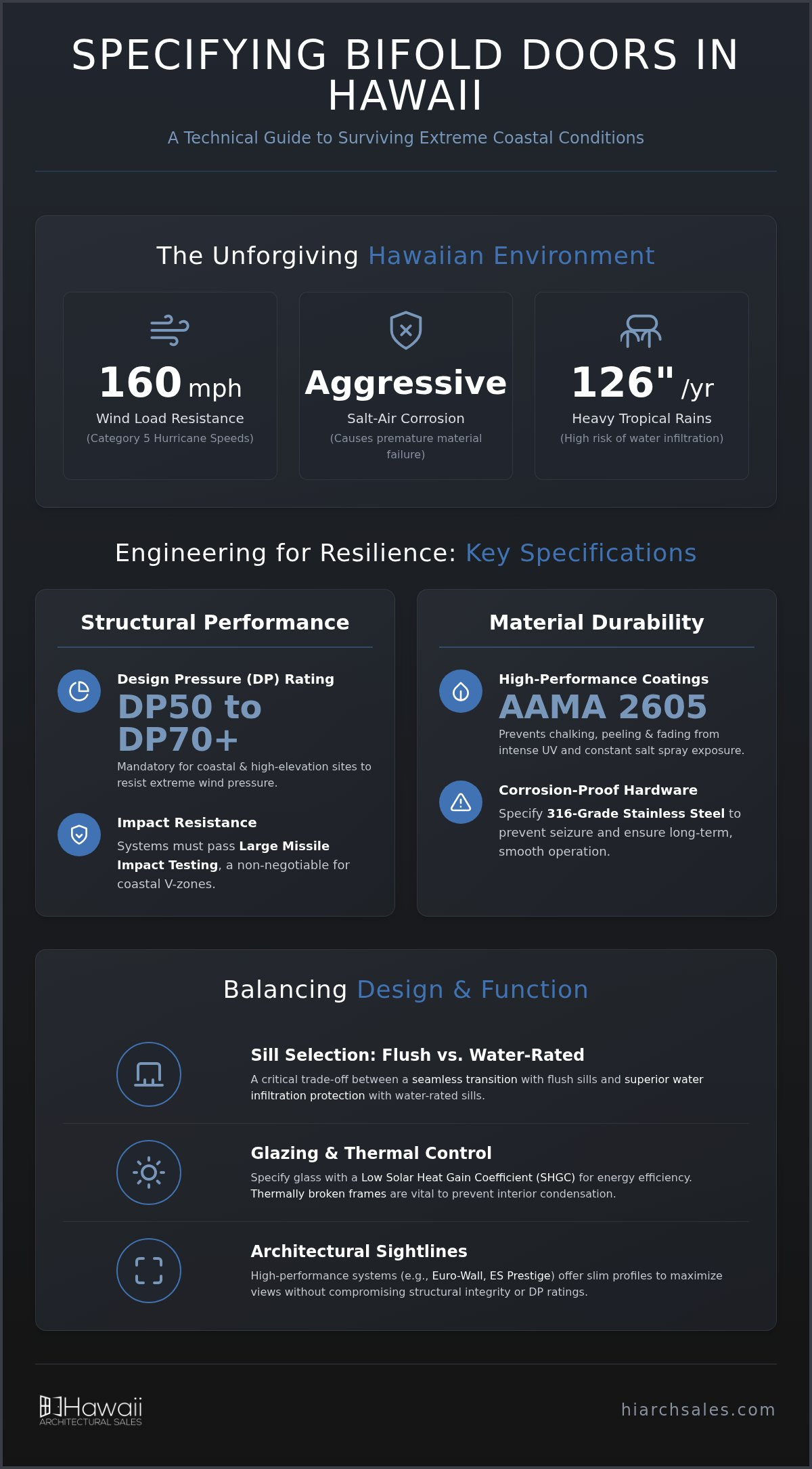
You likely recognize that balancing a luxury indoor-outdoor flow with extreme environmental resilience is one of the most difficult technical challenges in modern Hawaiian architecture. This guide provides the technical framework necessary to specify systems that withstand Category 5 hurricane speeds and heavy tropical rains without compromising design. We will examine critical design pressure ratings, the necessity of 316-grade stainless steel hardware for coastal proximity, and how to select high-performance systems from manufacturers like Euro-Wall and ES Prestige that meet the 2026 building code updates.
Key Takeaways
• Navigate the 2026 building code updates that mandate exterior bifold doors Hawaii projects withstand wind speeds up to 160 mph.
• Identify the critical materials required for coastal resilience, including AAMA 2605 coatings and 316-grade stainless steel hardware to prevent salt-air corrosion.
• Evaluate the engineering trade-offs between flush-sill transitions and water-rated performance to mitigate infiltration during heavy tropical rains.
• Compare high-performance systems from Euro-Wall and ES Prestige to balance architectural narrow sightlines with high Design Pressure (DP) ratings.
• Understand the value of technical representation in securing Florida Product Approval and localized engineering support for complex building envelopes.
The Role of Exterior Bifold Doors in Modern Hawaii Architecture
In the islands, Folding doors, commonly known as bifolds, operate as accordion-style glass walls that stack to one or both sides of an aperture. By 2026, the architectural standard for luxury properties has shifted toward 100% unobstructed transitions between the interior and the lanai. This design choice demands exterior bifold doors Hawaii systems that can span 20 feet or more while meeting the state's rigorous performance benchmarks. Unlike standard sliding doors, bifolds allow for a nearly total removal of the physical barrier between living spaces and the Pacific environment.
In high-wind zones, an exterior bifold door serves as a dynamic component of the building envelope that must maintain structural continuity and pressure resistance while facilitating large-scale openings. Standard residential folding doors often fail in this region because they lack the structural reinforcement to handle Hawaii's 70% average humidity and extreme rainfall, which reaches 126 inches annually in areas like Hilo. Without proper engineering, these systems suffer from frame racking, hardware seizure, and seal degradation within the first few years of service. Professionals must specify systems designed for high-performance building envelopes to avoid these common failure points. This standard of care should also extend to the roof, where specialized maintenance from uecroofing.com helps protect the entire building envelope from the elements.
The Aesthetic vs. Functional Balance
Architects prioritize narrow sightlines to maximize ocean views, but this aesthetic goal must be balanced against thermal performance and solar control. High-performance aluminum systems from manufacturers like Euro-Wall and ES Prestige allow for slim profiles that don't sacrifice structural integrity. These systems utilize advanced glazing to maximize daylighting while maintaining a low Solar Heat Gain Coefficient (SHGC). This ensures the building remains energy efficient even with massive glass exposures. Integrating these bifold systems into luxury residential and hospitality facades requires a precise selection of finishes, such as AAMA 2605 powder coatings, to maintain the visual appeal against UV degradation.
Hawaii-Specific Design Challenges
Managing the transition between a conditioned interior and a humid exterior is a primary technical concern for island projects. Without thermally broken frames, condensation can accumulate on the interior tracks, leading to moisture damage. High-performance exterior bifold doors Hawaii installations also leverage the "stack effect" by allowing for massive natural ventilation, which reduces the project's reliance on mechanical cooling. To ensure hardware longevity, projects within 500 feet of the shoreline require strategic site placement and protective overhangs to mitigate direct salt-spray exposure. This localized approach to design ensures the system remains functional despite the aggressive climate.
Engineering for Resilience: Wind Loads and Salt-Air Corrosion
Engineering for Hawaii's climate requires a shift from standard residential specifications to high-performance structural systems. Design Pressure (DP) ratings are the primary metric for structural integrity in these applications. Projects in Honolulu or Lihue must account for the 2026 building code update, which mandates resilience against wind speeds up to 160 mph. Coastal and high-elevation sites typically require a DP70 rating or higher, while inland projects may start at DP50. Florida Product Approval serves as a critical performance benchmark for Hawaii fenestration because both regions share similar high-velocity hurricane zone requirements and testing protocols.
Specifying exterior bifold doors Hawaii systems means planning for more than just wind. The intense UV radiation at the 20th parallel and 70% average humidity create an environment that accelerates material fatigue. Selecting finishes that meet the AAMA 2605 environmental standard is essential for ensuring that coatings don't chalk or peel under the tropical sun. These high-performance coatings are tested to withstand thousands of hours of salt spray, providing the durability required for the islands' aggressive conditions.
Impact Resistance and Hurricane Standards
Impact-rated glass is non-negotiable for large-span openings in V-zones and coastal areas. While standard hurricane rated windows Hawaii standards provide a baseline, bifold systems introduce unique cyclic pressure challenges due to their multiple panel joints and hinges. Systems must undergo Large Missile Impact testing and follow ASCE 7-16 standards to ensure the building envelope remains intact during extreme weather. Specifying laminated glass rather than simple tempered glass prevents catastrophic failure when wind-borne debris strikes the folding wall during a storm.
Corrosion-Proofing the Building Envelope
Salt air is a constant threat across all islands, as no location is truly inland enough to escape its effects. For properties within 500 feet of the shoreline, 316-grade stainless steel hardware is mandatory to prevent hardware seizure and maintain manufacturer warranty coverage. High-performance Kynar coatings provide superior UV and salt-spray resistance compared to standard anodized finishes, which often pit and corrode in tropical environments. Regular maintenance protocols, including freshwater rinsing of the tracks and hinges, are required to ensure long-term operation. You can consult with a technical representative to verify which hardware configurations best suit your specific site coordinates.
Comparing High-Performance Bifold Systems: Euro-Wall and ES Prestige
Choosing the correct system for exterior bifold doors Hawaii depends on the specific structural demands and architectural goals of the project. Engineering requirements set the baseline, but manufacturers like Euro-Wall and ES Prestige offer distinct advantages in how they achieve those ratings. For ultra-luxury applications where the profile must be as thin as possible without sacrificing the strength of steel, Hopes Steel Windows provides a handcrafted alternative to aluminum systems. Sourcing these high-performance products requires partnership with an authorized architectural window distributor Hawaii to ensure every specification aligns with local hurricane codes.
Euro-Wall: The Architect’s Choice for Large Spans
Euro-Wall is engineered for expansive openings that many standard systems cannot accommodate. As an authorized Euro-Wall distributor Hawaii, we provide access to the Euro Vista Fold™ series. This series allows for some of the largest panel heights and widths in the industry, with heights reaching up to 12 feet. This capability provides the vertical scale required for modern high-ceiling designs without compromising structural stability. Customization options include advanced thermal breaks that minimize heat transfer and multiple sill configurations designed to balance aesthetic flush-mount goals with the technical necessity of water management.
ES Prestige and Elite: High-Performance Value
The ES Prestige and ES Elite lines are designed to balance technical excellence with cost efficiency. These systems are particularly effective for multi-unit developments and high-end residential projects where performance consistency is vital. The ES Prestige BF5010T model is specifically recognized for its durability in tropical environments. It offers robust resistance to the high humidity levels found throughout the islands. These systems integrate seamlessly with other ES window lines, allowing architects to maintain a cohesive facade across the entire building envelope. This integration ensures that the exterior bifold doors Hawaii match the performance and visual profile of the surrounding fixed and operable windows.
For projects requiring a different material palette, Hopes Steel Windows offers a sophisticated aesthetic with extremely narrow sightlines. Steel bifolds provide a level of structural rigidity that allows for massive glass areas with minimal frame interference. This makes them a preferred choice for ultra-luxury estates that demand a timeless, industrial-influenced look. Whether selecting aluminum or steel, the focus remains on long-term operation and the ability to withstand the unique environmental pressures of a Pacific coastal site.
Technical Specifications: Sills, Hardware, and Glazing
The long-term performance of exterior bifold doors Hawaii installations depends on three critical technical factors: water management at the sill, the mechanical load-bearing of the hardware, and the thermal efficiency of the glazing. While aesthetics often drive the initial design phase, the engineering of these components determines whether a system remains operational or fails under tropical environmental stress. High-performance systems prioritize a "system" approach where every component is tested for compatibility with high-velocity wind zones and corrosive salt air.
A high-performance weep system utilizes strategically placed drainage channels and check valves to allow water to exit the track while preventing wind-driven rain from entering the interior space. This is particularly vital in regions like Hilo, where annual rainfall can exceed 126 inches. Without an engineered drainage path, water pressure during a storm can overcome standard weatherstripping, leading to interior flooring damage. Specifying the correct sill and hardware configuration ensures the building envelope remains secure against both daily humidity and extreme weather events.
Sill Design and Water Management
Architects frequently request flush-mount sills to create a seamless transition between the interior and the lanai. However, flush sills offer minimal resistance to water infiltration and typically require significant exterior overhangs or sophisticated trench drainage planning to be viable. In contrast, high-water-head sills feature a raised interior leg that creates a physical barrier against wind-driven rain. For projects requiring ADA compliance, manufacturers offer specialized low-profile sills that balance accessibility with improved drainage. When designing architectural glass systems Honolulu projects, professionals must weigh these performance differences against the project's specific exposure to trade winds and rain.
Hardware and Operability
The choice between top-hung and bottom-rolling hardware impacts both the structural requirements of the header and the long-term ease of use. Top-hung systems carry the weight of the glass panels from the top track, which prevents debris in the bottom track from interfering with operation. However, this requires a robust structural header to prevent deflection. Bottom-rolling systems transfer the weight to the floor, which can reduce the structural load on the building's frame but requires more frequent track maintenance. High-quality rollers and 316-grade stainless steel hinges are essential to prevent "panel sag" over time, especially in heavy-duty exterior bifold doors Hawaii applications. Multi-point locking systems further enhance the system by pulling the panels tight against the weatherstripping, ensuring a consistent seal against 160 mph wind loads.
Glazing technology for 2026 focuses on managing Hawaii's intense solar heat gain while maintaining high visible light transmittance. Utilizing Low-E coatings and argon-filled insulated glass units helps maintain a comfortable interior temperature without overworking mechanical cooling systems. These glazing choices, combined with UV-resistant weatherstripping, protect the interior finishes from fading under the 20th parallel's direct sun. You can review technical specifications for high-performance hardware to ensure your next specification meets these rigorous standards.
Sourcing high-performance fenestration in the Pacific requires more than a simple purchase. A retail vendor typically focuses on a transactional sale and often lacks the engineering depth required for complex building envelopes. In contrast, a technical manufacturer’s representative acts as a strategic ally throughout the design-build process. Hawaii Architectural Sales provides this localized expertise, bridging the gap between premium manufacturers like Euro-Wall or ES Prestige and the specific environmental demands of the islands. This partnership ensures that the specified exterior bifold doors Hawaii systems meet both aesthetic goals and stringent local codes.
Technical representation is about stability and reliability. It's not just about delivering a product; it's about ensuring that the product performs as intended for decades. When architects work with a dedicated representative, they gain access to a seasoned industry veteran who understands the high stakes of large-scale construction. This level of support is vital when navigating the 2026 building code updates and the nuances of Florida Product Approval standards as they apply to the Honolulu and Lihue markets.
The Specification Support Process
The transition from architectural concept to physical installation involves multiple technical hurdles. Our team supports architects by reviewing shop drawings and verifying wind load calculations against the 160 mph mandate. Large-span openings require precise coordination with structural engineers to manage header deflection and anchoring details. By leveraging bifold door systems Hawaii expertise, we ensure that the building envelope maintains its integrity during extreme weather events. This proactive consultation prevents costly field modifications and ensures that the original architectural intent is preserved from the first drawing to the final delivery.
Project Delivery and Partner Network
Logistics and material handling are critical components of project success, especially for neighbor island developments on Maui, Kauai, and the Big Island. We manage the complexities of specialized shipping and localized delivery to ensure that high-performance materials arrive on-site without damage. Our role continues through the product handover, where we work with local contractors to provide technical guidance on assembly and adjustment. This post-delivery support is essential for maintaining the long-term operability of exterior bifold doors Hawaii systems in aggressive coastal zones. We don't just ship boxes; we provide the technical framework for a successful installation.
A successful building envelope relies on the precision of its components and the reliability of its suppliers. We invite you to move beyond retail sourcing and partner with a consultant that understands the technical nuances of the Hawaiian market. Requesting a technical consultation for your 2026 project is the next step in securing a high-performance solution that balances luxury design with structural resilience.
Engineering the Future of Island Living
The successful implementation of exterior bifold doors Hawaii relies on a commitment to engineering excellence. Balancing narrow sightlines with 160 mph wind load requirements requires more than just high-quality glass; it demands a system-wide approach to resilience. From specifying 316-grade stainless steel hardware to selecting water-rated sills, every technical detail contributes to the longevity of the building envelope. High-performance systems from Euro-Wall and ES Prestige provide the foundation for designs that don't fail under the pressure of tropical storms or salt-air corrosion.
Hawaii Architectural Sales serves as a knowledgeable guide for architects and developers navigating these environmental challenges. With over 40 years of Hawaii architectural product expertise, we provide the technical support needed to move from concept to successful delivery. As an authorized representative for Euro-Wall and ES Prestige, we ensure your specifications meet the highest performance standards while maintaining your architectural intent. Our localized knowledge is a strategic asset for projects across Honolulu, Lihue, and the neighbor islands.
Do exterior bifold doors meet Hawaii hurricane codes?
High-performance exterior bifold doors Hawaii systems meet local hurricane codes when they carry Florida Product Approval or are tested to ASCE 7-16 standards. The 2026 building code mandates that new structures withstand wind speeds up to 160 mph. You must verify that the specific model and configuration have been tested for large missile impact and cyclic pressure to ensure compliance for your project site.
Can I install a flush sill bifold door in a coastal Honolulu home?
You can install a flush sill, but it requires significant architectural mitigation to prevent water infiltration. Coastal Honolulu projects often experience wind-driven rain that can easily overcome a flush transition without a raised interior leg. To maintain the building envelope, you should incorporate deep overhangs and a secondary trench drainage system to manage the moisture that a flush sill cannot effectively block.
What is the maximum size for a bifold door panel in Hawaii?
Maximum panel sizes vary by manufacturer and the required structural rating for your specific island location. Euro-Wall systems can accommodate panel heights up to 12 feet, which is ideal for expansive luxury openings. However, increasing the panel width or height may lower the overall Design Pressure rating. You should consult with a technical representative to determine the maximum dimensions that still meet your site's wind load requirements.
How do I prevent salt air from corroding my bifold door hardware?
Preventing corrosion requires specifying 316-grade stainless steel hardware and AAMA 2605 high-performance coatings. These materials are specifically engineered to resist the pitting and chalking caused by constant salt-spray exposure. Standard 304-grade stainless steel or basic powder coatings often fail within months in Hawaii's aggressive 70% humidity environment. Using the correct grade of metal is the only way to ensure long-term operability near the shoreline.
Are Euro-Wall bifold doors impact rated for Hawaii projects?
Euro-Wall bifold doors are impact rated and frequently specified for high-velocity hurricane zones throughout the islands. Their Euro Vista Fold series is specifically designed to meet the rigorous testing protocols required for coastal V-zones. This includes resistance to large missile impacts and the extreme pressure differentials experienced during severe tropical storms. This rating ensures the system remains a secure part of the building envelope under stress.
What is the lead time for architectural bifold doors in Hawaii?
Lead times for custom architectural bifold doors typically range from 12 to 20 weeks depending on the manufacturer and the complexity of the chosen finish. Because these systems are engineered to order for specific structural ratings and site conditions, you should account for this duration in your project schedule. Logistics for neighbor island delivery on Maui or Kauai can add an additional 1 to 2 weeks for transit and handling.
Do bifold doors offer better energy efficiency than sliding doors?
Modern exterior bifold doors Hawaii systems offer comparable energy efficiency to sliding doors when specified with thermally broken frames and Low-E glazing. While bifolds have more vertical joints, high-quality weatherstripping ensures a tight seal against air infiltration. Choosing a system with a low Solar Heat Gain Coefficient is essential for island projects to reduce the thermal load on the interior and decrease reliance on mechanical cooling.
How do I maintain bifold doors in a high-salt environment?
Maintenance in high-salt environments involves a regular schedule of freshwater rinsing and hardware lubrication. You should rinse the tracks and hinges every two to four weeks to remove salt crystals that cause friction and accelerate corrosion. Using a non-corrosive lubricant on the rollers and hinges ensures the system continues to operate smoothly despite the abrasive coastal air. This simple routine is often a requirement for maintaining the manufacturer's warranty.