Specifying steel windows for a coastal residence in Kailua-Kona or Kihei is often viewed as a maintenance liability, yet the right engineering transforms this material into the most durable asset on the building envelope. You understand the challenge of balancing ultra-thin sightlines with the bruta...
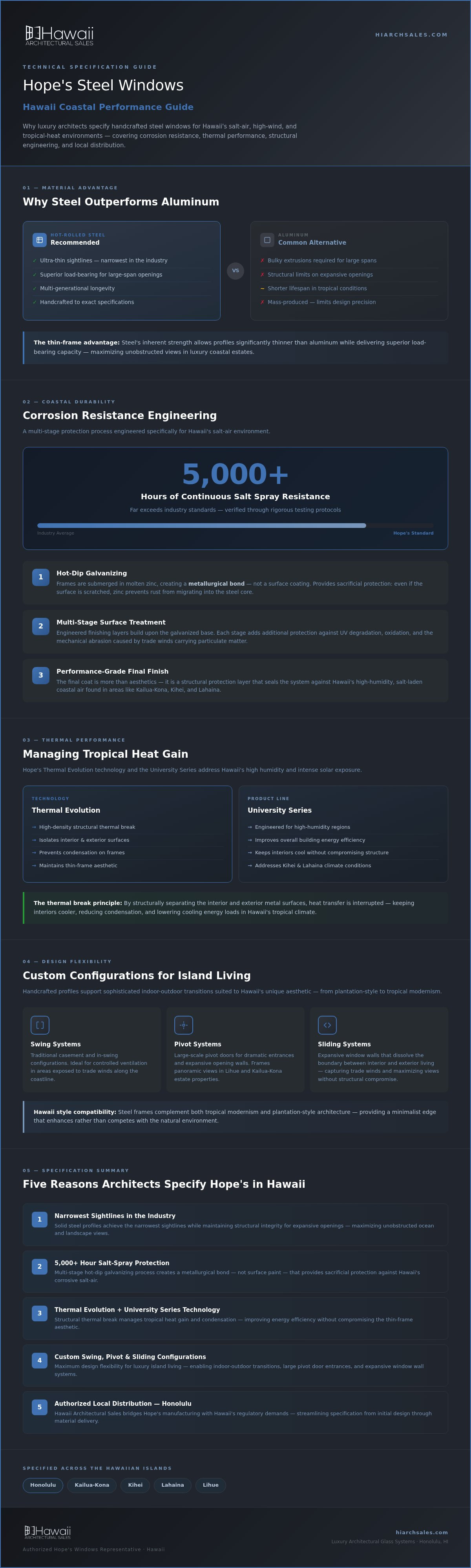
Specifying steel windows for a coastal residence in Kailua-Kona or Kihei is often viewed as a maintenance liability, yet the right engineering transforms this material into the most durable asset on the building envelope. You understand the challenge of balancing ultra-thin sightlines with the brutal reality of salt spray and high wind loads. It's difficult to find a system that doesn't compromise aesthetics for structural survival. This technical guide demonstrates why Hopes steel windows Hawaii are the definitive choice for luxury residential and commercial projects that demand both architectural elegance and long-term resilience.
We'll examine the specialized finishes that prevent corrosion, the thermal technology used to manage tropical heat gain, and the engineering that allows for the thinnest profiles in the industry. As the authorized local representative, we provide the technical bridge between Hope’s legendary manufacturing and the specific regulatory demands of the Hawaiian Islands. This overview covers the structural integrity and minimal maintenance requirements necessary for high-performance tropical design. You'll gain a clear understanding of how these handcrafted systems meet strict wind load requirements without sacrificing the modern aesthetic your clients expect.
Key Takeaways
• Learn how solid steel profiles achieve the narrowest sightlines in the industry while maintaining the structural integrity required for expansive openings.
• Understand the multi-stage hot-dip galvanizing process that protects Hopes steel windows Hawaii against the corrosive effects of salt-air environments.
• Discover how Thermal Evolution technology and the University Series manage tropical heat gain and condensation without compromising the thin-frame aesthetic.
• Explore custom configurations for swing, pivot, and sliding systems that provide maximum design flexibility for luxury island living.
• Identify how a technical partnership with an authorized local distributor streamlines the specification process from initial design to material delivery.
Why Architects Specify Hope’s Steel Windows for Hawaii Projects
Architects designing high-end properties in Honolulu face a recurring conflict. They want expansive, unobstructed views, yet they must meet strict structural requirements for the building envelope. Hopes steel windows Hawaii resolve this tension through the unique material properties of hot-rolled steel. Steel's inherent strength allows for profiles that are significantly thinner than aluminum while providing superior load-bearing capacity.
Aluminum typically requires bulky extrusions to achieve the structural integrity needed for large-span openings. In luxury coastal estates, steel is often the only material that maintains narrow sightlines without compromising safety or wind-load performance. This structural efficiency creates a "thin-frame" aesthetic that maximizes the visual connection to the landscape. It's a solution-oriented choice for professionals who refuse to trade architectural intent for structural survival.
The value of these systems extends to their lifecycle. Handcrafted steel represents a multi-generational investment. It's built to withstand the rigors of tropical environments for decades, offering a longevity that mass-produced alternatives simply can't match. When you specify these systems, you're choosing a building component designed for permanence.
The Legacy of Hope’s Windows in Luxury Design
Hope’s Windows, Inc. has refined the art of steel glazing for over a century. The company pioneered the transition from industrial utility to high-end residential art. Today, it remains the gold standard for high-performance architectural glass systems Honolulu. Every unit is custom-manufactured to meet exact architectural specifications. This bespoke approach ensures the windows function as integral design elements rather than mere building components. The result is a level of precision that supports the most ambitious modern designs.
Meeting Hawaii’s Unique Aesthetic Demands
Hawaii’s architecture frequently blends tropical modernism with plantation-style elements. Steel frames complement these styles by providing a minimalist edge that doesn't distract from the natural environment. In coastal areas like Lihue and Kailua-Kona, the flexibility of steel allows for sophisticated indoor-outdoor transitions. Architects can specify large-scale pivot doors and expansive window walls that capture trade winds and frame panoramic views. These custom configurations ensure that the building envelope is as functional as it is beautiful, providing a steady and dependable solution for the islands' unique climate.
Engineering for the Coast: Corrosion Resistance and Durability
A common misconception in the islands is that steel is unsuitable for coastal proximity. Modern engineering has rendered this concern obsolete. Hopes steel windows Hawaii utilize a multi-stage protection process that begins with hot-dip galvanizing. This isn't a simple surface treatment. By submerging the handcrafted frames in molten zinc, the material gains a metallurgical bond that provides sacrificial protection against oxidation. Even if the surface is scratched, the zinc layer prevents rust from migrating into the steel core.
In tropical climates, thermal performance is just as critical as corrosion resistance. Hope’s Thermal Evolution technology addresses the high humidity found in regions like Kihei and Lahaina. This system incorporates a high-density, structural thermal break that isolates the interior and exterior surfaces. It prevents condensation from forming on the frames and significantly improves the building's overall energy efficiency. It's a pragmatic solution that keeps interiors cool without sacrificing the structural benefits of solid steel.
Durability is verified through rigorous testing protocols. Hope’s finishes are engineered to endure more than 5,000 hours of continuous salt spray exposure. This far exceeds industry standards and provides architects with the confidence that the building envelope will remain pristine despite constant exposure to sea air. You can review specific performance data for your project’s location to ensure the specification meets local environmental stressors.
The Finishing Process: More Than Just Paint
The resilience of these systems relies on a sophisticated factory-applied coating. After galvanizing, the frames receive an e-coat primer followed by high-performance topcoats. This multi-layered approach is essential for specifying salt resistant window frames that won't peel or chalk. These finishes offer exceptional UV resistance, maintaining their color integrity under the intense Hawaii sun. Maintenance is straightforward; a simple rinse with fresh water is typically all that's required to remove salt deposits and maintain the factory finish.
Hurricane and Wind Load Compliance
Steel's high modulus of elasticity makes it an ideal material for hurricane rated windows Hawaii. In Honolulu, where wind-borne debris and extreme pressure cycles are a reality, the inherent strength of steel provides a superior safety margin. These systems are engineered to meet the most stringent impact standards. Because the frames don't deflect as easily as aluminum, they provide better support for the impact-rated glazing units required in high-velocity hurricane zones. This structural stability ensures the building envelope remains intact during severe weather events.
Design Flexibility: Handcrafted Profiles for Island Aesthetics
Choosing the right material for high-end island aesthetics requires a technical understanding of profile geometry. Unlike hollow metal alternatives, Hopes steel windows Hawaii are constructed from solid hot-rolled steel. This solid core allows for significantly narrower sightlines without sacrificing structural integrity. It's the difference between a bulky, industrial frame and a refined, handcrafted profile that complements luxury residential design. This material strength supports massive glass spans, ensuring the window system doesn't obstruct the panoramic views that define Hawaii’s premier properties.
Designers can specify a range of configurations to facilitate flexible island living. Custom swing, pivot, and sliding systems allow for precise control over ventilation and movement. For projects requiring a cohesive building envelope, these windows integrate seamlessly with high-performance door systems. Working with an authorized Euro-Wall distributor Hawaii ensures your window and door specifications match in both finish and performance. This coordination is essential for maintaining a consistent visual language across the entire facade.
The choice between true divided lites (TDL) and simulated divided lites (SDL) offers further aesthetic control. TDL provides the authentic look of individual glass panes separated by steel muntins, while SDL offers a similar appearance with improved thermal efficiency. Both options allow architects to match the specific architectural language of the project, whether it's a traditional plantation-style estate or a contemporary beachfront villa. These handcrafted details ensure the fenestration reflects the quality of the overall design.
Historic Restoration and Preservation
Honolulu’s historic landmarks often feature original steel glazing that has reached the end of its functional life. Hope’s provides the technical capability to match these original profiles while introducing modern performance upgrades like thermal breaks and impact-rated glass. This precision is vital for securing historic district board approvals. We provide the technical documentation and material samples necessary to demonstrate compliance with preservation standards, ensuring the building’s character remains intact for another century.
Modern Minimalism and Ultra-Luxury
In ultra-luxury modernism, the goal is often to make the frame disappear. The high-strength steel used in these systems allows for the largest possible glass formats with the smallest possible footprint. This pushes the boundaries of glass size in Hawaii, creating expansive window walls that feel virtually weightless. To ensure a unified design, finishes can be coordinated with other architectural metals like copper or bronze, providing a sophisticated, curated look for the entire building envelope.
Energy Efficiency and Thermal Performance in Tropical Climates
While historic steel windows were often criticized for their thermal conductivity, modern engineering has transformed this material into a high-performance asset for tropical climates. Hopes steel windows Hawaii utilize advanced manufacturing techniques to address the specific challenges of solar heat gain and humidity. The Hope’s University Series is a primary example of this evolution. It's designed with a structural thermal break that effectively isolates the interior and exterior steel surfaces, preventing heat transfer and reducing the load on HVAC systems. This technology ensures that luxury residences maintain a comfortable interior environment even during the peak temperatures of the summer months.
Sustainable design is a core requirement for modern Hawaii architecture. Steel windows contribute to these goals through their extreme longevity and high recycled content. Integrating these systems with high-performance architectural daylighting solutions Honolulu allows architects to maximize natural light while strictly controlling the Solar Heat Gain Coefficient (SHGC). This synergy is vital for projects targeting LEED certification or those simply aiming to reduce the building's carbon footprint. By specifying these systems, you're choosing a building envelope that balances aesthetic ambition with pragmatic energy management.
To ensure your project meets specific performance targets, you can request a technical consultation to review glass-to-frame ratios and thermal modeling data.
Thermal Break Technology Explained
The effectiveness of Hope’s thermal break technology lies in its ability to separate the steel profiles without compromising structural strength. This separation is critical in regions like Kailua-Kona, where the temperature differential between the sun-drenched exterior and the air-conditioned interior can be extreme. These systems are engineered to comply with the 2026 Hawaii Energy Code, providing a future-proof solution that minimizes operational cooling costs. It's a stable, dependable technology that addresses the long-term economic performance of the building.
Glazing Options for Tropical Light
Selecting the right glazing is essential for managing the intense Pacific sun. We recommend pairing handcrafted steel frames with high-performance Low-E glass coatings. These coatings reflect infrared light while allowing visible light to pass through, reducing glare without sacrificing the view. Additionally, the inherent mass of heavy steel frames provides a pragmatic benefit in sound attenuation. When combined with laminated glass, these systems offer a significant reduction in exterior noise, which is a valuable feature for luxury estates located near high-traffic coastal areas or urban Honolulu centers.
Authorized Representation and Material Distribution in Honolulu
Procuring premium fenestration for a luxury project requires more than a standard purchase order. Hawaii Architectural Sales serves as the authorized representative for Hope’s in the islands, providing the technical expertise necessary to manage complex building envelopes. We act as a consultant rather than just a supplier. This partnership ensures that the design intent of your project is preserved from the initial specification through to the final material delivery. Navigating the nuances of Hopes steel windows Hawaii requires a deep understanding of both the product’s engineering and the region’s regulatory landscape.
Selecting the right partner is a critical step in the procurement process. Our role is to streamline this journey, providing a stable point of contact for architects who demand precision. For a deeper look at what to look for in a partner, see our guide on selecting an architectural window distributor in Hawaii. We provide the material supply and technical support needed to ensure the window systems meet the high-performance standards of luxury Hawaiian construction. It's important to clarify that we operate as a material distributor only. While we coordinate closely with your chosen contractors and installers, we don't provide installation services.
Technical Consultation for Architects
We assist architects with the detailed requirements of technical submittals and shop drawings. This support is vital for ensuring that every custom steel unit aligns with the structural and aesthetic goals of the project. Our team helps navigate local building codes and coastal regulations, ensuring that the specified systems are compliant with all regional mandates. Given the long-lead nature of custom handcrafted steel, we also provide pragmatic guidance on budgeting and timeline management. This foresight prevents project delays and ensures that the materials arrive exactly when the site is ready for them.
Island-Wide Distribution and Logistics
Managing the logistics of premium material delivery across the islands requires localized knowledge. Whether your project is in Honolulu, Lihue, or Kailua-Kona, we oversee the transport of these high-value systems to ensure they arrive in pristine condition. Our service includes on-site technical support and material inspections upon delivery to verify that every component meets the project’s specifications. This methodical approach reduces risk and provides architects with the confidence that the building envelope is secure. To begin the specification process or to request project-specific quotes, you can contact our Honolulu office directly. We're ready to serve as your strategic ally in the building process.
Securing the Future of the Hawaii Building Envelope
Specifying Hopes steel windows Hawaii ensures that your project achieves the ultimate balance of architectural elegance and structural permanence. By utilizing solid hot-rolled steel and advanced hot-dip galvanizing, these systems provide the narrowest possible sightlines without compromising on salt-air durability. The integration of Thermal Evolution technology further adapts this historic material for the modern energy demands of the tropical Pacific. These are not merely windows; they are engineered assets designed for multi-generational performance.
As the authorized representative for Hope’s Windows, Inc., Hawaii Architectural Sales has specialized in high-performance coastal glazing for projects across all islands since 1985. We provide the technical bridge between the manufacturer’s factory and your local job site, ensuring every specification meets the highest standards of precision and regulatory compliance. Our team is ready to assist with technical submittals, shop drawings, and logistical coordination for your next luxury residential or commercial development.
Do Hope’s steel windows rust in Hawaii coastal environments?
Hope’s steel windows don't rust when specified with the appropriate coastal protection package. The frames undergo a rigorous hot-dip galvanizing process that creates a metallurgical bond between the zinc and the steel. This sacrificial layer prevents corrosion from salt spray in environments like Kailua-Kona. When combined with factory-applied e-coat primers and high-performance topcoats, the system maintains its structural and aesthetic integrity for decades in tropical climates.
How do Hope’s steel windows compare to aluminium in price and performance?
Steel offers significantly higher structural strength and narrower sightlines than aluminum. While the initial investment for custom steel is typically higher, the performance benefits are substantial. Steel's high modulus of elasticity allows for much larger glass spans with thinner profiles. This makes it the preferred choice for luxury building envelopes where architectural intent and long-term durability are the primary drivers for the material selection.
Are Hope’s windows hurricane-rated for Honolulu building codes?
Yes, Hope’s systems are engineered to meet the most stringent impact and wind-load requirements in Hawaii. Their inherent material strength allows them to withstand extreme pressure cycles and wind-borne debris without the deflection common in softer metals. We provide the necessary technical documentation and testing data to ensure every specified unit complies with Honolulu’s rigorous standards for high-velocity hurricane zones and coastal safety.
Can I get Hope’s windows with a thermal break for energy efficiency?
Energy efficiency is a standard feature in modern Hopes steel windows Hawaii. The University Series utilizes Thermal Evolution technology, which incorporates a high-density structural thermal break within the solid steel profiles. This break isolates the interior and exterior surfaces to minimize heat transfer. This technology is essential for reducing solar heat gain and meeting the stringent requirements of the 2026 Hawaii Energy Code in high-temperature regions.
Does Hawaii Architectural Sales provide installation for Hope’s windows?
Hawaii Architectural Sales serves as the authorized material distributor and technical representative for Hope's in the islands. We don't provide installation services or general contracting. Our role focuses on material supply, technical submittals, and on-site delivery inspections. We work alongside your chosen project team to ensure the specified window systems are delivered according to the technical requirements of the building envelope.
What is the typical lead time for Hope’s custom steel windows in Hawaii?
Lead times for custom Hopes steel windows Hawaii are influenced by the bespoke nature of the manufacturing process. Every frame is handcrafted to meet exact project dimensions and engineering requirements. To maintain your construction schedule, it's vital to coordinate with our Honolulu office during the schematic design phase. We provide updated lead time projections for 2026 to help you manage logistics and prevent site delays.
Are there different finish options for coastal vs. inland Hawaii projects?
Yes, Hope’s offers specialized finish protocols tailored to specific environmental stressors. For coastal projects in regions like Kihei, we specify the maximum corrosion protection package, including advanced coatings that endure 5,000 hours of salt spray testing. Inland projects might utilize different coating configurations depending on the local microclimate. We help you select the most pragmatic finish to ensure long-term color retention and UV resistance.
How do I specify Hope’s windows for a historic restoration project in Honolulu?
Specification begins with a technical consultation to match original historic profiles. We provide the shop drawings and material samples necessary for historic board approvals, ensuring the new units maintain the building's original character. This process allows architects to introduce modern performance upgrades, such as impact-rated glazing and thermal breaks, without compromising the authentic aesthetic of Honolulu’s landmark properties. Our local expertise simplifies these complex regulatory approvals.