Hurricane Windows Hawaii: 2026 Engineering & Spec Guide
A window system designed to survive a 160 mph wind gust is a failure if the salt air corrodes its hardware within five years. For architects and developers in the islands, the challenge isn't just meeting the 2018 International Building Code. It's about finding a balance between extreme structural p...
A window system designed to survive a 160 mph wind gust is a failure if the salt air corrodes its hardware within five years. For architects and developers in the islands, the challenge isn't just meeting the 2018 International Building Code. It's about finding a balance between extreme structural performance and the thin sightlines that define modern tropical luxury. You shouldn't have to choose between a bulky, institutional frame and a system that fails in a Wind-Borne Debris Region (WBDR).
This 2026 engineering guide details how to specify hurricane rated windows Hawaii projects need for full compliance and long-term durability. We'll explore the technical nuances of high Design Pressure (DP) ratings and the material science required to resist Hawaii’s unique corrosive environment. You'll find a deep dive into impact-rated systems from manufacturers like ES | Prestige and Euro-Wall. These solutions offer the thermal efficiency and architectural elegance required for high-end builds while strictly adhering to current state mandates. We'll provide the data-driven insights necessary to streamline your specification process and secure your structure against the Pacific's most demanding conditions.
Key Takeaways
• Understand the critical 2018 International Building Code updates and the 160 mph wind speed requirements for Hawaii’s Wind-Borne Debris Regions.
• Identify the specific engineering standards for hurricane rated windows Hawaii projects require to balance high Design Pressure ratings with premium architectural aesthetics.
• Evaluate the performance of ES | Prestige and ES | uPVC systems in resisting salt-air corrosion while maintaining high thermal efficiency.
• Learn how to specify expansive glass spans and folding systems from Euro-Wall that meet stringent structural mandates for large openings.
• Streamline the design-build process by leveraging technical consulting and material supply expertise from an authorized manufacturer's representative.
Hawaii Building Codes and Hurricane Rating Standards
Hawaii's regulatory environment for fenestration is among the most stringent in the United States. While many regions focus on basic weatherproofing, architects here must account for extreme wind loads and localized pressure changes. Specifying hurricane rated windows Hawaii requires a deep understanding of the 2018 International Building Code (IBC) and local amendments that govern coastal resiliency. A generic "impact" rating is rarely sufficient for high-end island projects. True compliance demands a system engineered for specific Design Pressure (DP) ratings that reflect the project's exact elevation, occupancy category, and proximity to the shoreline.
Wind-Borne Debris Regions (WBDR) in Hawaii
Designating a project site as a Wind-Borne Debris Region (WBDR) fundamentally changes the specification path. These zones require glazing that can withstand the impact of flying debris during a Category 5 event without breaching the building envelope. Under current standards, structures must be designed for wind speeds reaching 160 mph. Local topography plays a massive role in these calculations. ASCE 7 standards require engineers to look at "topographic effects," where wind speeds accelerate as they move over ridges or through coastal cliffs. A window system that works at sea level might fail on a hillside due to these increased pressures. Topography matters. Every project requires a site-specific analysis to determine the required DP rating.
Florida Product Approval and Hawaii Projects
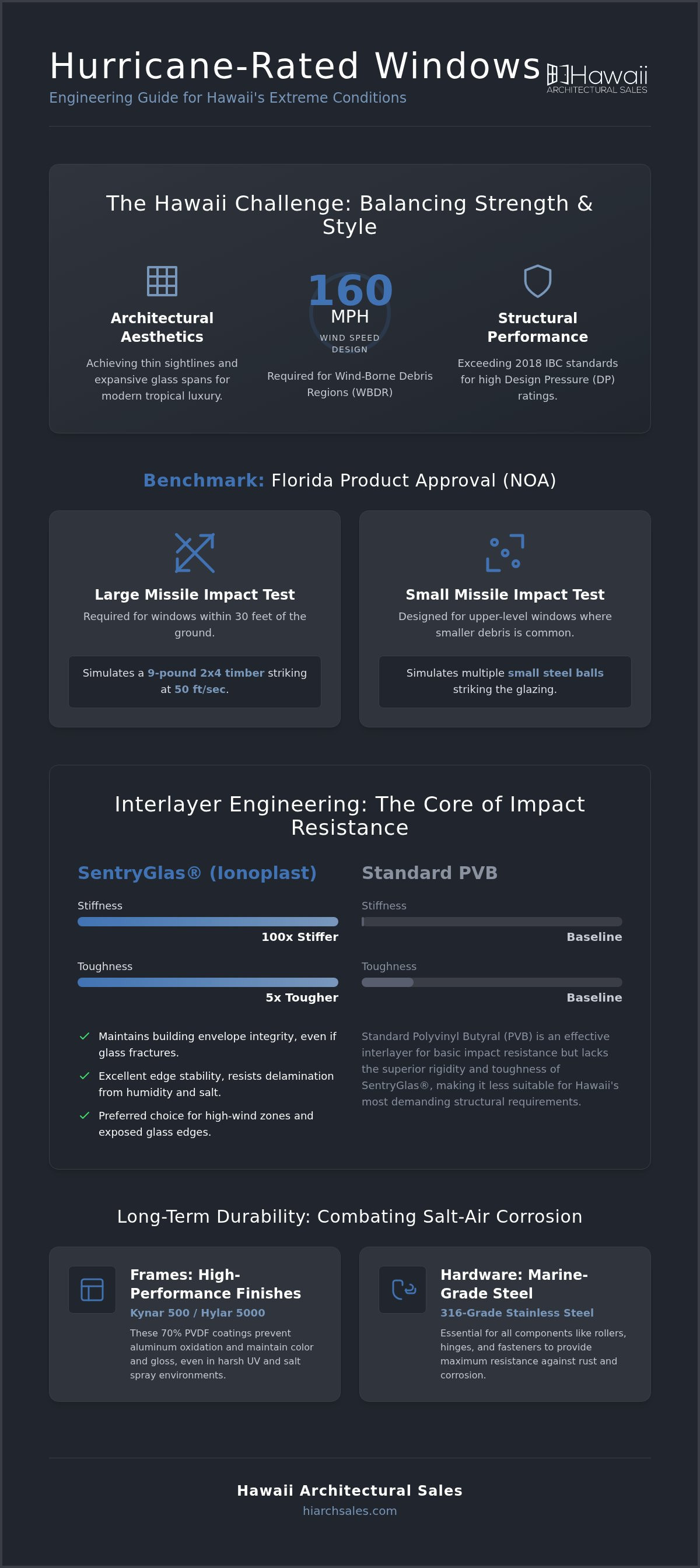
Because Hawaii and Florida share similar high-wind profiles, many architects rely on Florida Product Approval as the benchmark for reliability. Using Hurricane-proof building techniques involves selecting systems with a valid Notice of Acceptance (NOA). This documentation proves the window assembly passed rigorous testing protocols, including Large Missile and Small Missile impact tests.
Large Missile Impact
Simulates a 9-pound 2x4 timber striking the glass at 50 feet per second. This is typically required for windows within 30 feet of the ground.
Small Missile Impact
Involves firing several small steel balls at the glass. This is designed for upper-level windows where smaller debris is more common.
Relying on these verified test results ensures that your hurricane rated windows Hawaii installation provides the structural integrity promised by the manufacturer. It's about more than just the glass; it's about the frame, the fasteners, and the hardware working as a single, resilient unit. Reviewing NOA documentation is a critical step in the design process to ensure the selected system meets the project's specific wind load requirements.
Glazing Technology for High-Performance Coastal Architecture
Glazing in Hawaii must do more than stop water. It must resist impact while managing solar heat. Laminated glass, composed of two or more panes bonded with an interlayer, is the industry standard. This construction provides significant acoustic damping, a critical feature for residential towers in urban Honolulu where traffic noise is constant. Systems like ES | Prestige utilize these advanced interlayers to achieve high DP ratings while maintaining slim profiles.
Interlayer Engineering: SentryGlas vs. PVB
The choice of interlayer defines the system's structural integrity. Standard Polyvinyl Butyral (PVB) is effective for impact, but SentryGlas (ionoplast) offers superior stiffness. SentryGlas is up to 100 times stiffer and five times tougher than traditional PVB. This is vital for meeting the ASTM E1996 hurricane rating standard, particularly in high-wind zones. Even if the glass fractures, the ionoplast interlayer remains rigid, keeping the building envelope sealed against wind and rain. SentryGlas also provides excellent edge stability. It doesn't delaminate when exposed to Hawaii's high humidity and salt spray, making it the preferred choice for architects designing buildings with exposed glass edges.
Combating Salt-Air Corrosion
Frame durability is as important as the glass itself. Aluminum frames in coastal zones require high-performance finishes like Kynar 500 or Hylar 5000 to prevent oxidation. These 70% PVDF coatings maintain color and gloss in harsh UV environments. Hardware specification is equally critical. Using 316-grade stainless steel for rollers, hinges, and locks prevents the mechanical failure common in cheaper systems. Specifying salt resistant window frames ensures the building envelope remains secure for decades. This longevity is essential for maintaining the structural performance of hurricane rated windows Hawaii throughout the life of the building.
Balancing impact resistance with energy efficiency is a technical hurdle. Impact glass is thick, which can affect the Solar Heat Gain Coefficient (SHGC). However, modern Low-E coatings applied to the laminated stack allow hurricane rated windows Hawaii projects to meet the 2021 International Energy Conservation Code (IECC) without compromising structural safety. If you're designing a coastal residence, you can review technical data sheets for these specialized systems to ensure your spec meets both aesthetic and performance requirements.
Comparing Hurricane Rated Window Systems: Aluminum, uPVC, and Steel
The choice of frame material determines more than just the aesthetic of a project. It impacts the structural capacity, thermal performance, and maintenance schedule of the building envelope. Architects must evaluate how these materials interact with Hawaii’s high-wind loads and corrosive coastal atmosphere. Selecting the right hurricane rated windows Hawaii requires a balance of engineering requirements and client budget.
ES | Prestige and ES | Elite Aluminum Systems
Aluminum remains the most versatile choice for large-scale developments. ES Prestige windows Hawaii are engineered specifically for high-rise commercial projects and luxury estates requiring high DP ratings. These systems offer deep frame depths and expansive glazing pockets to accommodate the thick laminated glass discussed in previous sections. For projects where cost-efficiency is a priority without sacrificing impact standards, ES | Elite provides a high-performance alternative. Both systems utilize thermally broken profiles to mitigate heat transfer in the tropical sun.
The Rise of ES | uPVC in Hawaii
While aluminum is traditional, ES | uPVC is gaining traction for its exceptional thermal efficiency. In coastal zones where salt-spray is constant, uPVC offers a distinct advantage. It's naturally resistant to corrosion and won't pit or oxidize like metal. This material is maintenance-free and provides an integrated thermal break that helps projects meet the 2021 IECC energy codes. It delivers the necessary impact protection for WBDR zones while offering a more accessible price point compared to heavy steel or custom aluminum extrusions.
Hopes Steel: The Ultimate Architectural Statement
For projects where sightlines are the primary design driver, Hopes steel windows are unrivaled. Steel’s inherent strength allows for ultra-thin profiles that aluminum cannot match. These systems are often specified for historic renovations or modern estates that demand a minimalist aesthetic. Beyond their beauty, Hopes systems are engineered for High-Velocity Hurricane Zones (HVHZ). They maintain structural integrity under extreme cyclic pressure and offer the thinnest possible sightlines available for hurricane rated windows Hawaii. This makes them a strategic choice for architects who refuse to compromise on either safety or design purity.
Designing Large Openings with Hurricane Rated Folding Walls
Indoor-outdoor living is a signature of Hawaii’s architectural identity. For architects, the challenge is maintaining this flow while securing the building envelope against extreme weather. Standard hurricane rated windows Hawaii often lack the scale required for expansive vistas. This is where specialized folding and sliding systems become necessary. Specifying hurricane rated folding glass walls ensures that large hospitality and residential spaces remain compliant without sacrificing the lanai experience.
Euro-Wall Multi-Slide and Pivot Systems
Euro-Wall systems are designed to bridge the gap between aesthetic transparency and structural rigidity. These units achieve massive clear openings that meet stringent impact requirements. Because impact-rated glass is significantly heavier than standard glazing, the hardware engineering must be precise. Euro-Wall utilizes specialized stainless steel carriers and tracks that allow for effortless operation of panels weighing hundreds of pounds. As an authorized Euro-Wall distributor Hawaii, we provide the technical shop drawings and engineering support required to integrate these systems into complex coastal designs. This support is vital for ensuring that custom pivot doors or multi-slide configurations meet the project's specific wind load calculations.
Water Infiltration and Drainage Design
Water management is a critical engineering hurdle for large openings. During a hurricane, high-velocity wind-driven rain can bypass standard seals if the system isn't properly engineered. High-performance sill designs are mandatory to prevent infiltration. While flush tracks are popular for their seamless transition, they often struggle with the high DP ratings required in coastal zones. Euro-Wall provides water-rated sills that utilize advanced weep systems to channel water away from the interior effectively. These systems maintain seal integrity even under the intense pressure of a storm. Long-term durability is also a factor. The seals must resist the degradation caused by Hawaii’s intense UV exposure and salt-laden air to prevent future leaks.
Hospitality projects in Waikiki or West Maui require these high-performance solutions to protect guest safety and minimize business interruption after a storm. If you're designing a resort or luxury residence, you can consult with our technical team to review specific DP ratings and threshold options for your site. We'll help you select a configuration that balances accessibility with the structural demands of the 2018 International Building Code.
Specification and Distribution: Partnering with Hawaii Architectural Sales
Successful specification requires a partner who understands both the manufacturing limits and the local regulatory landscape. Hawaii Architectural Sales acts as a manufacturer's representative, bridging the gap between high-performance engineering and the practical needs of the job site. We don't just supply materials. We provide a technical bridge that ensures every design choice meets the structural mandates discussed in previous sections. Since 1985, we've served as a steady partner for the islands' most complex architectural challenges.
Technical Support for Architects and Engineers
Our technical consulting for hurricane rated windows Hawaii projects begins at the schematic design phase. We provide architects with the specific CAD details and BIM objects required to integrate systems like ES | Prestige or Hopes into the building envelope correctly. This early-stage support helps avoid costly redesigns when final wind load calculations are performed. We assist in selecting products based on site-specific Design Pressure (DP) requirements, ensuring that the specified glass and frame combinations are compliant. By acting as a consultant rather than just a vendor, we help ensure that the architectural vision remains intact while meeting the 2018 IBC standards.
Logistics and Project Management
Moving premium architectural systems to Honolulu or the Neighbor Islands requires precise coordination. Logistics in Hawaii present unique challenges that can derail a construction schedule if not managed with localized expertise. As a Hawaii architectural window distributor with over four decades of experience, we manage the entire supply chain from the factory to the site. We don't perform installation or general contracting. Instead, we focus on material supply and technical handoff to your chosen local contractor. This specialization allows us to maintain a high level of quality control over the materials delivered.
Our project management team coordinates the delivery of expansive systems like Euro-Wall folding doors or Kalwall translucent panels to ensure they arrive when the site is ready. We manage the complexities of shipping and local storage, providing a reliable point of contact for the duration of the build. This methodical approach respects the project timeline and ensures that the structural integrity of the building envelope is never compromised by logistical delays or incorrect material handling. Partnering with a seasoned representative ensures that your project benefits from established relationships with top-tier manufacturers and a deep understanding of Hawaii's environmental demands.
Securing the Future of Hawaii’s Building Envelope
Specifying the right building envelope components is a critical step in ensuring the long-term viability of island projects. Architects must navigate the intersection of 2018 IBC standards and the aesthetic demands of modern tropical design. This guide has detailed how technical precision in glazing and frame selection protects structures in Wind-Borne Debris Regions without compromising architectural vision. From the structural rigidity of ES | Prestige to the expansive vistas offered by Euro-Wall, the options for hurricane rated windows Hawaii projects require today are more advanced than ever.
It's essential to partner with a specialized manufacturer's representative who understands localized logistics and compliance. Contact Hawaii Architectural Sales for technical specification support and premium window supply. Since 1985, we've provided the technical expertise and Hawaii-compliant solutions needed to bridge the gap between complex engineering and successful project delivery. We look forward to supporting your next high-performance build in the islands.
Frequently Asked Questions
Do all windows in Hawaii need to be hurricane rated?
Not all windows in Hawaii require a hurricane rating by law, but requirements depend on whether the site is in a designated Wind-Borne Debris Region (WBDR). In these zones, impact-resistant glazing or shutters are mandatory for new construction and significant renovations. Even outside these regions, building codes require windows to withstand wind speeds up to 160 mph, making hurricane rated windows Hawaii a standard specification for long-term structural resilience.
What is the difference between impact-resistant and hurricane-rated windows?
Impact-resistant typically refers to the laminated glass itself, while a hurricane-rated window refers to the entire tested assembly. For a window to be truly hurricane-rated, the frame, glass, and hardware must pass specific missile impact and cyclic pressure tests. This ensures the system remains intact during extreme pressure changes. Specifying a full system from brands like ES | Prestige ensures the entire unit meets these rigorous engineering standards.
Can large folding glass walls really meet Hawaii hurricane codes?
Large folding glass walls can absolutely meet Hawaii's stringent hurricane codes when engineered as a complete system. Manufacturers like Euro-Wall design folding and multi-slide systems that carry Florida Product Approval and high Design Pressure (DP) ratings. These systems utilize reinforced profiles and specialized hardware to manage the extreme weight of impact glass while maintaining the seal integrity required for Wind-Borne Debris Regions across the islands.
How do I find the specific wind load requirements for my Honolulu project?
You should consult the Honolulu Department of Planning and Permitting (DPP) or the specific county planning office in Lihue or Kailua-Kona for your project's location. Wind load requirements are determined by ASCE 7 maps, which account for basic wind speeds and local topographic effects. Projects on ridges or coastal cliffs in Honolulu often face higher pressure requirements due to wind speed-up effects, necessitating higher DP ratings for all fenestration.
Is Florida Product Approval valid for building permits in Hawaii?
Florida Product Approval is widely recognized by Hawaii architects and engineers as a benchmark for high-performance testing. While Hawaii uses the 2018 International Building Code (IBC), the testing protocols for Florida are often more rigorous than standard ASTM tests. Local building officials frequently accept these certifications as proof of a system’s ability to withstand the 160 mph wind speeds required for Hawaii projects, streamlining the permitting process.
What is the best frame material for windows in high-salt coastal areas?
Aluminum with high-performance coatings like Kynar 500 or ES | uPVC are the most durable options for high-salt coastal zones. Aluminum requires a 70% PVDF finish to resist oxidation and pitting. Conversely, ES | uPVC is naturally immune to salt-air corrosion, making it a maintenance-free choice for beachfront properties in Kihei or Lahaina. Regardless of the frame material, you must specify 316-grade stainless steel hardware to prevent mechanical failure in the saline environment.
How does hurricane-rated glass impact a building's energy efficiency?
Hurricane-rated glass significantly improves energy efficiency by providing a thick, multi-layered thermal barrier. The laminated interlayer, such as SentryGlas or PVB, offers superior insulation compared to standard single-pane glass. When combined with modern Low-E coatings, these systems help projects comply with the 2021 International Energy Conservation Code (IECC). They effectively reduce solar heat gain while providing the added benefit of substantial acoustic damping in urban environments like Honolulu.