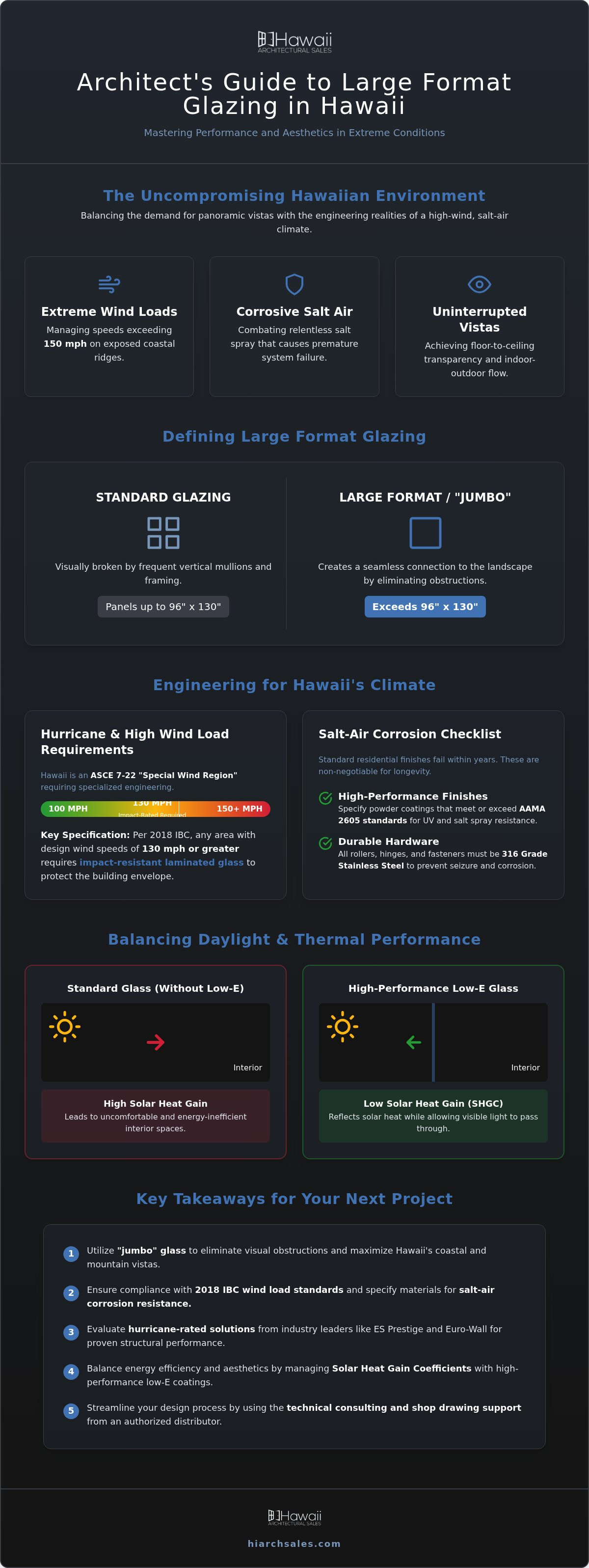
In the Hawaiian islands, a panoramic view is an engineering liability before it's an architectural asset. While clients demand floor-to-ceiling vistas, the technical reality involves managing wind speeds that can exceed 150 mph and the relentless corrosive power of salt-laden air. Successfully imple...
In the Hawaiian islands, a panoramic view is an engineering liability before it's an architectural asset. While clients demand floor-to-ceiling vistas, the technical reality involves managing wind speeds that can exceed 150 mph and the relentless corrosive power of salt-laden air. Successfully implementing large format glazing systems requires a shift in perspective; you must prioritize structural resilience and environmental performance without compromising the visual transparency that defines modern tropical design.
You likely recognize the difficulty of finding products that meet the stringent 2018 International Building Code (IBC) requirements while still achieving a high-end aesthetic. This guide will help you master the technical specifications, material selections, and local regulatory demands unique to the Pacific. We'll examine hurricane-rated glass options from industry leaders like ES Prestige and Euro-Wall, strategies for balancing solar heat gain with energy efficiency, and how to identify a reliable technical representative for your material supply needs.
Key Takeaways
• Understand the technical parameters of "jumbo" glass and how to utilize oversized panels to maximize Hawaii's coastal and mountain vistas.
• Master the engineering requirements for large format glazing systems to ensure compliance with 2018 IBC wind load standards and salt-air corrosion resistance.
• Evaluate hurricane-rated solutions from ES Prestige and Euro-Wall to find the optimal balance between structural performance and high-end design.
• Balance energy efficiency and aesthetics by managing Solar Heat Gain Coefficients without sacrificing daylight harvesting or visual transparency.
• Streamline your design process by utilizing technical consulting and shop drawing support from an authorized Hawaii architectural window distributor.
Defining Large Format Glazing in Modern Island Architecture
Large format glazing systems represent the pinnacle of modern architectural transparency. In the context of Hawaii's luxury residential and commercial sectors, these systems are no longer a luxury; they're a requirement for projects aiming to capture the state’s world-class vistas. Technically, large format refers to glass panels that exceed the industry standard dimensions of 96 inches by 130 inches. Architects are increasingly specifying "jumbo" glass to eliminate visual obstructions, especially in high-end developments across Honolulu and Maui.
These systems vary between fixed units and operable solutions. While fixed oversized units offer the highest level of structural simplicity, operable systems like multi-slide or folding walls provide the essential indoor-outdoor flow characteristic of island living. Because of Hawaii's intense solar exposure, these large expanses rely on high-performance low-E coatings to remain viable. Without these coatings, the solar heat gain would render the interior spaces uncomfortable and inefficient.
The Aesthetic and Functional Shift
The transition toward larger glass sizes is driven by a desire for uninterrupted views. By reducing the frequency of vertical mullions, you create a seamless connection to the landscape. This shift also maximizes daylighting benefits. Increased natural light is a critical component of occupant well-being, particularly in commercial environments where productivity and mood are linked to environmental quality. In competitive markets such as Honolulu or Kihei, using expansive glass defines the architectural branding of modern luxury. It positions a project as a sophisticated, high-performance structure that prioritizes the occupant's visual experience.
Standard vs. Oversized Specifications
Specifying oversized glass requires a deep understanding of manufacturing limits and structural loads. Standard float glass production typically caps at specific dimensions; moving beyond these requires specialized sourcing and handling. Large format glazing systems require robust, engineered framing rather than standard residential tracks. For instance, Curtain wall systems are often employed in commercial applications to support the weight of jumbo Insulated Glass Units (IGUs) while maintaining a slim profile.
The thickness and weight of these units are significant. A single oversized IGU can weigh hundreds of pounds, necessitating precision-engineered hardware and reinforced structural headers. You must account for the deflection of the glass under wind pressure, which is a critical factor in Hawaii’s high-wind zones. Selecting the right framing system ensures that these massive panels remain functional and safe over the building's lifespan.
Engineering for the Pacific: Wind Loads and Salt-Air Resilience
Hawaii's classification as a "Special Wind Region" under ASCE 7-22 means that large format glazing systems must do more than just provide a view. Design wind speeds across the islands vary significantly, ranging from 100 mph in urban centers to over 150 mph on exposed coastal ridges. Because Hawaii's conditions mirror the extreme weather of the Gulf Coast, Florida Product Approval serves as the primary benchmark for verifying performance in these high-stakes environments.
Hurricane and High Wind Load Requirements
Navigating local wind zone maps is essential for projects in Lihue or Kailua-Kona. Per the 2018 International Building Code (IBC) amendments adopted across the counties, any area with a design wind speed of 130 mph or greater requires impact-resistant glazing. You'll need to specify hurricane rated windows Hawaii to maintain the building envelope during high-pressure events. Laminated glass is the critical component here. It prevents the envelope from breaching even if the outer lite shatters, which protects the structure's internal pressure and prevents catastrophic failure.
Corrosion Resistance and Material Longevity
Salt-air environments are the primary cause of premature system failure in the islands. Standard aluminum finishes often pit and peel within a few years of coastal exposure. To ensure longevity, specify either high-micron anodized finishes or high-performance powder coatings that meet AAMA 2605 standards. These coatings provide the necessary resistance to UV degradation and salt spray that standard residential finishes lack.
316 Stainless Steel
This grade of hardware is non-negotiable for rollers, hinges, and locks in coastal zones to prevent "frozen" operable panels.
Even the most resilient large format glazing systems require regular freshwater rinsing to clear salt deposits and maintain warranty compliance.
Thermal stress is particularly relevant for oversized panels where the sheer surface area increases the risk of spontaneous fracture under the intense tropical sun. Consulting with a technical product representative early in the design phase helps identify these potential engineering conflicts before they reach the job site. This proactive approach ensures that the aesthetic goals of the project don't compromise its long-term durability or safety.
Comparing High-Performance Systems: ES, Euro-Wall, and Hopes
Selecting the right material and manufacturer for large format glazing systems involves balancing structural capacity with aesthetic intent. While aluminum remains the versatile standard, steel and uPVC offer specialized advantages for specific Hawaiian microclimates and design requirements. You must match the system's material properties to the project's specific exposure to wind and salt.
Aluminum Excellence: ES Prestige and Elite
The ES | Prestige line is engineered for high-end residential projects requiring superior wind load performance. These systems utilize high-quality aluminum extrusions that provide the rigidity needed for oversized panels without excessive bulk. For commercial or ultra-luxury applications, the ES | Elite line offers even more stringent performance metrics, including higher air and water infiltration ratings.
In certain island microclimates where thermal insulation is a priority, such as higher elevations or high-density urban areas, ES | uPVC provides a viable alternative. These systems are reinforced to handle larger spans while offering exceptional thermal resistance, preventing the frame from becoming a heat bridge.
Operable Large Formats: Euro-Wall Systems
When a project demands wide-span openings that blur the line between interior and exterior, collaborating with a Euro-Wall distributor Hawaii is essential. Euro-Wall is recognized as an industry standard for hurricane-rated folding and multi-slide glass walls. Their engineering allows for expansive openings that remain fully compliant with high-velocity wind requirements.
Choosing between these systems depends on the site's spatial constraints. Multi-slide systems allow massive panels to stack or pocket, while folding systems provide a 100% clear opening. For dramatic entry points, Euro-Wall’s pivot doors can be engineered at scales that aluminum or wood competitors can't match, maintaining ease of operation despite the significant glass weight.
Steel and Specialty Framing
Hopes Steel Windows represent the pinnacle of slim-profile design. Because solid hot-rolled steel is significantly stronger than aluminum, it allows for the largest possible glass spans with the narrowest sightlines. This aesthetic is highly sought after in modern Hawaii architecture where the goal is to make the frame nearly disappear. Steel’s structural advantages make it the preferred choice for "jumbo" glass units that might exceed the weight limits of standard aluminum extrusions.
Modern steel systems from Hopes incorporate advanced thermal break technology. This is crucial for managing Hawaii’s intense heat. It prevents the metal frame from conducting external temperatures into the cooled living space, ensuring that the aesthetic of thin steel doesn't come at the cost of energy efficiency.
Thermal Performance and Daylight Harvesting Strategies
Hawaii’s intense solar radiation makes thermal management the primary concern for any expansive glass installation. While large format glazing systems are designed to maximize views, they can also lead to excessive solar heat gain if not specified correctly. Achieving the right balance involves optimizing the Solar Heat Gain Coefficient (SHGC) while maintaining high Visible Transmittance (VT). This ensures that the building meets the 2018 International Energy Conservation Code (IECC) requirements recently adopted across the islands.
Advanced Glazing Coatings
Spectrally selective Low-E glass is the industry standard for tropical climates. These coatings reflect infrared energy (heat) while allowing the visible spectrum to pass through. This keeps interiors cool without the need for heavy tints that obscure the connection to the landscape. In urban Honolulu, these systems also serve an acoustic function. High-performance Insulated Glass Units (IGUs) with laminated lites significantly reduce street noise, creating a sanctuary in high-density areas. Additionally, these coatings block up to 99% of UV rays, protecting expensive interior finishes and artwork from the rapid degradation common in high-exposure designs.
Translucent and Overhead Systems
Clear glass isn't always the optimal solution for every facade. Integrating architectural daylighting solutions Honolulu often involves using Kalwall translucent panels. These systems provide museum-quality diffused light, eliminating the glare and hotspots associated with direct sunlight. Kalwall is particularly effective for large-scale facades where privacy or soft lighting is preferred over a direct line of sight. It allows architects to harvest natural light while significantly reducing the cooling load on the building's HVAC system.
For commercial atriums or luxury residential courtyards, Super Sky skylights provide engineered solutions for large-span overhead glazing. These systems are designed to handle Hawaii’s heavy rainfall and intense sun. When specifying these overhead systems, ensuring a robust thermal break is essential. Without a thermal break, the aluminum frame acts as a radiator, conducting exterior heat directly into the building. You can contact our technical consultants to review the specific SHGC and VT performance data required for your project’s orientation and elevation.
Specifying Large Format Systems with Hawaii Architectural Sales
The procurement process for large format glazing systems in Hawaii involves logistical complexities that go beyond simple ordering. Because these systems are engineered to order, successful integration depends on early collaboration between the architect and the technical distributor. Working with a dedicated architectural window distributor Hawaii ensures that the design intent remains consistent from the first render through final delivery. Hawaii Architectural Sales operates as a specialized consultant, providing the technical bridge between global manufacturing capabilities and the unique environmental demands of the Pacific.
The Role of the Technical Representative
A technical representative does more than supply material; they provide the expertise needed to navigate Hawaii's specific building codes and hurricane standards. Whether your project's located in Honolulu, Lihue, or Lahaina, each site presents different wind load and salt-air challenges. We assist architects by reviewing performance specifications and providing detailed shop drawings that reflect local requirements.
It's important to understand the local supply chain. Hawaii Architectural Sales focuses exclusively on material distribution and technical consulting. We don't perform installation or general contracting services. This separation allows us to maintain a high level of technical oversight, ensuring that the products from ES Prestige, Euro-Wall, and Hopes are specified correctly for their intended application. By acting as a liaison, we help local contractors understand the nuances of these high-performance systems before they arrive on the job site.
Next Steps for Specification
Engaging our team during the schematic design phase is the most effective way to prevent engineering conflicts. We provide architects with access to BIM and CAD resources, making it easier to integrate large format glazing systems into complex architectural models. These resources help visualize sightlines and structural requirements for oversized panels early in the process.
If you're evaluating options for a current project, you can request physical samples and technical data for our primary lines. We provide comprehensive documentation for:
• ES | Prestige and Elite aluminum systems.
• Euro-Wall multi-slide and folding glass walls.
• Hopes solid hot-rolled steel windows.
For authorized representation and a formal review of your project’s glazing schedule, contact our Honolulu office. We'll provide the technical support needed to ensure your design achieves both its aesthetic goals and its long-term performance requirements.
Advancing Hawaii’s Architectural Landscape with Precision Glazing
Implementing large format glazing systems in Hawaii requires a meticulous balance of aesthetic ambition and structural necessity. Success hinges on selecting materials that withstand 150 mph wind loads and the relentless corrosion of coastal salt air. By prioritizing hurricane-rated engineering and advanced thermal coatings, you ensure that expansive vistas don't compromise building performance or occupant comfort. Your choice of framing material, whether aluminum, steel, or uPVC, must align with the specific microclimate of your project site.
Navigating these technical requirements is more efficient with a dedicated partner. Hawaii Architectural Sales serves as an authorized representative for industry leaders like ES Prestige, Euro-Wall, and Hopes. We provide the localized expertise and technical data needed to bridge the gap between high-end manufacturing and practical island application. Our role as a technical distributor ensures your specifications meet the latest 2018 IBC standards while maintaining modern design integrity.
What is the maximum size for a large format glazing panel in Hawaii?
Maximum dimensions depend on the specific manufacturer and the wind load requirements of the project site. Generally, any unit exceeding the standard 96 inch by 130 inch threshold is considered large format. While "jumbo" glass can reach even larger spans, logistics for islands like Kauai or Maui often dictate size limits based on shipping container constraints and local handling equipment. We recommend consulting with us during the design phase to verify specific size capabilities.
Are all large format glass walls hurricane-rated?
No, not all large format glazing systems are hurricane-rated. In Hawaii, you must specifically select assemblies that meet the 130 mph wind-borne debris threshold required by local building codes. Brands like Euro-Wall and ES Prestige offer specialized lines that are engineered and tested for high-velocity hurricane zones. It's essential to verify the Florida Product Approval or equivalent certification for any oversized system intended for coastal Hawaii exposure.
How do you prevent salt-air corrosion on oversized window frames?
Prevention starts with specifying the correct finish and hardware grade. For coastal projects in Kihei or Lahaina, we recommend high-performance powder coatings that meet AAMA 2605 standards or high-micron anodized aluminum. These finishes provide superior resistance to UV degradation and salt spray. Furthermore, using 316 stainless steel for all rollers, hinges, and fasteners is non-negotiable to prevent hardware failure and seizing in Hawaii's aggressive saline environment.
What is the difference between ES Prestige and ES Elite systems?
ES Prestige is primarily engineered for high-end residential projects, offering a balance of slim sightlines and robust wind load performance. The ES Elite line is a commercial-grade solution designed for even more demanding structural requirements. Elite systems typically offer higher water infiltration and air leakage ratings, making them suitable for mid-rise or high-exposure commercial structures. Both lines provide the impact resistance necessary for Hawaii’s most stringent building zones.
Can I use large format glazing for a multi-slide door system?
Yes, operable systems are a primary application for large format glass. Euro-Wall multi-slide systems are specifically designed to handle the weight and wind pressure of oversized panels. These systems allow for massive clear openings that define modern island architecture in Honolulu and Kailua-Kona. Engineering these systems requires precise structural headers to account for the significant weight of the glass while maintaining smooth, effortless operation over time.
Does Hawaii Architectural Sales provide installation for Euro-Wall products?
No, we don't provide installation or general contracting services. Hawaii Architectural Sales operates as a manufacturer’s representative and material distributor. Our role is to provide technical expertise, assist with performance specifications, and manage the supply of materials to the job site. We work closely with architects and contractors to ensure the systems are specified correctly, but the physical installation is handled by the project’s glazing contractor.
How does oversized glazing impact the energy efficiency of a building?
Large glass expanses can significantly increase solar heat gain if they aren't managed with high-performance coatings. To maintain energy efficiency and meet 2018 IECC standards, you must specify glass with a low Solar Heat Gain Coefficient (SHGC). Spectrally selective Low-E coatings are essential. They reflect infrared heat while allowing high levels of visible light to pass through, reducing the cooling load on the building's HVAC system without sacrificing transparency.
What maintenance is required for large format glazing in coastal areas?
Regular maintenance is vital for preserving the warranty and functionality of large format glazing systems. In high-salt environments like Lihue, we recommend a monthly freshwater rinse to remove salt deposits from the frames and glass. This prevents the "pitting" of aluminum finishes and protects the clarity of the glass. Hardware should be inspected every six months to ensure tracks are clear of debris and moving parts remain properly lubricated for smooth operation.