Thermally Broken Aluminum Sliding Doors in Hawaii: A 2026 Technical Guide
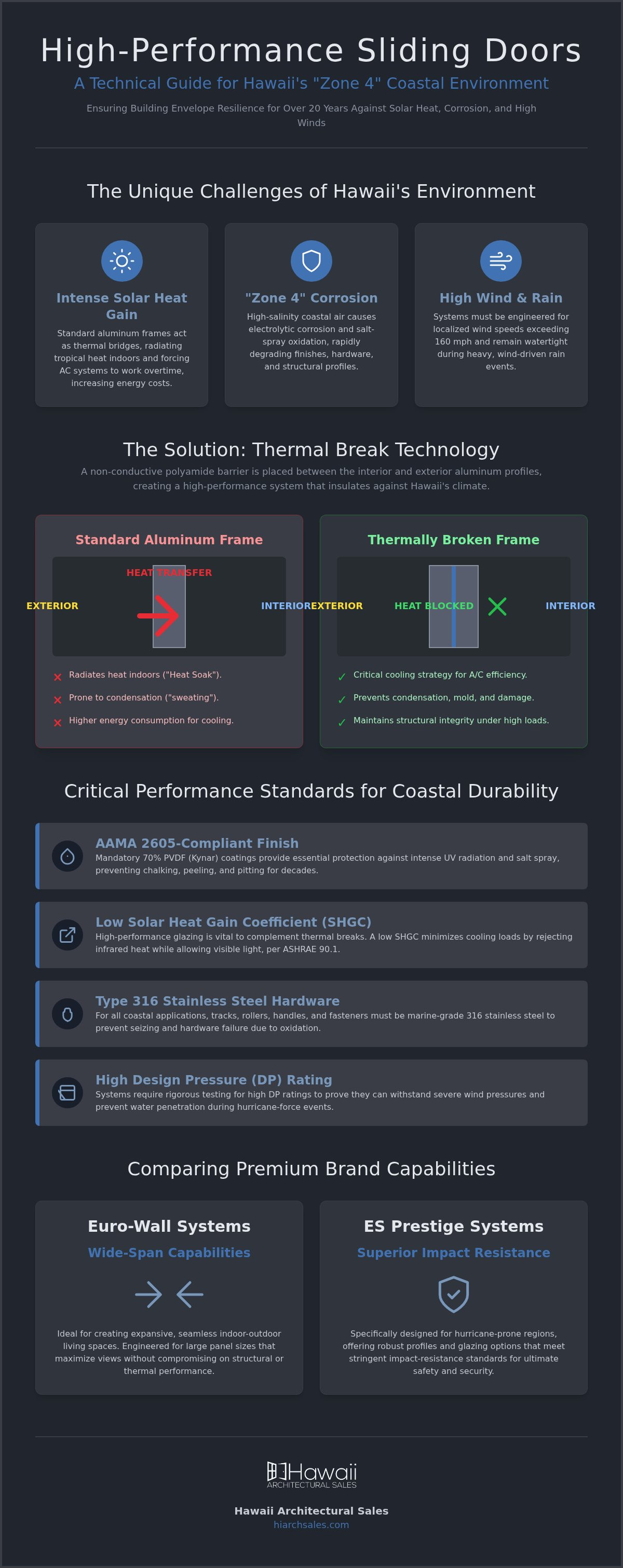
In the "Zone 4" extremely severe corrosion environment of the Hawaiian Islands, a thermal break is actually a high-performance cooling strategy rather than a heating one. While many associate thermal insulation with cold climates, it's the primary barrier against the intense tropical solar heat gain...
In the "Zone 4" extremely severe corrosion environment of the Hawaiian Islands, a thermal break is actually a high-performance cooling strategy rather than a heating one. While many associate thermal insulation with cold climates, it's the primary barrier against the intense tropical solar heat gain that drives up building energy costs. Specifying thermally broken aluminum sliding doors Hawaii architects and engineers trust requires a deep understanding of how to balance thin-profile aesthetics with the structural demands of 160 mph wind loads. It's the difference between a system that fails in five years and one that maintains its integrity for decades.
You likely know the frustration of seeing premium hardware succumb to salt-air oxidation or watching wood-clad alternatives fail under termite pressure. This 2026 technical guide provides the precise specifications needed to ensure your building envelope remains resilient for over 20 years. We'll examine the latest AAMA/WDMA/CSA 101/I.S.2/A440-26 standards and the energy performance updates from the NFRC. You'll learn how to leverage systems from ES Prestige and Euro-Wall to achieve seamless indoor-outdoor living without compromising on AC efficiency or hurricane safety.
Key Takeaways
• Understand why a polyamide thermal break is a critical cooling strategy for preventing Hawaii's solar heat gain from radiating into air-conditioned interiors.
• Learn the necessity of specifying AAMA 2605-compliant 70% PVDF coatings to ensure long-term finish durability in "Zone 4" extreme coastal corrosion environments.
• Compare the technical specifications of thermally broken aluminum sliding doors Hawaii architects prefer, including the wide-span capabilities of Euro-Wall and the impact resistance of ES Prestige.
• Identify the structural and drainage requirements for flush-mount thresholds to maintain a seamless lanai transition without risking water infiltration during heavy rains.
• Discover how partnering with a technical manufacturer's representative streamlines the specification process through custom CAD details and localized performance calculations.
Understanding Thermally Broken Aluminum in Tropical Climates
Aluminum is inherently conductive. In a tropical environment like Hawaii, a standard aluminum frame acts as a thermal bridge, drawing external heat directly into the building's interior. A thermal break solves this by placing a non-conductive barrier, typically made of polyamide, between the interior and exterior aluminum profiles. This creates the high-performance thermally broken aluminum sliding doors Hawaii architects specify to combat the "heat soak" effect. When the Hawaiian sun hits 90 degrees, standard frames radiate that energy like a heater, forcing air conditioning systems to work significantly harder.
Beyond temperature control, these systems manage condensation. In high-humidity regions like Lihue, the temperature difference between cooled indoor air and humid outdoor air often causes standard aluminum frames to "sweat." This moisture leads to interior finish damage and mold growth. Modern polyamide breaks provide the necessary insulation to keep the interior frame temperature above the dew point. They also maintain the structural integrity required for 10-foot-high sliding panels. The thermal barrier must handle the same shear and tension forces as the aluminum itself, ensuring the door remains rigid under high wind loads without sacrificing performance.
The Physics of Thermal Conductivity in Hawaii
Standard aluminum has a high thermal conductivity rate, meaning it transfers heat with almost no resistance. Thermally broken systems utilize high-performance thermal insulation profiles to decouple the metal surfaces and drastically reduce heat transfer. Even if the interior feels cool, occupants often feel uncomfortable near non-broken frames because of radiant heat transfer. It's this invisible heat that can make a room feel several degrees warmer than the thermostat suggests. In 2026, a lower U-factor is essential for compliance with Hawaii’s evolving energy codes which prioritize reducing cooling loads.
Preventing Electrolytic Corrosion
High-salinity coastal areas like Kihei present a unique challenge for metal building components. Electrolytic corrosion occurs when salt air facilitates a current between different metal parts, leading to rapid material degradation. A thermal break acts as an additional layer of separation within the frame assembly, breaking the conductive path. When paired with high-quality gaskets and EPDM seals, these systems provide a robust defense against the corrosive Hawaiian climate. Specifying the thermally broken aluminum sliding doors Hawaii environments demand ensures that the door hardware and structural profiles remain functional for decades, even in Zone 4 environments.
Performance Standards for Coastal Sliding Doors
Specifying thermally broken aluminum sliding doors Hawaii projects require means looking beyond basic aesthetics. In a "Zone 4" extremely severe corrosion region, the finish isn't just about color; it's about survival. AAMA 2605 standards, which mandate 70% PVDF (Kynar) coatings, are essential. These finishes withstand the intense UV radiation and salt spray that cause standard powder coatings to chalk and peel within months. Without this level of protection, the aluminum substrate remains vulnerable to pitting and structural degradation.
Energy efficiency in 2026 is largely governed by the Solar Heat Gain Coefficient (SHGC). Selecting glazing that complements thermally broken frames is vital to meet modern energy codes. Following ASHRAE Standard 90.1 guidelines ensures the building envelope minimizes cooling loads by rejecting infrared heat while allowing visible light. For properties within 500 feet of the shoreline, hardware must be Type 316 stainless steel. This includes tracks, rollers, and handles to prevent the seizing and oxidation that often plagues standard hardware in Lihue or Kailua-Kona.
Wind load engineering is another critical factor for high-performance fenestration. Honolulu high-rises often experience "venturi" effects, where trade winds accelerate between buildings. Systems must be rated for localized wind speeds that can exceed 150 mph. This requires rigorous testing for design pressure (DP) and water penetration, ensuring the system remains watertight during the heavy rains that accompany high-wind events.
Glazing Options for High-Performance Sliders
High-performance glass must balance visible light with heat rejection. Low-E coatings optimized for the tropics allow high visible light while maintaining a low SHGC. Laminated glass offers benefits beyond hurricane protection, such as 99% UV blockage to protect interior furnishings and significant acoustic dampening for urban environments. This allows for architectural daylighting solutions Honolulu designers use to create bright, expansive interiors without the associated heat gain or noise pollution.
Corrosion-Resistant Finishes and Coatings
Standard powder coatings often fail in coastal Hawaii because they lack the chemical resistance of architectural-grade finishes. While anodized finishes offer a durable, metallic look, they require frequent fresh-water rinsing to prevent salt pitting in high-spray zones. For maximum longevity, we recommend specifying "Coastal Hardware Packages" available with Euro-Wall and ES Prestige systems. These packages use upgraded alloys and specialized gaskets to seal out salt air. If you need help determining which finish suits your specific site elevation, consulting with a technical representative can prevent costly specification errors.
Comparing Premium Brands: Euro-Wall vs. ES Prestige
Selecting the ideal system for thermally broken aluminum sliding doors Hawaii architects trust involves balancing architectural intent with rigorous environmental performance. While many manufacturers offer standard aluminum frames, Euro-Wall and ES Prestige lead the market in specialized coastal engineering. Each brand serves a distinct role in the Hawaiian building envelope, from expansive luxury estates to high-density urban developments. Choosing between them requires an analysis of panel sizes, interlock sightlines, and specific wind load ratings.
For projects requiring ultra-thin sightlines, Hopes steel windows provide a historical aesthetic. However, steel does not offer the same thermal efficiency as aluminum. When comparing these materials, refer to the National Fenestration Rating Council (NFRC) data to understand the thermal trade-offs. Steel frames often result in higher U-factors, which may require more aggressive glazing specifications to meet 2026 energy codes. Aluminum remains the pragmatic choice for most Hawaiian projects due to its superior weight-to-strength ratio and integrated thermal breaks.
Euro-Wall Multi-Slide Capabilities
Euro-Wall is the premier choice for wide-span configurations that define the modern "lanai" lifestyle. Their systems allow for massive panels that nest or pocket completely out of sight, creating a truly seamless transition. As an authorized Euro-Wall distributor Hawaii, we provide technical support for their multi-slide and pivot systems. Their engineering focuses on minimalist interlock sightlines, ensuring that even when the doors are closed, the island view remains the focal point of the residence.
ES Prestige: The Hurricane-Rated Workhorse
ES Prestige is widely considered the standard for high-performance impact resistance in Honolulu’s high-rise sector. These systems are designed to withstand extreme design pressures while maintaining a sophisticated aesthetic. Architects often specify these doors alongside ES | Prestige Windows to ensure a unified facade with consistent finishes and profiles. Their extensive Florida Product Approval documentation provides the structural data engineers need to verify compliance with Hawaii’s 160 mph wind speed requirements for 2026. This reliability makes them the preferred choice for projects where structural integrity and aesthetic versatility are equally weighted.
Design and Configuration: Maximizing the Island View
Hawaii’s luxury architecture is defined by the lanai. Achieving a true indoor-outdoor connection requires choosing between pocketing and stacking configurations. Pocketing systems allow panels to disappear entirely into a wall cavity, providing a 100% clear opening. Stacking systems are often more practical for retrofits or designs where wall space is constrained. Both configurations for thermally broken aluminum sliding doors Hawaii projects must account for localized wind pressure. In coastal Lahaina, for example, large glass panels must be engineered to resist significant deflection without sacrificing the thermal break’s performance. Automation has also become a standard requirement for luxury estates, where motorized systems integrate with smart home hubs to manage ventilation and security.
Large panel engineering requires a balance between glass size and structural integrity. As panel heights reach 10 or 12 feet, the aluminum profiles must be robust enough to handle trade wind gusts. Modern systems utilize high-strength alloys that allow for these expansive views while maintaining the thermal separation needed for energy efficiency. It's a precise calculation that ensures the door remains easy to operate even as the weight of the glass increases.
Seamless Transitions: Flush Track Engineering
These expansive, well-insulated living areas are often the centerpiece of a home's social life. To fully equip these high-end entertainment zones, specialized providers like Power Man Cave offer the premium furniture and theater equipment that fit the scale and quality of such luxury Hawaiian estates.
Designing a zero-transition floor line is a technical challenge in high-rain environments. A flush-mount track must be recessed into the slab while maintaining a sophisticated drainage system. Without a properly engineered weep system, heavy rains can overwhelm the track and cause interior water damage. This is particularly critical when specifying hurricane rated windows Hawaii engineers approve, as the sill must meet specific water penetration resistance standards. The track design must balance the aesthetic of a flat floor with the physics of gravity-fed drainage to prevent infiltration during storms.
Sightline Optimization
The design trend for 2026 favors ultra-thin interlocks that maximize the glass-to-frame ratio. While a 1-inch interlock provides a minimalist look, it often requires a trade-off in design pressure (DP) ratings. Higher hurricane impact ratings generally necessitate slightly wider profiles to accommodate internal reinforcements. Architects can customize these frames with high-performance finishes that complement Hawaii’s volcanic landscapes or coastal palettes. Whether you prefer deep bronze or custom architectural grays, the finish must be AAMA 2605 compliant to resist the salt air. To ensure your design meets both aesthetic and structural goals, contact our specification team for a technical review of your door schedule.
The Architect's Partner: Sourcing and Specification
Hawaii Architectural Sales serves as the authorized technical representative for premium fenestration systems. We bridge the gap between high-end manufacturing and local application. Our role in the design-bid-build process is to ensure that the thermally broken aluminum sliding doors Hawaii projects require are specified correctly from the start. We focus exclusively on technical distribution and consulting rather than installation. This approach ensures we remain a neutral technical partner for general contractors and developers. We provide the expertise needed to navigate the complex intersection of aesthetics, energy performance, and structural requirements.
Technical Consultation Services
For professionals seeking a broader perspective on global fabrication and high-quality glass systems, you can discover Hasan Glass and Aluminium, a dedicated provider of comprehensive glass solutions and fabrication services.
Successful specification requires more than just picking a model from a catalog. We provide comprehensive technical support, including CAD details and performance calculations for engineers. Our team assists with wind load analysis and glazing schedules to ensure every opening meets the 2026 Hawaii Building Code requirements. We provide the necessary Florida Product Approval (FPA) documentation that local building departments demand for high-wind zones. Understanding how to select an architectural window distributor Hawaii professionals can rely on is the first step in protecting the project’s long-term value. We ensure that the thermal insulation profiles and glass specifications align with both energy goals and site-specific environmental pressures.
Project Logistics and Lead Times
Shipping high-performance glass to the Hawaiian Islands involves unique logistical challenges that can derail a timeline if not managed with precision. We manage the entire supply chain for ES Prestige and Euro-Wall systems to minimize project delays. Our local representation across Honolulu, Lihue, Kailua-Kona, and Maui provides a significant advantage for site-specific coordination. We understand the specific lead times associated with custom architectural finishes and specialized hurricane-rated glazing, allowing for better project scheduling and resource management.
Our technical support continues through the construction phase to ensure the design intent is realized. We provide general contractors with the detailed technical data, shop drawings, and specialized hardware instructions necessary for a successful install. By maintaining a strict focus on the distribution model, we provide a clear line of accountability between the manufacturer and the job site. This ensures that the thermally broken aluminum sliding doors Hawaii luxury estates demand are delivered on schedule and perform exactly as engineered. We act as a strategic ally for the design team, ensuring the building envelope remains resilient against the elements while fulfilling the architect's original vision.
Advancing Hawaii’s Architectural Resilience
Specifying thermally broken aluminum sliding doors Hawaii architects trust means prioritizing long-term durability over initial cost. We've examined how polyamide breaks serve as a critical cooling strategy by mitigating solar heat gain and preventing frame condensation. You now understand that AAMA 2605 coatings and 316 stainless steel hardware are mandatory for maintaining structural integrity in Zone 4 coastal environments. Whether you select the wide-span versatility of Euro-Wall or the hurricane-rated performance of ES Prestige, your choice defines the project's building envelope resilience for the next two decades.
Since 1985, Hawaii Architectural Sales has provided specialized technical support for architects and engineers navigating these complex requirements. As an authorized distributor for ES Prestige and Euro-Wall, we focus on delivering precise performance calculations and logistics management for high wind load projects. We don't just provide products; we act as a strategic ally throughout the design-bid-build process. Consult with our Technical Experts for Your Next Hawaii Project to ensure your specifications meet the highest standards of modern coastal design. We look forward to supporting your vision for a more efficient and durable Hawaiian landscape.
Frequently Asked Questions
Do I really need thermally broken doors in Hawaii's warm climate?
Yes, thermally broken frames are essential for cooling efficiency. In Hawaii, the "heat soak" effect from the sun radiates heat directly into air-conditioned spaces. Using thermally broken aluminum sliding doors Hawaii designers prefer stops this transfer. It also prevents condensation on the interior frame in high-humidity zones like Lihue. This protection keeps interior finishes dry and reduces the overall energy load on the building's HVAC system.
What is the best finish for aluminum sliding doors near the ocean?
The gold standard for coastal finishes is an AAMA 2605 compliant 70% PVDF coating, often referred to as Kynar. These coatings are specifically engineered to resist the intense UV radiation and salt spray common in Hawaii's Zone 4 environments. While anodized finishes are durable, they require frequent freshwater rinsing to prevent pitting. High-performance PVDF coatings provide the best long-term protection against chalking and finish degradation on premium aluminum profiles.
Are Euro-Wall sliding doors hurricane-rated for Honolulu?
Euro-Wall systems are engineered for high-velocity wind zones and carry extensive Florida Product Approval (FPA) documentation. This data is critical for meeting Hawaii’s 2026 building codes, which require resilience against wind speeds up to 160 mph. These systems undergo rigorous testing for design pressure and water penetration. This ensures they maintain structural integrity and keep interiors dry during the severe weather events that frequently impact Honolulu and the surrounding islands.
How do I maintain thermally broken aluminum frames in a salt-air environment?
Maintenance requires regular freshwater rinsing to remove salt deposits from the frame and tracks. For properties within 500 feet of the shoreline, this should occur monthly. Use a mild detergent on the aluminum surfaces and ensure that the weep holes remain clear of debris. Lubricate the 316 stainless steel rollers and locking mechanisms with a high-quality silicone spray. This simple routine prevents electrolytic corrosion and ensures the hardware operates smoothly for decades.
Can I get flush-mount tracks that still prevent water leaks during heavy rain?
Flush-mount tracks can be watertight if they include an integrated, high-capacity weep system. Achieving a zero-transition floor line requires the slab to be recessed to accommodate the track and its associated drainage plumbing. These systems are tested to meet specific water penetration resistance standards. This ensures that even during heavy tropical downpours, water is channeled away from the interior. Proper engineering during the slab-pour phase is the key to a successful installation.
What is the lead time for ES Prestige doors in Hawaii for 2026?
Lead times for thermally broken aluminum sliding doors Hawaii projects depend on the complexity of the glass specifications and the chosen architectural finish. Custom Kynar colors or specialized laminated glazing can influence the production schedule. Hawaii Architectural Sales manages the entire supply chain from the manufacturer to the islands to ensure project timelines remain predictable. For accurate scheduling on 2026 projects, we recommend a technical consultation during the early design phase.
Why should I choose aluminum over uPVC or wood for sliding doors?
Aluminum provides a superior strength-to-weight ratio compared to uPVC and eliminates the termite risks associated with wood. Wood-clad doors often fail in Hawaii’s high-humidity climate due to rot and pest infestation. uPVC lacks the structural rigidity needed for the massive, 10-foot-high panels required for modern lanai views. Aluminum systems offer the durability to withstand 160 mph wind loads while maintaining thin, minimalist profiles that maximize the glass area for island views.
Do thermally broken sliding doors help with noise reduction in busy areas like Waikiki?
Thermally broken systems provide a significant barrier against acoustic pollution in dense urban areas like Waikiki. The polyamide break that stops heat transfer also interrupts the path of sound waves through the frame. When paired with laminated, high-performance glazing, these doors significantly reduce decibel levels from street traffic and wind noise. This combination creates a quiet, comfortable interior environment without sacrificing the large glass spans that define luxury high-rise living.