High-End Architectural Window Systems in Lahaina: A 2026 Buying Guide
In the coastal environment of West Maui, a window is less of a view and more of a precision-engineered structural defense. Architects and developers often find that the very features that define luxury architecture, such as floor-to-ceiling glass and minimal profiles, are the most vulnerable to the...
In the coastal environment of West Maui, a window is less of a view and more of a precision-engineered structural defense. Architects and developers often find that the very features that define luxury architecture, such as floor-to-ceiling glass and minimal profiles, are the most vulnerable to the region's aggressive salt-air corrosion. Specifying high-end architectural window systems Lahaina requires a shift from purely aesthetic selection to a rigorous technical evaluation. It's a balance between achieving a seamless indoor-outdoor transition and ensuring the building envelope can withstand the intensified wind load requirements of the 2026 Hawaii building codes.
We understand that navigating these stringent standards is a high-stakes endeavor for any design professional. This guide provides a comprehensive look at the high-performance systems required for Maui’s unique climate, focusing on durability and structural integrity. You'll learn about the latest innovations in hurricane-rated glass and the specific material benefits of systems like ES | Prestige and Euro-Wall. We will also preview the technical criteria necessary to maintain long-term resilience against the elements while delivering the expansive, unobstructed views that high-end coastal projects demand.
Key Takeaways
• Identify the specific 2026 Hawaii building code updates that dictate wind load requirements for new construction in West Maui.
• Understand why high-end architectural window systems Lahaina must utilize specialized finishes to resist the rapid structural degradation caused by salt-air corrosion.
• Compare the technical specifications of premium systems, including ES | Prestige and Euro-Wall, to balance expansive glass spans with coastal resilience.
• Learn the two-step site evaluation process used by architects to determine the ideal glass-to-wall ratio for high-performance building envelopes.
• Discover how technical representation provides the design support and accurate bidding data that retail sourcing often lacks.
Defining High-End Architectural Window Systems for Lahaina
Defining these systems requires looking beyond the visible frame. High-end architectural window systems Lahaina are precision-engineered assemblies designed for superior structural integrity and coastal resilience. As the region moves toward new construction phases, the 2026 rebuilding standards demand higher performance metrics than previous decades. These systems aren't just aesthetic choices; they are critical components of the building envelope that protect high-value interior finishes from moisture and pressure. Moving from retail-grade to architectural-grade is a technical necessity for luxury projects where failure isn't an option.
Architectural vs. Residential Grade: Key Differences
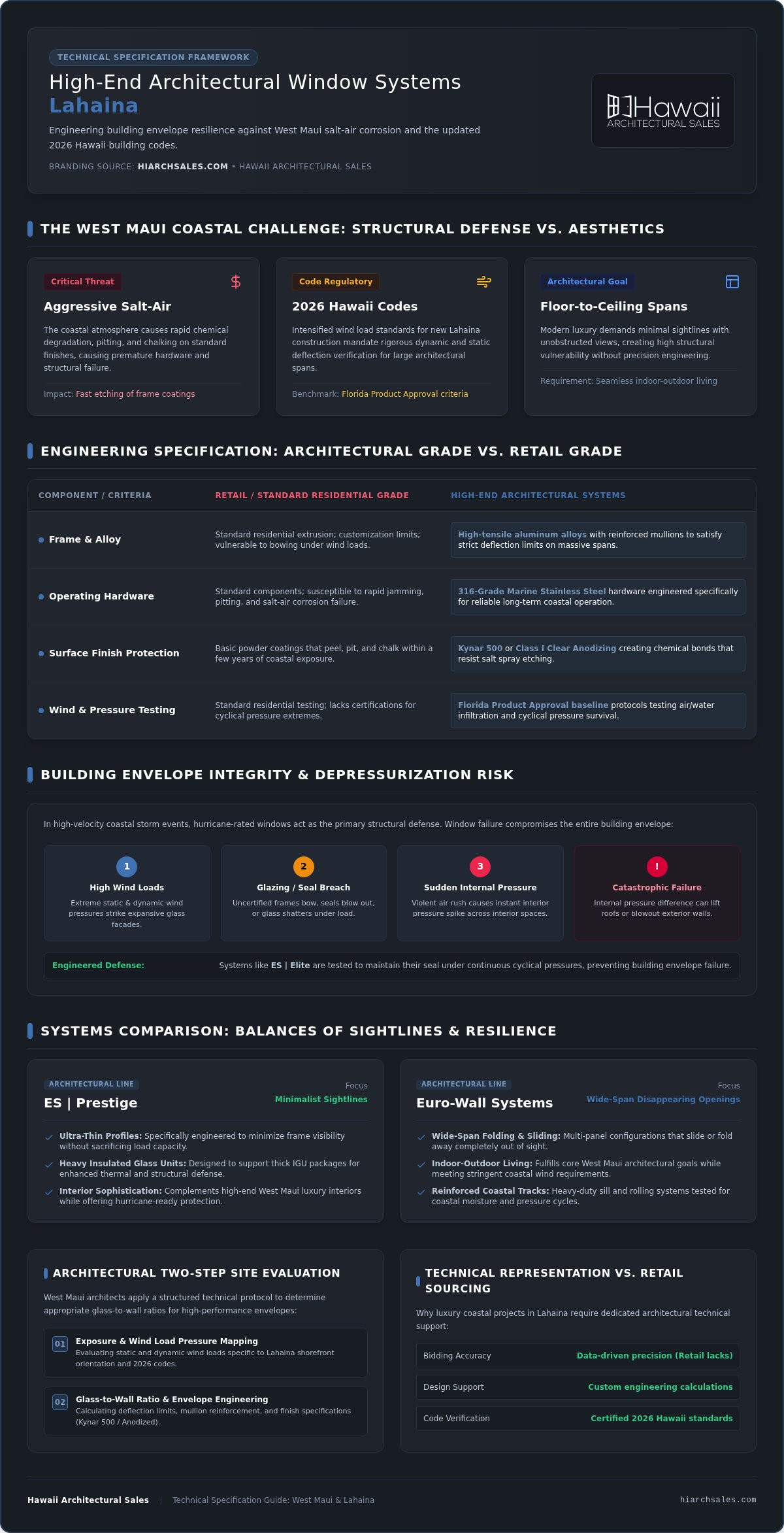
The primary difference lies in material thickness and alloy quality. Specifying high-end architectural window systems Lahaina involves more than selecting a style; it requires analyzing the alloy grade and frame reinforcement. Architectural frames use high-tensile aluminum alloys that provide the rigidity needed for massive floor-to-ceiling glass spans. Retail-grade products often have customization limits that force architects to compromise their vision. When specifying architectural glass configurations, engineers must account for both static and dynamic wind loads specific to West Maui. Hardware longevity is also a major factor. In Lahaina’s salt-heavy air, standard residential hardware often fails or corrodes quickly. High-end systems utilize 316-grade stainless steel components to ensure reliable operation in harsh coastal environments.
The Aesthetic of Modern West Maui Architecture
Modern design in West Maui prioritizes minimalist sightlines and expansive views. Achieving the 'Prestige' look requires frames that remain thin while supporting heavy, insulated glass units. Systems like ES | Prestige are specifically designed to provide this balance, offering a sophisticated profile that complements luxury interiors. Integrating these systems with indoor-outdoor living spaces is a hallmark of local design. Euro-Wall systems, for example, allow for wide-span folding or sliding glass walls that disappear when open. The selection of frame finishes also impacts long-term curb appeal. High-performance coatings are essential to prevent the pitting and chalking that can degrade a building's appearance over time.
Engineering for Resilience: Wind Loads and Salt-Air Protection
Resilience in West Maui isn't an optional upgrade. It's a regulatory requirement. For 2026, building codes have evolved to address the higher risk profiles of coastal properties. High-end architectural window systems Lahaina must provide a robust barrier against both high-velocity winds and the relentless chemistry of salt spray. Architects must look beyond standard residential specs to ensure the building envelope remains intact during extreme weather events. This requires a shift toward systems tested for the specific pressures of the Hawaiian Islands.
Meeting High Wind Load Standards
Structural integrity begins with deflection limits. Large glass spans require reinforced mullions to prevent the system from bowing under pressure. Many professionals use Florida Product Approval as a baseline because it mirrors the rigorous testing needed for Hawaii’s wind zones. These protocols include strict air and water infiltration tests. Adhering to Whole Building Design Guide window specifications ensures that the frame and glazing work as a unified system. This level of engineering prevents structural failure when wind speeds peak.
In this environment, hurricane rated windows Hawaii are non-negotiable. It's about protecting the interior from sudden depressurization. If a window fails, the internal pressure can lift a roof or blow out walls. High-performance systems like ES | Elite are engineered to maintain their seal even under cyclical pressure. This reliability is why we emphasize technical certification over purely aesthetic marketing claims.
Salt-Air Corrosion Resistance
Salt-air corrosion is the primary cause of premature window failure in Lahaina. Standard powder coatings often pit and peel within years. For long-term durability, we recommend high-performance finishes such as Kynar 500 or Class I clear anodizing. These finishes provide a chemical bond that resists the etching effects of salt spray. This level of protection is essential for maintaining the structural integrity of the frame over decades of exposure.
Hardware selection is equally critical. We specify 316-grade stainless steel for all moving parts. This prevents the "seizing" common in lower-grade metal components. Managing solar heat gain is the final piece of the puzzle. High-end systems utilize specialized glass coatings to block infrared light while maintaining clarity. If you're designing for a coastal site, consulting with a technical representative can help align your specs with local environmental demands and 2026 compliance standards.
Comparing Premium Systems: ES Prestige vs. Euro-Wall vs. Hopes
Selecting the right high-end architectural window systems Lahaina requires more than aesthetic preference; it involves matching the project's structural needs with the specific engineering strengths of a manufacturer. For West Maui, where exposure to coastal hazards is a primary concern, the choice often comes down to three premier brands: ES | Prestige, Euro-Wall, and Hopes. Each system offers distinct advantages in durability, span capability, and architectural style, and choosing between them requires a technical understanding of their performance benchmarks.
ES | Prestige and Elite Performance
The ES | Prestige line is the premier aluminum solution for the islands. While the ES | Elite series offers high value and the ES | uPVC line provides excellent thermal efficiency, the Prestige series is engineered for the highest design pressures. It allows for larger glass dimensions with slimmer profiles than residential-grade alternatives. In Lahaina luxury residences, this system is frequently specified for its ability to combine high-velocity hurricane zone (HVHZ) performance with a sophisticated aesthetic. Certain lines in this category are available with a 10-year guarantee, providing long-term security for the building owner against the elements.
Euro-Wall for Expansive Openings
Euro-Wall excels in creating the expansive openings that define modern Hawaiian architecture. Their systems allow for folding or multi-slide configurations that can reach heights and widths exceeding standard industry limits. Choosing between folding and multi-slide depends largely on the floor plan; folding walls stack to the side to provide a 100% clear opening, while multi-slides often disappear into wall pockets. Euro-Wall is particularly notable for offering hurricane ratings on folding glass walls, a feature that was previously difficult to achieve in wide-span openings. By integrating these with bifold door systems Hawaii, designers can ensure that even the largest transitions meet the localized resilience standards outlined in the University of Hawaiʻi Coastal Hazard Mitigation Guidebook.
Hopes Steel: Timeless Durability
Hopes remains the choice for projects that demand the strength and thin sightlines of solid steel. These systems offer a unique strength-to-weight ratio that allows for massive glass panels within incredibly narrow frames. Modern Hopes windows utilize advanced thermal break technology to prevent heat conduction, making them suitable for the high solar exposure of West Maui. This durability and timeless aesthetic make Hopes a staple for landmark coastal estates that require a permanent, high-performance solution. Integrating these high-end architectural window systems Lahaina into a project's design ensures that the building remains a steady, dependable structure for decades.
Selection Guide for West Maui Architects and Developers
Choosing high-end architectural window systems Lahaina involves a methodical evaluation of site-specific variables. The process begins with a detailed analysis of environmental exposure. Architects must determine the precise wind zone and salt spray proximity, as these factors dictate the required frame alloy and finish. Second, developers must establish the desired glass-to-wall ratio. While expansive views are the priority, structural limits and current energy codes often require a balance between glass surface area and solid wall construction. This step ensures that the vision for the project remains technically feasible.
The third step focuses on thermal management. Managing the Solar Heat Gain Coefficient (SHGC) is vital in Hawaii’s tropical climate to control cooling costs. Finally, aligning the selection with the project budget is a matter of prioritizing compliance and longevity. Investing in higher-grade materials early prevents the astronomical costs of premature system failure in a coastal environment. High-end architectural window systems Lahaina should be viewed as a long-term investment in the building’s structural health and market value.
Commercial vs. Residential Specifications
Specifications for commercial projects in Lahaina differ significantly from residential builds. ADA compliance is a primary concern; commercial thresholds must meet strict height requirements while maintaining water-tight integrity. For projects in denser urban areas, Sound Transmission Class (STC) ratings become a priority to mitigate street noise. Larger facades often require curtain wall systems that can support massive vertical spans. These systems provide the necessary rigidity for multi-story glass applications that standard residential frames cannot achieve.
Energy Efficiency and Daylighting
High-performance façades rely on sophisticated light management to reduce energy consumption. Integrating architectural daylighting solutions Honolulu allows designers to maximize natural light without increasing heat loads. Low-E glass coatings are essential for reflecting infrared light, which keeps interior temperatures stable during the hottest hours of the day. For areas requiring privacy or diffused light, Kalwall translucent panels offer a superior alternative to standard glazing. These panels provide excellent thermal insulation while eliminating the glare associated with direct sunlight. If you are currently drafting a project for West Maui, you can consult with a technical representative to ensure your specifications meet both aesthetic and regulatory goals.
The Value of Technical Representation in Hawaii
Navigating the complexities of high-end architectural window systems Lahaina requires a partner that offers more than just a product catalog. Selecting an architectural window distributor Hawaii provides access to specialized engineering knowledge that retail outlets simply do not possess. Retail sourcing often overlooks the nuanced technical requirements necessary for West Maui’s aggressive coastal exposure. Hawaii Architectural Sales functions as a technical consultant throughout the project lifecycle. We bridge the gap between premier manufacturers and the contractors on the ground, ensuring that specified systems are aesthetically correct and structurally resilient for the 2026 regulatory environment.
Technical Support and Documentation
Precision in documentation serves as the foundation for a successful building envelope. Our team assists architects with detailed shop drawings and engineering calculations to confirm that every glass opening meets localized wind load requirements. This level of support is critical during the design and bidding phases. It prevents costly mid-construction revisions that arise from overlooked technical specs. We help professionals navigate the specifics of Hawaii building codes and the permitting processes unique to the islands. By verifying material specifications against actual site conditions, we also ensure that the systems maintain their warranty compliance. This proactive approach protects the investment of the developer and the professional reputation of the design firm.
Sourcing for Rebuilding Projects
The rebuilding efforts in Lahaina present unique logistical challenges that require established industry relationships and deep localized knowledge. Lead time management is essential for large-scale developments where project schedules are tightly coordinated and high-stakes. We manage the consolidated shipping and neighbor island logistics for Maui, Kauai, and the Big Island. This specialized oversight ensures that complex architectural glass systems arrive on-site without the damage or delays common in standard freight handling. Since 1985, we have served as a steady, dependable partner for the Hawaii building community. We offer the stability and technical expertise needed to execute high-performance modern designs.
For architects and developers seeking technical precision, we recommend a direct consultation to align your project goals with our high-performance offerings. Contact Hawaii Architectural Sales today to discuss your technical specifications and procurement needs for West Maui.
Securing the Future of West Maui Architecture
Rebuilding in Lahaina requires an engineering focus that matches the beauty of the landscape. The 2026 building codes prioritize structural resilience against extreme wind loads and salt-air corrosion. Specifying high-end architectural window systems Lahaina is a strategic investment in the long-term safety of the building envelope. Systems from ES | Prestige, Euro-Wall, and Hopes provide the performance benchmarks needed to withstand coastal hazards while delivering modern aesthetics.
Hawaii Architectural Sales has provided expert solutions for the islands since 1985. We serve as authorized technical representatives, specializing in high-performance products that bridge the gap between manufacturer specs and local application. Our team understands the logistical and regulatory demands of West Maui construction. Request a Technical Consultation for Your Lahaina Project to ensure your specifications meet the highest industry standards. We're ready to help you build a more resilient future.
Frequently Asked Questions
What are the wind load requirements for windows in Lahaina?
Wind load requirements in Lahaina are determined by the specific wind zone and exposure category of the building site as defined in the 2026 Hawaii building codes. Coastal properties often fall into high-velocity zones that require systems tested for significant positive and negative pressures. Architects should verify the precise PSF rating required for their specific elevation and proximity to the shoreline to ensure the building envelope remains structurally sound during storm events.
Are ES Prestige windows hurricane rated for Hawaii?
Yes, ES | Prestige windows are engineered to meet and exceed high-velocity hurricane zone standards. These systems undergo rigorous testing for large and small missile impact, as well as cyclical pressure loading. This makes them an ideal choice for high-end architectural window systems Lahaina, where protection against tropical storms is a primary design requirement. Their heavy-duty aluminum frames and laminated glass configurations provide a robust barrier against extreme weather while maintaining thin sightlines.
What is the difference between aluminum and uPVC windows in tropical climates?
Aluminum systems like ES | Prestige offer superior structural strength and the ability to support larger glass spans with thinner frames. This is essential for modern architecture. Conversely, ES | uPVC systems provide exceptional thermal insulation and resistance to salt-air corrosion. While aluminum is the standard for high-strength architectural applications, uPVC is often selected for projects prioritizing energy efficiency and reduced maintenance in Hawaii’s high-salt environments. Both materials are viable depending on the project performance goals.
Does Hawaii Architectural Sales provide window installation?
Hawaii Architectural Sales does not provide installation services or general contracting. We operate as a specialized manufacturer's representative and distributor, focusing on technical product expertise and material logistics. We bridge the gap between high-end manufacturers like Euro-Wall and Hopes and the licensed contractors responsible for the physical installation. Our role is to provide architects and developers with the technical documentation, shop drawings, and engineering support necessary to ensure systems are specified correctly.
How do I prevent salt-air corrosion on my window frames in West Maui?
Preventing salt-air corrosion requires specifying high-performance finishes such as Class I clear anodizing or Kynar 500 coatings. These finishes provide a chemical barrier that resists the pitting and chalking common in Lahaina’s coastal environment. Additionally, all moving components should utilize 316-grade stainless steel hardware to prevent seizing. Regular maintenance, including rinsing frames with fresh water to remove salt deposits, is also essential for preserving the integrity and appearance of high-end architectural window systems Lahaina over time.
Can I get custom-sized floor-to-ceiling glass for my Lahaina home?
Custom floor-to-ceiling glass is a hallmark of the systems we represent. Brands like Euro-Wall and ES | Prestige are specifically engineered to accommodate expansive spans that exceed standard residential limits. These systems use reinforced mullions and high-tensile alloys to maintain structural integrity at significant heights. Architects can achieve seamless indoor-outdoor transitions with folding or sliding glass walls that are custom-sized to the project’s exact dimensions while still meeting the stringent 2026 Hawaii wind load requirements.
What is the typical warranty for high-end architectural window systems?
Warranties for high-end systems vary by manufacturer and the specific material finish selected. Many of the premium lines we represent, such as certain ES | Prestige configurations, are available with a 10-year guarantee. These warranties typically cover the structural integrity of the frame and the performance of the finish against significant chalking or fading. It’s important to review the specific warranty documentation during the design phase to ensure the chosen system meets the long-term reliability expectations of the developer.
Why should an architect work with a manufacturer’s representative?
Architects benefit from a representative's deep technical knowledge of complex building envelope products. We provide essential support during the design and bidding phases, including assisting with shop drawings, engineering calculations, and code compliance verification. Working with Hawaii Architectural Sales ensures that specified systems are appropriate for Hawaii’s unique environmental demands. We also manage the logistics of neighbor island distribution to Lahaina, reducing the risk of coordination errors and ensuring that high-performance materials arrive on-site as scheduled.